03/05/2016

West versus East


Important reminder ahead of the Sykes-Picot agreement's 100 years anniversary.
Best ever example of the damages inherited with "divide and rule" strategies.

In the New Yorker:
http://www.newyorker.com/news/news-desk/how-the-curse-of-sykes-picot-still-haunts-the-middle-east?mbid=nl_050216_Daily_Analytics&CNDID=36185179&spMailingID=8864576&spUserID=MTA5MjQwODYxMjQ2S0&spJobID=920152134&spReportId=OTIwMTUyMTM0S0


How the Curse of Sykes-Picot Still Haunts the Middle East

BY 


Anti-government demonstrators breaching the heavily fortified Green Zone, in Baghdad, on Saturday.CREDITPHOTOGRAPH BY HAYDAR HADI / ANADOLU AGENCY / GETTY

In the Middle East, few men are pilloried these days as much as Sir Mark Sykes and François Georges-Picot. Sykes, a British diplomat, travelled the same turf as T. E. Lawrence (of Arabia), served in the Boer War, inherited a baronetcy, and won a Conservative seat in Parliament. He died young, at thirty-nine, during the 1919 flu epidemic. Picot was a French lawyer and diplomat who led a long but obscure life, mainly in backwater posts, until his death, in 1950. But the two men live on in the secret agreement they were assigned to draft, during the First World War, to divide the Ottoman Empire’s vast land mass into British and French spheres of influence. The Sykes-Picot Agreement launched a nine-year process—and other deals, declarations, and treaties—that created the modern Middle East states out of the Ottoman carcass. The new borders ultimately bore little resemblance to the original Sykes-Picot map, but their map is still viewed as the root cause of much that has happened ever since.

“Hundreds of thousands have been killed because of Sykes-Picot and all the problems it created,” Nawzad Hadi Mawlood, the governor of Iraq’s Erbil Province, told me when I saw him this spring. “It changed the course of history—and nature.”

May 16th will mark the agreement’s hundredth anniversary, amid questions over whether its borders can survive the region’s current furies. “The system in place for the past one hundred years has collapsed,” Barham Salih, a former deputy prime minister of Iraq, declared at the Sulaimani Forum, in Iraqi Kurdistan, in March. “It’s not clear what new system will take its place.”

The colonial carve-up was always vulnerable. Its map ignored local identities and political preferences. Borders were determined with a ruler—arbitrarily. At a briefing for Britain’s Prime Minister H. H. Asquith, in 1915, Sykes famously explained, “I should like to draw a line from the ‘E’ in Acre to the last ‘K’ in Kirkuk.” He slid his finger across a map, spread out on a table at No. 10 Downing Street, from what is today a city on Israel’s Mediterranean coast to the northern mountains of Iraq.

“Sykes-Picot was a mistake, for sure,” Zikri Mosa, an adviser to Kurdistan’s President Masoud Barzani, told me. “It was like a forced marriage. It was doomed from the start. It was immoral, because it decided people’s future without asking them.”

For a century, the bitter reaction to the Sykes-Picot process has been reflected in the most politically powerful ideologies to emerge—Nasserism, in Egypt, and Baathism, in Iraq and Syria—based on a single nationalism covering the entire Arab world. For three years, Egypt and Syria, despite being on different continents, actually tried it, by merging into the United Arab Republic; the experiment disintegrated after a 1961 coup in Damascus.

Even the Islamic State seeks to undo the old borders. After sweeping across Syria and Iraq in 2014, Caliph Abu Bakr al-Baghdadi announced, “This blessed advance will not stop until we hit the last nail in the coffin of the Sykes-Picot conspiracy.”

Yet the premise of American policy (and of every other outside power) today—in stabilizing fractious Iraq, ending Syria’s gruesome civil war, and confronting the Islamic State—is to preserve the borders associated with Sykes-Picot. Since August, 2014, the United States has invested more than eleven million dollars a day in military operations, including almost nine thousand airstrikes on Iraq and more than five thousand on Syria. For the world’s worst humanitarian refugee crisis, which is now spilling out of Syria across countries and continents, Washington has pledged seven hundred million dollars in 2016, with more promised. The rest of the world—from Europe to the Gulf sheikhdoms, Russia to Iran—has poured billions into perpetuating the borders, even as they vie for different political outcomes.

In its final months in office, the Obama Administration is intensifying that strategy. Since April 8th, senior officials—Vice-President Joe Biden, Secretary of State John Kerry, and Defense Secretary Ash Carter—have made surprise visits to Baghdad to prop up Iraq’s increasingly fragile government. Baghdad’s political crisis predates its war with ISIS. Recent debates in parliament have disintegrated into brawls and water-bottle fights; dozens of lawmakers held a sit-in this month to demand the resignation of their Speaker. Tens of thousands have demonstrated in several provinces for months to demand political and economic reforms, as well as an end to rampant corruption. On Saturday, protesters breached fortified blast walls around the Green Zone—bringing down a section as if it were the Berlin Wall—and stormed Parliament. Reuters reported that the demonstrators waved flags, danced in the aisles, and chanted, “The cowards ran away!” of fleeing lawmakers, who had once again failed to reach a quorum for a vote on a new Cabinet of technocrats to replace the current top officials, who were chosen according to quotas based on sect and ethnicity. Iraq declared a state of emergency and closed all roads into the capital. The U.S. Embassy, the U.N. mission, and other embassies inside the Green Zone were on lockdown.

“Now is not the time for government gridlock or bickering,” President Obama said earlier this month. Biden’s visit “focussed on encouraging Iraqi national unity,” the White House said. But Prime Minister Haider al-Abadi increasingly risks becoming Iraq’s Humpty Dumpty.

The United States is upping its military footprint, too. On April 18th, President Obama announced the deployment of Apache helicopters, sophisticated mobile rockets, and another two hundred troops to Iraq. The total is now around five thousand American forces. Airstrikes are up sixty per cent this year over the same period last year.

The situation is even worse in Syria, as the United States ratchets up its role there, too. The peace talks launched in January are precarious, at best, after three unsuccessful rounds. The ceasefire collapsed in an explosion of fighting this week, especially around Aleppo, Syria’s largest city and its former commercial capital. On Monday, Obama called for another two hundred and fifty U.S. Special Forces to be sent to Syria to boost the fifty already there and “keep up the momentum.” It’s the largest expansion in the U.S. role since the civil war erupted, in 2011.

The United States claims progress in the military campaign against the Islamic State. Since November, ISIS’s pseudo-caliphate has lost forty per cent of its territory in Iraq and ten per cent in Syria, as well as tens of thousands of fighters, tons of arms, and hundreds of millions of dollars stored in warehouses that have been bombed by the U.S.-led coalition. Pentagon officials said last week that the number of new ISIS recruits in Iraq and Syria has plunged—from fifteen hundred a month last year to two hundred a month now. ISIS fighters are dying faster than they can be replaced. For the first time, ISIS no longer seems invincible.

The region is now beginning to peer nervously beyond both the political chaos and the challenge from ISIS. There’s a well-rooted fear that both Iraq and Syria—an area stretching from the Mediterranean to the Gulf—have become so frail that they may not be sustainable, regardless of whether ISIS is defeated. It’s the subject of political debate, media commentary, teahouse chatter, and academic conferences.

“Can Iraq remain the same as it was the day before ISIS attacked? No, I believe not,” Jan Kubis, the U.N. representative for Iraq, said at the Sulaimani Forum. “People must understand that something was wrong when ISIS was able to sweep through the country. And something is wrong when part of its territory has been liberated, but people know that things are not yet right to return.”

The debate about Iraq’s future has shifted since Senator Joe Biden wrote a controversial Times Op-Ed, in 2006, proposing three autonomous regions, for Shiites, Sunnis, and Kurds to have their own political space. After thirteen years of war, the fabric of the young nation is threadbare. Iraq, in in current form, is less than a century old; Saddam Hussein ruled it for a quarter of its existence. Since his ouster, Baghdad has not devised a political formula to insure that its disparate constituencies feel invested in saving the country as is. The economy—of a major oil producer—has also been hit by a crippling mix: grossly wasteful mismanagement, a bureaucracy bloated by unqualified personnel, escalating greed, a five-hundred-per-cent budget increase since 2004, and plummeting oil prices. Nationalism has unravelled. Iraqis take great pride in their land’s ancient civilization; it’s the connection with their present state that is the existential challenge.

In Syria, the sheer physical and human devastation undermines the prospects of a viable state for years to come. The stats are almost incomprehensible: more than half the population depends on humanitarian aid to make it through the day. Some three million kids are not attending school—in a population of twenty-two million. Besides a staggering death toll, one and a half million people have been injured or permanently disabled. Life expectancy is down fifteen years from when the civil war started, in 2011. Almost one out of five citizens has fled the country altogether. They may have little incentive to return. Physical destruction totals at least two hundred and fifty billion dollars, in a state the size of Washington. And it increases every day.

A century after Sykes-Picot, the dual crises have stripped away the veneer of statehood imposed by the Europeans and have exposed the emptiness underneath. Iraq was managed by Britain and Syria by France, with limited nation-nurturing, before both were granted independence. They flew new flags, built opulent palaces for their leaders, encouraged commercial élites, and trained plenty of men in uniform. But both had weak public institutions, teeny civil societies, shady and iniquitous economies, and meaningless laws. Both countries were wracked by coups and instability. Syria went through twenty coups, some failed but many successful, between 1949 and 1970, an average of one a year, until the Assad dynasty assumed power—in another coup. Increasingly, the glue that held both countries together was repressive rule and fear.

The outside world, led by the United States, has reëngaged to help salvage both countries. After its eight-year intervention, however, Washington is not eager to again assume responsibility for the political aftermath. “We have to have real humility about our ability to affect the course of events,” Brett McGurk, Obama’s point man for the anti-ISIS coalition, told me in Washington last month. “We have to be really careful before we get overinvested. We have to define our interests very narrowly and focus very aggressively on achieving those interests.”

At the Sulaimani Forum, McGurk foreshadowed other dangers undermining prospects of reconstituting the Iraqi state. He recounted an anecdote about an Iraqi leader urging a Yazidi not to focus on revenge after the ISIS slaughter of his people on the mountains of Sinjar, in 2014. The massacre, along with the enslavement of hundreds of Yazidi women, was the flashpoint that led to the original U.S. airstrikes. McGurk said the Yazidi replied, “They took my wife, my daughter, and my sister. All I have left is my revenge.” McGurk warned, “This is something that Iraq will be dealing with for decades.”

In Syria, the death toll is many times higher, the sectarian and ethnic divide at least as deep as in Iraq. The test in both countries is not just finding a way to re-create states more viable than the various formulations attempted since the Sykes-Picot process was launched. It’s also rallying public will in the current environment.

“You can liberate. You can hold. And you can build,” Salman al Jumaili, Iraq’s Minister of Planning, said at the Sulaimani Forum last month. “But you may not be able to sustain.”

Some of the political alternatives may be just as problematic. The reconfiguration of either Iraq or Syria into new entities could be as complicated, and potentially as bloody, as the current wars. The breakups of India, Yugoslavia, and Sudan spawned huge migrations, cycles of ethnic cleansing, and rival claims to resources and territory, which in turn sparked whole new conflicts, some still unresolved years later.

Civilization started here in the sixth century B.C.,” Iraqi Foreign Minister Ibrahim Jafari said at the Forum. “We don’t want Iraq without sects or nationalities. But we want Iraq without radicalism. We would like Iraq to be like a bouquet of flowers.” As the chaos mounts by the day in Baghdad, that is surely an illusion.

We don’t know the fate of the people in this region,” Salih, the former Iraqi deputy prime minister, told me this week. “But, for sure, this time—unlike a hundred years ago, when Mr. Sykes and M. Picot drew the lines in the sand—the people of the region will have much to do with shaping the new order.” The problem, for them and the outside world, is that they only know what they don’t want. They have yet to figure out which political systems—and which borders—will work.


--


02/05/2016

'Blue Lines' 25 years on: Just One (Big) Love


Couldn't agree more :)


"The benefits of nostalgia also mean that Blue Lines is undeniably a classic. It was made with heart and soul and was a piece of pure artistic collaboration. No one has made anything like it since. RATED".

Read here:

http://standardissuemagazine.com/arts/rated-dated-blue-lines/?utm_content=bufferf56b9&utm_medium=social&utm_source=twitter.com&utm_campaign=buffer

Rated or Dated: Blue Lines

Twenty-five years after its release, Justine Brooks asks if Massive Attack’s debut album has stood the test of time.


Blue Lines album coverWhat and why: Pioneering spirit and Bristolian vibe are the key ingredients to this iconic album. It was the soundtrack to the three years I spent as a student in Bristol, where down at the Thekla we’d see 3-D, Mushroom, Daddy G and Tricky Kid walk in like royalty. Perhaps we’d even get to talk gibberish with Tricky in the bar after a gig.
I first remember hearing their sound in the Moon Club (later Lakota), in its pre-refurb days down in St Paul’s. What Massive Attack created was a new and laid-back club groove that expressed a particularly Bristolian personality. They were more than a band: they were the whole city and their sound was part of an emerging scene that also featured Neneh Cherry, Massive Attack’s fairy godmother who bankrolled them while they got Blue Lines off the ground.
Rated or dated: In this album, Massive Attack created something that defied definition. It wasn’t soul or reggae or dub or funk or hip hop, it was the boundary blurring lot of them and it wasn’t until later that people started calling it trip-hop.
It was this new trip-hop sound that took the whizzy, ecstasy-fuelled rave scene down a peg or two and was just as much at home on the dancefloor as in a beanbag-strewn chill-out zone. Music was never the same again after this genre-defying debut and in those nine tracks Massive Attack arguably created their finest work.
Each track flows effortlessly and deliciously into the next – from the splendour of Unfinished Sympathy into the witty and streetwise Daydreaming to the smoulderingly sexy Lately and the album’s hauntingly soulful finale, Hymn of the Big Wheel, a collaboration between Neneh Cherry and Massive Attack and written to feature the vocals of Horace Andy.
Massive_Attack_Daddy G By Festival Eurockéennes CC BY 2.0
Daddy G. Photo by Festival Eurockéennes, via Wikimedia Commons (CC BY 2.0).
Unfinished Sympathy, with its sweeping orchestrations and Shara Nelson’s soaring vocals, is the swooningly beautiful, anthemic superstar of Blue Lines and still incites spine-tingling elation in me to this day. But this album was about so much more: it was the voice of a generation.
Maggie this, Maggie that, Maggie means inflation” rapped Tricky in the 1990 single Daydreaming. Earlier that year we had filled the streets and protested against the poll tax. We were a country about to go to war in the Middle East and the fear was palpable, so much so that Massive Attack changed their name to Massive around the time of the Gulf War, for risk of sounding too belligerent.
Blue Lines is about a point in time and that is very much 25 years ago. And yet, listening now, the variety of vocals on this album, the laid-back yet epic vibe, the devastating basslines on every track, mean that despite it being of a particular time and place, it’s still amazing and it still sounds fresh.
The benefits of nostalgia also mean that Blue Lines is undeniably a classic. It was made with heart and soul and was a piece of pure artistic collaboration. No one has made anything like it since. RATED.


01/05/2016

About the Arnolfini Gallery, Bristol


I love John Akomfrah's film work and I love Bristol so much, this is just a cherry on the cake.
The showing of Vertigo Sea at the Arnolfini - that I saw more than four times... - was a moment to remember among the twelve weeks I've spent in the West country so far.

It's of course not the end of our love affair, Bristol.

Here are John Akomfrah's words in The Guardian about Bristol and the Arnolfini Gallery as it is nominated on the Museums of the Year shortlist.


Emporiums of inspiration: the Museum of the Year 2016 shortlist


From a Scottish country estate to a psychiatric hospital, the Museum of the Year shortlist is announced this week. Tracy Chevalier, Grayson Perry, Norman Foster, Antony Gormley and John Akomfrah champion their favourites


John Akomfrah on Arnolfini, Bristol


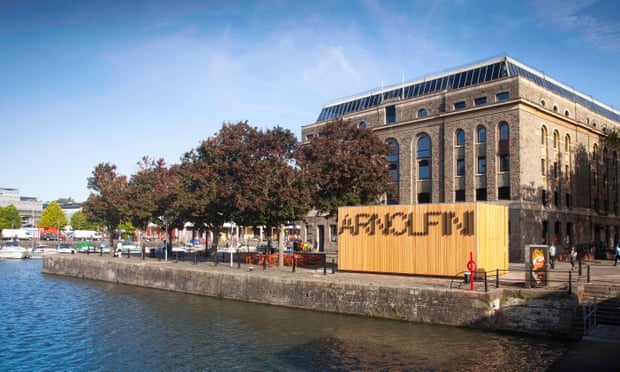
The Arnolfini.


The Arnolfini. Photograph: PR Image

I’m part of the generation that knew the Arnolfini in the 80s. Bristol had this incredible energy and a lot of it crystalised around the gallery. If you were in the city to watch bands or see shows then the Arnolfini was a Friday night watering hole, a refuge and the place you had to be to find out what was going on. It seemed tied up with the excitement of bands such the Pop Group, Rip, Rig + Panic and then Massive Attack. Almost inevitably, as the 90s went into the 00s, there was a sense that the venue had slightly lost that centrality; these things always move on. Which makes it all the more pleasing, and impressive, that in recent years the Arnolfini has again found its voice and place, and a new distinctiveness that chimes with people.

It has done this by keeping true to its roots – it was founded in 1961 – as one of the earliest interdisciplinary contemporary arts venues, presenting programmes of performance, dance, film and music alongside visual art. Last year it pulled off a significant coup in staging a large exhibition by Richard Long. It was a fine illustration of the level of its ambition as well as its capacity to successfully carry off big projects. The director, Kate Brindley, approached me about hosting the UK premiere of my video installation Vertigo Sea. That she came to me before the work had received any press, in effect before any critical consensus had gathered around it, impressed me. She really stuck her neck out and that sort of decisiveness and commitment, just being a bit ahead of things, has marked the Arnolfini out in recent years. The gallery then followed through in terms of execution and I was blown away by the quality of the installation. It is the best I’ve seen, and that includes the Venice Bienalle.

When the gallery moved in 1975 to its present home, a converted warehouse in the docks area, it was a trailblazer for a movement that has become the norm for cultural transformations of formerly rundown inner city areas. Its example was followed by Tate Liverpool, the Sage Gateshead and many other institutions. Back then the Arnolfini felt ahead of its time, so it is wonderful to see that it has found that role again; a home for ideas and work before they become orthodoxies.

--

The winner of the ArtFund prize for Museum of the Year 2016 will be announced at the Natural History Museum, London SW7, on 6 July. artfund.org.

--
--

A picture, by myself:


February 2015


Pop after Prince


Intéressantes questions soulevées par Slate.fr :


Le vertige d’une disparition est un poison quand il oriente vers le passéisme. Que dira-t-on quand il nous faudra enterrer Bob Dylan, Madonna, Stevie Wonder, Bruce Springsteen, Mick Jagger, Paul McCartney, Bono ou Patti Smith : la même chose que pour Prince et Jackson en encore plus alarmiste? Que dira-t-on, bien plus tard de Björk, Thom Yorke, des Daft Punk, des Massive Attack, de Bono? Que c’était vraiment, mais alors vraiment et définitivement mieux avant?

Lien :
http://www.slate.fr/story/117437/prince-bowie-jackson-mieux-avant


Le buzzPrince est mort, vive la pop


Deux des plus grands passeurs de son de l’histoire de la pop ont disparu à espaces rapprochés en 2016, David Bowie puis Prince. La mort du Kid de Mineapolis intervient aussi «peu» après celle de Michael Jackson. Cette proximité-là se discute davantage. Elle doit beaucoup à l’émotion collective, mais elle se défend: les superstars masculines des années 1980 auront abandonné, à «même pas» six ans de différence, des millions de fans ébahis, avant l’âge officiel de la retraite, qui n’existe pas pour ce beau métier, comme Paul McCartney continue de le montrer sur toutes les scènes du monde à 73 ans.
Pour saisir la pertinence du rapprochement entre les deux stars, il faut se souvenir que la diffusion du documentaire Doctor Prince and Mister Jackson, sur la rivalité entre les deux hommes, conçu de leur vivant, avait été avancée suite au décès de Jackson en 2009. L’heure de le visionner est définitivement atteinte.
Quel qu’ait pu être le lien intime tissé avec leur musique, le même mécanisme se met à l’œuvre quand des personnages aussi importants disparaissent. D’un coup, on ne les regarde plus comment avant, et surtout on les écoute plus comme avant. De leur vivant, nous avions des superstars respectées mais toujours évaluées dans tout ce qu’elles entreprenaient, qu’il s’agisse de musique, d’image marketing ou de comportements publics. La mort consommée, ne restent que les bons souvenirs et l’envie de plonger dans une œuvre désormais aboutie. Le tout dicté par un sentiment de proximité sans précédent. «Le public se réjouit de la mort d’une pop star, a osé Richard Mèmeteau, (auteur de Pop culture: Réflexions sur les industries du rêve et l’invention des identités), cette semaine sur France Culture. La pop star, cet ego gonflé par la célébrité, doit redevenir ce qu’elle était, c’est-à-dire un homme.»
Prenons l’exemple du solo de guitare délivré par Prince en 2004 sur le «While My Guitar Gently Weeps» en hommage à George Harrison, pour l’entrée de l’ex-Beatle au Hall of Fame. À l’époque, j’avais conçu une forme de tristesse à voir Prince conduire ce solo vers une démonstration en mode «tripoteur de manche»(pour rester poli). Au-delà même de l’appréciation esthétique que l’on peut exprimer pour ce type de performance très technique (je fais partie des sceptiques), elle démontrait une incompréhension du propos tenu par Harrison avec cette chanson. Gently weeps, «pleurer doucement», ou «sangloter délicatement», n’est pas le déchaînement démonstratif de Prince. Au lendemain de la disparition de l’artiste, d’autres sensations dominent en visionnant la séquence: la prestance invraisemblable du showman, le niveau du musicien virtuose, la certitude que ce moment restera plutôt pour de bonnes raisons.
Avec la mort des grands artistes, l’idée fait son chemin que l’humanité vient de perdre des personnes irremplaçables (c’est exact) et avec eux, une certaine idée de la capacité de la musique à parler du monde. Là, le terrain devient glissant, car la musique et la pop restent au-dessus des personnes qui en ont assumé le leadership. Francis Dordor a conclu son superbe article-hommage dans Les Inrocks sur la «majesté» qui manque à notre époque, comparée à celle du zenith Prince. D’autres –sur les réseaux sociaux notamment - ont communiqué sur le contraste saisissant entre les années 1980 florissantes et notre XXIesiècle présumé plus fade. C’est le versant le plus discutable de ces deuils en mondovision.
Le vertige d’une disparition est un poison quand il oriente vers le passéisme. Que dira-t-on quand il nous faudra enterrer Bob Dylan, Madonna, Stevie Wonder, Bruce Springsteen, Mick Jagger, Paul McCartney, Bono ou Patti Smith: la même chose que pour Prince et Jackson en encore plus alarmiste? Que dira-t-on, bien plus tard de Björk, Thom Yorke, des Daft Punk, des Massive Attack, de Bono? Que c’était vraiment, mais alors vraiment et définitivement mieux avant?
Dans les années 2010, les disques ne se vendent plus au supermarché, MTV et le Top 50 ont égaré leur influence, les magazines contribuent moins à la notoriété et au mystère qui caractérise les stars du rock. Jackson et Prince ont su nourrir cette industrie de leur talent visionnaire. Cela ne signifie pas que la génération YouTube, Spotify et des show encore plus élaborés doivent rougir du renouvellement qu’ils incarnent au détriment de ces superstars qui, autant être clair, avaient clairement décroché.
Si aucune figure n’écrase l’époque comme eux à la leur, c’est en bonne partie parce que le choix entre les propositions artistiques est sans égal aujourd’hui. Et encore: reste à prouver que nous avons le recul nécessaire pour être certain que l’impact de Rihanna, Pharell Williams, Kanye West, Beyoncé ou Eminem sur les consommateurs de musique d’aujourd’hui est inférieur à celui de Prince et de Michael Jackson.
La mort par assassinat de John Lennon, le 8 décembre 1980, reste probablement à ce jour la secousse la plus violente ressentie par la planète suite à la disparition soudaine d’une pop star. Tout concordait: l’absurdité de l’acte (meurtre sans mobile sérieux), la jeunesse de la star (40 ans), son influence planétaire («Imagine», la campagne War is Over), son impact sur le cours de l’histoire de la musique (on parle du fondateur des Beatles) et le lieu de la disparition (New York, capitale mondiale des médias de masse). Des millions de personnes observèrent en simultané dix minutes de silence à différents endroits de la planète; plus de 200.000 à New-York.
La mort de Lennon s’est produite un an après la disparition d’Elvis Presley, hors-jeu depuis très longtemps, mais figure tutélaire d’un genre –le rock– qui avait bouleversé le siècle musical comme seuls les Beatles purent le faire ensuite.
La tristesse était déjà une émotion légitime et le passéisme une tentation à fuir. En 1980, Michael Jackson et Prince débutaient à peine leur travail de redéfinition de la pop. Ils avaient 22 ans.
--

Music from Sahel


Digging into archives... TV report on music in Niger and its neighbours, April 2013, three years ago already!

Music, politics, borders, people, genius, eye-opening art and cultures of hope, still my favourite topics today.


Link:
https://www.youtube.com/watch?v=keefhud8quw&feature=youtu.be 


Iraq coming to London


Looking forward and see you there.


--

British Journal of Photography:


Iraqi photographers to exhibit their work at London art fair for first time

The Other Life © Akram Assam
Main image The Other Life © Akram Assam. All images © the artist, courtesy the Ruya Foundation
The Ruya Foundation is to bring 12 Iraqi artists, many of them working in photography as the only medium accessible, to London - the first opportunity for many of them to engage with the international art market.
A group of contemporary Iraqi photographers, most of whom live and work in Iraq, are to have their work exhibited and made available for acquisition at Art16 art fair in London.
Night Workers © Ayman Al Amiri
The Ruya Foundation, a non-profit organisation founded to create international opportunities for, and foster recognition of, Iraqi contemporary artists, have partnered with Art16, marking the first occasion the 12 artists repped by the foundation can present their work at an international art fair, despite the foundation working with many of these artists for a number of years.
They will be joined by artists such as Jamal Penjweny, born 1981, who exhibited in the Iraq Pavilion at the 55th Venice Biennale 2013, and Nadine Hattom, born 1980, whose work is on display as part of ‘Parallel Projects’ at the sixth edition of the Marrakech Biennale.
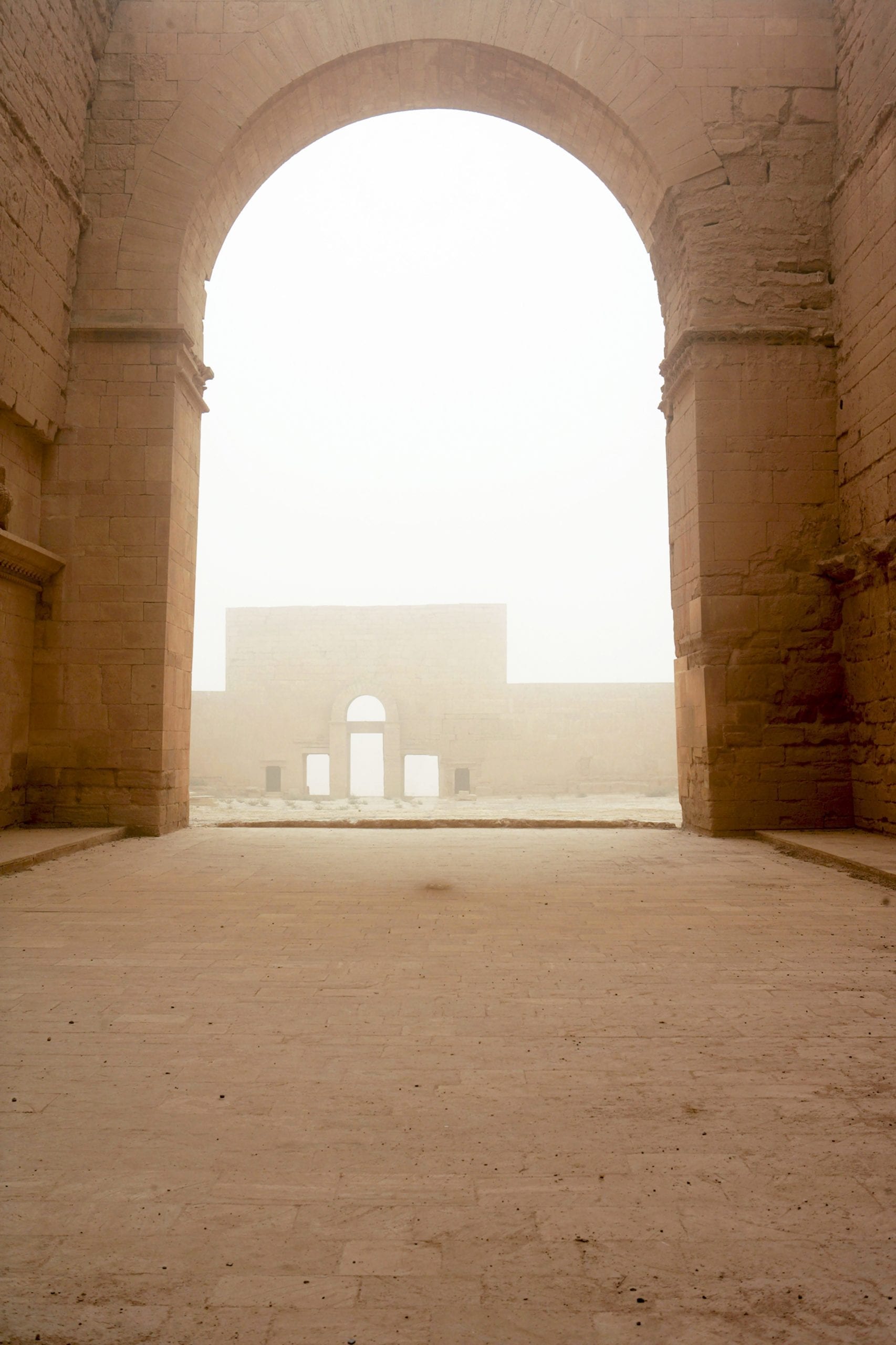
 A U.S. Marine with a ground combat element assigned to Delta Company, 2nd Light Armored Reconnaissance Battalion, Task Force Mechanized, Multi-National Force ñ West walks through the Hatra Ruins in the Jazeerah Desert in Iraq on July 20, 2008. The task force is conducting disruption operations in the area to deny the enemy sanctuary and prevent foreign fighters from accessing the area. DoD photo by Lance Cpl. Albert F. Hunt, U.S. Marine Corps. (Released)

A U.S. Marine with a ground combat element assigned to Delta Company, 2nd Light Armored Reconnaissance Battalion, Task Force Mechanized, Multi-National Force ñ West walks through the Hatra Ruins in the Jazeerah Desert in Iraq on July 20, 2008. The task force is conducting disruption operations in the area to deny the enemy sanctuary and prevent foreign fighters from accessing the area. DoD photo by Lance Cpl. Albert F. Hunt, U.S. Marine Corps. (Released) © Nadine Hattom
The particular emphasis on photography in the presentation reflects how accessible the medium is for artists living in Iraq.
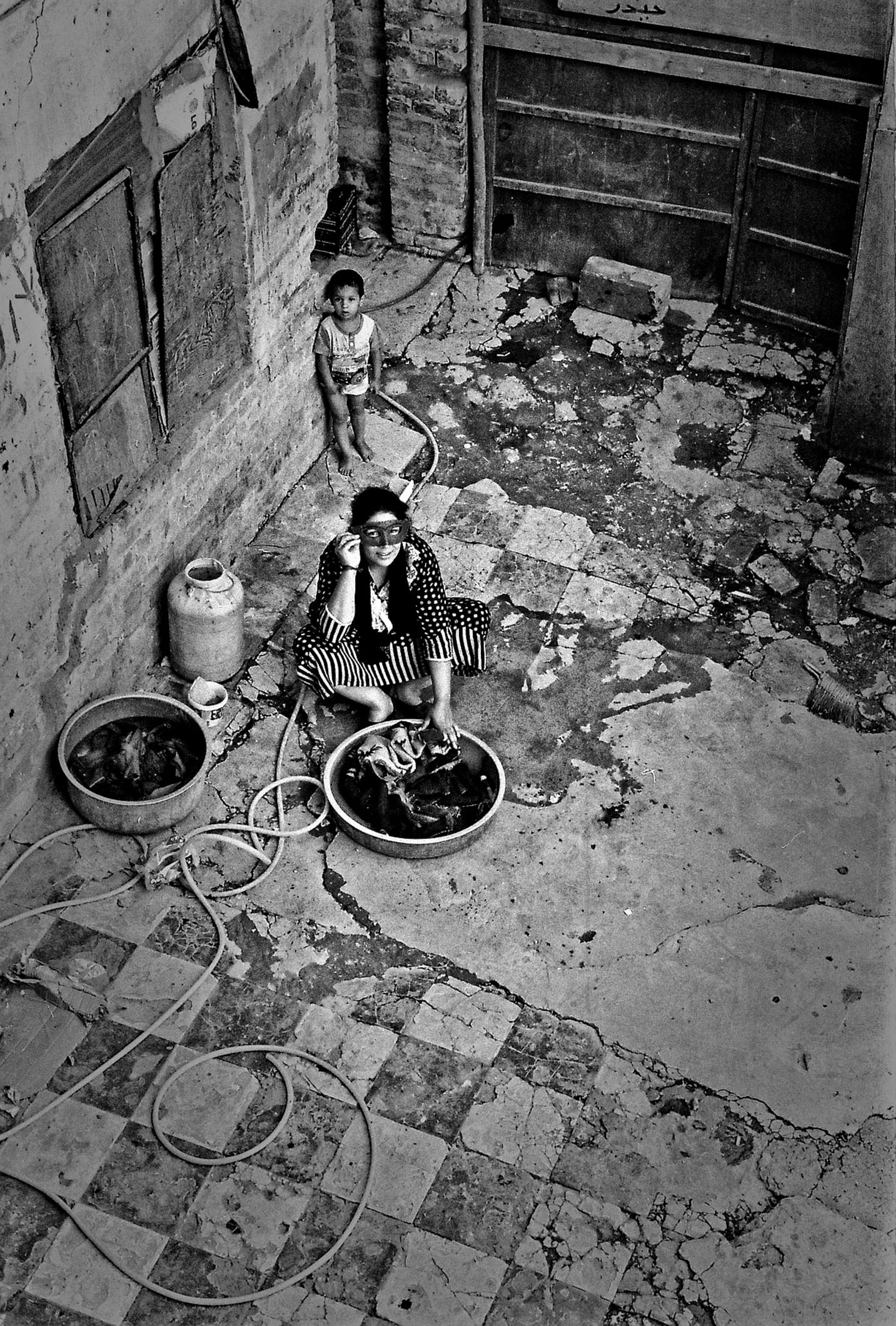
Hattom and Penjweny are joined by Ayman Al Amiri, a Baghdad-based photographer who takes black-and-white photographs of street life in the city.
Works from his series ‘Baghdad’s street workers’ (2013–2014) will be on display, which feature frank yet surprisingly playful depictions of prostitutes in domestic settings in Baghdad.
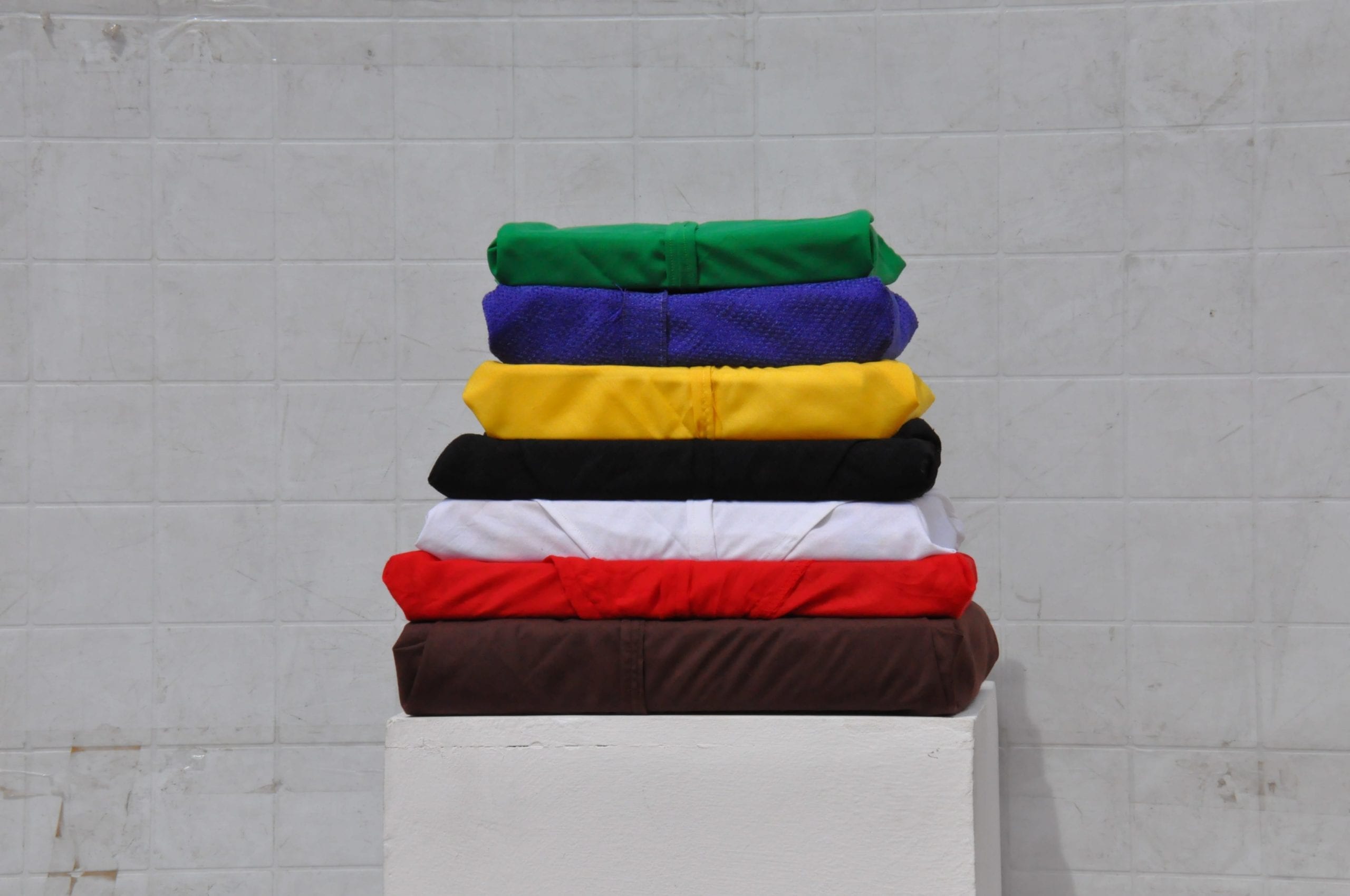
Read © Sakar Abdullah Sleman
Also on display is Julie Adnan, whose multimedia project You May Go (2010–) includes photographic portraits of subjects holding up touristic images of countries they wish to visit or migrate to, in direct contrast to the landscape of Iraq that the subjects inhabit.
Ruya’s partnership with Art16 follows its launch of the first publicly accessible online database of Iraqi contemporary artists, which includes over 300 artist profiles. The majority of the artists on display at Art16 can also be explored on the database.
“At a very essential level, this partnership grants commercial opportunities to artists who are otherwise disenfranchised from the art market,” Ruya said in a statement.
Tamara Chalabi, Chair and Co-Founder of the Ruya Foundation said: “We are delighted to be partnering with Art16 to give contemporary Iraqi artists the opportunity to exhibit on an international platform. This is particularly vital at a time when the cultural infrastructure of Iraq is increasingly under threat.”
Ruya Foundation will exhibit at Art16, Olympia, London from 19 to 22 May 2016
--


Art16 returns to Olympia London from 20 – 22 May 2016, with the Collectors' Preview and First Night on Thursday 19 May. Since our inaugural edition in 2013, Art16 has become a highlight of London’s cultural calendar, kicking off the summer season with a compelling edit of international artists and galleries from more than 30 countries from around the globe.

The Fair will present over 1000 outstanding artworks from artists and galleries as far-flung as Senegal to South Korea, and Cuba to the Czech Republic, maintaining our unique commitment to showcasing exciting emerging talent alongside established contemporary artists.

Art16 unites art-lovers, collectors, gallerists and artists from around the globe, together with an engaging programme of free talks, expert-led tours and performances, and a highly anticipated revolving pop-up restaurant by Corbin & King, the duo behind The Wolseley and The Delaunay. Art16 is an unmissable occasion for art-loving Londoners and international collectors alike.

The 2015 fair attracted over 24,000 visitors and featured over 150 galleries from more than 40 countries around the world. Our commitment to showcasing galleries from around the world puts us in a distinct position within the market and the fair has affirmed its place on the international art fair calendar.