07/06/2019

About human rights in Malaysia


I wrote this draft for a documentary project, as the result of two weeks of work I did for a project, but the filmmaker disappeared...

So let's at least share it with the world:


Human rights in Malaysia: Progress has been made, but the government has a lot to do to keep its promises

-

By Melissa Chemam

-


After a shift in power on 9 May 2018, the new Malaysian government had promised in to fight to encourage the freedom of the press and to protect women’s rights and human rights in general.

Prime Minister Mahathir Mohamad came to office thanks to a campaign promising roll back restrictions on free speech. Malaysians voted in May to oust Prime Minister Najib Razak and his governing party for the first time in the country’s history. But the progress has been slow…

In their latest report, published on 6 May 2019, two NGOs working on press freedom have found out that “a year after the electoral victory of the Pakatan Harapan coalition, authorities have failed to reform repressive legislation or expand civic space, and continue to restrict fundamental freedoms and silence dissent.”

Despite some encouraging early steps by Malaysia’s new political leaders, broader reform processes to protect human rights have ground to a halt. 

“In August 2018,” they wrote in a press release, “Malaysia’s lower house of Parliament passed a bill—later rejected by the Senate—to repeal the Anti-Fake News Act, a repressive law adopted by the previous government in the run-up to elections.” Authorities also took steps towards “ending criminal proceedings against human rights defenders, political activists and critics of the former regime.” 

“The Pakatan Harapan government came to power on the back of promises to reform repressive laws and open up public spaces that have long been restricted by the previous regime. Instead, authorities have used the same old laws to silence critics, stifle unpopular opinions and control public discourse. These retrogressive tactics blemish the supposed reformist credentials of Malaysia’s new leaders, and impede the democratic transition that they promised to bring about,” said their researcher from their Malaysia Programme Officer.

They still welcome steps to establish a self-governing media council, and to end political oppression.

Among those benefiting from dropped charges or acquittals were:
-human rights lawyers, 
-a socialist Party activist, 
-a political cartoonist, 
- a former Batu MP, 
-a former Jelutong MP, 
-and many political protesters. 

One week after the election, former opposition leader Anwar Ibrahim was also released from prison.

-

Blocking progress

However, the NGOs noted, “after one year in power, the Pakatan Harapan government has made little progress on many of the promises made in its manifesto, and has backtracked on other commitments made since taking power.” 

Notably, the government reversed course on its decisions to ratify the International Convention on the Elimination of All Forms of Racial Discrimination (ICERD) and Rome Statute of the International Criminal Court after coming under pressure from conservative groups. 

“The government has also failed to take concrete steps towards the ratification of other human rights treaties, including the International Covenant on Civil and Political Rights.” 

NGOs reviewed the government’s record during its first year in office and revealed continued restrictions on the right to peaceful assembly. Those involved in peaceful protests, including students, women’s rights activists and indigenous activists have been arbitrarily detained, threatened or investigated, while the Peaceful Assembly Act has yet to be amended in line with international law and standards. Further, the government has failed to follow through on manifesto promises to create an enabling environment for civil society and to review laws and policies that restrict the registration and operations of NGOs.

-

Women’s rights: more could be done for equality

Talking to a Women’s organisation, I also found out that some progress have been made in terms of policy regarding women’s rights, notably to get stalking criminalised. But women in Malaysia are still paid less and have less access to certain professions. It’s quite difficult socially for Muslim women to get out without a headscarf but in the hospitality business, managers often ask of them to work without any veil. 

The rights of LGBTs and trans-women are in the contrary not protected at all. 

On International Women’s Day for instance, in March 2019, activists who marched to support their rights were harassed, arrested or even condemned. And the Sedition Act was once again deployed to investigate the organizers of an International Women’s Day march that included participants from LGBTI groups.

In Malaysia in general, the conservative opposition has built up a backlash against LGBT people and to get rid of the international convention against discriminations. 

-

Other examples of human rights violation:

-In January 2019, three individuals were arrested and investigated for allegedly insulting the former King Sultan Muhammad V following his resignation.”

-Between January and April 2019, the authorities continued to use the Sedition Act against individuals who made comments on social media allegedly insulting the Malaysia royalty and for alleged racially inflammatory remarks

-On 10 January 2019 the de facto Law Minister announced that the authorities were considering new legislation or legal amendments to provide stronger punishments for those insulting the Malaysian royalty.

-In general, progress also needs to be made for the rights of ethnic minorities. 

-Investigating the deforestation of Sarawak, in Borneo, and the dispossession of its people, some journalistsfollowed a trail of corruption in 2018 that led her to the heart of Malaysian politics and to Prime Minister Najib Razak himself. There practices are still in place today.


06/06/2019

How green and efficient is a local currency? Reporting from Bristol


My radio piece on the Bristol Pound for DW's Living Planet - finally on air! 

I've been working on this since February  

Thanks to St Werburgh City Farm and Grow Bristol for our interviews.


ENVIRONMENT

Living Planet: How green and efficient is a local currency?

The Bristol Pound, launched back in 2012, has become the UK's largest local currency. It was thought up by members of the local Green Party, worried about the proliferation of chain stores in their city. The idea was to promote community life and small, independent, green businesses. So how does it work and how efficient is it? 

To listen:

-
To read:
Launched in 2012, the Bristol Pound (£B) is the UK’s largest local currency. Imagined by members of the local Green Party, worried about the proliferation of chain stores in their city, its goal was to promote community life and small, independent, green businesses. 
So how does it work and how efficient is it?
Melissa Chemam reports from Bristol.

--

St Werburgh, Bristol, a neighbourhood known for its city farm and independent shops. I’m talking with customers at Better Food, an organic store, discussing the utility of the local currency, the Bristol Pound, set up in 2012 to encourage local consumption.

Journalist: Do you use the Bristol Pound?
Man: No… I don’t.
Journalist: Never? You know what it’s for?
Man: Yeah, local businesses, but I’ve never looked into it.
Journalist: And you…?
Woman: Yes, I use it a lot, and where I work we use it as well, at the café on the city farm… 
Journalist: Why do you think it’s a good think?
Woman: “If you think about economics, you keep money in an area, it ends up increasing in its value, it’s circulating in one area. So to me it makes complete sense and it supports independent businesses”.

At the Farm, the Bristol pound is indeed a key tool.

Sarah Flint works at the Farm. Here local residents have come to grow organic vegetables, in small allotments, independently, since the 1970s. 

Sarah Flint, Training Manager at the Farm 

Sarah: “We grow vegetables, which we then sell to a couple of local outlets, the café here and also the restaurant down the road. It’s not a huge amount but it means there’s a production going on here.”

Journalist: “Wow, so what they grow here with you during the training, you can sell it directly…”

Sarah: “Absolutely…”

Journalist: “to people living in the neighbourhood.”

Sarah: “Yes, just down the road we’ve got a community garden. And the other things we have all through the farm are of course the animals. We can see the chicken, we collect the eggs and you can buy them from our office. In the paddock, usually we have the goats and sheep in. And this is also where we have a festival every year to fundraise to help us paying for the outgoing for the animals”.

Here, the Bristol Pound is used every day, to sell to products directly, as well as in the café. 

Sarah: “Personally I use the Bristol Pound and I used to work for another organisation where we had a lot of other services to sell and it was used extensively there. It’s one of those things that’s growing and growing and it certainly has made people think ‘I’ve got this money, I’m going to spend locally’. And it’s so important to get that locality idea. People now understand they have that choice, which I don’t think they understood before.”

Journalist: “The production here is organic and self-conscious about pollution, about what is produced, and about the quality…”

Sarah: “Yes, absolutely. It’s that thing about people already out there wanting to grow vegetables, and let’s encourage them, make it easy for them, otherwise they will give up.”

Leaving the farm, I’ve walked on Gloucester Road, one of the UK’s longest streets of independent shops. Most of them accept the Bristol Pound. But many people tell me they don’t use it… 

Carlotta and Fatima, local residents:

-“I’m aware of it but I’ve never used it…”
-‘It’s something I thought about but sometimes you’re busy with your life, so you don’t do it.”
-“Also you have to think about where you going to find it, so I think that’s why people are not using it that much.”

Other customers are more aware of the goal of the currency, like Laura, who comes every day to Café Kino, a vegan restaurant on Stokes Croft.

Laura, regular customer at Café Kino:

“I use the Bristol Pound because I believe in money as a tool and not an end in its own right. And I buy locally anyway. It keeps the money generated in the city inside the city, rather that to see it bolster to multinationals…”

The goal of the Bristol Pound is to avoid importing what doesn’t need to come from far away. It can be used in cash, online on the websites of hundreds of local independent businesses in Bristol, in the transports, in restaurants, or with your mobile phone with a text payment.
Some places use it daily like The Canteen, where I met with Ciaran Murphy, chief executive at the Bristol Pound…

Ciaran Murphy: 

“One of the important things to remember about creating a green society is how economic structures work. And so you have to change the structures if you want to change people’s behaviour. And one of the main things that affect people’s behaviour is money and the way it’s spent, obviously. For example, if you want to localise supply of food more, or other products, rather than using energy to transport them from all over the world, then you need to find ways to making that happen and you need a systemic intervention, which works through the economy, across different sectors. And that’s one of the reason the Bristol Pound was born.”

In the same building, I also met with Dermot O’Regan, the CEO of Grow Bristol, which works in urban ultra-local farming, in containers and small spaces. He values the Bristol Pound for the ideas it helps spreading.

Dermot O’Regan, Grow Bristol:

“We were registered with the Bristol Pound from the beginning, in 2016. Some of our customers used the Bristol Pound, some didn’t because they didn’t use it as much. But what we found the most beneficial for us was that promotion of somand and local businesses and buying local. So it’s very good at producing a guide every year where you can use the Bristol Pounds, and they featured us in some of their blogs. So I think, as powerful as the currency is, even where it’s not necessarily used so much, as in our business – for example we would have to buy our seeds from a couple of companies outside Bristol that wouldn’t take the Bristol Pound, however the strength of it for us has been the network for local businesses and promoting local business. I think it’s very useful in that sense as well.”

The Local Pound helped Bristol become European Green Capital, in 2015.A few other cities in the world have their own local currency like Baltimore, in the USA. Now others in the UK, are putting in place their own like Glasgow and Liverpool. 

Melissa Chemam, Bristol, DW.

03/06/2019

Bristol, end of May 2019, reporting on music venues


Hello readers,
how are you?

I'm in Bristol again to write about three different issues, before my new event with LifeTrack on 4 July.

Here's a series of illustrations of music venues in the City, about to close, looking for investors, or opening now/soon, to begin with, more soon.

-

Stokes Croft, under massive changes:


Being The Blue Mountain and Lakota, these graffiti all pay homage to the city's musical history:


Nightclub Lakota is being developed by nightclub owners:


Corner of Stokes Croft and City Road:


-


Change of scenario, City Centre, near the Harbourside, a new venue just opened:


Artwork by Inkie:


First band playing for the opening: Laid Blak


My video here of the opening here:


And special guests... from Inkie to...

Legends Peter D. Rose, from the band/collective Smith & Mighty, and Mushroom, arriving later:


-

And on Saturday, the legendary pub, 
where reggae boomed in Bristol, 
reopened in Montpelier: 
The Star and Garter


01/06/2019

BRISTOL PROTESTS TRUMP'S VISIT


The US president Donald Trump is in the UK for a state visit this Monday (3 June 2019). 
Here in Bristol, a demonstration to protest his coming starts today at 5pm.
 London will protest tomorrow...

And Bristol also protests here in its own way!!
News for Trump's visit...


 Political china ware produced to coincide with
President Donald Trump’s State Visit to the UK

Protest Ware from Stokes Croft China

Fine bone china memorabilia is traditionally used by the Establishment to celebrate its power.
We are all too accustomed to seeing commemorative Royal wedding mugs or plaques celebrating Royal events.

Turning convention on its head, radical political activists at the Peoples Republic of Stokes Croft in Bristol have produced a range of hard-hitting political china ware in resistance to the impending visit to the UK by Donald Trump.

Director Chris Chalkley states: “There is enormous opposition to the visit of this President to the UK. It is entirely appropriate to celebrate and commemorate the resistance to Donald Trump and all that he stands for, and to remind ourselves of the realities behind all the razzamatazz.  After all, this is a man who denies climate change, has characterised the majority of Mexicans as rapists, and thinks that it is perfectly ok for him to “grab ‘em (women) by the pussy.”

We are pleased to offer a “Dump Trump” 20cm Bone china plaque in a limited edition of 25pcs decorated in inimitable Stokes Croft China style, the platinum bling coming from salvaged print from the now-defunct Spode factory in Staffordshire.
Also on offer are three different bone china mugs, all decorated on our premises in Stokes Croft, Bristol.
Each piece delivers political comment in style.

Big thanks go to Kalle Lasn at Adbusters Magazine for allowing us to use the magnificent and wholly appropriate Trump image with the "Hitler" barcode moustache.
Only 100 of each mug will be made available.
All items are available for purchase online and at The Stokes Croft China Gallery, 35 Jamaica Street Bristol BS2 8JP  from Friday onwards


-

 EDITOR’S NOTES: Background:

The People’s Republic of Stokes Croft was founded in Bristol in 2007. It was deeply involved in the campaign to keep Tesco out of Stokes Croft in 2011. Tesco won their fight over the community, and riots ensued later that year.

The organisation has championed street art/graffiti, creating of Stokes Croft an outdoor gallery, and is responsible for the placement of the now infamous Bear statue in the centre of the city that Bristol City Council is determined to remove from the Bearpit.
PRSC is a social enterprise that receives no external funding, thus retaining political independence, yet has managed to create a significant organisation which works for community.

 PRSC is in the process of setting up a community land trust (Stokes Croft Land Trust) so that the building it works from will be owned by the local community in perpetuity.

 Stokes Croft China is the principal revenue earner for PRSC. The founder, Chris Chalkley worked for thirty years in the pottery industry.  When the majority of factories in Staffordshire were forced to close twenty years ago due to globalisation, Chris had the foresight to buy kilns and the whole back catalogue of ceramic print from the last independent decorating factory in Staffordshire.
Stokes Croft China has become renowned for its eclectic range of china ware, from the highly political to unique art pieces that are increasingly collectable.

 People’s Republic of Stokes Croft CIC 
17-25 Jamaica Street
Bristol

BS2 8JP


29/05/2019

Reporting on refugee rights


Hello everyone,

I don't write here very much at the moment... Because I'm working quite much, and asking myself a lot of questions about journalism, and also writing other types of pieces, for myself...

But I've been a journalist for 15 years now and nothing defines me more, even if I'm very aware that we're not defined by anything as superficial as a job, a title, a career. It's a process.

Anyway... Some news about what's coming:

I'm reporting on refugee rights in the UK, one of the topic the dearest to my heart, and I'm about to meet with refugees/asylum seekers, to prepare a series of articles/radio pieces ahead of World refugee day later in June.


Photos I took in Dadaab, Kenya, at the border of Somalia, 
one of the largest refugee camps in the world


I'm coming to Bristol to meet some charities, support groups, and people in general. 
And I will meet other people in London too the following week.


Get in touch if you have a story to share!
melissa.chemam01@bbc.co.uk

Thank you.

With gratitude,
melissa


27/05/2019

Bristol's music scene - 2019


Hello Bristolians, I'm coming to your city in two days to write about music venues.

How many have closed in the past few years, and the prospects of some welcome re-openings, as well as projects for new venues.

Photo by myself in April 2015 for Record Store Day: Rise record shop on Park Street, now closed


Places like The Blue Mountain might have to close...


Stokes Croft is particularly changing...


Please, share your thoughts and let's meet if you want to tell me more.

Many thanks,

Melissa 


26/05/2019

Trump/Johnson Kiss


Bristol artist FLX painted this mural 3 years ago in Stokes Croft, Bristol, in May 2016, ahead of the Brexit referendum.

You can see how relevant it was!!


25/05/2019

Young Karl Marx 2018/19


Last year in May, I was invited to this event at the British Library:

Karl Marx Imagined, and The Young Karl Marx screening

 - 


Re-imagining Marx in theatre, literature and film
Karl Marx has had huge influence on world history, but who was the man behind the famous bearded image? Where did his inspiration and his relentless intellectual energy come from? In a conversation chaired by Rachel Holmes, Clive Coleman and Richard Bean, writers of West End hit Young Marx, film maker and writer Jason Barker and Melissa Chemam from the team behind Raoul Peck’s film The Young Karl Marx get to grips with this enigmatic figure. Followed at by a rare UK screening of The Young Karl Marx
Jason Barker is author of the new bicentennial novel Marx Returns. He is writer-director of the 2011 German documentary Marx Reloaded, and editor of the Karl Marx bicentennial forum at the Los Angeles Review of Books. He teaches Marxism and literature at Kyung Hee University, Republic of Korea.  
Richard Bean, co-writer of Young Marx is among our most acclaimed playwrights. In 2011 Richard became the first writer to win the Evening Standard Award for Best Play for two plays, The Heretic and One Man, Two Guvnors. For the latter he also received the Critics' Circle Award for Best Play and Whatsonstage.com Award for Best New Comedy and the Outer Critics' Circle Award for Outstanding New Broadway Play.
Clive Coleman is a writer, broadcaster and also the BBC’s Legal Correspondent, a role he arrived at via a career as a barrister and Principal Lecturer in Law. As well as co-writing Young Marx his writing credits include Spitting Image, and legal sitcom Chambers.
Melissa Chemam is a French journalist and author who was lead researcher for Raoul Peck on The Young Karl Marx. She has worked for France 24, the BBC World Service and Radio France International and is the author of the book Massive Attack: Out of the Comfort Zone.
Rachel Holmes is the author of Eleanor Marx: A Life, (2014), serialised on BBC Radio 4 Book of the Week. She is also the author of The Hottentot Venus: The Life and Death of Saartjie Baartmanand The Secret Life of Dr James Barry, and co-editor of collections including I Call Myself A Feminist and Fifty Shades of Feminism.  Her next book, Sylvia Pankhurst: Natural Born Rebel, is published by Bloomsbury in 2018.
Followed at 16.00 by a rare UK screening of The Young Karl Marx (2016, 1 hr 58 mins)


-
The Young Karl Marx was released in UK Cinemas on 4 May 2018. 
An ICA CINEMA distribution project.

Film trailer:


-


23/05/2019

Reportage : Sur les partis anti-Brexit au Royaume-Uni


Reportage cette semaine dans 'Vu d'Allemagne', diffusé sur les ondes mardi, et en ligne depuis ce mercredi, veille de l'élection au UK:


La montée des partis anti-Brexit au Royaume-Uni

La Grundgesetz, la loi fondamentale allemande, a 70 ans cette semaine. Mais ce texte affirmant les valeurs fondamentales de la République allemande est de plus en plus sous pression. Les extrémistes de tous bords sont de plus en plus nombreux. Dans la seconde partie de ce magazine, rendez-vous au Royaume-Uni, où les partis contre le Brexit rencontrent parfois du succès.
-

Montée des partis anti-Brexit au Royaume-Uni
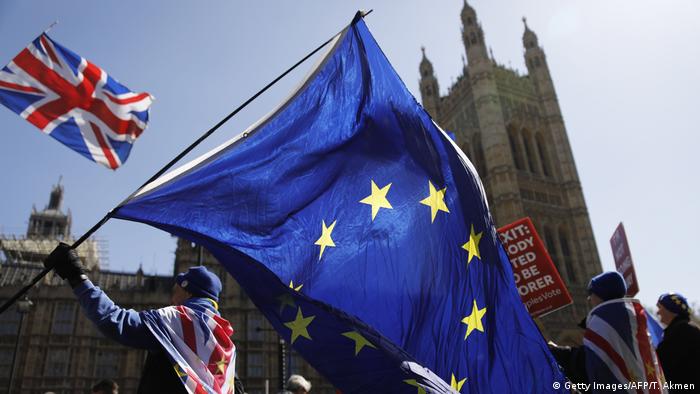
Symbolbild - Brexit und EU (Getty Images/AFP/T. Akmen)
Dans la seconde partie du magazine, Vu d'Allemagne prend le chemin du Royaume-Uni, où on vote aussi cette semaine pour les élections européennes. En effet, comme le Brexit n'a pas eu lieu, des députés européens vont être élus aussi dans le pays, et ils démissionneront dans quelques mois quand le Brexit sera acté. Une élection pour rien ou presque pourrait-on penser ... Et pourtant...
Aussi paradoxale que cela puisse paraître, jamais autant un scrutin européen n’a jamais autant été au cœur de la vie politique britannique. Les partis anti-Brexit connaissent même une forte poussée, déjà remarquée lors d'élections locales cette fois au début du mois. Reportage sur place de Mélissa Chemam à découvrir. 


10/05/2019

On youth and change


Young and already been through a major change in your life...?


I've started working on a new podcast series!! For BBC Radio 1 / 1Xtra, to be aired this summer before it's put on BBC Sounds.

We're looking for young people to share their story with us, about a major transformation in their life, that make them change deeply.


Swedish Climate activistGreta Thunberg in London, on 21 April 2019, 
for her speech on fighting climate change at the Extinction Rebellion stage


If you're between 16 and 25 years old, have been through a major change or made change happen yourself, and if you're willing to tell your story, do contact me  

I'll tell you more very soon!! 

Many Thanks, 
Melissa