09/03/2020

Mad Professor & 40 years of Ariwa


My interview with the "MAD MAN" for WhyNow!!


The man known as Mad Professor is celebrating 40 years of his record label, Ariwa, which has produced some of the best of British reggae and dub since 1980. 
Neil Fraser (the Professor’s real name) has produced and worked with the likes of Lee Scratch Perry, Horace Andy, Sade, the KLF and Massive Attack. He talks to us about four decades of musical history.
5 MINS  /  6 DAYS AGO


Words byMelissa Chemam 


Hello Neil, looking back at Ariwa’s story can make a lot of music producers look unproductive. How did it start for you, a young boy who left Guyana at 13 years old to join his dad in England? 
I always had a huge interest in electronics and in music. I was curious about how technical things worked: about the radio; the light bulbs....

(...)


More on WhyNow's website:

https://whynow.co.uk/read/mad-professor-on-his-four-decades-of-south-london-reggae-and-dub/


Subscribe here: https://whynow.co.uk


08/03/2020

Tricky - 'M'


New song, from new EP


Tricky - M


‘M' from Tricky's new EP '20,20' out now
Stream & download the EP here: https://FalseIdols.lnk.to/2020 Follow Tricky on Spotify: https://open.spotify.com/artist/6hhA8... Follow Tricky on Apple Music: https://itun.es/gb/6h- Follow Tricky online: Facebook: https://www.facebook.com/TrickyOfficial/ Twitter: https://twitter.com/KnowleWestboy Website: http://www.trickysite.com Instagram: https://www.instagram.com/trickyofficial


04/03/2020

Ep. 5 - Art For A Feminine/Masculine Reconciliation?


Arnolfini's writer in residence 

Ep. 5  - Can art be a place of feminine/masculine reconciliation?


As International Women’s Day looms, on 8 March, I wanted to share some thoughts about femininity, creativity, masculinity, misogyny and women’s rights…


-

By Melissa Chemam, Bristol, 4 March 2020 

-


After hosting Still I Rise, one of the most feminist exhibitions in the country, the Arnolfini gallery has welcomed two new contemporary female artists: Angelica Mesiti and Amak Mahmoodian – who are from places that have regularly hit the headlines these past few weeks: Australia and Iran.

Born into an Italian Australian family, Angelica is now living in Paris where she teaches at L’Ecole des Beaux Arts, the school of fine art. Her film, Assembly, represented Australia at the Venice Biennale in Italy last year, and was filmed in the Senate chambers of Australia and Italy, in Canberra and Rome.

Amak was born in Shiraz and studied photography in Tehran then came to pursue her research in Wales, earning a doctorate, before moving to Bristol to teach at the UWE. Her Zanjir exhibition retells her family’s story through the mirroring of another Iranian family, the one of the famous feminist princess Taj el-Saltaneh (1883-1936).

None of them is reducible to their place of birth however, having had a life marked by international paths, deepening their gaze as artists through travels and migration. Yes, they have a lot to share with us about two unordinary countries, which can represent two extreme polarised versions of our era: one new nation forged on colonialism and eradication of the past – resulting in the current incendiary crisis that took over the news – and the other one closed up on traditions and politically refusing the rules of modernity.

In these two cases however, the artists’ lives, stories and art show a feminine way of dealing with these environments, and a woman’s way of responding to these with understanding, love and a passion for life, instead of despair.


*

These past few months Bristol has indeed been a brilliant platform for women artists. 

In the autumn, Spike Island exhibited the work of Turkish-born, Sweden-based artist Meriç Algün, Day Craving Night, about separation, love and how to overcome the rules of a world making money out of our state of separateness. This winter, the gallery is dedicating its space to Filipino-American visual artist Pacita Abad (1946-2004) and her work Life in the Margins, created in response to migration, displacement, and political protest, always promoting indigenous cultures and approaches to textiles. 

Early March, for International Women’s Day specifically, films like Frida, retelling the life of famous Mexican painter Frida Kahlo, and Portrait of a Lady on Fire were also on display. 

In the British art world in general, turning-point moments for women artists have just occurred, with for instance the opening of the Dora Maar exhibition at the Tate Modern in London – finally acknowledging publicly the talent of one of the key members of the Surrealist movement, almost a century after it began – but also the appointment of Sonia Boyce as the next artist to represent the UK at the Venice Biennial.

In the literary world, the 2019 prestigious Booker Prize for Fiction was awarded jointly to two women: Margaret Atwood, for The Testaments, and Bernardine Evaristo, for Girl, Woman, Other.

*

These are incredible and rare achievements. And evidence of change.

They may seem like small events for people outside of the art world, yet it’s actually a real series of breakthroughs. But they’re not welcome by everyone. Every day I hear men complain about women monopolising the attention of these artistic spaces… Even though they know they have been almost invisible for decades and decades.

Even here, many readers might actually wonder: why such a need to emphasise women all the time? Aren’t we equals now? Women are represented in politics; and even the most famous climate activist is a 17-year-old girl. Well, it might seem like it but the reality of most women’s lives is not well represented in the biggest stories; these are by far not the majority. The art world is just the tip of a large iceberg-like shift. The rest of women’s reality is unfortunately pretty grim still, all around the world.

Just a few statistics and facts:

Women are still not paid equally to their male counterparts, even in the western world.

Women still are not present in equal numbers in business or politics.

And globally women’s education, health and the violence against them are way worse than that of men.

Just in France, a rapid increase in teenage girls working in prostitution has been recently noted as an alarming trend, with an estimated 6,000 to 10,000 young women selling their bodies across the country. Meanwhile, the French sport world has recently been rocked by a series of sex abuse scandals, after the world of cinema. 

In Syria, the ongoing refugee crisis has facilitated sex trafficking in Lebanon, where victims are often treated as criminals, as Al Jazeera reported in February 2020. 
  
In India, on 12 December 2019, the government passed a law that fast-tracked citizenship for non-Muslim refugees from Bangladesh, Afghanistan and Pakistan who moved to India before 2015, which essentially made it more difficult for Muslim refugees to claim citizenship. A law that is mostly and primarily affecting women, activists reported.

In Mexico, women are even “urged to disappear for a day” on Monday 9 March to protest against escalating gender-based attacks and murders. 

In the UK, domestic abuse is on the rise, and recent reports from charities have shown that “most women who flee domestic violence have nowhere to go,” as the Guardian wrote a few weeks ago. “Government figures show that in the year to June 2019, almost 24,000 people were made homeless in England directly because of domestic abuse.” In a column published on 23 February, the Observer editors asked “How much longer must we tolerate male brutality against women and children?” 

In Australia, the murder of Hannah Clarke, 31, and of her three young children, burned to death by her husband and their father, sparked a national outcry over domestic violence…   

*

So, as the arts and culture are often one step ahead of broader societal shifts, where changes are plotted, thought through and experimented with, an increased presence of women in visual art, the publishing world and cinema can only be good news.

In politics, business, but also in music and in the literary world, women are still struggling. I recently read Sammy Stein’s book Women in Jazz, which reveals how much this world has remained very misogynistic since the 1920s… 

Yet, I still read, hear and discuss every week with men who think that too much attention is given to women writers, artists, thinkers. “How many novels can you publish per year with the word ‘girl’ in the title?” one asked me a few days ago… 

However, to use a cliché, “since the dawn of time” women have been half of humanity… Why should they be 80% of nurses and midwives and only 20% of engineers and artists if it is not what they desire? Why should men be allowed to choose their destiny and not women? 

I personally believe feminism will never achieve its goals without men on board.

I also had the chance to meet a couple of men in the past two decades who have been of tremendous help and inspiration for my work and my own personal development. 

But unfortunately, in many workplaces, occasions and collaborations, other men I worked with have been cruelly disempowering, unfair, competitive, belittling and using. Despite my faith in some of them, or my dependency - most being my superiors, my bosses, editors in chief or publishers – I had to live through harsh moments of utter pain, manipulation and betrayal.

And that’s without counting the violence, insults, meanness and abuse inflicted by strangers...

Yet, I tried to move on, cut my losses, learn my lessons and forgive.

And as far as I’ve seen, no woman has ever protested to have rights they would refuse to men. Or in order to live in a world where all writers would be women, all of our Prime Ministers or all of the doctors… Never. It’s about having at least the choice and to be able to hope for equal opportunities. 

Hopefully, this message will one day come across peacefully and bring us together.

*

So can art be a place to help women and men to build a space for equality, acceptance, understanding, respect and reciprocity? Could the 2020s be a decade when the glory of women artists and writers will not make any men feel resentful and deprived of their right to dominate the ‘second sex’? The one that Simone de Beauvoir thoroughly explored in her writing? As women still are and most surely will remain half of humanity…

Just like the installations of Meriç Algün, Pacita Abad, Amak Mahmoodian and Angelica Mesiti invite us to do, I hope these words can contribute to extend a hand to the ‘other’ and offer some more room for togetherness. But a togetherness that include equality, respect, protection and fair collaboration.

And in the end, hopefully, men will find comfort in that reconciliation too.


Women In Jazz!


A lot going on these days, and a lot of writing!

Ahead of International Women's Day, one of my articles trying to pay homage to women's contributions in arts and music:


Sammy Stein
Author of 'Women In Jazz' Talks to
​ Melissa Chemam


Paulie Paul - editor of the Phacemag: "I was attracted to this book from the first email introducing it to us at Phacemag. I'd been wanting to publish more book articles, we get so swamped with music that books have been taking a back seat if they ever had a front seat! This book ticked the books and music boxes, but who could I get to review and interview the author? I've been trying to give the Phacemag interviews more depth if you've noticed, the idea to ask Melissa Chemam to do this one was immediate. Who better qualified to talk to an author on a music book than the author of a music book? Although both authors are much more. I was overjoyed when the plan came together and I hope you enjoy the following article as much as I did. Best pp x"

Introduction


Picture
From Sammy Stein, an author already familiar to many music readers, comes Women In Jazz. Written around interviews with over 40 women from all areas of jazz including stellar musicians, composers, photographers, radio hosts and more, this book will have you gripped from beginning to end.
In Sammy's inimitable way, the book tells the journeys of women in jazz right now.
Women In Jazz tells the stories of the women in their own, unchanged words. It  allows their voices to be heard and tackles head- on some issues which need to be discussed such as misogyny and there are some hilarious anecdotes, some poignant moments but above all a positivity from these women whose passion for music helps keeps it well  and truly alive.

​When Sammy Spoke To Melissa


Picture
There are obviously a countless number of books about the history of jazz music. Writing about women in the genre seems like a great way to take a different look at this amazing history. What took you to write about music in the first place, about jazz specifically, and how did that precise idea come to you?

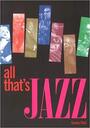
My two books have a section about the history of jazz simply to give context to the rest of the narrative. In my first book, All That’s Jazz(Tomahawk Press, 2017), the aim was to provide insights to the lives of jazz musicians and those supporting them like radio hosts, PR people, writers and so on.
Writing about jazz specifically has come about because I wrote a piece on the People Band in 2012, not expecting it to be published but London Jazz News took the chance and published it. The next thing I knew John Kelman called me from All About Jazz and it sort of went from there. Musicians liked the way I listened and wrote and I was helped and supported by incredible people including Peter Brotzmann, Mats Gustafsson, Davey Payne and Paul Jolly – all musicians with experience and who understood that my aim was to engage more people in the music.
I have interviewed lots of musicians for my columns and radio shows and I co-hosted a series called ‘Ladies of Jazz’ for Jazzbites – the US jazz station – and it got such a huge positive response. Several women then said to me why not write about more women. I thought about it and approached some female performers and was amazed at how they responded. The idea took flight and the book gradually came about.   

You start the book by a statement on the misogynistic state of the jazz scene up until this day, did the women you interview really think it is worse than in any music genre, like rock and metal for instance?

I was surprised at this too and the answer is yes. Many of them of course play genres apart from jazz but it seems that jazz remains stubbornly misogynistic. But there are also changes glimmering tantalisingly on the horizon and getting closer.

Your first chapter starts with reminding us if how jazz was born in New Orleans, Louisiana, out of colonial violence and slavery. A music that came to influence the whole of 20th music. Was it important to you to write about the social aspect of music? And to go to New Orleans? 

I think discussing the origins of jazz puts the music in context.
The trip to Louisiana came about because I spent a year in Ecuador, Bolivia, Peru and Chile and intended to return to the UK via America or Japan. One of the women I met, Carmela Rappazzo, who came over to play in the mini festival said “you are so close, why not return via New Orleans?” It seemed like too good a chance to miss and it was easy to re-route. NOLA proved so interesting and Carmela took me to 3 different gigs in one day so I learned a lot. Music was everywhere - I even came across an amazing singer who has played major venues across the world (Alicia Renee aka Blue Eyes), singing on a corner to a crowd of enthusiastic people. I asked her why and she simply said: “well, this is my home town.”

“Jazz is still a man’s world,” you wrote, and there are fewer women in jazz than in other genres. How would you characterise their impact then? Were they more socially aware than men? More courageous? More ambitious in terms of song writing?

I think men and women are probably equally ambitious, courageous and socially aware. It just depends on their circumstances, opportunities and encouragement.

Your book is divided in seven parts, with two main parts dedicated to women “of the past” in jazz history, the main influencers (from Bessie Smith and Billie Holiday to Aretha Franklin and Carla Bley), and “women in jazz today”. Was it easy to make this selection? Especially for the second part? 

“Women of the past” was difficult to decide who to include and it was impossible to include all the women who made a difference. There are well-known women but also some lesser-known ones who made inroads too. The second part was harder, partly because I was an unknown writer to many of them so although I wanted to include women from many cultures most of them are from the UK and America, or at least based there, because I had the contact with them. With my next book, which is in depth interviews with 21 women, I have women from 92 years and down in age and a far wider cultural diversity. This is partly because since writing the first book I have become more widely known with the Jazz Times notations, reviews and other things and the radio shows and interviews have really helped.

Were you pushed to focus mainly on American and British musicians or was it difficult to include other regions of the world? 

My contacts at the time were mainly from the US and UK although I do have women from Cuba and other countries in the book but I needed women to open up to me and so they needed to be women I had contact with at the time. 

"I think a book like this is different and it has been a journey and learning curve for me as well as readers."
Who were the main interviewees in your research and how did you select them?

The research was the longest part because it involved several trips to archive collections, the British Library reading rooms, past papers and books. I ended up with several boxes crammed with notes and deciding what to include was tricky. The main interviewees were women who I felt were making change happen today and include Terri Lyne Carrington, Jane Ira Bloom, Jane Bunnett, Barb Jungr, Tina May, Camille Thurman, Georgia Mancio, Claire Martin, Ruby Turner and many more, but I also included women working on radio shows, PR and for record labels (the total was well over 30) because I felt this gave a more rounded picture.
 
Obviously, to survive in such a milieu, women in jazz would have needed some benefactors. Who were the notable men in the jazz world who strongly allowed a space for these women to develop their skills and talent?

There were many in the past including John Hammond, Chick Webb and Billy Eckstine and today there are also men who actively support women including the 33Jazz records label, John Russell (host of Mopomoso events) and many others. I think many musicians today will give another good musician space regardless of gender.

The press was notably responsible for the closing doors to women’s legacy, and you address the issue at the centre of the book, as well as the “Me Too” movement. Did you feel like you were fixing some past mistakes in that field? 

Not really because I am not influential to that degree. When I wrote the book, there was no agenda. I simply wanted to give women a voice. The issues coming up in the book came from interviews and discussions we had. Mistakes of the past are there and can’t be fixed by someone like me but they are to be learned from.

How did the audiences respond to women in jazz music in comparison to the press, did you notice differences in different cities?

I do not have a huge number of cities to use as references personally but I have noticed different places react differently. In South America there were very few female musicians in jazz, but there were some in orchestras and in larger music ensembles like folk groups that I saw. London seems very supportive of female performers – or rather they choose for talent rather than gender which is as it should be, especially in the free jazz community. Women in the book speak of audiences being different in many places, largely as a reflection of culture. One leading female performer said that she leads the band but as soon as they get hungry, she is expected to provide sandwiches and drinks because that is her role too.

More than half of the book addresses practical issues and lists experiences from women in jazz today, which is completely unseen. Was it your plan from the beginning or did this come about while interviewing so many artists?

I wanted readers to get a better insight into what it was like to be a jazz musician and particularly a female performer. As I said before, I began with no agenda, it was simply a way of allowing women to speak to me, tell their stories and I liked how many of them gave real insights such as the 'day in the life' story which really sums up everything a musician has to do as well as perform for their art. One of the hardest decisions was how to put so much information I gained from all the women into an order. I did not want it to be a book of interviews. My publisher and I came up with the idea of a conversation. As explained in the early pages, it is all of us around an imagined table, discussing different issues. The women liked this way of formatting and it seems to have worked.
The practical issues came about organically because many of the women, like most musicians, are managing their PR, finances, arranging transport, accommodation and all the other issues that go with performing. It was great that many of them explained this side and that they wanted readers to get a clear idea of the additional, behind the scenes, work which goes on around performing. ​
It feels much more like a book about now, really, more than a history book, addressing issues in the industry and not only song writing, almost like a sociological study, was this one of your goal?

It was definitely intended to be a book about now although the historical elements give context. It was not meant to be a sociological study, although many see it as such. It has been chosen by university tutors as a study aid for students and this was a surprise to me but also lovely because it means that those coming into the music word will have first-hand accounts to refer to.

With all the interviews you conducted for the second part of the book, and pages of words of encouragement, would you say you now have a guide for women helping them to navigate this men’s world? 

Maybe the beginnings of one but really the book was designed to give readers an insight into the community which is jazz and I also wanted to point out the positive elements – which are many – of being a jazz musician or working in some way in the jazz industry. I like the fact that some of the women look forward to the day when gender will not be an issue, or anything else come to that. I don’t think it is possible to produce a guide for women because each one will have a different journey but I was privileged to have women with different characters come in on the book with me.

In the editing phase, did you have to change parts of the redaction?

Actually, the editing was done by my publisher (8th House) and the words are largely unchanged. This was a deliberate choice because I did not want a sterilised book, edited for a particular audience. I wanted the voice of each women, their character, to come across clearly, so I did not change much apart from the odd spelling mistake or language changes but even these were discussed so I could be sure the words I used were what the woman wanted to say and not become my words rather than theirs.

Anything you’d like to add?

I think a book like this is different and it has been a journey and learning curve for me as well as readers. The response has been incredible – far more, and more positive than I ever imagined but I never intended to be an advocate for women or set myself up as anything really; I am not knowledgeable enough for that by any means. I simply felt there were stories to be told. I have been honoured that the musicians have shared the book, one of them even made a YouTube video about it. The women seem to feel proud to be in it, which, for a writer, is amazing and humbling.
Writing the next book to follow this has been even more interesting because it is in-depth interviews with women from diverse backgrounds, ages, cultures. There are women who have been present for much of jazz’s history and some who are fairly new to it and their journeys are incredible. I would like to sincerely thank all the women who made the book possible because without them and their support it would never have come about and I would also like to thank the reviewers, radio shows and magazines who have given the book the thumbs up. It has been amazing and I am astounded at their generosity. I think many writers could have written the book but I am glad I was the one who did.
 
Many thanks, Sammy, all the very best.
--


03/03/2020

MiniBABE (Bristol Artist’s Book Event), Arnolfini, Bristol, UK


Some more news for the spring!!

FROM UWE BRISTOL BOOK ARTS NEWSLETTER
No. 131 March - mid-April 2020


MiniBABE, Arnolfini, Bristol, UK
Sat 2nd – Sunday 3rd May 2020


The next biennial Bristol Artist’s Book Event (BABE) will take place in spring 2021. 


However, in 2020, over the weekend of the 2nd - 3rd May, UWE Bristol Book Arts will be running a smaller programme of events in collaboration with the Centre for Fine Print Research at UWE, Making Books Research Centre at Bath Spa University, and a host of local artists, celebrating all aspects of artist’s book making.


Tom Sowden will lead a two-hour walking tour from the Arnolfini Gallery to Arnolfini’s archives on 2nd May at 1.30pm:

-A walk through the Harbourside exploring connections between artists’ bookmaking and writing to place,
-Starting at Arnolfini and finishing at Bristol Archives, with stop- offs on the way. 

Led by Tom Sowden, with contributions from Angie Butler, Melissa Chemam, Éilis Kirby, and the Arnolfini artists' book collection.


Stephen Fowler will also lead a watery themed MiniBABE family workshop on Saturday 2nd May 2020.

Further announcement expected here:


-

See you there!
melissa


Two new exhibitions on Bristol Street art this summer


 Edit on 3 April 2020:

The exhibition will now take place at M Shed in summer 2021 – exact dates will be announced soon.


-


Two of Bristol's institutions are currently organising an exhibition on street art: the RWA and M Shed.

According to my sources, they'll be centred on John Nation, a former youth club volunteer who tremendously helped the young graffiti writer in the early 1990s, after police operations really brought the graffiti scene to a low.

However, Bristol's street art scene bloomed from as early as 1983, when 3D, now known for his music in Massive Attack and powerful live performances, first painted on a wall in Hotwells, in the centre of the city...

3D went on to paint all over the city, and especially in St. Paul's, and like in this photo by Beezer (you might know who he is!), on Jamaica Street:

Photo by Beezer, 1985


More on this in my book: Massive Attack: Out Of The Comfort Zone
Paperback – 4 Mar 2019 by Melissa Chemam (Author)
Link:
Rough Trade: https://www.roughtrade.com/gb/melissa-chemam/massive-attack-out-of-the-comfort-zone
Waterstones: https://www.roughtrade.com/gb/melissa-chemam/massive-attack-out-of-the-comfort-zone
Amazon: https://www.amazon.co.uk/Massive-Attack-Out-Comfort-Zone/dp/1910089729

-


I assume most of the work exhibited will be photography though, as you cannot recreate graffiti from back in the day. We'll see soon.

Details about the exhibitions here:


VANGUARD
A new exhibition in partnership with Bristol Museums celebrating the instrumental role of Bristol in the development of modern British Street Art in response to the subcultural developments unique to this diverse and dynamic city.
Vanguard present a display of unseen and rare works by leading Bristolian and British street artists with a special focus on international artists beyond the UK spotlighting the growing relationship between Street Art and Sustainability as we re-contextualise the activity from its anarchist beginnings to the global phenomenon we know today.
Summer 2020 at Mshed Bristol
-
6 June—1 November 2020 
Vanguard 
Bristol Street Art: The evolution of a global movement

An extensive new exhibition celebrating the international street art movement will open at M Shed this summer.
Vanguard | Bristol Street Art celebrates Bristol’s instrumental role in the development of British street art, with rare work by leading Bristolian, British and Irish artists – including seminal works from the late 90’s.
Early work by creatives such as the earliest instigator of street art in Bristol, Massive Attack’s Robert Del Naja (3D), Banksy and Inkie through to deep fake viral sensation Bill Posters and Swoon will be exhibited, including works never seen before or not shown in public for over 20 years, and photos from American photographer Henry Chalfant.
The exhibition will explore the evolution of street art in response to Bristol’s unique identity and underground culture – beginning with its anarchist origins in the 80’s and 90’s to the global phenomenon that is street art today.
An additional focus on international artists beyond the UK will spotlight the growing relationship between art and sustainability.

-

RWA 

Streets Ahead: Bristol Street Art 2020 looks forward to the future of street art and the exciting new directions today’s artists are heading in.

Bristol has long been at the vibrant centre of the global street art scene but over the last decade the practice of graffiti art has evolved, encompassing new forms, media and concerns. 
Focusing on artists who are pushing the boundaries of street, graffiti and urban art, the exhibition will span installation, interactive art, sculpture, sound art, collage, light-based works and performance as well as fresh perspectives in mural painting.

Streets Ahead takes visitors on an unexpected journey from the street to the studio, and via many a detour, as wall paintings merge into canvases, shipping containers become stages, objects are found and lost, musical instruments are made from inflatables and lettering jumps from the walls invading three-dimensional space. Specially commissioned new collaborative works are being realised, reaching into the realms of tattooing, spoken word, film-making and activism.

The artists exhibited in Streets Ahead are not only dreaming up dynamic new aesthetics but are using their work to tackle universal crises; confronting urgent political, environmental and mental health issues. Street Art’s uniquely compelling nature can be instrumental in building bridges between faith communities, celebrating diversity and making bold social statements.

This exhibition will be a major reassessment of street art recognising the impact made beyond the city walls. It celebrates the vision, ambition and diversity of the art form that has grown out of Bristol’s inimitable scene.

Streets Ahead is curated by Felix Braun and Luke Palmer who originated Crimes of Passion, an exhibition that took place at the RWA 10 years ago. Since then the pair have remained embedded in the street art scene.

Artists include: 3Dom, Alex Lucas (Lucas Antics), Andy Council, Aspire, Bex Glover, Cheba, Duncan McKellar, Epok, Filthy Luker, Mohammed Ali, HazardOne, Richard Shipley, Sepr, Shab, Soker, Sophie Rae, Ziml, Zoe Billboard Gibbons and Zoe Power.

Graffiti Lab

Graffiti Lab is a space for visitors to participate in workshops, discussions, games, activities and crafts. Visitors will be invited to contribute to a collaborative large-scale wall piece created with ACERONE and FLX. The work will grow as audiences add to it over the course of the exhibition. FREE with your admission ticket.

Street Art is taking over the city this summer!

Streets Ahead is part of a citywide celebration of street art including Vanguard’ Bristol Street Art: The evolution of a global movement at MShed from 6 June–1 November 2020. This landmark show will celebrate Bristol’s instrumental role as the birthplace of modern British Street Art through a display of many unseen and rare works by leading British and international street artists.


02/03/2020

Bristol Transformed Festival 2020


This weekend, Bristol Transformed Festival returns, organised by Bristol Transformed.

I'll be chairing an event on International Women's Day 2020, Sunday 8 March, from 2pm, about journalism and women's role in making news more radical...

More on this soon and the programme here for now:
https://bristoltransformed.org/index


Bristol Transformed Festival 2020 is nearly upon us! Inspired by The World Transformed, we’re back for our second year of radical politics, art and culture. The full programme is now available on our website: www.BristolTransformed.org

Early bird tickets sold out in less than 24hrs, and now we’re on our final release of tickets. Make sure you don't miss out and get your tickets here - there is a sliding scale of prices. There is also a limited number of unwaged tickets made possible by people who bought solidarity tickets. 
The festival this year is happening in the shadow of the Christmas General Election, and therefore in the shadow of defeat for progressive forces in the UK. But spring is upon us, and now it’s time to rebuild not retreat. 

You can read a piece from one of our organisers in Tribune magazine on the importance of continuing the work we started with our inaugural 2019 festival.

We are proud to have Tribune magazine as official media partners this year, along with publishers RepeaterHaymarket Books and PlutoRed Pepper magazine, media platform Voice.Wales,  as well as Reel Politik and Trashfuture podcasts.

We're also partnering with thinks tanks Common Wealth and Autonomy who will be helping us bring alive the ideas we will need to continue to fuel our movement going forwards.
In what is becoming a tradition, socialist comedy podcast Trashfuture will be kicking off the festival with a live show on a Friday night (included in main ticket), link here.
This year we have crammed even more sessions into the programme, expanding over two full days covering Saturday and Sunday, and an incredible and diverse range of speakers. 

  Here are just a few:
 Lowkey- musician 
No Human Is Illegal panel
 Zarah Sultana - newly elected Labour MP for Coventry South
What Next for the Green New Deal and Economic Patriarchy panels 
 Sarah Jaffe - writer and forthcoming author  
Getting Real With Strategy and Creating Radical Media panels 
 James Meadway - economist
Getting Real With Strategy panel 
 Ben Smoke - Stanstead 15 activist and Huck Magazine 
No Human Is Illegal panel 
 Thangam Debboinaire - MP for Bristol West
Make All Drugs Legal? panel  
And Lola Olufemi, Angie Speaks, Jack Shenker, Huda Elmi, Chris Saltmarsh, Torr Robinson, Beth Redmond and almost 100 more!

As mentioned above you can buy your ticket here  We can't wait to see you!

Yours in Solidarity,
The Bristol Transformed Team