13/04/2020

Plea for Refugee Children


I published this article on Medium:

Plea for Refugee Children

Melissa Chemam
Apr 13 · 4 min read
The cruelty of the UK Home Office is beyond limit.


By Melissa Chemam
-
When the so-called “refugee crisis” started in Europe in 2015, I was in Paris, about to start a series of radio reportage in England. During mysix years as a reporter on African affairs, I visited a few refugee camps, notably Dadaab in Kenya at the border with Somalia, and covered the plight of, for instance, South Sudanese refugees in Nairobi. Almost half a million refugees live in Kenya; they have since the civil war started in Somalia in 1991, as well as other conflicts in the DR Congo, Burundi and Sudan.
So I was the first surprised to hear our French and British governments reject demands for asylum from a few thousands people, fleeing some of the worst conflicts in the world, in Syria, Iraq, Afghanistan…
A year later I was working for a charity and was monitoring the communication about refugee camps in Greece and Sicily, watching the rest of Europe letting them down. I edited texts and reports along photographs of camps like Moria, in Greece, and later travelled to Iraqi Kurdistan to interview medical staff helping internally displaced people who had fled the violence of ISIS.
The most shocking to me, who lived years between the UK and France, especially in London and Paris, was to see the UK refuse to accept any refugees, while the country could have been the most protective place for them to settle in. Some asylum seekers I met already had family in England, others spoke perfect English, they had contact there, could hope to find jobs, etc.
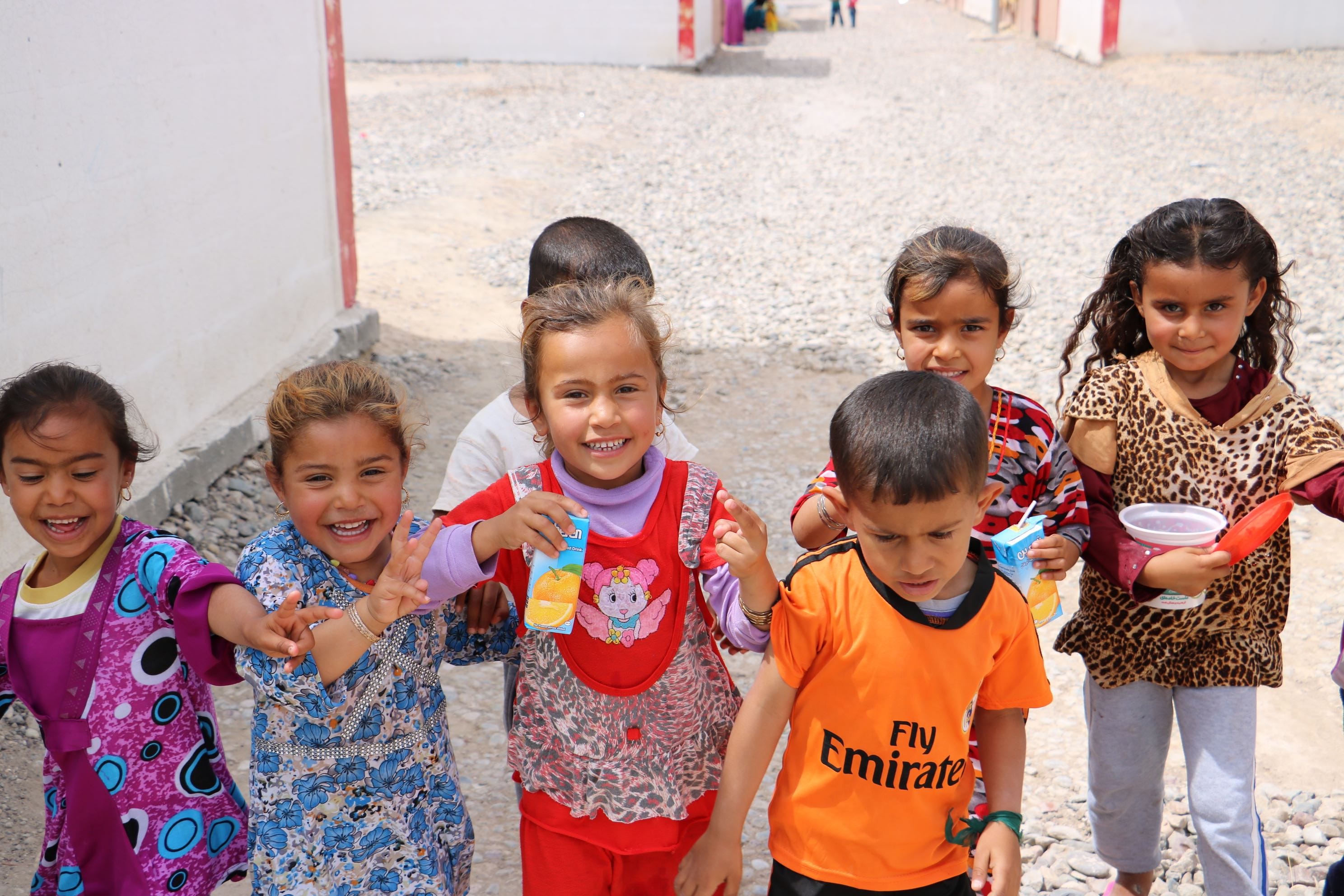
Iraqi children in a camp for internally displaced people near Erbil, Iraqi Kurdistan, Spring 2016 (photo: M. Chemam)
Soon after, I reported in Calais, at the Italian border and in some parts of Paris, where informal refugee camps had spread (see that one: https://www.ips-journal.eu/regions/europe/article/show/refugees-welcome-1887/ ), full of people hoping to make it to England…
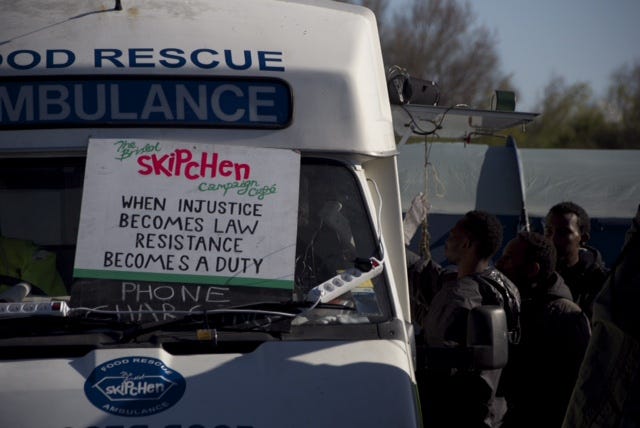
Skipchen Charity, working in Calais, 2015
I now live in England again and I’m here to witness that once more, and despite governing through the worse health crisis in the world since the Second World War, the UK Home Office has rejected the bid to help secure a temporary home for refugee children at risk in overwhelmed camps in Greece.
The charity Médecins Sans Frontières reported having written to the British Home Secretary Priti Patel on 13 March, asking her to “significantly increase” the number of child refugees transferred to the UK and specifically to “facilitate the urgent evacuation” of those with chronic and complex health conditions.
But the Home Secretary has refused these pleas to accept more unaccompanied children from the notoriously overcrowded refugee camps on the Greek islands, despite dire warnings of a coming humanitarian disaster.
Priti Patel did not respond herself and instead the Foreign Office replied on 31 March, to say that the UK “would continue to support the implementation of the EU-Turkey deal.” For the past four years, this deal has ensured that most refugees from the Middle East trying to reach Europe would remain on the Turkish soil, preventing asylum seekers from travelling further to our shores.
The executive director of MSF UK, Vickie Hawkins, described the response as “shameful”: “This cynical deal traps thousands of people — many of them children or deeply vulnerable — in squalid conditions on the Greek islands,” she said. “The UK government must stop sacrificing basic refugee rights for the sake of its migration agenda.”
According to the NGO, a number of EU countries including Germany, France, Luxembourg, Finland, Belgium and Bulgaria had volunteered to help transfer 2,000 children from the islands. But the UK government have refused to offer assistance. Aurélie Ponthieu, MSF’s team coordinator on forced migration, said: “The UK has so far not volunteered to help the children. These measures are symbolic; if these camps get the virus it’s going to be a disaster. Access to healthcare is very limited.”
Last week, the legal charity Safe Passage also sent the Home Office a list of unaccompanied children and vulnerable adult refugees who have been legally accepted for transfer to join family in the UK, but who are now trapped on the Greek islands because of the coronavirus travel chaos. Beth Gardiner-Smith, chief executive of Safe Passage International, said: “The government cannot now sit on its hands. We have a small window of opportunity to evacuate all those unaccompanied children and vulnerable adults who have families here in the UK waiting to receive them now at grave risk in overcrowded and unsanitary camps and settlements. We know children will be leaving on charter flights to the EU next week, why not to the UK too?” she asked.
The moral or economic justifications for these refusals are nowhere to be found. The Leave campaign notoriously used lies about the numbers of foreigners and refugees in Britain and potential invasion from Turkey to influence the Brexit referendum. And now the same politicians, in power, are transforming these lies into a basis for a foreign policy that is inhumane and unjustifiable.
In this time of unprecedented health threat, the decision to take on refugee children for a temporary relocation should not be left to this cruel government. Some MPs are already calling for a reopening of the British Parliament. Hopefully, a vote on the issue could soon be put into place and open a door to solidarity with these little children in need.


-


Freelance journalist/writer, I’ve reported in 30 countries for the BBC, CBC, DW, magazines, on African-European relations, social change, arts, music & politics


12/04/2020

The US is on the verge of a breakdown; Europe can and must avoid it at all costs


I published this column on Medu

The US is on the verge of a breakdown; we must avoid it in Europe at all costs


by Melissa Chemam
On Friday, I woke up early, read the news and come across this surprising headline:
“California governor Gavin Newsom Declares It a ‘Nation-State’ — basically Declares Independence From Trump’s Coronavirus Plans”
States seceding from the great American nation. That’s what I had imagined in a novel I was writing in 2010, while based in Nairobi.
I was then posted in East Africa as a freelance reporter for the BBC World Service, but the poverty I had previously seen in the US shocked me in a very different way. It was — or at least it was supposed to be — the richest nation the world had ever seen emerge…
I had moved to the United States early in 2008 to cover part of the presidential election, and I had chosen to settle in Miami, thanks to one of my primary collaborators, the Haitian filmmaker Raoul Peck (since 2006, I had worked for him as a researcher on his Karl Marx and James Baldwin film projects).
Florida is a state that often had troubles with presidential polls and it’s closer to the Caribbean, so it made it possible to cover Cuba and Haiti as well. From there, I worked mainly on migration issues, with migrant communities from Latin America and Haiti. As I was not driving, I was forced to take public transports regularly, with what I soon discovered was the poorest members of society, from any of the local communities. I came back from the US in December 2008, not thrilled by Barack Obama’s victory, but shocked by the depth of inequalities and the state of abandonment some people were living in. They couldn’t afford healthcare, and sometimes not even a proper home.
It was also the year of the “hunger strikes” all over the world, and the financial crisis, the “subprime” crisis had begun. But at that time Miami saw multi-storey buildings mushroom all over town… A classic result of money influx from Latin America, and a stark irony in this time of crisis. While so many citizens were losing their homes.
This was what decades of lack of public services did to a community. And this is why the USA is suffering more than other countries in the current crisis.
12 years later we see the US hit even harder, while governed by a leader in denial.
We cannot afford to let Europe and the UK follow that example.
Here in the UK, divisions are rife. And the past 10 years have led the country in the same direction: with reduced healthcare, less access to free education, privatisation of public transports, etc.
The British government, like the American government, is not active enough, nor are city councils. They have no plan to support health workers or homeless people, no extra budget for hospitals. For ten years, the authorities have privatised healthcare and now the NHS is paying the price big time.
Instead of coming up with emergency budgets, British MPs have been given an extra £10,000 to work from home… Money that comes on top of the existing £26,000 MPs can claim each year to cover the costs of their offices. Some city councils have also increased their mayor’s, deputy mayors’ and councillors’ pay in March. Meanwhile, Health Secretary Matt Hancock said on Sunday 7 April that “the time was not right to discuss salary and conditions of living of the health workers.”
But what we urgently need to rethink are public services. Here in the UK, and inside a European solidarity project.
This week, the British government even encouraged its citizens to denounce their neighbours if they’re seen going out for no reason. Here in Bristol people have received notes saying they’ve been seen driving without their NHS or driver’s uniforms… See this tweet: https://twitter.com/wood5y/status/1248488262852685829
How insane, antisocial and incredibly risky is it to ask people to randomly denounce others? This government is irresponsible; it doesn’t want to be in charge of police and other services that require civil servants. It lets the private sector and charities run the show. But if this crisis lasts for a few more months, this will only fuel futher the mismanagement of hospitals, the food supply chain and other vitally needed sectors.
In Brussels however, on 8 April, the European Commission and the High Representative set out plans for a “robust and targeted EU response” to support partner countries’ efforts in tackling the coronavirus pandemic. And the president of the European Commission, Ursula von der Leyen, apologised to Italy, for not stepping in soon enough. The overall package is of €15.6 billion, and €3.25 billion will be channelled to help affected African countries, including €1.19 billion for neighbouring Northern Africa.
For now, the Covid-19 has killed about 100,000 people worldwide. Almost 8,000 in the UK; and in the whole of Europe around 50,000.
In Europe, this is still fewer deaths than, for instance, the 2003 heat wave that led to the hottest summer on record since at least 1540, with a death toll of more than 70,000 people. But Covid-19 has already halted the world’s economy, put millions on unemployment and hijacked the news 24/7.
And a study showed that the UK is about to the become the most affected country in Europe (link: https://www.theguardian.com/world/2020/apr/07/uk-will-be-europes-worst-hit-by-coronavirus-study-predicts ). The public response is just inadequate. We cannot let people in a Western country rely on themselves in such a level of panic and turmoil. Unlike African and Asian countries, in the past 70 years, they have not been used to deal with crises; they have been used to stability and safety.
This is what my 2010/11 unpublished novel predicted for the US: poverty matching racism and “colour lines”, a complete meltdown, states breaking away from central power and, in the end, a new civil war.
With Brexit, the UK is more divided than ever. The Prime Minister is still in “power” from his hospital bed. And the responses are not strong enough, not inclusive enough, not protective enough for the most vulnerable people.
We cannot keep on begging billionaires for donations. We must rethink altogether an economy that allows some to become super-rich and others — workers we know see as “key” — to be given a few dollars a day or a week!
Solidarity in between classes, and above all a public government-led response is the only way out of this crisis. This is why the governor of California is breaking away from Trump’s leadership. In what is treated as the worst social crisis since 1945, we must avoid becoming the US at any costLet’s not watch this happen, helpless, on our continent.


10/04/2020

Tigran Hamasyan's quarantined concert


I met and interviewed the Armenian pianist Tigran Hamasyan in 2013 for RFI. One of my favourite pianists in this world.


Tigran gave a live stream concert on Armenian Government's facebook page while under quarantine in Los Angeles, due to the coronavirus.

Gift from me to you:   "Non official" concert


Link to RFI: https://musique.rfi.fr/emission/info/bande-passante/20150216-tigran-hamasyan-et-francois-atlas-mountains


08/04/2020

PJ Harvey and the world as the right form of inspiration


PJ Harvey after winning her second Mercury Prize in 2011 for 'Let England Shake', on writing an album on the wars in Iraq / Afghanistan and the worse in the world...
And remaining optimistic and inspiring.

Obviously such an example of talent, creativity, poetry, authenticity and humility.

#UtterLove


Watch PJ Harvey win the Mercury Prize 2011


PJ Harvey performs 'The Last Living Rose'


07/04/2020

What's the meaning of values, prices... public services?


I posted this article on Medium today:

In these times of crisis, it’s urgent to rethink the meaning of values and prices, and public services

Melissa Chemam
Apr 7 · 5 min read

In these times of crisis, it’s urgent to rethink the meaning of values and prices, and public services


By Melissa Chemam, independent journalist and writer 
-
The whole planet is living its worse health crisis since the end of World War II… and here in the UK, national and local governments are unfortunately not doing much to support NHS staff. Apart from giving thanks and encouraging clapping, gestures which are not protecting them or helping anyhow.
Moreover, the authorities have rejected calls to raise the current salaries of nurses. On Sunday (5 April), the Health Secretary Matt Hancock even said on the Andrew Marr show that though he is “sympathetic” to calls for nurses to receive a pay rise, the time was not right to discuss salary and conditions of living of the health workers.
“Everybody wants to support our nurses right now and I’m sure there will be a time to debate things like that,” he stated. “At the moment the thing that we’re working on is how to get through this. So I’m very sympathetic to that argument but now is not the moment to enter into a pay negotiation, now is the moment for everybody to be doing their very best.”
But is he doing his “very best”?
At the very same time, all over the country, some mayors and city councillors have voted their own pay rise and will be using public money, raised from taxpayers, for themselves while they are sitting at home.
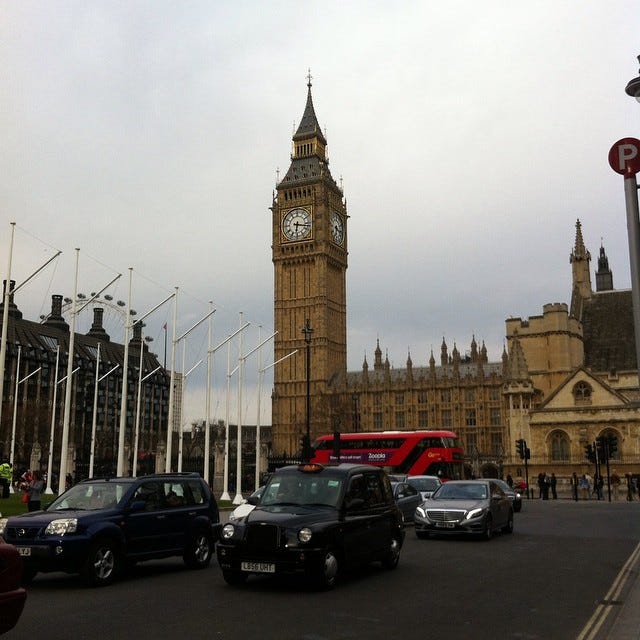
House of Parliament, London (by M. Chemam)
First example: In Bristol, the mayor Marvin Rees is getting a £9000 pay rise.
Set to try to “match an MP salary”, the rise has been approved late in March by the members of the City Council — for themselves, as local reporter Adam Postans wrote on 25 March 2020. The councillors were not supposed to vote for their own pay rise however; they were set in 2019 to vote for a rise to come into place after the local elections scheduled for May 2020. These elections have now been postponed for a year by the British government, due to the current pandemic. But the councillors, mayor and deputy mayors still intend to increase their salaries, while freezing the ones of top officers. And of course not increasing help for NHS or “key” workers.
This measure will cost council taxpayers an extra £180,000 per year.
The increases include £9,000 a year for mayor Marvin Rees, £5,500 for deputy mayors Craig Cheney and Asher Craig and £3,500 for the seven other cabinet members. The basic allowance for all 70 councillors also rose by about £1,000 from the current level of £12,000. The two deputy mayors will be paid £39,946 a year from May, with cabinet members receiving £37,946. In total, the increases take the councillors’ wage bill from £1.28million to about £1.46million. The mayor of Bristol’s salary alone is increased by 12.6%, going from £70,605 to £79,468, all to, again, “match that of an MP”.
Since then, the decision has been wildly criticised in Bristol, on Twitter, Facebook, local radio and newspapers, etc. But the mayor insisted last week that he deserves a rise, despite the pandemic, speaking to his fellow citizens during a Facebook Live event: “An independent panel spends considerable time looking at the rate of pay of elected members,” he said, “they look at the job, they look at comparable pay in other authorities — and then they come back with a recommendation. My position has been not to cross the line and get involved in that process, other than to support whatever the panel says.”
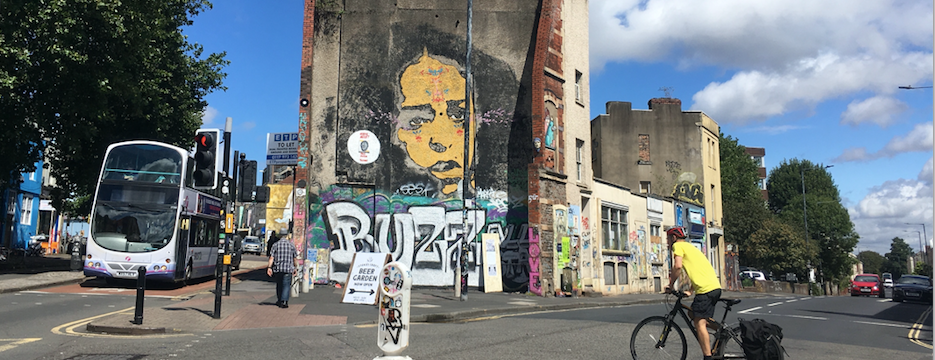
Bristol, Stokes Croft (photo: M. Chemam)
And, the bad news is… that Bristol is not the only city concerned.
In 2019, Newcastle councillors agreed to give themselves pay rises — costing taxpayers an extra £26,000 a year, which was approved in November 2019.
On 15 December 2019, a local online magazine reported that York councillors were set for big pay rises. The authority’s Independent Remuneration Panel Report 2019 has recommended the basic allowance for councillors increases by more than 12%. And it says the payments for members with special responsibilities should rise by up to 50%.
In Leicester, mayor and councillors are also set for pay and allowance rises.
In Kent, an £8.4m council tax hike for policing in Kent has been approved on 7 February 2020. The increases came after Kent police and crime commissioner Matthew Scott’s funding proposal for the next financial year was unanimously approved by councillors at Maidstone County Hall on 6 February.
And I haven’t had time yet to look further at other cities and counties…
This is putting British public services to shame.
As, meanwhile, in Australia, the city of Brisbane has decided a “two-year pay freeze for councillors and council staff”, as local reporters wrote on 1 April. Brisbane City Council will attempt to save $36 million by issuing this two-year pay freeze, to prepare its $3.1 billion budget against the coronavirus pandemic.
Here in the UK, the very same Matt Hancock told Premier League players to “play their part” and take pay cuts. But indeed if it’s not to support nurses struggling today, what is it for? This call is now reported all over Europe and making much noise in the media. He highlighted the death of NHS frontline workers in the battle against coronavirus, and asked what high-earning footballers are doing in this country to help others…
But I would like to ask: what are our elected officials doing in this country to help?
Let’s remind our readers that according to Unison the starting salary for a nurse is £24,214. And the more than 300,000 nurses have suffered real terms pay cuts due to government-imposed wage restraints over the past decade.
In comparison, the basic annual salary for a Member of Parliament is £79,468, and they also receive expenses to cover the costs of running an office, employing staff, having somewhere to live in London or their constituency, and travelling between Parliament and their constituency…
They are now mainly sitting at home, to protect us all, unlike the Prime Minister, who ignored the basic medical advice.
I believe on the contrary that if there is a time to have the conversation about the values of “key workers”, and especially health workers and the NHS, the time is NOW.

-

Melissa Chemam is a writer, broadcaster and independent reporter based in England, after years or reporting in North America, East & Central Africa, and Europe. She is a freelance correspondent in the UK for the German broadcaster DW, and has been published in The Independent, The Times Literary Supplement, Verso’s blog, Lucy Writers, WhyNow, The Public Art Review, The Bristol Cable, etc. She’s the author of the book ‘Massive Attack — Out of the Comfort Zone’, about the Bristol band’s music, art and activism, and an associate lecturer in journalism at the University of the West of England.