This week, in my podcast:
Interview with Dr Rashad Shabazz, a specialist in human geography, on the line from the US, on his research on Minneapolis.
As the agents from the agency known as Immigration and Customs Enforcement - or ICE - are under scrutiny after increasing violence and the death of two civilians in January in the city of Minneapolis in Minnesota, in the North of the country; Renée Gould and Alex Pretti, some courageous people are trying to fight again this brutality, and its signalling of a terrible ending for the rule of law and people’s freedoms.
ICE agents and others from the Border Patrols have been deployed in Minnesota as part of Operation Metro Surge, the Trump administration’s largest-ever immigration-enforcement operation, involving up to 2,000 federal agents.
Africa, and has publicly targeted the people of Somali origin in the state.
It has also suspended immigrant visas to the US, a policy that has disproportionately affected African countries – 39 in total, which face either total or partial visa restrictions.
Minnesota is the home of the largest Somali community in the USA - between 80,000 and 100 000 - and one of the biggest outside Africa (with communities in the UK and Canada). And it is mostly concentrated in the Twin Cities area, between Minneapolis and Saint Paul.
Minnesota Democratic Congresswoman Ilhan Omar, who’s Somali herself, was also attacked the last week of January by a man who rushed to the podium she was speaking from and sprayed an unknown substance at her.
To discuss the reactions in the different African American and immigrant communities in the US, I spoke with Dr Rashad Shabazz, a specialist in human geography, on the line from Arizona.
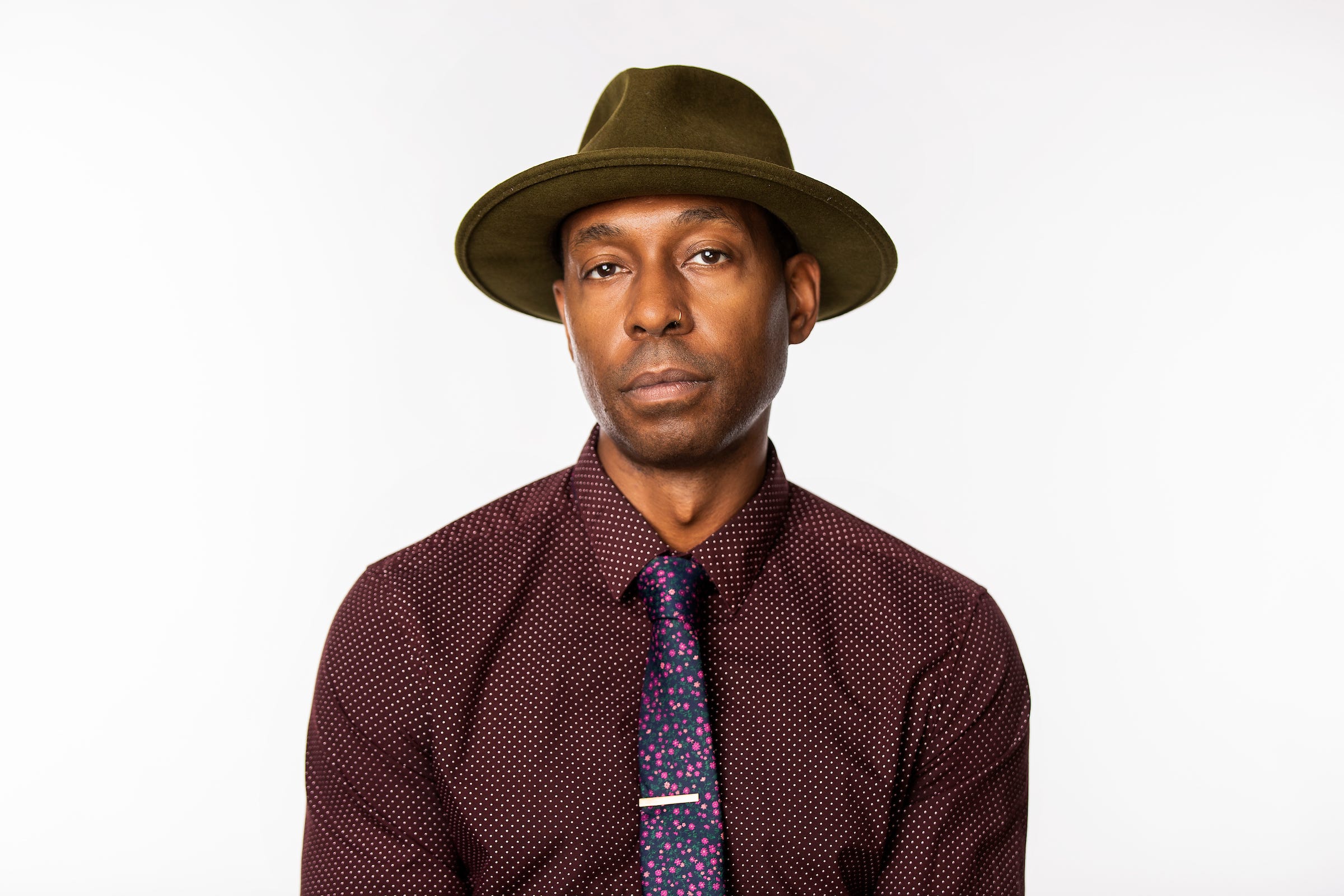
He has done research on the city of Minneaoplis, where he used to be based, after New York and Chicago. And he’s written about recent and less recent immigration policies, as much as about the Black populations of Minneapolis, including its probably most famous one, the singer Prince.
Minneapolis is also the location of the tragic death of George Floyd, which inflamed the Black Lives Matter movement again in 2020.
“I'm in touch with people who are living in Minneapolis, who are organising and are experiencing this onslaught by ICE agents, and there are a number of emotions,” Rashad told me. “There is deep anger at the federal government's response, how the city is being treated and the community members. There is frustration that not much is being done by Minneapolis and Minnesota officials to alleviate the stress. And then there's also this deep sense of community that those who are organising in response to the deportation efforts are feeling.”
He said he initially thought other cities would be targeted, like his hometown, Chicago, or Los Angeles, where he is currently living, or Phoenix, Arizona, all of which have higher populations of communities of colour, higher immigrant populations, and particularly large Latino populations.
“I assumed that it would be those places, but upon further review and thinking about it in terms of the kind of spectacle and the impact that the administration wants to make vis a vis deportation numbers, Minneapolis makes a lot of sense because it is a left of centre city, and it is also a city with a growing number of communities of colour, particularly immigrant communities from Latin America, from Central America, from Africa, as well as from South Asia,” he added.
The geography of the distribution of the immigrant population is also a factor.
“Unlike Los Angeles, Chicago, New York City and D.C., the immigrant and community population of colour, while centred in the Minneapolis Saint Paul Twin Cities region, have really been growing over the last decade in small towns and suburbs all over the state. So what that means is that the efforts that the administration has to deport as many people can have higher rates of success in a place like Minnesota, because in towns like Austin or Mankato or Worthington or even in some of the suburbs, there’s not as much resistance, and there’s not an infrastructure of community organising that exists. So in that sense, the rates of success for the administration can be higher there.”
There is also, in Minneapolis, a large Somali community, and the Trump administration and President Trump himself have been targeting Somalia and Somalis strongly.
“There is, of course, a deep anti-Black racism that runs through this,” Dr Shabazz said. “So while the anti-immigrant rhetoric is affecting immigrant populations in large bounds, the very particular anti-Black rhetoric and targeting the Somali population, has real traction amongst a core group of Trump’s supporters, members of his Republican base.”
Then we also discussed the fact that Minneapolis is also a city where George Floyd was killed by the police, in 2020… and looked at why some want to pretend they didn’t see the true face of Trumpism sooner…
To listen to our entire conversation, check the next episode of my podcast, from Tuesday 3 February: https://www.rfi.fr/en/podcasts/spotlight-africa/
*
Dr Rashad Shabazz concludes:
“As a scholar, this is why history is important. The administration is attempting to whitewash and remove historical narratives of enslavement and of racist policing and of the denigration of poor people. And given this nation’s allergic reaction to its own history and its lack of knowledge of global history, this moment is deeply shocking to a lot of people in this country, I’m sure.”
*
Meanwhile, protests against ICE, discrimination, stigmatisation and racism, are growing in Minneapolis. Kudos to these rare, courageous people, who are fighting to protect all of us, even beyond the USA.
For more: link to the podcast
Spotlight on Africa - An in-depth look at an important story affecting the African continent today

No comments:
Post a Comment