Hello everyone,
so I have been working with the pan-African channel Vox Africa since July 4th.
I am the new news presenter for the French news and a reporter / interviewer for our news in both French and English.
If you want to follow us, go on our website:
http://www.voxafrica.com or http://www.voxafrica.co.uk/.
And watch today's midday news in French here:
http://www.voxafrica.com/vod/videos/&v=0_6hej13gy&p=0_q3b9ys18
or Thrusday July the 28th:
http://www.voxafrica.com/vod/videos/&v=0_9mfbbovv&p=0_q3b9ys18
29/07/2011

Kenya: report on heathcare and technology
Here is my latest radio report from Kenya, the the German broadcast Deutche Welle for Africa, in French :
Rappel de RDV médicaux, communication de résultats, diagnostic à distance : le téléphone portable est le nouvel outil au service de la santé en Afrique. Un outil qui permet d'atteindre les zones les plus reculées...
En Afrique, les SMS peuvent sauver des vies car le téléphone portable reste le seul moyen de communication. La situation est parfois absurde: dans certains villages, on manque d’eau potable, mais on a des portables. D’où le projet d’une ONG fondée en 2009, appelée Alliance Mobile Health, d’intégrer les SMS aux systèmes de santé des pays en voie de développement pour améliorer les soins de santé et pour atteindre les personnes des zones les plus reculées. Ecoutez dans ce magazine Jody Ranck, directeur de recherche à l’Alliance Mobile Health, basée à Washington, qui en dit plus sur les diagnostics à distance via les téléphones portables.
Selon une étude de l’OMS, l’organisation mondiale de la Santé, plus de 40 pays africains disposent au moins d’un tel programme de téléphonie mobile au service de la santé. Mais en réalité, trois pays se détachent du lot : l’Afrique du Sud, le Rwanda et le Kenya. Notre correspondante à Nairobi, Mélissa Chemam, a enquêté sur l’un de ces projets kenyans, Health Text, qui permet aux habitants des bidonvilles de recevoir des conseils de santé via leurs téléphones portables. Ecoutez ci-dessous son reportage.
Auteur : Cécile Leclerc
Edition : Mireille Dronne
Edition : Mireille Dronne
SÉQUENCES AUDIO ET VIDÉO SUR LE SUJET
27/07/2011
Remembering Ireland
Time flies... I have been in Europe for about six weeks now and with my new job (http://www.voxafrica.com/vod/videos/&v=0_oxjknw4u&p=0_q3b9ys18) I had no time to update my travel experiences.
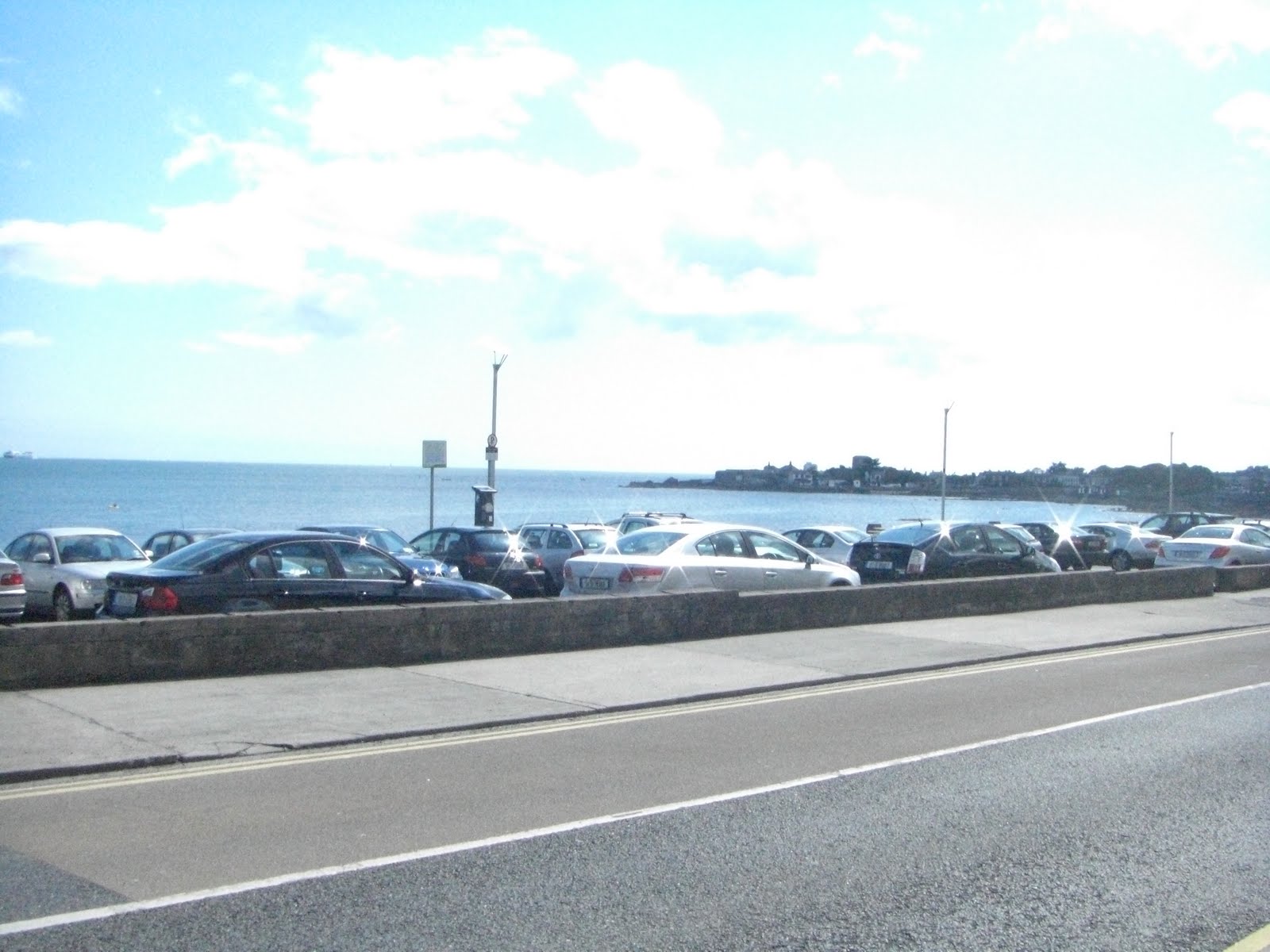
But I now have a good internet connection and a spare day off work. So here a re a few pictures from my first stop in Europe: Dublin.
Will follow in the next few days: thoughts from Paris, London and Rome, the three cities where I'll spend the rest of the summer.
And finally, I will be back in Nairobi on September the 1st.
And Dublin was simply a dream citybreak. Vibrant and beautiful, welcoming and exotic. I cannot wait to go again!


But I now have a good internet connection and a spare day off work. So here a re a few pictures from my first stop in Europe: Dublin.
Will follow in the next few days: thoughts from Paris, London and Rome, the three cities where I'll spend the rest of the summer.
And finally, I will be back in Nairobi on September the 1st.
And Dublin was simply a dream citybreak. Vibrant and beautiful, welcoming and exotic. I cannot wait to go again!


25/07/2011
Kenya: drought and famine threaten Dadaab refugee camps
Hello everyone.
Since I've been back in London, this story has been published in France in the daily newspaper, Le Figaro.
Here is a link to the newspaper's website anf below the report in French.
Thanks for caring!
--
Au Kenya, le plus grand camp de réfugiés du monde
Par  Melissa Cheman
Melissa ChemanA quelques kilomètres de la frontière avec la Somalie, Dadaab s'est transformée en une vingtaine d'année en un gigantesque camp où vivent 350.000 personnes.


Les Kenyans l'appellent la ville poussière… Dadaab est postée à seulement quelques kilomètres de la frontière avec la troublée Somalie voisine, dans la zone aride du nord du Kenya. Et elle s'est transformée en vingt ans en camp de réfugiés géant. Plus de 350.000 personnes y vivent au sein de trois structures gérées par le Haut Commissariat pour les réfugiés de l'ONU, le HCR.
Lorsque la ville de Dadaab a commencé à recueillir les Somaliens fuyant les combats qui ont suivi la chute de leur dernier véritable dirigeant, Siyad Barre, personne ne prévoyait que la Somalie ne connaîtrait plus la paix.
Abari Osman vit depuis vingt ans à Ifo, l'un des camps de Dadaab, devenu le plus grand ensemble de camps de réfugiés du monde. «Je n'ai jamais pensé que je resterai ici si longtemps , nous raconte-t-il lors de notre visite du camp où il est désormais traducteur pour le HCR. Je suis arrivé à 8 ans, je ne pensais pas faire toute mon école primaire dans un camp de réfugiés puis toutes mes études secondaires…»
Des villes de toile surpeuplées
Abari a poursuivi ses études par correspondance et a pu se rendre occasionnellement à Nairobi, pour des examens, mais il n'a jamais été autorisé par le Kenya à vivre ailleurs que dans le camp. Il reste enfermé dans ce lieu, qui, en nombre d'habitants, peut être considéré comme la quatrième ville du Kenya. À présent, la ville est engorgée de nouveaux arrivants, alors que l'Afrique de l'Est connaît sa pire sécheresse depuis soixante ans.
Dadaab est constituée de trois camps, Ifo, Dagahaley et Hagadera, et d'un quatrième en construction, Ifo 2. Chaque entité est conçue pour recevoir autour de 30.000 réfugiés, 40.000 au maximum. Mais, elles en accueillent trois fois plus. La situation s'est rapidement détériorée depuis le début de l'année. «Un des principaux problèmes est la congestion des camps, et nous cherchons à lutter contre la surpopulation , explique Richard Floyer, directeur de programme au Haut Commissariat pour les réfugiés de l'ONU.
Nous avons demandé au gouvernement kényan de nouveaux espaces. Car nous pensons que nous avons atteint un stade ou le nombre de réfugiés dans cette région du Kenya a atteint un niveau insoutenable.»
Muslima Hassan est mère de quatre enfants, elle a fui la guerre à Mogadiscio, il y a quelques mois. Arrivée au Kenya fin janvier, dans le plus grand camp de réfugiés du monde, elle n'a pas trouvé le refuge espéré…«J'ai fui la Somalie du fait de la guerre, raconte-t-elle, essuyant les larmes qui coulent sur les joues de son nourrisson. Je suis venue avec mon mari et mon bébé et puis mes autres enfants ont pu nous rejoindre. Mais quand nous sommes partis, nous pensions que nous vivrions dans de meilleures conditions…»
Comme elle, des milliers de Somaliens ont fui la terrible sécheresse qui frappe depuis décembre la Somalie, à laquelle s'ajoutent les combats qui se sont intensifiés à Mogadiscio depuis janvier. Or ils vivent à présent sous des tentes en plastique installées aux abords du camp, loin des structures sanitaires et des écoles.
Cette situation semble d'autant plus insoutenable que le nouveau camp, baptisé Ifo 2, est prêt depuis plusieurs mois à accueillir les nouveaux arrivants. Mis en place depuis août 2010, il aurait dû commencer à accueillir des réfugiés en novembre dernier mais le gouvernement kényan n'a autorisé son ouverture que le 14 juillet.
Terribles conditions
Selon le département kényan des Affaires liées aux réfugiés, le DRA, le Kenya s'inquiétait des conditions de sécurité et de respect de l'environnement… Haron Komen, le directeur des camps de Dadaab pour le DRA, justifie le report de l'ouverture d'Ifo 2 par un conflit avec les communautés locales…
Mais, pendant ce temps, des milliers de réfugiés somaliens arrivés depuis janvier ont vécu dans de terribles conditions. Seules des tentes de fortune aux abords du camp de Dagahaley étaient disponibles ces derniers mois pour ces familles démunies. L'ouverture du camp d'Ifo 2 ne pourra qu'être une bénédiction pour ces réfugiés de la sécheresse. Mais pour combien d'entre eux?
11/07/2011
London is on
So here am I in Europe...
Holidays are over but I'm staying in the UK. I've started presenting the midday news on the African channel based in Battersea, Vox Africa.
This means I'm still working on Africa, but from London.
I've spent only a week in the British city, but it's already a blessing. London has become my favourite town in the world, since I moved here in 2009. And I am lucky enough to have found a place to stay despite the rush of my new move. I am currently in Denmark Hill for a few weeks before I move for good in Hampstead.
This makes me travel a lot and cross the city regularly, which is always a pleasure for me.
So far, I have spent a lovely sunny afternoon in Covent Garden, I've spent some time at the Caledonian Road's local Festival, I've been working in Battersea and discovering the Clapham Common's neighbourhood... I have also done some shopping in Chelsea and had brunch in Stoke Newington. I also spent time with friends in the area of Angel, along the London Canal... Finally on Saturday, I went to see the latest exhibition in the wonderful Saatchi Gallery in Sloane Square, dedicated to "New Sculpture" in the UK.
More to come on London's adventure... So exciting to be here again!
Holidays are over but I'm staying in the UK. I've started presenting the midday news on the African channel based in Battersea, Vox Africa.
This means I'm still working on Africa, but from London.
I've spent only a week in the British city, but it's already a blessing. London has become my favourite town in the world, since I moved here in 2009. And I am lucky enough to have found a place to stay despite the rush of my new move. I am currently in Denmark Hill for a few weeks before I move for good in Hampstead.
This makes me travel a lot and cross the city regularly, which is always a pleasure for me.
So far, I have spent a lovely sunny afternoon in Covent Garden, I've spent some time at the Caledonian Road's local Festival, I've been working in Battersea and discovering the Clapham Common's neighbourhood... I have also done some shopping in Chelsea and had brunch in Stoke Newington. I also spent time with friends in the area of Angel, along the London Canal... Finally on Saturday, I went to see the latest exhibition in the wonderful Saatchi Gallery in Sloane Square, dedicated to "New Sculpture" in the UK.
More to come on London's adventure... So exciting to be here again!
26/06/2011
European Tour
So, I've been pretty silent on this blog this past week, but paradoxically it is because I've been doing so much!
More on my trips soon, but I've left Kenya for a while to go back on a break to Europe.
First, I've seen Ireland for the first time, visiting Dublin and its southern neighbourhoods around Bray and Powerscourt. I have then spent the three busiest days in London, meeting my editor and boss in the BBC World Service, in Bush House, as well as colleagues, friends and other fellow journalists.
Finally, last Thursday, I arrived home, in Paris, for a break with friends and family.
I am now to visit a few of our great art events and will try to give some insight into them here very soon...
Cheers from Europe!
More on my trips soon, but I've left Kenya for a while to go back on a break to Europe.
First, I've seen Ireland for the first time, visiting Dublin and its southern neighbourhoods around Bray and Powerscourt. I have then spent the three busiest days in London, meeting my editor and boss in the BBC World Service, in Bush House, as well as colleagues, friends and other fellow journalists.
Finally, last Thursday, I arrived home, in Paris, for a break with friends and family.
I am now to visit a few of our great art events and will try to give some insight into them here very soon...
Cheers from Europe!
20/06/2011
World Refugee Day: Kenya's Refugee Camps
Today, June 20, is World Refugee Day. For the occasion, I wrote this article for Think Africa Press, on the Dadaab refugee camp in Northern Kenya, the biggest in the World...
---
Kenya's Refugee Camps
The overpopulation of Kenyan refugee camps threatens relations between Kenya and Somalia.
Article | Dadaab and Nairobi, Kenya

With around 300,000 refugees using facilities intended for 90,000 people, Dadaab City’s three refugee camps, in Northern Kenya, are more than overpopulated. Dadaab is considered to be the biggest refugee camp structure in the world. Up to 10,000 people have been appearing at its gates each month since January, fleeing the misery of war-torn Somalia.
Daghahaley, Ifo and Hagadera have been progressively growing in the city of Dadaab since 1991, and the outbreak of war in Somalia. Situated at the border between the two countries, the city has become the only safe haven for thousands of Somalis. While a small number of refugees are from Democratic Republic of Congo, Burundi and Sudan, most of the refugees arriving in Dadaab come from neighbouring conflict-torn Somalia.
Refugees who have recently arrived therefore often have to live in tents in the outskirts of the camps. And while the United Nations High Commissioner for Refugees (UNHCR) and NGOs like Medecins Sans Frontiere (MSF) and Oxfam have pushed for the addition of a fourth camp, Ifo II, the Kenyan government has been refusing since last November.
Muslima Hassan has four children. She fled Mogadishu to escape the war and drought. But here in Dadaab she didn’t even find a proper shelter. “I fled with my husband and my baby because of the war”, she said, holding the crying infant in her arms. “And my children joined us later on in January. But when we arrived we were disappointed by the terrible living conditions. We don’t have enough water, enough food. Nobody can help us here”. Thousands of other women are in the same situation in the outskirts of the camps.
For the programmes’ director of the United Nations High Commissioner for Refugees (UNHCR), Richard Floyer Acland, it’s clear the overcrowding in the camps has become unbearable. “One of the problems is congestion. We’re looking at how we can decongest the camps. We’re asking the Kenyan government for more sites”, Acland explained during a visit to the camps. “I think we’re getting to the stage where the number of refugees in this part of Kenya has really reached a level which is going to be difficult to sustain”, he added.
To ease the pressure, the UNHCR negotiated with the local communities, elected leaders and the provincial administration to open the fourth camp. The UNHCR acquired more land in December 2009 and the construction of Ifo II camp began early 2010. It was designed to host 80,000 refugees and was supposed to open in November 2010. It now has clinics, schools, water access and sanitation facilities.
But the new camp remains empty.
According to the Kenya Department of Refugee Affairs (DRA), the Kenyan government did not give its official approval, due to the concerns of local communities about the construction. The Kenya Department of Refugee Affairs commissioner Omar Dhadho has maintained since February that a compromise will be found. And Haron Komen, Dadaab refugee camps’ director for the DRA explained to me during my visit: “structures, houses, there are concerns in the host communities of Dadaab about the respect for their environment. The government has to discuss and consult the local leaders before making any decision”. Yet still no decision has been made regarding Ifo II.
The spokesperson for MSF, Maimouna Jallow, wonders: “Why is Ifo II closed when it was meant to open last year and has a capacity to host 80,000 refugees? If they say stalled negotiations, who are they between and why? Is there a solution in sight? Is the Kenyan government simply fed up of receiving refugees?”

The whole problem of congestion and the Kenyan government’s inaction demonstrates, on the one hand, that Kenya is no longer ready to take responsibility for those who manage to cross the border, which has been happening for 20 years now. On the other hand, we should not forget that the Somali government, despite its protests, has again proved it cannot bring any stability to the country.
Kenya is one of the more stable and developed nations in the East and Horn of Africa and has to bear the burden of Somalia's recent misery. The crisis is problematic as it is changing relations between the least stable and most stable countries in East Africa.
Nowadays, most NGOs and UN agencies helping Somalia are based in Nairobi and some Kenyans often complain that a lot of the aid attention based in Kenya does not concern Kenya at all. While Somalia and Kenya both currently suffer from a drought crisis, for instance, the international aid agencies like the World Food Programme (WFP) and Oxfam are much more worried about Somalia's situation. A large part of the Somali people who left their country for Kenya in 2011 were running away from the drought, not the war.
“I met Somali women and children who have fled conflict and arrived traumatised and suffering from malnutrition,” said WFP Executive Director Josette Sheeran, in April, trying to raise concern.
“After more than 20 years of war, Somali refugees have become a true global population. The majority are here in Kenya and in Djibouti, Yemen and Ethiopia but Somalis have sought refuge in countries on all five continents”, added the UN High Commissioner for Refugees António Guterres. “As the war continues unabated, I appeal to all countries in the world to keep their borders open and to allow them to live in dignity”.
Around 300,000 Somali refugees live in Dadaab. But thousands of Somalis also live in Nairobi, and thousands of Kenyans have Somali origins. Nowadays these Somali Kenyans, living also in the Dadaab region, are increasingly responsible for the Kenyan government’s decision not to let the new Ifo II camp open. Unfortunately, if the Kenyan and Somali governments don’t manage to improve their relations, hundreds of thousands of people will continue to be put at further risk every day.
17/06/2011
Introducing Paris' 'Princess Hijab'
Today the British newspaper The Independent published this very rare interview with a very special street artist from Paris. Her/his name is Princess Hijab. I think it's worth knowing a bit about her/him...
Here is some insight into her/his motivation.

It's an enigma. We don't know if the artist is a she or a he. The "Princess" is working anonymously. But let’s call her ‘she’ for a minute…
Her street art performances consist in “veiling” the main characters on subway advertisements using black paint.
From diverse sources, she is about 23 years old.
To The Independent, she explained her nickname “combines French Revolution with ethnic minorities”.
She strikes at night, essentially in the Paris’ underground, and targets primarily pictures of half-naked women and men on French adverts.
In The Guardian, my favourite British newspaper, last November, Angelique Chrisfalis wrote that Princess Hijab calls it “hijabisation” and that “her guerrilla niqab art has been exhibited from New York to Vienna, sparking debates about feminism and fundamentalism”.
But she never said if she was a Muslim herself, she just uses the symbol of the hijab as a provocation, in a very tensed society, where the current government doesn’t hesitate to stigmatise immigrants or immigrants’ children, born in France.
Her “work” is only visible for a few minutes, an hour maximum, as the Paris’ metropolitan underground takes care of erasing any form of intervention on its wall. But you might bump into it some day or another, as it is getting more and more visible. Yet, as a person, she remains invisible.
More below!
--
Rare interview with urban artist Princess Hijab
We talk to the graffiti artist who works in the Paris underground at night 'hijabising' posters and billboard advertising
By Matilda Battersby - The Independent - June 17, 2011
Princess Hijab is an elusive graffiti artist who goes around Paris scrawling hijabs and burqas in black marker onto the faces of men and women on posters.
She is out to ‘hijabise’ advertising by targeting cosmetic brands and well-known models, seeming to ask if hiding a face behind a veil is any different from hiding one behind make-up and air brushing.
In a rare interview, the artist explains in her own words (with the help of a translator via email) her motivation:
--
Street art is how I build my universe, giving form to my imaginary representations. Paris - the city, the identities, fashion and society- it offers me nearly inexhaustible inspiration. It nourishes my urban expression.
When I engulf myself in the entrails of Paris and sneak amongst the travellers I visit my kingdom incognito, thus getting my bearings to say so.
I apprehend advertising in order to transform it. The image of women in publicity is a feature, a fetishist representation of the moment.
My work is nothing to do with the veil ban in France. I’ve repeatedly stated: "No that is not my message, neither in the form, nor in the content of my stuff”. I started working in 2005 [before the ban was imposed] on top of that...
--
The whole interview here:
Slum Film Festival
Here is an interesting initiative in Nairobi...
The "Slum Film Festival" is starting this month of June.
It is a joint project of Embassy of Spain in Kenya, the Spanish Agency of International Cooperation for Development (AECID), Slum TV and the Hot Sun Foundation, with the collaboration of the Nairobi Art Centre.
It is actually a contest, open to young people between the ages of 18-30 years with an interest in art and filmmaking in Kenya.
Artists from informal settlements - slum - are, of course, encouraged to enter.
Professional artist are not eligible, even if based in slums.
There are actually two categories:
1. Slum Film Festival LOGO.
These are going to be digital submissions, designed using any computer design software.
The submission must be saved as JPG, be less than 500MB in size and then be emailed to these address:
mercy@hotsunfoundation.org or info@slum-tv.org
With the following title in your submission e-mail: “Slum Film Festival LOGO”.
The deadline is 21st June 2011.
2. Slum Film Festival POSTER.
These submissions should be hard copy (paintings, drawings, sketches, etc) and should be dropped at either: Hot Sun Foundation offices in Kibera, Slum TV offices in Mathare or the Embassy of Spain at CBA Building in Upper Hill.
--
The announcement of the finalists will be on 7th July 2011. The awards ceremony and the launch of the Festival (together with press conference) will occur on 29th July 2011 at the Embassy of Spain
Film Festival and the Celebration will take place from August 8th to 21st.
Details:
/http://nairobinow.wordpress.com/2011/06/16/slum-film-festival-poster-and-logo-contest-may-30-jun-21-2011/
The "Slum Film Festival" is starting this month of June.
It is a joint project of Embassy of Spain in Kenya, the Spanish Agency of International Cooperation for Development (AECID), Slum TV and the Hot Sun Foundation, with the collaboration of the Nairobi Art Centre.
It is actually a contest, open to young people between the ages of 18-30 years with an interest in art and filmmaking in Kenya.
Artists from informal settlements - slum - are, of course, encouraged to enter.
Professional artist are not eligible, even if based in slums.
There are actually two categories:
1. Slum Film Festival LOGO.
These are going to be digital submissions, designed using any computer design software.
The submission must be saved as JPG, be less than 500MB in size and then be emailed to these address:
mercy@hotsunfoundation.org or info@slum-tv.org
With the following title in your submission e-mail: “Slum Film Festival LOGO”.
The deadline is 21st June 2011.
2. Slum Film Festival POSTER.
These submissions should be hard copy (paintings, drawings, sketches, etc) and should be dropped at either: Hot Sun Foundation offices in Kibera, Slum TV offices in Mathare or the Embassy of Spain at CBA Building in Upper Hill.
--
The announcement of the finalists will be on 7th July 2011. The awards ceremony and the launch of the Festival (together with press conference) will occur on 29th July 2011 at the Embassy of Spain
Film Festival and the Celebration will take place from August 8th to 21st.
Details:
/http://nairobinow.wordpress.com/2011/06/16/slum-film-festival-poster-and-logo-contest-may-30-jun-21-2011/
16/06/2011
Going to Korogocho
Today I spent the afternoon in one of Nairobi's largest slum, Korogocho. Situated in the East side of the Kenyan capital, it is the home of more than 150 000 inhabitants in less than two square kilometres.

I was committed a story on 'Health Text', a new system of SMS allowing Kenyans to get medical advice via text messages. And I met an adorable Kenyan journalist working in Nairobi for the NGO Internews, who raises funds for the project and to connect it with some local radio in slum areas.
I had interviewed him last week and he mentioned the Korogocho slum as one of the areas where the project would be the most useful.
So I convinced him to take me there to meet the local radio's journalists and health workers he is working for to put the project into place.
Korogocho is just at 20 minutes-drive away from Nairobi business centre, on the northeast side, just like Kibera is 30 minutes outside of the centre to the southwest side.
I met the journalists from Koch FM and two health workers from the area. All of them live in Korogocho and act as community workers voluntarily, like ‘Florence’, who started as an AIDS advisor a few years ago. She moved into the slum for the rural Western province when her parents died. Now she is happy to work for free for her community because she knows it’s the only way to make the living conditions change and improve a little.

The Health Text initiative would allow slums’ dwellers to get access to medical advice for a cheap amount, in an area where most people live in shack with no access to water and no electricity.
It remains difficult for the slums’ inhabitants to get any attention from the Kenyan government. Most of them are informal settlement and are not even registered as habitations. This is why community workers are investing in “mapping” to complete the settlement’s official existence and obtain the authorities’ recognition.
Korogocho was also one of the strongly hit sites of the 2007-2008 violence that followed the disputed presidential election on December 27, 2007. At least fifteen men died in one incident at the end of 2007, according to Reuters, when ethnic and political divisions resulted in rioting and battles with the police.
--
On our way back the journalist launched this inevitable conversation about post-colonial relations between African and European countries, comparing East and North Africa. And he made an interesting comparison between Kenya and Algeria. According to him, the two countries have been the most integrated into the former settlers’ administration and economy and have ended up having the most violent conflicts to reach independence. I had never looked at it this way; Kenya and Algeria are so different. But it might be an idea… As I’m planning to go again to Algeria next year, for the 50 years of its independence, it is probably worth remembering.
Subscribe to:
Posts (Atom)