09/03/2021

IWD: French Literature - Faïza Guène’s Fight for French Respectability (TMR)


My latest piece for The Markaz Review on a significant woman writer and French-Algeria novelist: 


-


What Faiza Guène’s new novel La Discrétion tells us about French Algerians and their perception in the French literary world


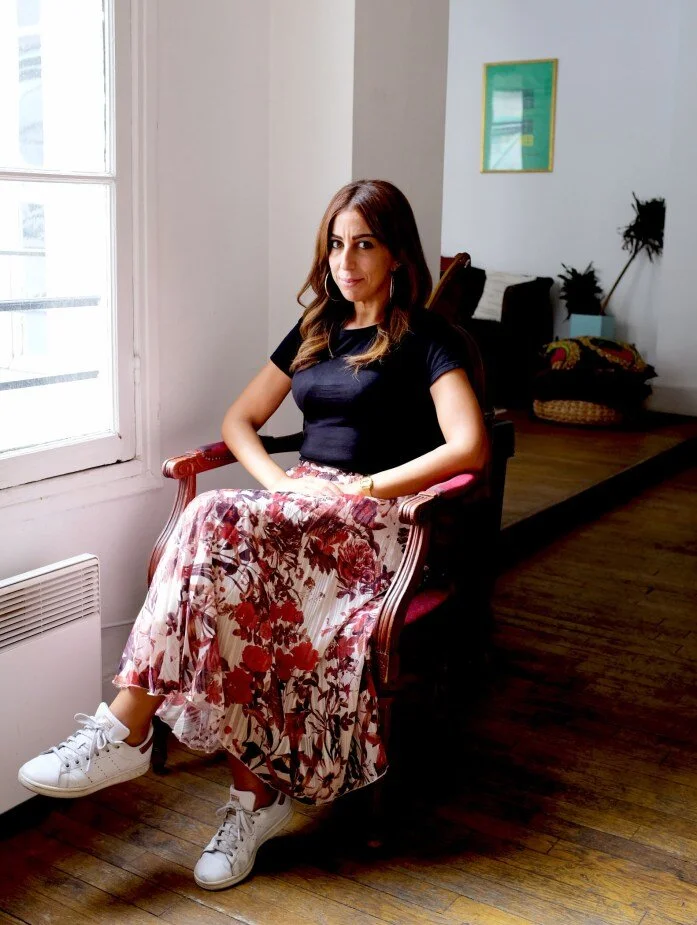
La Discrétion, a novel by Faïza Guène
Plon 2020
ISBN 9782259282444


Melissa Chemam


Back in 2004, a 19-year-old French novelist of Algerian heritage named Faiza Guène shook the French literary world out of its phlegmatic complacency with Kiff kiff demain (published in the UK as Just Like Tomorrow). A teenager from the disadvantaged suburbs of Paris, Guène’s debut novel, written mostly in French vernacular, went on to sell over 400,000 copies and was eventually translated into 27 languages. At the time, Guène declared her surprise, noting that for her, writing had so far been just a hobby. “There wasn’t really a role model for me…I grew up in a working-class neighborhood. I didn’t imagine I was going to make a career out of it,” she told RFI’s Tirthankar Chanda. 

I must say that I feel very grateful to Faïza Guène. She broke new ground as a young Franco-Algerian woman turned into a booksellers’ sensation with a story about the banlieues. In fairy-tale fashion, this happened just a year before major riots in Paris’s suburbs. Yet Kiff kiff demain was not about life in the troubled or dangerous suburbs, it was about adolescence.

16 years and several books later, the author published her sixth novel in September 2020 in France. This time, in La Discrétion, she writes more intimately, deriving truth from her own family. The main character is Yamina, a 70-year-old mother of four children, living in Aubervilliers with a husband. They wedded 40 years prior, in Algeria, in an arranged marriage. That took her to France, where she had never before set foot. This is a story of migration that is very familiar to North Africans in France—working-class communities in which many factory workers opted in the 1950s and 1960s for an arranged marriage with a younger woman from their homeland, and not a local, French (white) spouse. Yamina, a petite, kind-hearted woman, never had a job but raised their children. She and her husband have a lot in common with Faïza’s parents, born around the same time in the same circumstances and with the same destiny of migration.  

The story isn’t so much about life-changing events, or even Algerian independence as it is about the everyday tribulations of a very humble family, in which all members feel at a point or another—and some feel this oppression on a weekly basis—humiliated by their position on the French social ladder, which is often characterized by a kind of invisibility. As the title suggests, this “discretion” starts with themselves, as Yamina chooses to remain discreet when mistreated, even when her doctor hurts her physically, or speaks to her too casually. The novel doesn’t address the issue in depth, but through a few anecdotes we feel that the French system doesn’t give her a chance to speak up for herself. 

I started this review by saying I was grateful to the writer because, for once, a book by a well-known bestselling author doesn’t mention the Algerian war only through the eyes of French people, pieds noirs who had to leave their “beautiful Algeria” because of ungrateful locals chasing them away. Writers like Yasmina Khadra and Alice Zeniter have both written fine books about the 1950s in French Algeria, but not through the eyes of local natives who believed in their independence. Here, La Discrétion is divided into two sorts of chapters: the first ones retell the non-eventful, family-oriented life of Yamina and her intimates, with the intention to pay homage to the anonymous in French society and especially stay-at-home mothers in working-class families; and the other chapters dig into Yamina’s memories and past life in Algeria, from the harassment of her family by French soldiers; her birth “in a cry”, as the narrator describes, a metaphor for her future moral strength; her family’s exile in Morocco during the independence war; and her marriage and her move to France, in tears. Yamina’s father was a fellaga, a freedom fighter who battled for his country’s independence from France.

The chapters featuring Yasmina’s memories are the most charming. They describe her difficult but meaningful childhood in Algeria, with her war-traumatized mother and a father she puts on a pedestal for his involvement in the independence movement. Yamina worships the memories of their fig tree back home; all her family responded with courage, even when the women were sent away in exile in Morocco to avoid the war, facing famine. These chapters are also filled with other characters, and not reduced to a narrow sort of unaccomplished sub-life only, as are the chapters set in Aubervilliers and Paris in 2019-2020, which are characterized by a fair amount of repetition.  

When dealing with France, the novel follows Yamina’s family, described as people who would only be minor characters with a brief mention in other books, as they are in Leila Slimani’s award-winning novel, Chanson Douce (Lullaby in English), in which the Arabs are only of secondary interest, if that. Here, the main characters are all workers with humble jobs and all Algerians, which is formidably rare. The father, Brahim, was a miner before retiring; the brother, Omar, is an Über driver; one of the sisters, the eldest, Malika, works in the local town hall; the other one, Imane, the youngest, is a saleswoman; and Hannah is… more or less professionally angry for everyone else in this society that appears profoundly discriminatory and sometimes outwardly racist.  

None of them ever escapes their milieu. For instance, for years, Omar drives by the luxury hotel Lutetia, but never dares to actually go in until the very end. Most of them feel they don’t belong in nice French places and in most of central Paris.

Fortunately, none behaves in the way that typical suburban stories in French films depict French North Africans, as drug dealers, thieves or thugs (consider La Haine, Les Misérables or even Taxi, set in Marseille). Here, for 250 pages, we observe a loving family, and especially a mother who went through a lot of pain as a child, and whose story will never be heard by her neighbors, her children think, let alone any other French citizen. People making no particular trouble. 

It’s a very noble goal, and the book reads extremely easily.

Yet, as a French woman who also grew up in a Parisian suburb, with an Algerian dad who came to work in Paris in a factory in the 1950s, and a mother who married him in the late 1970s, then joined him in France without having ever seen the country previously, I can’t help but feel frustrated at these portraits of lovely people whose main social occupation is to remember the price of every item they ever buy.  

Yes, Hannah praises her mother for her strength, and she is angry at racism and humiliation she undergoes, but she doesn’t do anything about it. Actually, none of them ever really tries to change their lives. Malika, the first born, has to endure an arranged marriage just like her mother did, and unfortunately her father chooses really unwisely so she divorces once she discovers her husband had a child with a French lover. Afterwards her father only feels pity for her, sees her as “damaged goods.” She never remarries and none of her sisters even try to. They all seem to have trouble falling in love—they resent French men for not being masculine enough, and Arab men for looking for French trophy wives to reward their self-projected integration, the Holy Grail for an immigrant in France. In that matter, La Discrétion is no feminist novel. 

The family’s culture is also limited to a few television programs and the mother’s quotes from her prayers and the Qu’ran. They don’t feel French and don’t even try to be French, spending all their summer vacations in Algeria with their mother’s family, except the last one, in 2020, when they discover the Poitou-Charente region.  

The depiction of these first-generation French Algerians wants to be loving and accepting, but it risks being alienating by virtue of the sum of its clichés on Muslims and their cultural desert, naming more supermarkets, brands and suburban malls than a Simpsons episode ever could. Something in me is really saddened by the fact that French immigrants can only represent themselves as humiliated, not fitting in, feeling half the time like failures or looking a bit like caricatures, wearing burkinis and eating cheap halal Chinese food. It’s not Faïza Guène’s fault, of course; it’s mostly because France has so few Muslim or Arab writers, the most successful and known being Nina Bouraoui (whose mother is Algerian), Rachid Djaïdani and Sabri Louatah (author of the brilliant novels Les Sauvages or Savages in English and 404).  

(We should note that Kaouther Adimi writes in French but she is Algerian, like Yasmina Kadra; she was born in Algeria, spent a few years in France as a child, but studied in Algeria and was living in Algeria until 2009.)  

Faïza Guène is calling for more acceptance, through the eyes of her female characters especially, in a France that is every day nearly as racist as it was in the 1950s, considering that the Macron administration is openly discussing the arrest of so-called Muslim “separatists”. And she mentions in passing that the attacks on the World Trade Center and Charlie Hebdo only made the country more Islamophobic.

The French literati has mostly praised La Discrétion, while they came down hard on her first novel, often not taken seriously because of its heavy use of slang and humor.  

Unfortunately for now, unlike the likes of Salman Rushdie and Zadie Smith, whose novels have become more broadly universal both in the UK and within the Anglophone literary world, France’s generation of Arab/Muslim novelists mostly represents members of ethnic minorities as lonely outcasts, with no sense of belonging or desire to fight for greater inclusion. Too often, their stories end with some version of failure and tristesse. This may be a reflection of the state of French diversity, or lack thereof. For now, with her novels, Faïza Guène doesn’t really celebrate the empowerment of first-gen French citizens of immigrant heritage; she puts them on the radar and describes their isolation well, but doesn’t embody a bold and proud appearance into the French cultural landscape. But she definitely stands as a rare and important French-Algerian female voice.

TMR-branding-logo-50.jpg

According to Faïza Guène’s English translator, Sarah Ardizzone, Discretion will be published in early summer 2022, while her novel Men Don’t Cry (Un Homme ça ne Pleure Pas) will be published by Cassava Republic in July 2021.


-


Melissa Chemam

Melissa Chemam is a writer, broadcaster, cultural journalist and author. She has been based in the USA, France, the UK and East Africa (for the BBC World Service, AFP, Reuters, CBC, DW, RFI, etc), also traveling to North Africa, the Middle East and the Caucasus regularly. She works mainly on multiculturalism, post-colonial issues, East-West and North-South relations, and is an associate lecturer at the University of the West of England in journalism. She is a TMR contributing editor.


08/03/2021

International Women's Day: Article about Dr Ngozi Okonjo-Iweala, the first woman at the head of WTO

My article for I AM History:  


10 Things To Know About The New WTO Director-General, Dr Ngozi Okonjo-Iweala 


by 


History was recently made when Dr Ngozi Okonjo-Iweala was appointed the new Director-General of the The World Trade Organisation (WTO). Dr Konjo-Iweala took on the role formally March 1st 2021, becoming the first woman and the first African to hold the office. We can’t wait to see her shine and make an impact in her new role.

Headquartered in Geneva, Switzerland, WTO is an intergovernmental organisation that regulates and facilitates international trade between nations. It officially started operating on 1 January 1995, according to the 1994 Marrakesh Agreement, replacing the General Agreement on Tariffs and Trade, known as GATT, established in 1948, a few years after the United Nations’ main organisations. 

10 interesting things to know about Dr Ngozi Okonjo-Iweala: 

  1. Born into a royal family in Nigeria

    Ngozi Okonjo-Iweala was born 13 June 1954 in Nigeria in Ogwashi-Ukwu, Delta State, where her father Professor Chukwuka Okonjo was the Obi (King) from the Obahai Royal Family of Ogwashi-Ukwu.

  2. Educated in Nigeria and in the United States 

    She went to Queen’s School, Enugu, St. Anne’s School, Molete, in the state of Ibadan, and to the International School Ibadan. She then moved to the USA in 1973 at 19 years old to study at Harvard University, graduating magna cum laude with an AB in Economics in 1976.

  3. Started her research in the USA

    Ngozi Okonjo-Iweala began research in Cambridge, Massachusetts, in the late 1970’s and received an international fellowship from the American Association of University Women (AAUW) that supported her doctoral studies. 

    In 1981, she earned her PhD in regional economics and development from the Massachusetts Institute of Technology with a thesis titled ‘Credit policy, rural financial markets, and Nigeria’s agricultural development’.

  4. An economist and international development expert

    Ngozi Okonjo-Iweala spent 25-years at the World Bank in Washington DC as a development economist, scaling the ranks to the number two position of Managing Director, from 2007 to 2011. A position overseeing an operational portfolio of over $81 billion, in Africa, South Asia, Europe and Central Asia. 

  5. Worked on solving poverty

    She spearheaded several World Bank initiatives to assist low-income countries during the 2008–2009 food crises, and later during the financial crisis.

  6. The first woman to serve as the country’s finance minister and the first woman to serve in that office twice

    In Nigeria, she was the only finance minister to have served under two different presidents: President Olusegun Obasanjo (2003–2006) and President Goodluck Jonathan (2011–2015). 

  7. Sits on the board of many leading companies

    That includes Standard Chartered Bank, Twitter, Global Alliance for Vaccines and Immunization, and the African Risk Capacity (ARC). 

  8. A Multi-Awarded Leader

    Okonjo-Iweala has received numerous recognition and awards and has been listed as one of the 50 Greatest World Leaders (Fortune, 2015), the Top 100 Most Influential People in the World (TIME, 2014), the Top 100 Global Thinkers (Foreign Policy, 2011 and 2012), the Top 100 Most Powerful Women in the World (Forbes, 2011, 2012, 2013 and 2014), the Top 3 Most Powerful Women in Africa (Forbes, 2012), etc. 

  9. Her first move at the head of WTO has been to ask for more cooperation between members 

    “WTO members have a further responsibility to reject vaccine nationalism and protectionism while cooperating on promising new treatments and vaccines,” Ngozi Okonjo-Iweala wrote in the Financial Times.

  10. Cares deeply about the links between trade and climate change

    Ngozi Okonjo-Iweala hopes to reactivate and broaden the negotiations on environmental goods and services, while stating that WTO must also assist developing countries as they transition to the use of more environmentally friendly technologies.


-


From Paris with Love

 Was away for a while... 

For a family emergency.

More here: 

A Quarantini with the creators of 'Nature Through Her Eyes'


Listen HERE


We finish off season 4 with an interview with three remarkable women who are behind the festival and 4-part documentary "Nature Through Her Eyes" which airs on March 8th 2021 on CuriosityStream. The interview features Emma Tyrell, Development Executive and Festival Producer; Jacqueline Farmer, Film Director and Producer and Gail Jenkinson, Director of Photography.

They talk about the world of Natural History film-making mainly being dominated by white men and how this needs to change. In a time of climate crisis, stories about nature and our environment need to be told through a diversity of lenses including women and people of colour.

ALSO - we've chosen a brand new track from Helefonix called 'Jackie Weaver's kicked him out'. Yes Jackie Weaver from the notorious Handforth Parish Council meeting. All proceeds to to the NALC Make a Change campaign.

PLUS - we bring you our usual round up of positive responses to the virus from around the world....

Music:

Jackie Weaver's kicked him out, Helenofonix

Hot Flu, Seb Gutiez, The Old Bones Collective - opening music

Hosts: Melissa Chemam and Pommy Harmar

Producer: Pommy Harmar


Listen HERE


15/02/2021

"The unfinished Arab revolutions deserve our support"


My latest for the brilliant Markaz Review:


Revolution Viewed from the Crow’s Nest of History


The unfinished Arab revolutions deserve our support.

The unfinished Arab revolutions deserve our support.

Melissa Chemam


As world media began to follow the early days of the misnamed “Arab Spring” in January and February 2011, I found myself in Uganda, covering that country’s presidential election for the BBC, where the opposition candidate, Kizza Besigye, had no chance to defeat the incumbent president, Yoweri Museveni, in power since 1986. I had studied journalism in Paris and one of my best friends there was from Tunisia. I immediately thought of her: she had grown up under Ben Ali but had always hoped she would see change in her country during her lifetime. She was then based in Cairo, and soon had to deal with two revolutions.  

“This is above all a moment of new possibilities in the Arab world, and indeed in the entire Middle East,” Rashid Khalidi, the Edward Said professor of Arab Studies at Columbia University, wrote in Foreign Policy on February 24, 2011. “We have not witnessed such a turning point for a very long time,” he added. “Suddenly, once insuperable obstacles seem surmountable. Despotic regimes that have been entrenched across the Arab world for two full generations are suddenly vulnerable. Two of the most formidable among them — in Tunis and Cairo — have crumbled before our eyes in a matter of a few weeks.”  

I came back from Kampala, feeling thrilled for them. Having grown up in France in a town led by a communist city council, I had always thought of revolution as a positive, radical and necessary source of change. In primary school, our teacher organized a play for us to celebrate the 200th anniversary of the 1789 French Revolution. My own parents and grandparents had also participated in their own revolution with the liberation of Algeria, but at the time—especially in France— this was a complete taboo. No one ever mentioned Algerians as revolutionaries, in public or even in private, yet in our house that’s what we were. Later on, when I studied history and politics more in depth, I met quite a few French people and even Arabs who despised revolutions, seeing them as form of violence coming from “the people,” meaning the unimportant lower classes. What they valued was order and hierarchy. However, I learned over the years that their reaction was a symptom of allergy to change, based on fear, and that no revolution was ever completed in one day.  

It didn’t take long for skeptical voices to carp at the Arab Spring. Can Tunisia and Egypt really succeed in their popular revolutions? Will Libya and Yemen ever shake off their despots…with pundits implying that democracy in the Arab would always be an oxymoron.  

Back from Africa, in 2013 I joined the newsroom of the international radio in Paris, RFI, in the African section. As the only North African in the team, I often had a chance to cover Tunisian, Algerian and Libyan issues. North Africa had always had this weird place in foreign news, in the UK as well as in France: it’s not completely Africa, but it isn’t the Middle East either… I noticed that many journalists often walked on eggshells when they talked about the region. But by 2013/2014 the general sentiment was that the revolutions had failed… Tunisia had an Islamist government (Ennahda won a plurality of votes in the October 2011 Constituent Assembly election). Egypt was a military dictatorship again. And Libya was in limbo.

But whenever the subject of the Arab revolutions arose, I wondered aloud and still wonder why no one ever compares them with at least the French Revolution—to be more historical, we should say the French revolutions. Victor Hugo, one of France’s literary greats, was born in 1802 into a bourgeois family but later became a true republican. Thirteen years after the French Revolution of 1789, he was forced into exile, however, for decades. He wrote Les Misérables, published in 1862, in exile. Because after “The Revolution”, France had two brutal empires—under Napoleon and Napoleon III—and as many royal “Restaurations” that only brought wars, more inequality and social conservatism. Had the French Revolution failed? 

Well, in 1830, Paris had a second revolution after the collapse of Napoleon’s egotistic desire to dominate the whole of Europe… But the three days of the July 1830 Revolution soon led to the return of a French king: Louis-Philippe Ier. Then in 1848, France was swept away by a vaster movement of revolutions that shook the whole of Europe, known as the “Springtime of the Peoples” or the “Spring of Nations”. Italy and Germany didn’t exist back then, but were comprised of a cluster of sovereign provinces speaking dialects of Italian or German. It was a high time in European history. The same year, Karl Marx and Friedrich Engels, who had fled Germany, published their Communist Manifesto. How did this revolution end? Well, in France it concluded with the election of Louis-Napoleon Bonaparte in 1851, who soon declared himself… an Emperor. In the rest of Europe, in oppressive, conservative regimes mostly, and Marx had to leave France and Belgium for England. 

All these revolutionary events led to violence and to very conservative regimes, also kick-starting imperial and colonial rivalry between the European powers over their control of half of Africa and Asia. But it doesn’t mean they had failed; they were part of a longer process.

“If revolution is a regime change involving collective physical force, then the key dates are 1789, 1830 and 1848,” observed Peter Jones, a professor of French history at the University of Birmingham in the United Kingdom. In the end, France had at least three major revolutions, and arguably a fourth one—La Commune de Paris in the spring of 1871—before it had a stable regime, the Third Republic. Yet even this regime didn’t lead France to become entirely democratic, not until at least the turn of the 20th century and not until the country had been torn apart by the Dreyfus Affair from 1894 until 1906. Victor Hugo didn’t live to see the Third Republic, for he died in 1885, while the French regime was still very conservative. Then of course, even after 1910, women still could not vote (they couldn’t until 1944!), and the largest part of the population of colonized Algeria—declared French territory—was deprived of fair parliamentary representation.

The transition to a republic didn’t prevent Vichy or Dien Bien Phu. The French Third Republic ended up in the painful and disastrous Second World War, and the humiliating collaboration period. Then the Fourth Republic, established after WWII, died out in a civil war, over the horrifying settler colonialism in Algeria, in 1958. This gave birth to a Republic of “emergency” or what François Mitterrand often called “la République du coup d’Etat permanent,” the Fifth Republic and current French regime.

Paris 1968.

Paris 1968.


Even then, revolutions weren’t over, for a socialist and labor/student-led uprising broke out in Paris in 1968 and soon engulfed the country, bringing the French economy at one point to a grinding halt. May ‘68 marked the world much in the way the 1789 Revolution had. 

We could also draw parallels with American history.

One revolution that is too often forgotten is probably the most important of all in terms of balance between the West and the rest of the world: From August 21, 1791 to January 1st, 1804, the Haitian Revolution made European domination over the Caribbean a reversible phenomenon. One might say that the Haitian revolution isn’t over; certainly Toussaint Louverture has become a hero inspiring Africans and African Americans to this day.

The American Revolution, which took place between 1765 and 1783, only concerned colonial North America, meaning 13 states and their white settlers, in a fight to free themselves from their British oppressor. But all the other human beings living on North American soil at the time were simply ignored and denied citizenship, first and foremost the Native population, the First Nations, as well as the displaced African slaves. Up until the mid-20th century, American democracy remained a nuanced reality: despite the 13th, 14th and 15th Amendments to the Constitution passed in the 1860s—all intended to enfranchise Black Americans—most could not vote until the passage of the Voting Rights Act in 1965. 

The Egyptian-American journalist Mona Eltahawy, author of The 7 Necessary Sins for Women and Girls (2019), actually referred to the civil rights movement as a revolution on Twitter on January 25, 2021, while commenting on the Arab Spring. She wrote that: “A revolution does not happen overnight. And because, as Audre Lorde insisted, ‘Revolution is not a one-time event.’ I will not write its obituary.”

Ten years after 1789, France was about to have a new Emperor and to plunge Europe into war. Ten years after 1848, it was at the height of the Second Empire, and its best author was writing in exile. So, ten years after the Arab Spring began, I would argue that we should give Arab revolutions some time.


-


Melissa Chemam

Melissa Chemam is a writer, broadcaster, cultural journalist and author. She has been based in the USA, France, the UK and East Africa (for the BBC World Service, AFP, Reuters, CBC, DW, RFI, etc), also traveling to North Africa, the Middle East and the Caucasus regularly. She works mainly on multiculturalism, post-colonial issues, East-West and North-South relations, and is an associate lecturer at the University of the West of England in journalism. She is a TMR contributing editor.


13/02/2021

'Where the Nightingale Sings' (Redux) - 3D x Gang of Four feat. Nova Twins

 A song for you today...


'Where the Nightingale Sings' (Redux) - 3D x Gang of Four feat. Nova Twins


3D x Gang of Four feat. Nova Twins - "Where the Nightingale Sings (Redux)" - https://gang-of-four.ffm.to/wherethen... 'Nightingale' is the 2nd single to taken from the forthcoming album, "The Problem of Leisure".

05/02/2021

Award-Winning Playwright Ryan Calais Cameron on his play 'Typical'

 My interview for I AM History:


Award-Winning Playwright Ryan Calais Cameron's Typical To Premier On Soho Theatre On Demand


by 


Soho Theatre’s “On Demand” platform will premiere Typical, the film version of the hit stage play from 24 February 2021. Written by award-winning playwright Ryan Calais Cameron and directed by Anastasia Osei-Kuffour, it follows the tragic true-life events of Black British ex-serviceman Christopher Alder and the injustice that still remains 20 years since his story emerged. Typical is the story of a Black man, who “in the comfort of his home is just a man, but as he leaves, he must navigate through society’s ideas and prejudices about what it means to be Black,” Cameron explained. I AM History talked to the playwright about his humble beginning, well-deserved success and his unique journey from a church in South London to Edinburgh’s theatre festival and Soho.  

IAM: Ryan, you wrote this story, reflecting the deep impact of racism on Black men in the UK. The play retells true events, and the life of Black British serviceman Christopher Alder, how did you become aware of it yourself? 

RCC: The story of Christopher Alder was part of my life very early on (Editor's note: Alder died in 1998. A trainee computer programmer of Nigerian origin, former British Army paratrooper, he had served in the Falklands War, and died unexpectedly while in police custody at Queen's Gardens Police Station, Kingston upon Hull, in April 1998, after a night out). 

My parents saw the story in the news, the story of a Black man who died in police custody, and it really affected us, my mum especially. It was a news story, it may have been on the news for a week or so, but my mum really picked up on it. It stayed with her, so it affected me too, growing up. She was constantly thinking of how to protect me and how to help me succeed in life. 

Years later, things haven’t changed at all. That’s what Typical is about, it’s about telling not only about a Black man, but about a man’s life, a life like any other, free to roam. But of course, he wasn’t, and had to constantly walk on eggshell.

I realised that this story hadn’t been told and especially not the way I wanted to tell it. I wanted it to be a story for everyone. Like, when you watch a television show like ‘Friends’, it’s made for everyone, not only for white people.  That’s what I wanted to achieve. As a man, anyone should be able to identify with him. In the play, we see him, he lives a normal life, especially in his private life, in his house… He wants the best for his children, like everyone else. He wants to live just like you; he’s a human just like you. Then when he has to go out, that’s when we see how he’s going to be treated. 

IAM: Which events, stories or personal reflections inspired your research and writing? 

RCC: The story of Christopher Alder was always in the back of my mind. And it affected me constantly, especially when I became a father. Then one day in 2018, I was stopped, pulled over by the police while driving with my wife and children. I was stopped for no reason and bullied for no reason. And I know that every Black boy has been through this but I was a grown-up then. I wonder: Do I have no freedom? Am I not a man? I had enough and so I wrote the first draft for Typical in one night! 

Then of course, there were many challenges, to get it from my mind to the paper then to the stage. I looked at the way to make the story alive, to retell all the many events behind it. I worked on the form and decided to write for only one character, Christopher himself, as not only a sad and traumatic death but as an entertaining story, celebrating a man’s life. It’s firstly about a charismatic character going on a night out. 

I researched everything I could find about him, about that night, and also spoke to his sister. Then I took it from there and worked on the rest of it. I filled in the gaps, about the nightclub he went to, the hospital he ended up in Hull. It’s not a biography; it’s an emblematic story in the end. 

IAM: How was the reception of the play? What sort of audience did you expect to touch? 

RCC: Well, I wrote that play in 2018, then decided to produce it in 2019, and that was only the beginning of my job…I had to sell the play, to get people to come and see it. It was so much work that it’s only now that I can really take the impact it had! Casting was difficult, so was the rehearsals, as it’s based on someone’s real life... I had created my own production company, Nouveau Riche, a few years prior, and I was this man from a lower working class background with no means, no mentor, no guidance… 

“we had planned to tour the UK with the play and especially to perform in Hull, where the events happened, but of course Covid hit.”

IAM: Can you let us know how you started in theatre and remind us of your first projects before Typical

RCC: What really helped me was the success of my first plays, Timbuktu, about a Black man as well, and my second, Queen of Sheba, in 2017. I created a community, with friends, and we worked with no help apart from support from our church, from the pastor and his wife. All our meetings and rehearsal happened in that church in South London. There, we fostered our own community – the pastor and most of the churchgoers are Nigerian, I am from Guyana, and we had a really mixed group of people. We only worked out of love. 

We had to raise money but we did it and performed Queen of Sheba in Camden for a week and then a woman came to us and suggested we applied for an Untapped Award at Underbelly Edinburgh Fringe, in 2018. We won and that’s how we ended up performing in Edinburgh’s theatre festival! There we sold out, won the Stage Award. And a year later, in August 2019, we performed Typical in Edinburgh.  

IAM: Typical was first performed in August 2019 at the Edinburgh Festival Fringe then at the Soho Theatre in London for four weeks in December. Now, you all performed, directed and filmed a new version during the pandemic’s lockdown, on location at Soho Theatre, how was this experience? 

RCC: First, we had planned to tour the UK with the play and especially to perform in Hull, where the events happened, but of course Covid hit. Then when the death of George Floyd created such a movement in June, we talked about doing something again, but theatres remained mostly closed. So I was inspired by Spike Lee’s work Pass Over (from 2018), not a filmed play but a mix between film and theatre. 

But we had to rehearse intensely. We felt like guinea pigs, as we were one of the first companies to get back to work! We had to constantly spray everything with cleaning products, to wear masks, to work from different desks to remain physically distant; we couldn’t be more than six people in the same room, so we worked with Zoom too.

Then we filmed and worked on the edit. To give the film this hybrid feeling, we filmed our performance twice; we filmed a first version in one go with three 3D cameras; and then we filmed a second version with more of a cinematic feel. 

IAM: How do you feel it resonates now, after a year of debates and discourses about Black Lives Matter? Do you consider yourself a political writer? A “Black” writer? Does this mean anything to you? Or do you feel you’re just writing stories that resonate with your own experience? 

RCC: For me, it’s mostly about being passionate about what I do and about my community. I write about things that matter to me and to the people who matter to me. And my scope changes. If I were to go to New York or to Zimbabwe, I’d want to be able to get inspired and follow my instinct, especially if I’m touched. So, am I political? I never saw myself as such but I want to talk about myself and that, in our times, is a difficult issue so it is seen as political, which in reality is crazy, but that’s how it is. 

As for Black Lives Matter, and all the attention finally there, I can’t say it is helping. Is it a ‘moment’, will it have longevity? I can’t tell but I’m not a ‘moment’ person. Yes, it seems very topical now but we know that these issues are actually not new. So for us, at Nouveau Riche, we carry on. I can’t afford to trust in other people’s interest. My next project is about Black boys who have considered suicide. I’m looking to go and perform it internationally, in the United States, in Africa, in Europe. For instance, people often say that the United States is a dangerous place for Black people but it’s also where the best opportunities for them arise. We need to keep on doing what we believe in.  And for now we get a great response to our work.

-

Watch the trailer in my previous post!

03/02/2021

Typical - Soho Theatre On Demand


Just talked to Ryan Calais Cameron on Monday, about the filmed version of his play 'Typical'. Out on 24 February.

Interview out later this week!  


Typical at the Soho Theatre On Demand | World premiere trailer


Soho Theatre will premiere new play "Typical", created alongside award-winning creative movement Nouveau Riche, next month. The piece explores racism and how British society stereotypes Black masculinity. Written by award-winning playwright Ryan Calais Cameron and directed by Anastasia Osei-Kuffour, it follows the tragic true-life events of Black British ex-serviceman Christopher Alder and the injustice that still remains twenty years since his story emerged. Cameron says: “Typical is the story of a Black man, who in the comfort of his home is just a man, but as he leaves, he must navigate through society’s ideas and prejudices about what it means to be Black. Typical is a slice of our history, that I hope gives insight, education and desire for a better future.” Hollyoaks regular and former EastEnders star Richard Blackwood takes on the role he played in the original stage version.


02/02/2021

More on “Exterminate All the Brutes”, on HBO from April


Journey to ‘Exterminate All the Brutes’


During a discussion Raoul Peck had with Richard Plepler, president of HBO at the time, the filmmaker elaborated what his next project would be. 

“I told him I needed peace, time and maybe resources to pay researchers, but I wasn’t sure what the next step was,” Peck said during a discussion with Tabitha Jackson at Sundance Film Festival online this week. “He basically told me that I could have all three.” 

That’s how Peck started his new project, “Exterminate All the Brutes,” a four-part miniseries.

For more than a year, Peck explored different ideas surrounding the beginning of slavery in the United States to find the right narrative of what he wanted to say.

-

I was the only and main researcher when the project started in the summer 2017, with Peck's film production company Velvet Film, in Paris.

Raoul wanted to work around the book by Sven Lindqvist, 'Exterminate All The Brutes', on the roots that led to the worst genocides in Europe.

I researched all the sources mentioned in the book, which basically compares the Nazzi's expansion plans to Britain and France's colonial expansion in Africa and Asia.

After six months collecting, books, reading nots, visual references and interviews with historians, I came across the work of Roxanne Dunbar-Ortiz in America, about the history of Indigenous people on the continent and the first massive genocides that happened in the Caribbean and in North America, from the 1500s to the early 1920s.

-

“I knew in terms of scope, I needed to tell the bigger story and start earlier, and tell it from the original white-supremist position,” Peck explained. “We tend to see our current situation as the domination of one people over others. But when did the concept of white supremacy begin?”

The concept started in Europe, and Europeans invaded America, Peck said. “That’s what we call ‘settler colonisation’ in scholarly terms,” he said. “It’s not about a country that was basically empty and there were a few ‘savages,’ but that’s how the European story is being told.”

The story, Peck said, is being blurred by the notion that violence was committed equally by the colonised and the coloniser. “But people do not hand over their land, their resources, their children and their futures without a fight,” he said. “And that fight is always met with violence.”

The story is also about land, and who oversaw and cultivated it, Peck said. “It’s about who fished its waters, maintained its wildlife and who invaded and stole it,” he said. “It’s about how the land became a commodity, real estate, and broken into pieces to be bought and sold on the market.”

In the same way Baldwin’s narrative served as a libretto for “I Am Not Your Negro,” the writings of three authors served as the basis for the new project:


-The first was as I previously mentioned Sven Lindqvist’s book, “Exterminate All the Brutes,” which also provided the title of Peck’s miniseries. 

A friend, who is a publisher, gave Peck the book. “The whole story I was trying to tell all these years was right there,” Peck said. The book examines slavery in Europe, Africa and the United States, and also looks at Germany and the Holocaust, he said. 


-The second book was “Silencing of the Past: Power and the Production of History” by Haitian scholar Michel-Rolph Trouillot

“It’s the perfect link,” Peck said at Sundance. “It gives the principal and theoretical construct that links all three, and the role that Haiti laid, not only in the wealth of Europe and France, in particular, but also in the creation of the U.S. Suddenly I have the bigger picture that made sense to me.”

Adding Trouillot’s book also brought Peck back to his own story of Haiti, where he was born and served as the ministry of culture.


- The third element came from the writings of Native American activist Roxanne Dunbar-Ortiz.

“I knew I had to be sure of what I was going to say, and I had to find a Native American scholar who knew exactly what they were talking about,” he said. “Roxanne, who is, herself, of mixed Native American origin and Irish-Scottish on the other side, had written something that was the equivalent to Howard Zinn's history of America. Her books opened another big chunk of the story.”


With these books in hand, Peck was faced with the task of creating a comprehensive story. 

“I had to make sure to go through and take everything I could that felt vibrant, and make sure they are in sync with what they are telling me,” he said. “I put chunks of stories and sentences on the wall, not in a random way. I tried to follow the chronology of the books and some sort of dramatic chronology. And the most difficult thing was not to panic.”


-

Raoul Peck’s “Exterminate All the Brutes” is on HBO in the spring.

Trailer: 


For information and further reading, visit HBO's website here:

  https://www.hbo.com/exterminate-all-the-brutes


For more details see also this video:

The Big Conversation: The Past in the Present

https://www.youtube.com/watch?app=desktop&v=rR0AipUz_0c&fbclid=IwAR0lAjK9IqdEMIWlbg90fXYNhaBfmHlmv2s0g-jWlkgpdoZvUkrEAAaved0

On January 29, 2021, at The Big Conversation: The Past Is Present, activist and filmmaker Raoul Peck joined Festival director Tabitha Jackson for a discussion about white supremacy, history, creative expression, and his personal journey from the Academy Award–nominated I Am Not Your Negro to his upcoming work Exterminate All the Brutes. The 2021 Sundance Film Festival continues through Wednesday, February 3.


01/02/2021

'Art in a Time of Crisis and Upheaval'

Looking forward to this discussion! 

Movement and Stillness: Art in a Time of Crisis and Upheaval


Stuart Hall Foundation welcomes poets Linton Kwesi Johnson, Roger Robinson and Jay Bernard for a evening of readings and discussion.


About this Event

4TH STUART HALL PUBLIC CONVERSATION:

Movement and Stillness: Art in a Time of Crisis and Upheaval, with Linton Kwesi Johnson, Roger Robinson and Jay Bernard.

Wednesday 3 February 2021

6pm - 7:15pm GMT

FREE ONLINE EVENT (suggested donation £5)

What is the role of art in a time of crisis and upheaval? Is it to speak up and speak out against injustice or to provide a space of quiet reflection? Should protest and movement take precedence over stillness and contemplation? And what part does imagination play in shaping alternative futures?

Join us for our 4th Annual Public Conversation, which takes place online this year, to welcome three of Britain’s leading artists and poets, Linton Kwesi Johnson, Roger Robinson and Jay Bernard as they come together to read and reflect on the role of art and poetry in our turbulent times.

Since 2018, our Public Conversation event has been our yearly moment to pause and reflect, inviting an audience to engage with the work of artists and thinkers on a chosen theme that responds to recent political, cultural and social changes taking place. Previous years have pursued themes through multiple lenses, providing a chance for questions and discussion, and punctuated with interventions by poets, artists and musicians that open up a different space for thinking.

How to watch

This event takes place online and is free to access. Please register to watch by clicking the 'register' button at the top of this page.

Instead of charging for tickets, we are inviting audiences to make a donation (suggested amount of £5), which will help towards the cost of our public programme.

The Speakers

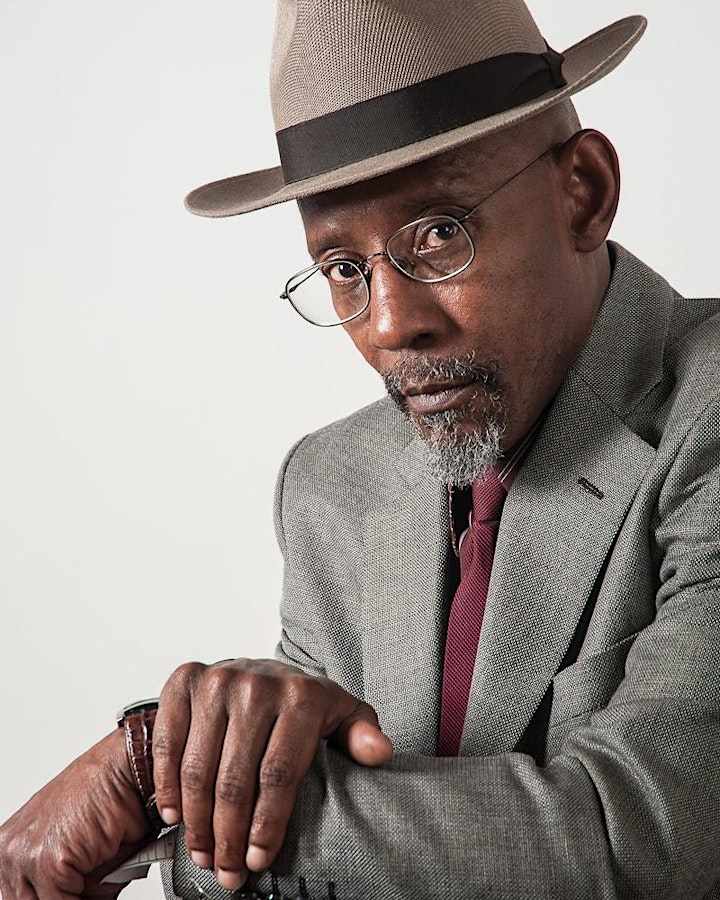
Linton Kwesi Johnson

Linton Kwesi Johnson, is a UK-based Jamaican-British dub poet. Born in Chapelton, a small town in the parish of Clarendon, Jamaica, he came to England in 1963. In the mid-seventies he gained a sociology degree from Goldsmiths College, London, and had poems published in the journal Race Today. Whilst still at school he joined the Black Panthers, helped to organise a poetry workshop within the movement and developed his work with Rasta Love, a group of poets and drummers. In 1977 he was awarded a C. Day Lewis Fellowship and was writer-in-residence for London Borough of Lambeth that year. He went on to work as the Library Resources and Education Officer at the Keskidee Centre. In 2002 he became the second living poet, and the only black poet, to be published in the Penguin Modern Classics series. He is the recipient of many prestigious awards, including numerous honorary and associate fellowships, and most recently was awarded the 2020 PEN Pinter Prize.

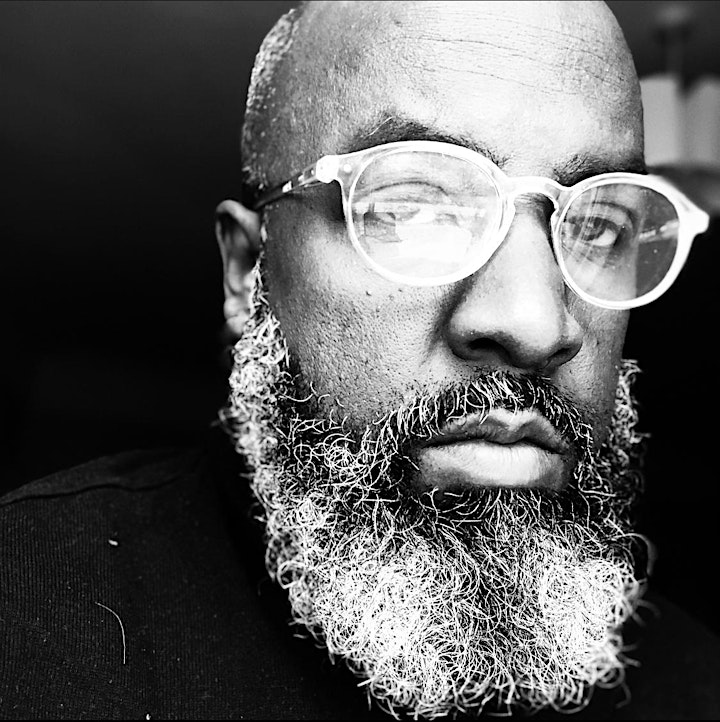
Roger Robinson

Roger Robinson is a writer who has performed worldwide. He is the winner of the T.S. Eliot Prize 2019 and the RSL Ondaatje Prize 2020, shortlisted for the Derek Walcott Prize for Poetry 2020 and shortlisted for The OCM Bocas Poetry Prize, The Oxford Brookes Poetry Prize, highly commended by the Forward Poetry Prize. His latest collection ‘A Portable Paradise’ was a Newstatesman book of the year. He was chosen by Decibel as one of 50 writers who have influenced the black-British writing canon. He is an alumnus of The Complete Works and he has toured extensively with the British Council.

Jay Bernard

Jay Bernard is a writer, their practice is interdisciplinary and much of what they do is rooted in archives and social history. Their debut collection Surge won the Ted Hughes Award 2017 and they were named Sunday Times Young Writer of the Year 2020. Surge was shortlisted for the Costa Poetry Award; T.S. Eliot Prize; Forward Prize for Best First Collection; Dylan Thomas Prize; RSL Ondaatje Prize; John Pollard Foundation International Poetry Prize. Surge is based on the archives at the George Padmore Institute relating to the 1981 New Cross Fire.

Chaired by

Gilane Tawadros, Chair of the Stuart Hall Foundation

Gilane Tawadros is Chief Executive of DACS, a not-for-profit visual artists rights management organisation. She is a curator and writer and was the founding Director of the Institute of International Visual Arts (Iniva) which Stuart Hall chaired for over a decade. She is currently working on an anthology of Stuart Hall’s writings on the visual arts and culture.

About Stuart Hall Foundation

The Stuart Hall Foundation was established in 2015 by Professor Stuart Hall’s family, friends and colleagues. The Foundation is committed to public education, addressing urgent questions of race and inequality in culture and society through talks and events, and building a growing network of Stuart Hall Foundation scholars and artists in residence.

-