15/03/2012

On David Hockney

Melissa Chemam on Twitter (@melissachemam)
3/15/12 8:42 AM

I loved it so much, i wrote about it. RT via @laboiteasorties La Royal Academy de Londres consacre David Hockney – tinyurl.com/7zabvbq

My recent article on the Royal Academy of Arts' exhibition of David Hockney's recent painting. It is in French for a website dedicated to culture and arts...

http://toutelaculture.com/2012/03/la-royal-academy-de-londres-consacre-david-hockney-critique/


LA ROYAL ACADEMY DE LONDRES CONSACRE DAVID HOCKNEY – CRITIQUE

15 mars 2012
Première rétrospective du genre consacrée aux toiles récentes de l’artiste, l’exposition de la Royal Academy consacrée au peintre britannique contemporain David Hockney signe une consécration sans égale pour l’artiste de 74 ans, encore très prolifique. Elle rassemble des œuvres achevées entre 2006 et fin 2011, célébrant l’éternel motif paysager et la gloire des couleurs, dans une pulsion créatrice enthousiaste aux croisements de l’art contemporain et des traditions impressionnistes et « maitres anciens ». Une des grandes expositions qui a donné le coup d’envoi de l’année culturelle olympique de la capitale britannique – à suivre.
Les grands artistes bénéficient souvent du temps, pour jouer de leurs tournants et revirement et régulièrement se réinventer. David Hockney, icône britannique du Pop Art dans les années 1970, orfèvre du paysage sur toile géante, apparaît désormais aussi comme un maitre du figuratif, renouvelé par un regard rétrospectif sur son pays d’origine, le Yorkshire. Après avoir passé plusieurs décennies à Los Angeles à partir de 1964, Hockney s’est inspiré ces dernières années des paysages champêtres de sa campagne anglaise natale dans laquelle il s’est réinstallé en 2005. Mais à travers ces toiles – présentées en ce moment à la Royal Academy of Art de Londres, l’artiste dépasse largement le figuratif pour transcender l’art de la représentation paysagère via son gigantisme et ses couleurs audacieuses. Datant essentiellement de 2006 à décembre 2011, soit pour certains seulement quelques semaines avant l’installation de l’exposition, ces tableaux offrent un exemple de cohérence picturale, dans les thèmes comme dans les choix esthétiques, d’une intensité rare.
La plupart des salles présentent de très grands formats de Hockney, reposant souvent eux-mêmes sur un principe de composition de plusieurs toiles assemblées en modèles géants, composés comme A Closer Winter Tunnel de six tableaux, ou encore dans le sublime Sermon on the Mount – A Bigger Message (salle 10 de l’exposition, 2010) de trente toiles assemblées en une massive œuvre… La plupart de ces tableaux étant d’ailleurs exposés pour la première fois. Le musée britannique a également réunis des aquarelles – des paysages aussi inspirés par la campagne du Yorkshire – ainsi que des carnets de croquis de l’artiste, des vidéos et des dessins réalisés – dernier cri de modernité – sur une tablette numérique. La dernière salle réunit enfin des toiles d’envergure inspirées par les paysages éternels du parc américain du Yosemite, dans le grand ouest états-unis.
Le but de la Royal Academy est d’ainsi mettre en avant « l’engagement émotif » de l’artiste dans des paysages qu’il connaît et a côtoyés depuis sa plus tendre enfance. Né en 1937 à Bradford, dans l’est du Yorkshire, Angleterre, David Hockney a en effet grandi dans la région avant de se rendre au Royal College of Art de Londres en 1959. Il a alors connu le succès dès le début des années 1960, participant ainsi aux débuts du British Pop Art. La fin des années 60 le voit installé pour un bon moment en Californie et dans la veine colorée et lumineuse mais déjà paysagiste de ce mouvement bruyant et mondialement exploré.
A travers cette dernière exposition, les figures de l’arbre, du sous-bois, de la floraison, et des chemins étroits jonglent avec la thématique des quatre saisons, triomphant dans le projet de la salle 9 de l’Académie consacrée à l’étude de l’arrivée du printemps, The Arrival of Spring in Woodgate, comprenant 51 imprimés et une toile géante composée de 32 tableaux. Ils ont été réalisés entre début janvier et fin mai 2011 à partir de la représentation d’un seul et même chemin de la petite bourgade de Woodgate, évoluant sous les pinceaux de Hockney de la mortification de l’hiver à l’éblouissement d’une nature pré-estivale. Le tout offre également un triomphe visuel des couleurs qui virevoltent entre les verts les plus variés et se mêlent de lavandes subtiles, de violets éclatants et d’ocres intenses dans un défilé à la palette aussi large qu’imaginable.
La toile titre Winter Timber, le ‘bois d’hiver’, aux couleurs criardes et aux traits lourds, et la série inspirée de la toile biblique du français Claude Lorrain datant de 1656, Le Sermont sur la montagne, viennent apporter une vague d’hétéroclisme à ce cheminement champêtre.
Le tout donne un immense défi à l’histoire de la peinture contemporaine récente, nie les excès de l’abstraction et du Pop Art dont Hockney lui-même a été l’un des totems vivants…
A presque 75 ans, David Hockney présente ainsi un visage plus que jamais décomplexé et maitrisé de ses œuvres, d’ailleurs au sommet de leur énergie et de leur élan, et une créativité à l’opposé de celle des Young British Artists qui font la jeune génération d’artistes du pays emportée par le mondialement connu Damien Hirst – qui fera lui l’objet d’une exposition au moins autant attendue à la Tate Modern à partir d’avril prochain .
Melissa Chemam
Photo : David Hockney, ‘Woldgate Woods, 21, 23 & 29 November 2006’, 2006. Oil on 6 canvases. 182 x 366 cm. Courtesy of the Artist. © David Hockney. Photo credit: Richard Schmidt

12/03/2012

Hello London Folks!

It's almost spring and it's a blooming artistic season so what else than a little London break for this week?

On my to-do-list, friends and art galleries, among which Lucian Freud at the National Portrait Gallery, German art at Saatchi Gallery and the latest events at the Whitechapel. A little tour from Hampstead to Kensington via East London.

That's for today. Tomorrow is another day and should be enlightend by David Hockney at the Royal Academy.

Join me if you can...

08/03/2012

March 8...


Paris, France, March 8, 2012


After a short break in Berlin, an intense trip to Kenya, and a marvellous discovevy of the Southeastern part of India, I am now back in my hometown, Paris, France. And it is a time of many anniversaries.


As you know, March 8 is the International Day of Women. I do believe that picking one day to celebrate and defend half of humanity is ridiculous and even insulting, but if some intitiatives can help some women somewhere, why not?

As for me March 8 was absolutely a day of liberation, once, in 2002, when I pass the written test to enter in Sciences Po Master of International Relations and Journalism, thanks to a history dissertation on Women in the political and social scene in France throughout the 20th century...

Since then, March 8 remains a special day for me and a metaphor of personal empowerment. As you may imagine, few people at the time thought I could pass the test, as a humble granted student from a low incomes immigrant family... But the topic of women in French history came just on time on the right day to help me show the French University world that it was actually possible.


 Then again, early March brought me another breakthrough in 2008. It is the date when I moved to the US, to Miami specifically, to be on the continent during the presidential campaign that brought Barack Obama to the White House and myself on the roads of the world. The best decision I ever took was to leave the France 24 newsroom in Paris and to become a foreign correspondent! I thus managed to make my dream of a life of travels come true.

So today I'm in Paris but it's only my base for now.


 This weekend I'll be back in London and next week I'll be back in Africa if all goes well.

And there are only more travels ahead...


"I must be gone and live, or stay and die"... On travels and literature


     Travels are privileged times. And reading is the ultimate privilege of patient travellers.

While on the roads of South India, I took many buses, on rides that took hours and even nights, and I stayed alone in quite a few guesthouses and restaurants. Therefore my cherished companions were mainly books, novels, guides and one travel literature masterpiece.

--

My first choice was a personal one, a novel by Jack Kerouac I came across on a London bookshop, down the Old Street Tube Station, Camden Locks Books. Not 'On the Road', his well-know masterpiece, but 'The Subterraneans', a short novel remaining as a embodiment of the unique Beat Generation writing years. Its unseen and revolutionary style, its singled out voice and its peculiar topics - unprecedented for the times - are more than ever noticeable nowadays and made the novel become right away one of my favourite texts of the American literature I came across.

--

The second one started with a memorable quote: "I must be gone and live, or stay and die" (Romeo, in 'Romeo and Juliet', Act 3, Scene 5, by William Shakespeare). As in the Epigraph of 'The Way of the World', by Nicolas Bouvier.

Nicolas Bouvier was a Swiss traveller and writer who wandered on the Eastern routes in the 1950s, crossing the Balkans, Turkey, Iran and India, while the Cold War was only starting. And from these journeys, he brought back some amazing words. 'The Way of the World' was published in 1963 and written in French, and is still considered as a masterpiece of travel literature. It recounts of a journey taking Bouvier and his painter friend Thierry from Serbia to the gates of India, mainly through the Balkans, Turkey, the Caucasus and Iran.

I can confirm there is a great feeling of inspiration coming from reading travel literature on the road. For at least you know one person understood the depth than can come from what others only sees as a running-away bad habit... For most people believe, as a French man once told me, that "to leave is to die a little", as the Edmond Haraucourt's (1857-1941) poem 'Rondel de l'adieu' stated in its first verse, becoming a common French adage. I, on the contrary, strongly believe there is no life without movement, and travel is an essence of life. 

--

Stopping for a while in Auroville, Sri Aurobindo and Mira Alfassa's dreamt and utopian city located in the very heart of India's Tamil Nadu, I encountered a new classic, the 'Letters from Africa' by the great Karen Blixen. The correspondence of the Danish writer with her mother, her brother and her closest ones in Denmark offers a direct insight into Blixen's life in her African farm on the Ngong Hills in Kenya from the 1910s to the 1930s and marvellously complete her unforgettable novel 'Out of Africa'

Since Nairobi has become one of my favourite places among all the cities I have been lucky to live in, this text could only feel very special to me. Reading them while away on my first trip to Asia, a few weeks away only from my latest journey in Kenya - last January - these letters have open a long list of reflections in my thoughts and considerations of this new year, a year already dedicated to travelling and reading and writing... 


07/03/2012

Discovering South India

Some trips are simply eye-opening. I was expecting a lot of a first journey to India. First because I had been willing to travel to India since I was 19 years old... Secondly, because a dear friend of mine has been living in South India, near Pondicherry, for years. 

Towards the end of 2011, I decided 2012 would be a wonderful year of travels. It was my first resolution for the new year. In January and February, I had already traveled to Berlin, Nairobi, London and Paris, but it was not enough. The year had to start with the greatest travel of all, and it was time to make room for 'Incredible' India.


In order to spend some time in the legendary Auroville where my friend lives, I then flew to Chennai (ex-Madras) mid-February and scheduled to spend some time in Tamil Nadu and Karnataka.

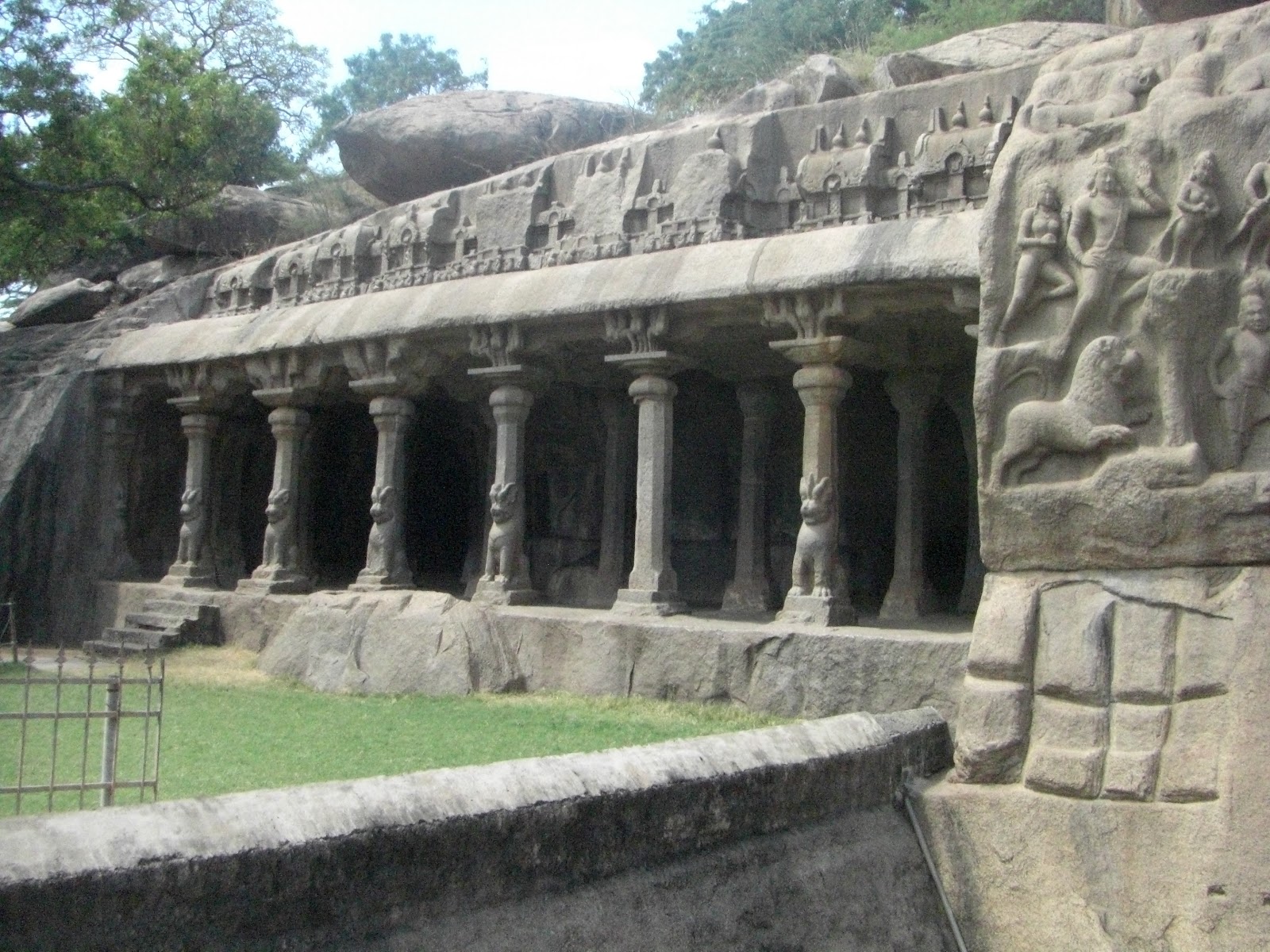
We started the journey with my friend in Mamallapuram / Mahabalipuram, near Chennai, on the Indian Ocean for a short introduction to Tamil Nadu heat and sun and temples...


Tamil Nadu is a very special state of India, very traditional and out of time, so spiritual and colourful, I was lucky enough to travel from Chennai to Pondicherry via Auroville.


While Auroville is so uneasy to define with common words, for its unique social and spiritual experience and its international gathering of people from all over India and the world, Pondicherry is the charm itself of a middle-sized city along the ocean, enlighted by historical and especially French influences, which remain today as a positive and lovely impact.

There is nothing more agreable than a walk in the middle of Pondicherry's main market, more colourful than possible, or a ride through the white streets of the French quarter.


Before spending more time discovering more in depth Auroville, I took a week to travel to the rest of India and decided to ride by bus around Karnataka, to reach the holy temples of Hampi and the Maharajar's palace of Mysore, north and south of Bangalore.

                                                           (Hampi's main temple)

Hampi was quiet, hot and warm and so historical.


Mysore is on the contrary very busy and extremely dynamic.


Getting back to Tamil Nadu through Bangalore, I came back to spend the third week of my journey in Auroville.


But that's already another story.

More soon....


14/02/2012

Time to fly


We are mid-February and after three weeks in Europe it is now time to fly again. 

I am going to Asia for the first time and will be away for three weeks.

See you soon folks,
M


07/02/2012

My latest article for Think Africa Press: Review of 'Getting Somalia Wrong? ' by Mary Harper

Review: Getting Somalia Wrong?


Mary Harper challenges the international media's portrayal of Somalia.

25/01/2012

Kenyan Somali Islamist Radicalisation (ICG)

INTERNATIONAL CRISIS GROUP - NEW BRIEFING

Kenyan Somali Islamist Radicalisation

Nairobi/Brussels, 25 January 2012:  

Kenya’s proximity to and troubled relationship with Somalia and the militant Al-Shabaab movement threaten its security and stability, necessitating sound strategies to combat Islamist radicalisation that go beyond counter-terrorism.

Kenyan Somali Islamist Radicalisation, the latest Crisis Group briefing, examines the spillover of Somalia’s growing Islamism and radicalisation into the neighbouring country. Al-Shabaab, which in the last four years has built a formidable and secretive cross-border support infrastructure and network among Muslim populations in the north east and Nairobi and on the coast, is trying to radicalise and recruit youths, often capitalising on long-standing grievances against the central state. The October decision of Kenya to deploy thousands of troops in Somalia’s Juba Valley to fight the group underscores the threat that the government perceives it faces from Somalia’s insurgency and growing Islamist radicalism.

“Al-Shabaab’s swift rise to relative dominance in southern Somalia has added to concerns about radicalisation in Kenya and beyond”, says Abdullahi Boru Halakhe, Crisis Group’s Horn of Africa Analyst. “Despite recent military setbacks, growing internal schisms and public backlash, it remains a major threat to Somalia’s and the region’s security and stability”.

Kenyan Somalis – some 2.4 million of the country’s 38.6 million population according to the 2009 census – have been exposed to various strains of radical Islamism in the last four decades. A history of insurgency, misrule and repression and lack of basic services in the North Eastern Province have posed an additional threat. Moreover, Somalia’s two decades of conflict have also had a largely negative effect on the province and Kenyan Somalis.

The deployment of troops to Somalia may jeopardise benefits produced by a modest affirmative action policy that is opening opportunities for ethnic Somalis in Kenya and drive more members of the politically important minority into Al-Shabaab’s arms. There is also concern that the decision to join the fighting in Somalia country may lead to more terror attacks inside Kenya.

Partly due to lack of resources, government counter-terrorism efforts continue to focus on policing and border security, but more needs to be done both with programs designed to counter radicalisation as well as with those that seek to de-radicalise persons who have already joined radical groups. There is a link, but counter-terrorism tactics aimed only at stopping Al-Shabaab and other militant groups should not become the only official response to radicalisation. Reducing the appeal of Islamism and persuading people already in radical organisations to leave should be a priority. Moreover, the government should recognise that a draconian crackdown on Kenyan Somalis, or Kenyan Muslims in general, would radicalise more individuals and add to the threat of domestic terrorism.

“It would be a profound mistake to view the challenge solely through a counter-terrorism lens. Counter-radicalisation and de-radicalisation are long-term processes needing tact and patience”, says EJ Hogendoorn, Crisis Group’s Horn of Africa Project Director. “Radicalisation will be a problem long after the physical threat of Al-Shabaab terrorism subsides”. 

24/01/2012

Statement by the Prosecutor of the International Criminal Court on Kenya ruling


Source: ICC
Statement: 24.01.2012


Yesterday’s ruling is critically important in many dimensions. Yesterday’s decision is establishing individual responsibility for the post electoral violence but also for a peaceful Kenya.

We appreciate that the judges explained the decision in a public session and that there have been no reports of violence as a result.

Judges confirmed that the first acts of violence in 2007/08 were planned and organised by members of the ODM led by Ruto a year in advance. This generated retaliatory attacks against ODM supporters. 

The International Criminal Court has identified those who have to face justice. There are substantial grounds to believe they committed the crimes they are charged with but they are still presumed innocent.

Another significance of the ruling is that it defined what crimes against humanity are. It goes back to Nuremberg and makes clear that no country has sovereignty to attack civilians.

Talking about legal definitions, contrary to the Prosecution’s allegations, the Chamber finds that acts of forcible circumcision do not constitute other forms of sexual violence but other inhumane acts (since not every act of violence targeted against a body part commonly associated with sexuality is sexual in nature.)

As any other court the ICC is making factual and legal decisions, but ICC intervention is helping Kenya move to a more peaceful future with no costs. In 2008, Kofi Annan helped establish peace in Kenya but what would be the cost of another post election violence in Kenya? More lives lost, more people displaced and not to mention millions in money.

We also appreciate the fact that the accused appeared voluntarily before the court. This goes to show Kenya is managing its transition to a less violent future. President Kibaki yesterday committed to solve the problems of victims of violence still displaced. Victims do not have to wait for a conviction before they receive any help. The government of Kenya has a responsibility to help its citizens. And to protect them. The Office is concerned about allegations of attacks against victims of the crimes.

Let me look to the future now.

We will keep investigating Kosgey and the activities of the police as well as crimes allegedly committed in Kibera and Kisumu. We will not appeal the decision.

Some of the accused have stated that they will appeal the decision. President Kibaki said Kenyan legal teams are studying the ruling. This is a legal right for the accused. The prosecution is preparing for trial but if the judges accept the appeal, this will delay the beginning of the trial. This further delay may be frustrating for victims but this is the legal process and we have to respect it.

It is in the hands of Kenyans themselves to solve the problems in Kenya. Kenya must decide on the candidates for the upcoming election and seize the opportunity to discuss the way forward and invest in the future.

Thank you.

UN Special Representative moves to Mogadishu - first time in 17 years


UN WebsiteUNPOS United Nations Political Office for Somalia  
Featured News

UN Special Representative moves to Mogadishu - first time in 17 years

Mogadishu, 24 January 2012 – The Special Representative of the Secretary-General (SRSG) for Somalia, Ambassador Augustine P. Mahiga today moved the office of the SRSG back to Mogadishu after an absence of 17 years.  Ambassador Mahiga, who was welcomed at the airport by Prime Minister Abdiweli Mohamed Ali, Somali Officials and foreign diplomats, said he was delighted that the UN Political Office for Somalia (UNPOS) would now be working from the capital.
 
“I sincerely hope that the arrival of the UN Political Office will mark the start of renewed hope for the future of Somalia,” said Ambassador Mahiga. “Being in Mogadishu will allow us to work far more closely with the Transitional Federal Institutions, the UN agencies and NGOs already based here, civil society and ordinary Somalis. We have much to do and we are eager to get straight to work.”
 
The last SRSG to be based in Mogadishu, James Victor Gbeho of Ghana, who was with the UN Operations in Somalia II (UNOSOM II), left in early 1995. UNPOS was established shortly afterwards and was based in Nairobi. However UN staff remained in Somalia throughout the following years and at present six agencies have permanent staff in Mogadishu.
 
After the airport welcome and the raising of the UN Flag, the SRSG proceeded to Villa Somalia where he was welcomed by President Sheikh Sharif Sheikh Ahmed and officially presented his credentials. The SRSG then travelled back to AMISOM Headquarters to inspect a Guard of Honour and pay tribute to the remarkable sacrifice of the African Union peacekeepers and the Somali Security forces in advancing the cause of peace.
 
“Without the incredible efforts and sacrifice of the troops from Somalia and other African countries, we would not be here today,” said Ambassador Mahiga. He pledged to the Somalis that the UNPOS move to Somalia would herald the beginning of a new era of cooperation and political engagement as the transitional period draws to a close.
 
The SRSG will spend Wednesday at Villa Somalia for discussions with his Somali interlocutors on resolving the ongoing Parliamentary crisis and will also meet the UN Country Team.
 
“Now we are here working among you, I believe we will see significant progress on implementing priority tasks in the Roadmap to restore peace and stability to Somalia,” the SRSG said.