23/06/2012

One way ticket

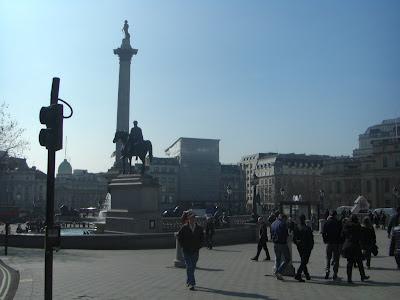
It is Summer and as I mentioned here already, Summer will be the season for London.


I just book my one way ticket to the British capital and will be leaving Paris in a week. 2012 is the year of travels, so it's the way forward. Paris, we had a great time but it never seems to be enough to make me stay for good.


 London's Summer 2012 will be the summer of the Olympics and Parlympics, which I should cover for radio,  and will see my return at the BBC World Service's headquarter, in their new building in Central London.


I hope to see you there!

Kenya's port of Mombasa threatened according to the USA

U.S. warns of attack threat in Kenyan port city

The press agency reports that the US warns Kenya over terror attacks in Mombasa...

You can read the article from the link below:

(Reuters) - The U.S. embassy in Kenya has warned of an imminent threat of an attack on the Kenyan port city of Mombasa and asked all its government workers to leave the coastal town, which has been hit by a series of attacks.

http://www.reuters.com/article/2012/06/23/us-kenya-security-idUSBRE85M03O20120623

22/06/2012

London calling: Summer of ARTS

Here is a list of my main choices of exhibitions not-to-miss my first weeks in London this summer. Theere are so many possible choices, but time is - by nature - limited!
Follow me... and feel free to add some more.


Damien Hirst
Until Sun Sep 9
Tate Modern, SE1


Out of Focus: Photography
Until Sun Jul 22
Saatchi Gallery, SW3


Summer Exhibition 2012
4 June—12 August 2012
Royal Academy
In the Main Galleries, Burlington House
http://www.royalacademy.org.uk/exhibitions/summer-exhibition-2012/


Bauhaus: Art as Life
Until Sun Aug 12
Barbican Centre, EC2


Picasso and Modern British Art
Until Sun Jul 15
Tate Britain, SW1


British Design 1948-2012: Innovation in the Modern Age
Until Sun Aug 12
V&A, SW7


The London Open
 Whitechapel Gallery
4 July-14 September 2012
Galleries 1, 8 & 9
This exhibition showcases the most dynamic work being made in London in 2012.
Admission free
http://www.whitechapelgallery.org/exhibitions/the-london-open


Afropolitans!

This event is a dream come true, a dream I did not even dare to have...

My favourite museum, the V&A in London aka the Victoria and Albert Museum in South Kensington, is organising a new monthly event in Paris.

It is called Friday Late Paris and the first one is next Friday, June the 29th, and branded Afropolitans.

It will take place at the Wanderlust, a new hot and trendy fashion and art place on Quai d'Austerlitz, Paris 13e, recently opened.

The evening will be focused on African fashion, photography, style, and aesthetic.

This will be on my last weekend in Paris before I move to London again and get to spend all my Friday evenings at the V&A.

So looking forward!


Here are the details:

"We're pleased to announce a monthly collaboration with Wanderlust - the new multi-disciplinary space set in the Docks-Cité de la Mode et du Design. On the last Friday of every month, we present Friday Late Paris.

Following it
s success in London in 2011, join us for Afropolitans - an evening exploring African fashion, photography, and personal style, looking back to the image makers who captured the excitement and optimism of the 60s and 70s, and forward to the young Afropolitans who are creating a new urbane and cosmopolitan African aesthetic.

Visitors can have their portrait taken in our monochrome, Malick Sidibé-inspired photo studio, or join textile designer Emamoke Ukeleghe for a hands-on workshop, screen printing vintage-inspired designs onto Vlisco’s famous Dutch Wax fabric.


Rising British designer Adrien Sauvage will appear in conversation to discuss his Ghana-inspired A. Sauvage Black Volta collection, and we will be screening the documentaries Dolce Vita Africana and Sunday in Brazzaville. There will be a fun and interactive installation by Laurence Airline designer Laurence Chauvin-Buthaud and music from the Secousse Sound System DJs
".


---
 
Links:

http://www.wanderlustparis.com/en.html

Africa Writes 2012 - London, SOAS, June 30 - July 1

The Royal African Society (RAS) in London organises every every year a brilliant event called Africa Writes - a literature and book festival celebrating contemporary African writing, and for 2012 it begins soon.

"Africa Writes aims to enhance coverage and discussion about African literature and writers in London - and the UK, by extension - showcasing established and emerging literary talent from Africa and the Diaspora during a weekend-long series of events, including book launches, readings, panel discussions, children's workshops and other activities:, RAS explains on its website.

The festival will also feature a two-day international book fair of publishers of African writing and an outdoor pan-African food market featuring dishes from all four corners of the continent.

This year Africa Writes will mark the 50th anniversary of the African Writers Series and Chimamanda Ngozi Adichie - author of Half a Yellow Sun and winner of the Orange Prize for fiction - will be delivering the main lecture focusing on the legacy of the series. 

Other confirmed authors taking part in the festival include: Ellen Banda-Aaku, Nuruddin Farah, Kojo Laing, Lily Mabura, Jack Mapanje, Obi Okigbo, Noo Saro-Wiwa, E. E. Sule, Goretti Kyomuhendo and the five shortlisted Caine Prize writers for 2012, namely Rotimi Babatunde, Billy Kahora, Stanley Kenani, Melissa Tandiwe Myambo, and Constance Myburgh. 

Participating poets include: Modeste Hugues, Oxmo Pucion, Kety Nevyabandi Bikura, Shalija Patel, T.J. Dema, Paul Dakeyo, Bewketu Seyoum, Abdulahi Botaan Hassan 'Kurweyne', Warsan Shire, Sam Elmi, Elmi Ali, Inua Ellams,Yemisi Blake, Safia Elhillo, Mariama Khan, Togara Muzanenhamo, and Lemn Sissay.

On Sunday, 1st July, panel discussions will be held on the current publishing landscape for contemporary African writing and the phenomenon of "Writing Away from Home", which affects so many African writers living in the Diaspora. 

The festival's closing event will be Word from Africa, part of Poetry Parnassus at the Southbank Centre (Sunday, 1st July, 6-10pm).


All events are free and open to the public except for the Chimamanda lecture and Caine Prize event.

---
Infos:

Africa Writes 2012

30 June, 2012 - 01 July, 2012 
 
          Where:
SOAS, Thornhaugh Street, Russell Square - London,WC1H 0XG 
 
http://www.royalafricansociety.org/events/details/1173-africa-writes-2012.html
 

Ethiopia, land and pastoralism

On those days of the Earth Summit in Rio, my thoughts goes especially to the future of food in Africa and especially Ethiopia where I was reporting on the topic about a month ago.

This week, the NGO Human Rights Watch (HRW) published a report on the endangered balance between pastoralism and agriculture. Here it is:


http://www.hrw.org/news/2012/06/18/ethiopia-pastoralists-forced-their-land-sugar-plantations

Government Should Consult, Compensate Indigenous Communities

June 18, 2012
 
It concerns the Omo region in the South of the country where the government intends to start state-run sugar plantations, according to HRW. 
 
"The 73-page report, “‘What Will Happen if Hunger Comes?’: Abuses against the Indigenous Peoples of Ethiopia’s Lower Omo Valley,”documents how government security forces are forcing communities to relocate from their traditional lands through violence and intimidation, threatening their entire way of life with no compensation or choice of alternative livelihoods," states the NGO's website.
 
Give it a read.

20/06/2012

RIO+20: Views from Ethiopia

As I mentioned a few weeks ago, I was in Ethiopia reporting on food security in East Africa, in the perspective of the UN Summit of Rio+20, in French 'Le Sommet de la Terre', organised 20 years after the 1992 UN summit in the very same city in Brazil.


Here is a link to my first report from Ethiopia on the issue for La Deutsche Welle in French:

http://www.dw.de/dw/article/0,,16028463,00.html


 "Le sommet de Rio+20 consacré à l’économie verte et à l’éradication de la pauvreté s’ouvre lundi. La question de la sécurité alimentaire dans les pays en développement comme l'Ethiopie s’annonce au centre des débats. On connaît les problèmes auxquels est confronté le Sahel, mais en Ethiopie, où la sécheresse a durement frappé en 2011, l’Etat est parvenu à supprimer les famines qui avaient accablé le pays jusqu'à la terrible crise de 1985. Cela dit, les difficultés perdurent."

Listen at the end of the page in: Audios et vidéos sur le sujet


Direct link to audio:

http://www.dw.de/popups/popup_single_mediaplayer/0,,16028478_type_audio_struct_0_contentId_16028463,00.html

More soon.

My main radio story will be on BBC Afrique this week, listen in BBC Matin here:


http://www.bbc.co.uk/afrique/

19/06/2012

CMPF Summer School for Journalists: Investigative journalism in France


Best Practices nb#2
Investigative journalism

Case in France
Melissa Chemam
--
Summer School for Journalists
CMFP, Florence, June 2012
--
Investigative journalism is not as developed in France as in the US or the UK. But legally, laws exist to protect journalists and their sources. It’s more in practice that it becomes sometimes dangerous for the investigative reporters to try and protect their rights, contacts and sources.
The Press Freedom Law of 29 July 1881 passed under the French Third Republic intended to liberalise the press and promote free public discussion. The new law swept away a swathe of earlier statutes, stating at the outset the principle that "Printing and publication are free".
But in 1893, following French anarchist Augustin Vaillant’s assassination attempt, the first anti-terrorist laws were voted, which were quickly denounced as ‘lois scelerates’, threatening the media freedom. These laws severely restricted freedom of expression, permitting widespread censorship of the press. Since then, the country has been battling to protect the rights of journalists to investigate political stories. Censorship was current during World War I, for instance, and it led to the 1915 creation of the Canard enchainé weekly, which used and still uses today satires, cartoons and games of words to pass through censorship.
Though the press is largely unrestricted by law in France, indirect pressures are still denounced by some journalists. They comes from state members in order for instance to prevent publication of materials against the interests of the government or influential industries. Involvement of the government and major industrial groups with press organisations also occurs regularly. The business groups Dassault and Bouygues are for instance well know to be close to the main right-wing party and own many newspapers and TV stations favouring their candidates during elections or the government’s policy when the right is in power. 
To avoid such bad practices, newspapers have developed editorial committees and other tools to protect themselves from owners’ involvement in their investigation.
An example: In 2010, French investigative journalists were accused of uncovering two scandals involving Nicolas Sarkozy during his pre-presidential career, involving ‘L'Oreal’ heiress Liliane Bettencourt and an arms contract in Karachi, Pakistan. But the accusations themselves were finally published all over the press and thus were heralded as a triumph for press freedom. Newspapers and websites like Le Monde, the investigative news website Mediapart, and the satirical and investigative weekly Le Canard Enchainé, gave French people revelation and their reporters exposed the meanderings of the Bettencourt and ‘Karachigate’ scandals.
The culture of investigative journalism seems to have taken root in France, but the collision between politicians and journalists remains slippery. Many French journalists and politicians study in the same universities and gather in the same networks, which is demeaning their independence.
Nonetheless, mainly in the print press, investigative journalists still cherish their independence and do not hesitate to defend it when necessary. In 2010, for instance, shareholders in the French newspaper Le Monde denounced then President Nicolas Sarkozy’s attempt to interfering in interfering in the process of selling their newspaper.
But Le Canard enchaîné, a weekly 8-page newspaper remains the main source of investigation in France. It is very independent and unique in many ways, as it has no website and carries no advertising. Above all, it is the only newspaper in France that practices ongoing investigative reporting about politics.
--

Sources :
http://www.persee.fr/web/revues/home/prescript/article/arss_0335-5322_2000_num_131_1_2663 : Les révélations du "journalisme d'investigation", par Dominique Marchetti, Actes de la Recherche en Sciences Sociales, Année 2000, Volume 131, Numéro 1

CMPF Summer School: Status of journalists (Best practices)


Best Practices nb#1
Status of journalists (professional and/or non-professional, including bloggers)
Case in France
Melissa Chemam
--
Summer School for Journalists
CMFP, Florence, June 2012
--
I have been a journalist for seven years, trained in Paris and I have been working as a journalist in France for three years before I moved to report from abroad and finally worked for British media. From this experience, what I can underline as a good practice in France is that the status of journalists is pretty well defined and protected in this European country. Journalist is a respected profession in France, though many struggles especially freelancers and bloggers. Journalists have a specific status and laws are into place to try to protect their work and their independence.
This status of journalists has been defined pretty early in France, in the late nineteenth century and is pretty much the same nowadays. It comes from the 1881 Law on the Freedom of the Press voted on July the 29th 1881, under the French Third Republic - often called Press Law of 1881. The law defines the freedoms and responsibilities of the media and publishers in France and provides a legal framework for publications. It also therefore regulates the display of advertisements on public roads. It has been amended several times since its enactment, but remains in force to the present day.
The text established a number of basic principles, which liberalised the publishing industry, as the law requires only that publishers present their names to the authorities with two copies of their work. The authorities were denied the power to suppress newspapers and délits d'opinion - crimes of opinion, or types of prohibited speech – was then abolished. It also attributes to journalist a professional card, the ‘press card’, and grants them with a tax allowance, two measures aimed at protecting them from financial struggle in order to insure a better editorial independence.
Another important law define the press’ legal framework in France in the audiovisual field, dating from 1982. It made radios and televisions opened to private operators, completely revolutioning the French broadcasting landscape. A large number of other rules finally protect freedom of expression for every kind of press in France.

Finally a Charter of the Professional Duties of French Journalists was adopted by the National Syndicate of French Journalists in 1918 and revised and completed by the Syndicate in 1938. The Loi Guernut-Brachard passed in 1935 also defined the collective labour contract for journalists. The statute was revised in 1956 under the leadership of Marcel Roëls, and then in 1968, 1974, and 1987.


However, we must note that the media landscape in France has changed a lot in recent years: the press is trying to conquer the web (with many popular websites such as Rue 89, Mediapart, etc), the arrival of 14 new, young and very active channels shaking ageing TV landscape with its five major channels, and new technologies “redefining the status of journalists”, according to the European Journalism Centre. “Paradoxically, the press is not doing well but more and more people are trained in journalism schools, while logs are an increasingly legitimate source (and more reactive) than newspapers on certain specialities”, it stated on its website.
According to the BBC country profiles, “France enjoys a free press and has more than 100 daily newspapers; most of them are in private hands and are not linked to political parties”. But it is, in fact, a difficult time for journalists who have encountered a true identity crisis in France.
We can add along with the European Journalism Centre that “the present media landscape in France has its cultural roots in the postwar period, when the state decided to regulate an industry that lost credit after the collaborationist Vichy regime. The state is hence still very present in the written press (via a recently renewed system of subsidies), the TV (with France Televisions as a major actor and its president almost directly appointed by the state), the radio (Radio France group has two stations in the top five in terms of audience), the cinema (with a complex system of subsidies handled by the National Cinematographic Center, or the CNC), and more recently on the Internet (with regulations on cultural products, downloading and property rights known as Hadopi). State-level decisions regarding French media are thus awaited with impatience and are often very important moments”.
--
Sources:
CMPF Summer School for Journalists

More details on the Summer School for Journalists organised by the Centre for Media Pluralism and Media Freedom and the European University Institute in Florence...


We were 32 participants from all over Europe, including Turkey and Kosovo, to take part into the workshop organised from June 11 to 15 in Florence, Italy. 


Details here:


http://cmpf.eui.eu/training/summer-school-2012.aspx


The aim of the School was to identify and shape a common culture and approach to freedom and pluralism of media across Europe, based on theoretical principles and best practices as well as the exchange of ideas and points of view.
Specific focal areas of the summer school are the governance of journalistic activity and the role of investigative journalism for media freedom and democratic dynamics.   

For five days we listened to media and new media experts, from Pier Luigi Parcu to Steven Barnet from the University of Westminster, including Tom Rosenstiel from the Pew Research Center in the US, Alexander Stille rom Columbia University, USA, Dirk Voorhoof from Ghent University, Belgium, and Beata Klimkiewicz from Cracow, Poland.

We are now trying to build a network to try to keep on working on these issues. 

In this goal, our colleague Laura Schneider, PhD candidate at the University of Hamburg, is now conducting a survey on media freedom. If interested, you can find how to participate here:

http://ww3.unipark.de/uc/hh_fak5_lschneider/a55d/ospe.php?SES=f69970775c24983c5840e6831679d5f1&syid=277116&sid=277117&act=start

 I will publish the two presentations I wrote about France in the next blog posts.


Cheers.


--


http://cmpf.eui.eu/Home.aspx