09/04/2015

London shows the way for African Art in Europe / America


As I always said! And NYC is following. Paris, wake up. 

Read below:

http://www.okayafrica.com/news/1-54-ny-contemporary-african-art-fair-new-york-frieze-week-2015/


London’s 1:54 Contemporary African Art Fair is crossing the Atlantic next month for its US debut during New York’s Frieze Week. Dubbed 1:54 NY, this satellite edition of the growing art gathering will set up shop at Brooklyn’s Pioneer Works from May 15-17. Yesterday, 1:54’s creator and director Touria El Glaoui revealed the lineup of artists and galleries exhibiting at the New York presentation. “Contemporary African art is continuing its rise to the fore as it is granted the attention it duly deserved,” El Glaoui said about expanding the fair. “In light of this, it seems only right that 1:54 would spread its wings to land in New York, where established and emerging African artists and artists of the African Diaspora are leading a burgeoning contemporary art scene that communicates across international geographies. The New York edition will retain the intimacy and charm that the setting of London’s Somerset House has made possible, and as always, will showcase the highest caliber of art to date, in an unrivaled setting.”
What do you think?

1:54 NY’s participating galleries, which come from Abidjan, Cape Town, Johannesburg, Lagos, London, Marrakech, Milan and Paris, will feature works from 70+ African artists, including Gabonese painter Boris Nzebo, British-Nigerian draftswoman ruby onyinyechi amanzelegendary Malian portrait photographers Malick Sidibé andSeydou Keita, Senegalese fashion and fine arts photographer Omar Victor Diop, Kenyan visual artist Jim ChuchuBeninese mixed-media artist Romuald Hazoumè, iconic Nigerian photographer J.D. Okhai Ojeikere, Mozambican sculptor Gonçalo Mabunda, Belgian-Beninese photographer Fabrice Monteiro, and Tunisian artist and researcher Nidhal Chamekh, among others. For more on the upcoming 1:54 NY fair head to their official websiteTwitterInstagram, and Facebook, and see below for the full list of participating exhibitors and artists.
What do you think?

1:54 NY Selected Exhibitors
What do you think?

A Palazzo Gallery, Brescia / Afronova, Johannesburg / Art Twenty One, Lagos / ARTCO Gallery, Aachen / Axis Gallery, New York / Bennett Contemporary, Cape Town / CIRCA Gallery, Johannesburg / Galerie Cécile Fakhoury, Abidjan / Jack Bell Gallery, London / Magnin-A, Paris / Mariane Ibrahim Gallery, Seattle / NOMAD Gallery, Brussels / Primo Marella Gallery, Milan / SMAC Gallery, Cape Town / VOICE Gallery, Marrakech

1:54 NY Selected Artists
What do you think?

Aboudia
Leonce Raphael Agbodjelou
Leila Alaoui
ruby onyinyechi amanze
Olu Amoda
Joël Andrianomearisoa
Younes Baba-Ali
Sammy Baloji
Steve Bandoma
Wayne Barker
Rim Battal
Daniel Blom
Conrad Botes
Armand Boua
Frédéric Bruly Bouabré
Nathalie Boutté
Edson Chagas
Nidhal Chamekh
Jim Chuchu
Soly Cissé
Bruce Clarke
Peter Clarke
Barend de Wet
Calixte Dakpogan
Omar Victor Diop
Bright Ugochukwu Eke
Theo Eshetu
François-Xavier Gbré
John Goba
Maïmouna Guerresi
Romuald Hazoumè
Ayana V. Jackson
Seydou Keïta
Lebohang Kganye
Abdoulaye Konaté
Lawrence Lemaoana
Toyin Loye
Gonçalo Mabunda
Ibrahim Mahama
Abu Bakarr Mansaray
Megumi Matsubara
Vincent Michéa
Jean-Paul Mika
Bobson Sukhdeo Mohanlall
Shula Monsengo
Fabrice Monteiro
Jean-Claude Moschetti
Richard Mudariki
Lavar Munroe
Vitshois Mwilambwe Bondo Cheikh Ndiaye
Boris Nzebo
J.D.’Okhai Ojeikere
Gérard Quenum
Chéri Samba
Amadou Sanogo
Kura Shomali
Malick Sidibé
Ransome Stanley
Pathy Tshindele
Eric van Hove
Billie Zangewa
Asha Zero

Cultural guide to Nairobi - by The Guardian


The insider's cultural guide to Nairobi: Tusker beer, urban slang and 'writivism'


From Lupita Nyong’o street art to occupied playgrounds and poking fun at socialites, let Josephine Opar guide you round Kenya’s capital

Nairobi culture in five words

Beeps from security wands and metal detector machines are the norm in Nairobi, because of the compulsory security checks at every major building, mall, event locations and some buses in the city. In short, security checks are everywhere. Individuals are required to put their bags and phones in trays while they walk through the metal detector machine and in some places security guards also frisk people.

Everyone’s tuning into …

The Trend, NTV’s hit show, chats with popular and polarising personalities that people in Kenya are talking about on Twitter: from pop stars to skin-bleaching socialites.

The look on the street

Nairobians are all about mixing local and international trends. Local accessories are popular, while clothes are often sourced from markets (mtumba), or from vendors who select pieces from overseas. Designers and tailors are increasingly becoming a popular choice for producing original attire.

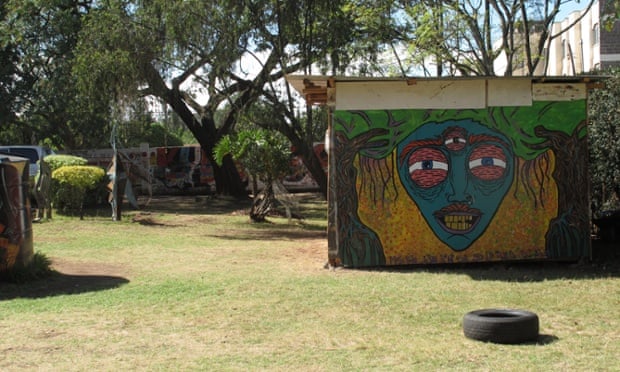
Kuona Trust
Pinterest
 Kuona Trust. Photograph: Joel Lukhovi
Kuona Trust is a vibrant and accessible arts space in the Hurlingham district of the city. It’s a great place for discovering local painters, glass artists, visual artists, sculptors and photographers, who showcase their work there at regular exhibitions and installations, events, workshops and community outreach programmes.
Kuona markets many Nairobi-based artists. Recently, director Sylvia Gichia spoke out about the Venice Biennale scandal, which sees Chinese and Italian artists representing Kenya instead of local artists, for the second time.

What’s the big talking point?

Digital migration – three leading private TV stations operating on analogue platforms were switched off for three weeks in February for failing to migrate to digital. The conflict caused Kenyans on social media to swap memes making fun of the situation. Now that all the stations are back on air, Kenyans are required to purchase set-top boxes to watch local channels, unless they already have satellite TV.
Fena is a solo singer-songwriter whose take on the urban-soul genre is swaggy and relatable. She is proudly African, from her dreads to her lyrics she stands out as a positive, “fena-menal” woman. The artist recently shared a stage with the legendary South African singer Yvonne Chaka Chaka.

What Nairobi does better than anyone else …

Tusker beer is made in Nairobi, and is popular with Kenyans and tourists alike. Locals often drink it with nyama choma (barbecued meat). Now that police are on the look-out for drunk drivers, Kenyans are doing their best to enjoy their alcoholic beverages responsibly and avoid failing the “alco-blow” tests.

--

See more here - on The Guardian:

http://www.theguardian.com/cities/2015/apr/07/nairobi-kenya-insider-cultural-guide-urban-slang-lupita-nyongo


08/04/2015

Bristol headlines the BBC News website: Battle over historical building on Stokes Croft and the idea of housing


Bristol's Stokes Croft: Battle over 'home' of Banksy

  • 8 April 2015
  •  
  • From the sectionBristol
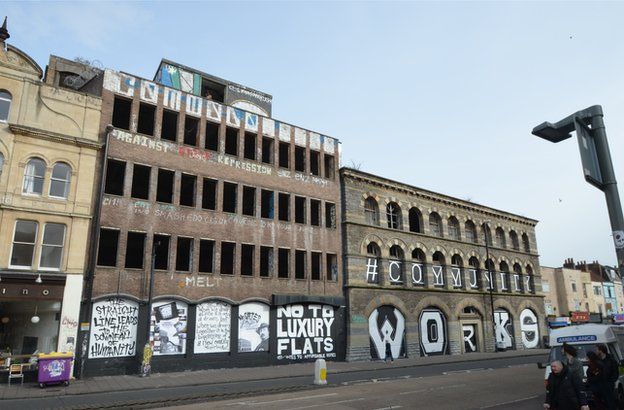
Westmoreland House and the Carriageworks
Westmoreland House (left) opened in 1966, while the Carriageworks was built in 1862
A derelict listed building at risk of being lost could finally be redeveloped, but hundreds of people have objected to the plans that will be debated later.
Developing the Carriageworks would provide much-needed housing in Bristol and rid the Stokes Croft community of an "eyesore". But, would it destroy the soul of an area famed for street art by the likes of Banksy?
Link: http://www.bbc.com/news/uk-england-bristol-32132450

"He's arguably the most significant artist ever to come out of Bristol," says Chris Chalkley, chairman of community group the Peoples Republic of Stokes Croft (PRSC).
"That building, which was the first carriage showroom anywhere, deserves better than to be turned into luxury flats."
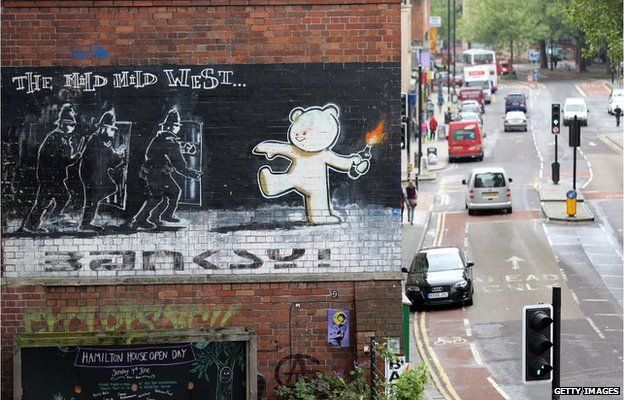
Mr Chalkley is not talking about artist Banksy, who painted his famed mural The Mild Mild West further along Stokes Croft.
He is talking about architect EW Godwin, who built the Grade II* listed Carriageworks in 1862, for horse carriage manufacturers John Perry and Sons.
The Mild Mild West by Banksy
The Mild Mild West, on Stokes Croft, is one of the most loved and known Banksy artworks in Bristol
The building was later used as offices for Regional Pools Promotions, and in the 1960s the organisation added the concrete building Westmoreland House next door.
But, both buildings have been empty for three decades, and their deterioration largely contributed to English Heritage classifying the entire Stokes Croft Conservation Area as "at risk".
Now, a planning application for Westmoreland House to be demolished and for the Carriageworks to be turned into 118 flats has been recommended for approval at a Bristol City Council meeting later.
So why is there wide opposition?
Fifteen influential people - including the executive chairman of Aardman Animations, and the council's former head of planning services - have signed an open letter calling for the proposals to be rejected.
The report for the council's planning committee also acknowledges 1361 objections from the public, while there have been just 21 responses in support.
Many people, including the PRSC, fear the gentrification of the area.
"If this development goes ahead it will irrevocably change the nature of the area," said Mr Chalkley.
"Stokes Croft is an area that's always had an independent spirit. It's an area that's become a beacon of alternative thinking."
He remembers Stokes Croft being "shunned" through decades of neglect by people in power, but says the community turned the area around for itself.
People now come from all over the world to see the street art and experience being in an "outdoor gallery", he says.
"We now find ourselves where after 30 years of dereliction, and the community having developed within that, all of that can be swept away because some developers from elsewhere deem that might be a good thing," says Mr Chalkley.
"In 2011, this community had Tesco forced upon it and we saw what happened."
Opposition to Tesco led to two nights of violent clashes between protesters and police.
A protest march is also planned against the Carriageworks development, to coincide with the council meeting.
English Heritage, which has since been succeeded by Historic England, has backed the council in support of the application.
The site has been on the Heritage At Risk Register since 1998, and is one of Historic England's risk priority sites in the South West.
In his letter to the council Simon Ramsden, principal inspector of historic buildings and areas, said he hoped the proposals "can be delivered in the near future in order to prevent any further damage" to the important building.
The Carriageworks Action Group (CAG), an alliance of residents and businesses, agrees the building needs developing, but says the proposals are not good enough.
"What's proposed is bland, boring and a pastiche, what you would find in any boring high street in any clone town in the country," says Lori Streich, who chairs the group.
The group wants an "innovative and interesting design" that befits the "iconic and fantastic" design of the Carriageworks.
CAG, supported by the council, had been working on its own proposals with a housing association called Knightstone, but these were put on hold following the planning application by Fifth Capital London.
The community had wanted a mix of affordable housing and units for small businesses.
"What we want and what the community desperately needs is affordable housing, and the Fifth Capital proposals are for only eight out of 118 to be affordable," says Ms Streich.
The city's mayor, George Ferguson, says the council remains "committed to the regeneration of this eyesore site", and will continue to consider options for a compulsory purchase order should the owner either fail to secure planning consent or to develop the site.
Bristol Civic Society supported the work of CAG and Knightstone, but also supports the current planning application.
It has wanted the Carriageworks to be developed for years, although it has opposed all previous planning applications.
"The current application is a pretty attractive one," says chairman Simon Birch.
"The quality of the architecture is good and if it gets built in the way that is proposed it will look fantastic."
He believes the 1960s building is "a horror" and welcomes its demolition.
Fifth Capital London director Marc Pennick sounds surprised by the opposition he has encountered in Bristol.
"People say they want investment but it seems that certain factions of the area don't want change," he says.
Fifth Capital London does not own the property, but Mr Pennick says he has agreed to buy it from Comer Homes if planning permission is given.
He likes the Carriageworks because it is a listed building, and he sees it as "a great opportunity to put something back into the area".
Mr Pennick estimates between £15m and £20m is needed to develop it, and the only way to raise this "serious amount of money" is by building and selling flats.
The decision is now in the hands of councillors, but Mr Pennick says he will "find a way forward" even if they refuse permission.
"I've started this," he says. "I'm not going to stop."
--

My pictures from Stokes Croft, taken in February 2015:


Banksy's famous "Mild Mild West" at the Hamilton House on Stokes Croft:


More of Stokes Croft and nearby streets: 


--

07/04/2015

Meanwhile in Somalia...


On The Guardian:


Kenya launches air strikes against al-Shabaab camps in Somalia


Military says jets have bombed two camps in border region in response to massacre of students at Garissa University

 in Nairobi and agencies

Monday 6 April 2015


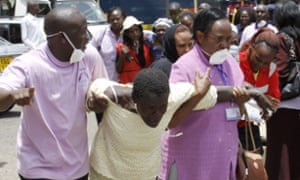
Medical staff console a woman after she  viewed the body of a relative killed in Thursday's attack at Garissa university.
Pinterest
 Medical staff console a woman after she viewed the body of a relative killed in the attack at Garissa University. Photograph: Khalil Senosi/AP
Fighter jets have bombed two al-Shabaab camps in southern Somalia, Kenyan officials said on Monday, as more details emerged of the model-student-turned-jihadi who took part in a massacre that left 148 dead.
In the first major military response to last week’s attack by the militant group on Garissa University, jets hit what were described as al-Shabaab camps in two villages in the Gedo region of southern Somalia, close to the border with Kenya.
A spokesman for the Kenyan military, Colonel David Obonyo, said the al-Shabab camps which were used to store weapons and for logistical support were destroyed, but it was not possible to determine the number of casualties because of poor visibility.


The bombings, which followed President Uhuru Kenyatta’s promise to retaliate in “the severest way possible” to the attack, in which dozens of cowering students were lined up and shot in the head at close range, came as a government source told Reuters that governors, members of parliament and security officials from regions bordering Somalia would compile a list of people suspected to have joined al-Shabaab or been radicalised by Islamists.
“The message is very clear: we have to deal with this problem once and for all,” said the official, adding that regional governors had discussed the idea with Kenyatta on Monday.
Hawa Yusuf, who lives in a village near the town of Beledhawa that is close to the Kenyan-Somali border, said the Kenyan warplanes “were hovering around for a few minutes, then started bombing.” She didn’t know if there were any casualties, she said by phone. Another resident of the village, Ali Hussein, said the airstrikes hit a grassland “where nomads often take their animals for grazing.”
As Kenya began the second of three days of national mourning, meanwhile, people digested the shock identity of one of the gunmen.
Abdirahim Abdullahi – whose name was first revealed by the Kenyan journalist Yassin Juma on his blog and later confirmed by Kenyan authorities – was described by friends as a “brilliant, upcoming lawyer” and an A-grade student who took a mysterious turn to radical Islam at some point between school and university.
Abdullahi was the son of a chief – a Kenyan government official whose job includes identifying criminals to the police and arbitrating in local disputes.
Friends described the gunman, who had secured an internship at a major bank that recruits many Muslim graduates, as a bright student who began to show signs of radicalisation during his college studies, even as he gave motivational lectures to high-school pupils.
“He used to make the students laugh with his words, quoting wise people and motivate them to do the best they can. He was the perfect lawyer. He had his way with people,” a former student said.
One student described a conversation with Abdullahi and another of his former schoolmates Mohamed Atom, who is the only Kenyan known to have joined Islamic State in Syria, after one of its motivational lectures.
He told the Sahan Journal website that the lawyer-turned-jihadi and his friend spoke of the futility of western education and repeatedly brought up the question of dying to advance the cause of religion.
“After the lecture, they kept talking about how secular education was not useful,” said a previous student who engaged him afterwards. “He kept saying: ‘We need to strengthen our connection with Allah. It is the knowledge of Islam that will only be useful to you today and in the hereafter.’”
Alarmed by the prospect of more Kenyans returning from jihadi training camps to take part in terror atrocities, the authorities urged relatives whose children had disappeared to come forward.
“It is indeed very necessary and critical that parents whose children go missing or show tendencies of having been exposed to violent extremism report to authorities to help prevent further escalation of radicalisation”, Mwenda Njoka, an interior ministry spokesman, told the Standard newspaper.
The Garissa attack came amid a debate about Kenya’s involvement in a UN-backed, African Union troop mission to tackle al-Shabaab in Somalia.
Although the Kenyan military has enjoyed considerable success on the battlefield, taking few casualties and pushing the terror group from most populated centres in southern Somalia, the mission has come at the cost of more than 400 Kenyan lives.
Al-Shabaab, which at one point controlled most of Somalia, has lost swaths of territory in recent years but diplomats have repeatedly warned this has not diminished its ability to stage guerrilla-style attacks at home and abroad.
It has threatened to turn Kenyan cities “red with blood” and police have stepped up security at shopping malls and public buildings in the capital, Nairobi, and in the eastern coastal region, which is popular with tourists and has been prone to attacks.

Read here:


France : vers plus de surveillance?


Communiqué de l'ONG Human Rights Watch


France : Un projet de loi ouvrirait la voie vers une société de la surveillance 


Ce texte bafoue des obligations relatives aux droits humains et servirait de modèle préjudiciable pour d’autres pays 


(Paris, le 7 avril 2015) – Un projet de loi conférant de vastes pouvoirs de surveillance électronique contrevient aux engagements internationaux de la France relatifs aux droits humains, a affirmé aujourd'hui Human Rights Watch. Le texte, qui a déjà obtenu l'approbation de la commission des lois de l'Assemblée nationale, risquerait de servir de modèle extrêmement néfaste pour d'autres pays, et devrait être reconsidéré et révisé, au lieu de faire l’objet d’un examen accéléré par le parlement. 

Le projet de loi relatif au renseignement, qui était prévu avant même les attentats contre Charlie Hebdo et un supermarché Hyper Cacher, doit être examiné en séance plénière à l'Assemblée nationale à partir du 13 avril, dans le cadre d'une procédure législative accélérée qui exclut une seconde lecture. Parmi les défauts de ce texte figurent les pouvoirs considérables accordés au Premier ministre pour autoriser la surveillance, sur des motifs qui dépassent largement ceux reconnus par le droit international des droits humains ; le manque de contrôle judiciaire effectif ; l'obligation pour les fournisseurs de services privés de contrôler et d'analyser les données des utilisateurs, et de dénoncer les comportements suspects ; les longues périodes de conservation de certaines des données collectées ; et le manque de transparence vis-à-vis du public.

« Bien que l'objectif du projet de loi soit de raccrocher les pratiques de surveillance de la France au cadre du droit, c'est en réalité une extension massive des pouvoirs en matière de surveillance qui se drape dans le voile de la loi, » selon Dinah PoKempner, directrice juridique chez Human Rights Watch. « La France se doit de faire mieux que ça, surtout si elle veut se distancier des pratiques de surveillance de masse abusives et secrètes des Etats-Unis et du Royaume-Uni, qui suscitent tant de contestations juridiques. »

Le projet de loi consacre en préambule le respect de la vie privée ainsi que le principe selon lequel toute forme d'entrave à ce droit n'est légitime que si elle est nécessaire et proportionnée. Pourtant, ce point de départ positif est rapidement mis à mal par une liste extensive de sept « intérêts publics » qui peuvent justifier la surveillance, parmi lesquelles « les intérêts économiques et scientifiques essentiels » de la France, la « politique étrangère » et l'« exécution des engagements […] internationaux ».

Contrairement à la protection de la sûreté nationale et de la sécurité publique, de tels intérêts ne sont pas reconnus aux termes du droit international des droits humains comme motifs valables pour porter atteinte aux droits fondamentaux, et peuvent de plus être interprétés de façon très large pour justifier toutes sortes de contrôle de données.

« L'exemple du droit américain montre comment des normes vagues peuvent facilement finir par justifier une surveillance de masse », selon Dinah PoKempner. « La très large portée de ce projet de loi contredit radicalement les obligations de la France aux termes du droit international des droits humains, et  pourrait servir à légitimer légalement un État de surveillance. » 

Le texte inclut l'obligation pour les opérateurs d’installer des dispositifs secrets, non spécifiés et fournis par l’État, pour analyser les comportements suspects – par exemple des visites sur des sites web faisant l'apologie du terrorisme, ou des contacts avec des personnes faisant l'objet d'une enquête. Cette obligation pourrait potentiellement s'appliquer à un nombre pratiquement illimité de critères, selon Human Rights Watch.

Cette disposition, dont la Commission de réflexion et de propositions sur le numérique de l’Assemblée nationale avait suggéré la suppression, mais qui a été conservée par la Commission des lois, suscite déjà des inquiétudes. La France pourrait forcer des entreprises privées à opérer comme analystes de sécurité de substitution pour l’État, avec des conséquences qui pourraient être désastreuses sur les fonctionnalités en ligne et la sécurité des informations, ainsi que sur la confiance des consommateurs et les droits fondamentaux tels que l'accès à l'information et la liberté d'expression et d'association.  Les entreprises devront garder confidentielles leurs activités au nom du gouvernement, ce qui réduirait encore davantage la transparence.

Human Rights Watch a rappelé que de nombreux chercheurs, journalistes, universitaires, avocats et acteurs humanitaires visitent des sites web qui font l'apologie du terrorisme, et échangent avec des personnes liées à des crimes, pour mieux comprendre ces exactions et lutter contre elles.

« L'ensemble des activités d'organisations indépendantes devrait-il ainsi faire l'objet d'un contrôle et d'une suspicion généralisée? » a demandé Dinah PoKempner. « Les gouvernements les plus répressifs pourront remercier la France, qui créée un précédent juridique en forçant les plus grandes entreprises de l'Internet à contrôler non seulement les indices de “terrorisme”, mais aussi les indices d'une dissidence tout juste naissante, ou même d'une pensée indépendante. » 

Le projet de loi confère entière discrétion au Premier ministre, pour appliquer ces pouvoirs de surveillance. Il est censé consulter au préalable un nouvel organe consultatif, la Commission nationale de contrôle des techniques de renseignement, mais n'est pas obligé de suivre son avis. Et même cette étape de consultation peut disparaître au profit d'une surveillance en temps réel, quand il existe « un risque très élevé » de ne pouvoir exercer cette surveillance a posteriori.  

Le projet de loi n'impose aucune obligation de contrôle judiciaire sur les mesures de surveillance avant leur mise en application, à moins qu'une majorité de neuf membres nommés à la commission ne soient en désaccord avec la décision du Premier ministre. Dans ces cas, très rares, la question devra être renvoyée pour examen devant le Conseil d’État, la plus haute cour de justice administrative française.  

Au contraire, un seul membre de la commission suffit pour approuver une mesure, et si la commission ne s'exprime pas au cours d'une brève période dédiée à son examen critique, qui dure 24 à 72 heures, la mesure peut prendre effet. Si la commission devra faire des rapports publics, ceux-ci ne présenteront guère que le nombre de fois où elle aura été sollicitée, aura rendu un avis défavorable au recours aux techniques de surveillance, et le nombre de fois où le Premier ministre sera néanmoins passé outre. 

« Au final, la commission n'a pour ainsi dire aucun moyen de remplir sa fonction protectrice », a affirmé Dinah PoKempner.

Le public continuera à ignorer le nombre de gens faisant l'objet d'un contrôle, le type de cibles autorisé et la nature de celles-ci, les motifs justifiant ce contrôle, le moment où la surveillance a lieu et la façon dont elle s'exerce, les types de matériaux collectés et conservés, ou encore le nombre de fois où le gouvernement passe outre la procédure pour raison d'urgence, a déclaré Human Rights Watch.

« Il est difficile de voir comment les personnes visées – que ce soit directement ou en raison d'associations dont elles ne sont pas conscientes, de l'endroit où elles sont, ou d'autres raisons – pourront savoir qu'elles ont fait l'objet d'un contrôle, et contester ces actes devant le Conseil d’État », a souligné Dinah PoKempner.

Deux autres aspects du projet de loi sont inquiétants. Une fois approuvées, les mesures de surveillance – y compris grâce au piratage ou des logiciels malveillants – pourront être prolongées indéfiniment, sans contrôle judiciaire ni signalement à la personne qui en fait l'objet. Les données obtenues grâce à cette surveillance pourront, dans certains cas, être conservées cinq ans, voir même indéfiniment. 

De nombreux amendements ont été proposés, dont certains apporteraient des améliorations, tandis que d'autres pourraient encore exacerber les inadéquations entre le texte et le droit des droits humains, selon Human Rights Watch.

« Peu après les attentats du 11 septembre 2001, l'administration Bush a fait passer en force le Patriot Act, consacrant des pouvoirs que peu avaient compris, sans vrai débat ni examen juridique, » a conclu Dinah PoKempner. « Le Premier ministre Manuel Valls prétend que le projet de loi français n'a rien à voir avec le Patriot Act, mais autoriser une surveillance d'une telle portée nécessite une réflexion approfondie, plutôt qu'un passage précipité au Parlement. »