26/09/2015

Banksy's Dismaland in pictures


When you arrive...


--

Inside the Castle:


--

In the park, on a sunny day: 


What an odd suggestion ;) 


Broken fairy tales...


Films are shown here: 


A bit of politics:


And lots of love:


Messaging us:


Dismaler:


Banksy's own pieces:


More messages:


--

Insights into the Gallery:


--


More soon!!

Last day tomorrow.


21/09/2015

About Bombin', and the birth of the hip-hop culture in the UK


Very interesting talk about the birth of hip-hop and graffiti in England in the 80s.

James Lavelle programmed the 1987 film at the Southbank Centre when he curated the Meltdown Festival in 2014, where this discussion was held.

Fascinating and lively insights from Goldie into this scene.


Bombin’ director Q&A with Goldie and James Lavelle

Director Dick Fontaine discusses making Bombin’ (1988) with musicians Goldie and James Lavelle, and talks about his experiences making Beat This! (1984) in New York after meeting Grandmaster Flash and Afrika Bambaataa. Lavelle and Goldie reveal how they became involved in hip-hop culture.


--


"Find Your Own Way Home"


Yanka's Song (Part II) - Massive Attack v Adam Curtis @ Park Avenue Armory, NYC 9/28/13 - Finale:


Liz Fraser, ‘Yanka’s Song’ with Adam Curtis' message:

Outside our fragile cocoon, beyond the reach of the two dimensional ghosts, and the enchanted music of the dead, the future is also full of possibility. It is not predictable. You can make anything happen. You can change the world. Now find your own way home’. 

« En dehors de notre fragile cocon, au-delà de la portée des fantôme en deux dimensions et de la musique des morts, l’avenir est aussi plein de possibilités. Il n’est pas prévisible. Vous pouvez faire arriver les choses. Vous pouvez changer le monde. Maintenant, trouver votre propre chemin pour rentrer ».


20/09/2015

About the UK and Syria


Very much worth reading!
Highlights are from myself...


The four questions we need to answer before bombing Isis or Assad


The west’s failure has already fuelled Syria’s dirty war. Now it needs to address how we got here, the endgame, the legality and the global implications before it asks for permission to shoot
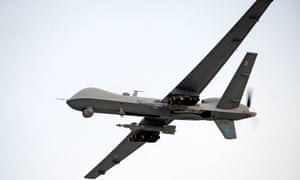
An RAF Reaper UAV (unmanned aerial vehicle). An RAF Reaper UAV
As early as November, parliament could be asked to authorise bombing in Syria. It will be a re-run of the 2013 debate with one important difference: this time we will be bombing the other side.
The UK’s national security body was said last week to have recoiled from a proposal to impose a no-fly zone against President Assad’s air force, using ships and cruise missiles. The government is reportedly “nervous” of any military action that might provoke an Iraq-style protest movement. Instead, we will be asked to authorise strikes against Isis, already the target of RAF bombing missions in Iraq. They are right to be nervous, because so is the British public. There is revulsion at the outcome of the Iraq and Afghanistan interventions; despair over the west’s inability to rebuild democracies in the dictatorships it invades.
For a major and historic military power, this is a situation close to paralysis. Its roots lie in the breakdown of the two alliance systems of which Britain is part. China and Russia prevent the UN security council from endorsing lawful military intervention to stop the massacre. And the US has lost its appetite for full-scale military intervention. At Westminster, there is the added complication that the opposition does not yet know its position.
But a decision is coming. Britain, as a permanent member of the UN security council, has not only the right but the duty to uphold international law, by force if necessary.
If you’re a pacifist, then it’s justifiable on moral grounds to say nothing can be done. If you are not, then the most valuable thing you can apply to the Syrian crisis is logic. As a public service journalist, I don’t get a voice on whether to bomb or not. But we all have a right to ask questions.
The first challenge is to understand what is happening. A democratic uprising became a civil war, got hijacked by Islamists, was abandoned by the west, and became a bargaining piece in a bigger standoff with Putin’s Russia. Yes, the US was trying to destabilise Syria before 2007, as the WikiLeaks cables show, but it was as unenthusiastic about the Syrian spring of 2011 as it was about the Arab spring in general. The Syrian uprising failed because Putin re-armed a military that was teetering, and because Iran’s proxy militia in Lebanon, Hezbollah, intervened in a crucial battle that helped defeat the moderate opposition. And because – again at crucial moments – Qatar and Saudia Arabia withheld aid from secular opposition forces in order to strengthen their own proxies. Though the US-backed Free Syrian Army is fighting Assad, major recent gains were made by the so-called Army of Conquest, backed by Turkey, Saudi Arabia and Qatar. In July, the latter actually attacked US-trained rebels inserted into their territory.
So, it’s a four-way civil war. In such a war any military action from outside will provoke a reaction, and a change in the balance of forces. The question those proposing to bomb Isis alone have to answer is: how will that help end the conflict in Syria? If Isis disappears from the map, who does the British government think will take its place? Three-quarters of civilian deaths have been attributed to Assad, not Isis. So is the attack on Isis to be used as a bargaining chip with Assad? Or as an implicit threat to him?
The next question is: what is the desired end result. From the US state department to Jeremy Corbyn’s office in Portcullis House, there is agreement that it will involve a diplomatic settlement including Russia and any western nations who have committed forces. It may lead to partition, or de-facto zones of control. And it must involve the destruction of Isis.
The US has become used to using Saudi Arabia, Qatar and Turkey as proxies in the region, as Russia has with Iran and Hezbollah. But the US nuclear deal with Iran has angered these regional players and strengthened their determination to have their own game plan for the Syrian opposition.
Before it commits to any conflict in Syria, parliament needs to ask what the involvement of these powers will be. For this is a war as dirty as the dirtiest moments of Iraq. The increasingly unhinged regime in Turkey has already used the cover of fighting Isis to bomb Kurdish positions in Iraq and is now at war with the Kurdish PKK inside Turkey itself. The Saudis and Kuwaitis have fuelled sectarianism throughout. Specifically, what promises will be made to Syria’s Kurds as to their position in a postwar carve-up?

The next question is legality. Since Isis has recruited British Muslims and targeted them against Britain, the legal case for proportionate military action will not be hard to make. But an attack on Syria would have to be justified under international humanitarian law. That means proving there is an overwhelming humanitarian need; that there is no alternative; and that the action is proportionate. This, I understand, is the argument that has been put to both frontbenches: that hitting Assad is the single most constructive thing you could do to end civilian deaths and stem the flow of refugees.
The final problem is geopolitical effectiveness. Given Russia has moved troops into Syria this month, and may be preparing to station fighter jets there, why does the British government think bombing Isis, or bombing Assad’s airbases at the same time, would bring Russia closer to a strategic deal? Proponents of intervention say it will, and that Putin will broker peace in Syria if he sees Assad’s freedom of action once again curtailed.
Right now, the public mood in Britain is split between “something must be done” and “nothing can be done”. We employ diplomats and national security advisers to think beyond this: but we have a right to detail, clarity and transparency.

Isis rules half of Iraq because the government the west installed there failed. It rules large parts of Syria because that state fell apart, and the west balked at the chance to fight Assad in 2013. In both Syria and Iraq, then, Isis took advantage of the west’s failure of strategy. Logic therefore dictates that what can beat Isis is not primarily bombs or drones but an effective regional strategy. That’s what I want to hear from the green benches on the day defence secretary Michael Fallon asks for permission to shoot.

-


Link to the Guardian article:


ABOUT THE YOUNG KARL MARX


My next project will be a contribution to this exciting film!!!
Very much looking forward!

Raoul Peck is a brilliant and committed filmmaker whose films are each powerful and meaningful. And I'm really privileged to have worked with him from 2005, ten years ago, on the preparation of this very same project.

A few details below!


--


THE YOUNG KARL MARX by Raoul Peck is now shooting.

Featuring August Diehl, Stefan Konarske, Vicky Krieps, Amy Wren, Olivier Gourmet, Alexander Scheer


Agat Films and Velvet Film (France) are teaming up with Rohfilm (Germany) and Artémis Productions (Belgium) to produce "The Young Karl Marx", penned by Raoul Peck and Pascal Bonitzer, and to be directed by Peck.

The feature film will star August Diehl as Karl Marx, and Alexander Fehling as Friedrich Engels.
Principal photography is scheduled to begin in July 2015.

Films Distribution will handle the international sales.

In France, Canal Plus, France Télévisions (France 3 Cinéma) and Diaphana (French distributor) back
the film. In Germany, the film is supported by the Medienboard Berlin-Brandenburg (MBB) et Mitteldeutsche Medienförderung (MDM) while Neue Visionen will release it.


"The young Karl Marx" tells the story of a great friendship between two brilliant and insolent young men and their turbulent youth, who will, for better or for worse, forever change the world. At 26, Karl Marx leads his wife, Jenny, into exile. In 1844, in Paris, they meet the young Friedrich Engels, the son of a textile factory owner, who has studied the terrible birth of the English proletariat

Together, between censorship and police raids, between riots and political power struggles, they will preside over the birth of the labour movement with the completion of the renowned Communist Manifesto to a backdrop of the 1848 rebellions.

--

"Avoiding the habitual caricature of the old bearded revolutionary icon, this film is the coming of age of two young and daring intellectuals who will have an extraordinary impact on the world of the 20th Century and beyond." - Raoul Peck


Raoul Peck's latest feature film, "Murder in Pacot" is selected as part of this year Berlinale Panorama
Special, and will have its European Premiere on Tuesday 10 at 21:30 at Zoo Palast.

Previous Peck's films include: "Man by the Shore" (Competition, Cannes 1993), "Lumumba" (Directors' Fortnight, Cannes 2000), "Sometimes in April" for HBO with Idris Elba and Debra Winger (Competition, Berlinale 2005), "Moloch Tropical" (Toronto 2009, Berlinale 2010), "Fatal Assistance" (Berlinale and Hot Docs 2013) and "Murder in Pacot" (Toronto 2014, Berlinale 2015).

--

Raoul Peck Set to Direct August Diehl in ‘Young Karl Marx’ (EXCLUSIVE)


August Diehl stars as Karl Marx

Haitian vet helmer Raoul Peck is on board to direct “The Young Karl Marx,” a period drama chronicling the turbulent youth and friendship between Karl Marx and Friedrich Engels.
The ambitious project has lured two German stars: August Diehl (“Night Train to Lisbon,” pictured above) for the role of Marx, and Alexander Fehling (“Inglorious Basterds”) for the role of  Engels.
Pic is being produced by Agat Films and Velvet Film in France, Rohfilm in Germany and Artemis Prods. in Belgium.
Films Distribution, Nicolas Brigaud-Robert and Francois Yon’s Paris-based arthouse company, has acquired international sales to the film.
Written by Peck and Pascal Bonitzer, “The Young Karl Marx” opens with 26-year old Marx who goes with his wife, Jenny, into exile, and depicts Marx’ encounter with Engels, the son of a textile factory owner, in 1844 Paris.
Set against the backdrop of the 1848 rebellions, which culminated in police raids and riots, the movie charts Marx and Engels’ journey to complete Communist Manifesto, which gave birth of the labor rights movement.
“Avoiding the habitual caricature of the old bearded revolutionary icon, this film is the coming of age of two young and daring intellectuals who will have an extraordinary impact on the world of the 20th century and beyond,” said Peck, whose latest “Murder in Pacot” will be playing in the Berlinale Panorama Special on Feb. 10.
“The Young Karl Marx” is backed by pay TV Canal Plus, pubcaster France Televisions (France 3 Cinema), as well as Germany’s Medienboard Berlin-Brandenburg (MBB) and Mitteldeutsche Medienforderung (MDM). Diaphana and Neue Visionen will release the movie is France and Germany, respectively.

'Just Like Honey'


Massive Attack V Adam Curtis - 'Just Like Honey', live @ Kraftzentrale, Duisburg, Germany. 31.08.2013


'Dream Baby Dream', Manchester Style


Extract from Massive Attack v Adam Curtis: 'Dream Baby Dream' (from Suicide) @ Manchester International Festival, Mayfield Station 4/7/13


Time lapse


Extract from Massive Attack versus Adam Curtis - live in NYC at the Park Avenue Armory, in October 2013

'Bela Lugosi's Dead' by Massive Attack