06/02/2016

Reasons of wrath: Nightmare in Calais


Rage and wrath... When will human being learn to treat their fellow human beings as they deserve? I'm ashamed to hold a French passport when I read this.

I'll be in Calais in two weeks, here is where you can help us:

https://fr.ulule.com/dici-dailleurs/supporters/

And in you're in Paris, come to our fundraising gig:
https://www.facebook.com/ceuxdicietdailleurs/?fref=ts


Calais Jungle: French prosecutors investigate alleged 'endemic' of attacks on refugees

One man suffered a black eye and a broken jaw
Cameron has promised that the UK will take 20,000 Syrian refugees over the next five years AFP
French authorities are investigating at least six alleged attacks on refugees at the makeshift Calais Jungle migrant camp.
Volunteer legal teams have described the rise in attacks on migrants as 'endemic".
It is currently believed 5,000 refugees are living at the camp.

Attacks on 'Jungle' migrants investigated by French prosecutors

Marianne Humbersot, the head of a legal centre opened by volunteers in the camp about a month ago, says she has been told of 20 attacks in the last two weeks.
Many migrants do not want to make a complaint to the police, she says.
The investigations have not yet identified any individuals, but Jean-Pierre Valensi, one of the main prosecutors in the region, says they know they drive a black BMW and use metal weapons.
The move was part of a new housing project which is aimed at improving conditions in the camp.

--


And today a demonstration against migrants is happening in Calais despite an official forbid:


Read here in French:


La manifestation de Pegida maintenue à Calais, malgré l'interdiction

Les autorités craignent des débordements samedi lors de la marche du mouvement d'extrême droite contre la présence des migrants. Le général Christian Piquemal, qui a commandé la légion étrangère de 1994 à 1999, fera partie du cortège.

Malgré l'interdiction préfectorale décidée par le ministre de l'Intérieur Bernard Cazeneuve, le mouvement d'extrême droite Patriotes européens contre l'islamisation de l'Occident (Pegida) est déterminé à maintenir samedi sa manifestation à Calais contre la présence des migrants. Et ce malgré les sanctions pénales encourues. Par crainte des débordements et pour «veiller à faire appliquer l'arrêté préfectoral», un important dispositif de sécurité a été prévu, indique la préfecture du Pas-de-Calais.
Dans leur déclaration de manifestation, les organisateurs de Pegida avaient annoncé 800 à 1000 personnes. Avec un manifestant de marque, inattendu, qui fait la joie du mouvement: le général de Corps d'Armée Christian Piquemal, combattant d'élite qui a commandé la légion étrangère de 1994 à 1999 et a longtemps présidé l'Union nationale des parachutistes (UNP). Il a rédigé un communiqué annonçant sa venue à Calais, révolté par l'interdiction préfectorale. «Nous maintenons notre participation, apolitique, qui se fera dans l'ordre, le calme et la discipline des “vieilles troupes” ; j'y serai présent physiquement, martèle le militaire en retraite. Il y aura dans nos rangs des personnes vulnérables (femmes, enfants, personnes âgées et/ou handicapées) et il n'est donc pas question, à aucun moment, de se confronter aux forces de l'ordre autrement qu'amicalement: des consignes précises ont été données et un personnel de sécurité veillera à leur application. C'est donc confiant dans le futur déroulement de notre action que j'invite tous les Patriotes et associations patriotiques à se joindre à nous». Pour la plus grande satisfaction de Pegida: «Que fera le Préfet, va-t-il envoyer de la lacrymo sur un général en retraite, et pas n'importe lequel?», interroge Loïc Perdriel, qui dirige la branche de Pegida en France.

Thylacine


THYLACINE - Moskva [Transsiberian album]


THYLACINE - Chaman [Transsiberian album]


THYLACINE - Pleasure ⎜Official Video⎜


Thylacine - Live @ Festival Les Nuits Claires


05/02/2016

For Calais


British Tory MP visits Lesbos and ask David Cameron for compassion for the refugees


Heidi Allen tells The Independent: 'I was prepared to be upset – I wasn’t prepared for the sheer scale'

Read the story on The Independent's website: 

http://www.independent.co.uk/news/uk/politics/take-more-refugee-children-from-europe-tory-mps-tell-david-cameron-after-mission-to-lesbos-a6850601.html


--


Take more refugee children from Europe, Tory MPs tell David Cameron following mission to Lesbos


A group of Tory MPs has urged David Cameron to take more refugee children from within Europe after witnessing first hand the "sheer scale" of the desperate situation on a Greek island at the centre of the crisis. 
The three MPs met with immigration minister, James Brokenshire, after travelling to Lesbos, where up to 6,000 asylum-seekers arrive from Turkey every day to squalid conditions and total administrative chaos.
Last week, the Prime Minister rejected calls from charities to take in 3,000 unaccompanied children who had already arrived in Greece and Italy, saying Britain would focus its efforts on Syria and other conflict zones.
The Independent can reveal that he now faces growing pressure to reconsider that approach from his own MPs, who reported back to Government with their findings last night.
Heidi Allen, the MP for South Cambridgeshire, Caroline Ansell, the member for Eastbourne and Jo Churchill for Bury St Edmunds were taken out to Lesbos by Save The Children, one of the main charities providing relief to the thousands of refugees as they arrive on the island.
The three MPs met with Mr Brokenshire before they left on the trip in order, Ms Allen says, to be “filled in on the Government’s strategy” for the region.
But Ms Allen said that after seeing “the discarded life jackets, the broken ships and battered limbs” of people arriving in Lesbos, she would “bang every drum” to get the Government to do more for genuine asylum-seekers within Europe’s borders.

Speaking to The Independent, she acknowledged Mr Cameron’s concerns about the “pull factor” of providing help to people who have made the journey to Europe themselves – possibly encouraging more to do so.
Nonetheless, she said: “I defy any country, and I would drag them to the table myself if I have to, if we identify however-many thousands of unaccompanied children who genuinely have not a soul in the world [not to do more to help them].
“We will find homes for them,” she said.
Save The Children say around 26-27,000 unaccompanied children turned up on Europe’s shores last year – but admit that this is just a best guess because of failures processing new arrivals.
And Ms Allen said that Government's must act now to help solve the crisis: “At the moment the difficult position is we just don’t know how many [unaccompanied children] there are,” she said. “And the faster we can process these people, the faster we can find out whether they do have true refugee status, then the faster we can work out how to help them and identify those children.”

‘I was prepared to be upset – I wasn’t prepared for the sheer scale’

save-the-children-1.jpg
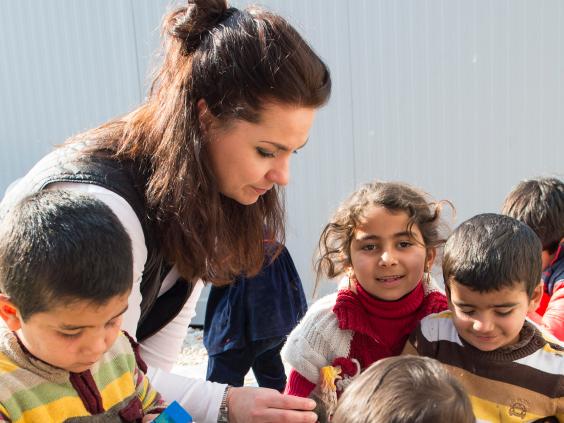
Conservative MP Heidi Allen plays with Syrian refugees during a visit to Lesbos, Greece (Matt Crossick/Save The Children)
Ms Allen said she agreed to the trip with Save The Children when she had a “gut instinct we should be doing more”, without a clear idea of what that would mean.
She says she was told of the need to “relieve the administrative pressure”, and even “wondered whether there could be a military operation… with people turning up on an island met by men in green uniforms”.
“We have seen such uncontrolled immigration, and countries risk losing their compassion because they are overwhelmed,” she said. “It seems to me if you are a person looking at the statistics and infrastructure you will be terrified and batten down the hatches and say no more.”
She said she had “been privileged to lead a beautifully sheltered life” and, up until last week, had never met anyone “who had gone through this”.
When the MPs were there, though, they saw the boats people arrive in, helped distribute supplies and sat down with men, women and children who had fled from conflict.
 “I was prepared to be upset by it all – I wasn’t prepared for the sheer scale,” she said.
“I’ll never forget the sight of a woman slightly younger than me, walking along with her two little children and barely able to open her eyes because her face was so obliterated by black eyes and bruising.
“And she didn't need to say a word, at a glimpse she told you exactly where she’s come from. It was absolutely heartbreaking, and I’ve never seen anything like it in my life.”

'We need to step up'

Ms Allen said she was proud Britain had pledged to take in 20,000 refugees, as well as being “second only to America” in the amount it has contributed towards solving the crisis financially.
But she said she would also press the Government to do more for unaccompanied children in Europe and called on Europe as a whole to address the administrative issues preventing them from being identified.
She is hoping to go to Italy next with Save The Children, where the authorities have a better grasp on who arrivals are and where they have come from. 
“If I do get to Italy and I see there are unaccompanied children who have been identified, then I will be pushing hard [on the Government] because I feel that we do need to step up and take some of them,” she said.
“As the situation evolves and we get better at identifying children, I think there should be a review of that 20,000 figure,” she said. “I think that should be fluid.”

'A proud history of offering safe havens to children'

Ms Allen said her own rural constituency of South Cambridgeshire had not been called upon to take refugees yet as part of the 20,000 pledge, and said there were “great reservations” in the area about how people would be integrated into the community.
But having seen the situation in Lesbos, she said she would “want us to try” and do more if called upon by the Home Office. 
“We are extremely rural with very poor public transport links, so for the most part they would be stuck in the middle of nowhere and I don’t think that would be helpful.
“But I’ve had lots of people volunteering, and we would look to try and do something in the villages [near the city of Cambridge] where it might work.”
--


04/02/2016

Sicilia, amore mio


I want to thank my new home to lead the way! Sicily, I got you!

Article shared by the International Organisation for Migration (IOM) on The Times's website:

http://www.msn.com/en-us/news/world/how-one-sicilian-village-learned-to-love-migrants/ar-BBoM4fa?ocid=LENDHP

How One Sicilian Village Learned to Love Migrants


The Sicilian village of Sutera, like many in rural Italy was dying. Its population fell from 5,000 in 1970 to 1,500 and there was little hope of revival. Its schools and businesses were closing and farmers struggled to tend its fields of pistacchio and olives.
This year, its population has surged by 200 after the local mayor agreed to take in some of the thousands of migrants that have made the dangerous journey from Africa to the Sicily.
“We have always been a hospitable town,” says the Mayor of Sutera, Giuseppe Grizzanti. “Our name comes from the ancient Greek word Soter which means ‘salvation’ because, thanks to our geographical location, Sutera was a perfect stronghold against invasions. Two thousand years later, our town has rediscovered its vocation for hospitality, giving shelter to these families fleeing war.”
Sutera has more to offer than hospitality. Hundreds of its homes were empty and and it even had work to offer. “Sutera was disappearing,” says Grizzanti. “Italians, bound for Germany or England, packed up and left their homes empty. The deaths of inhabitants greatly outnumbered births. Now, thanks to the refugees, we have a chance to revive the city.”
The local school was once attended by hundreds of children, but it was reduced to one class with six pupils. It has had an influx of new pupils providing work for teachers. Other businesses such as chemists, squares, butchers, grocers and bars have also benefitted. Each morning, the elders of Sutera sip espresso with their new neighbors. They chat casually, tell jokes and learn a few words of each other's languages.
Here, every August, local associations organize the “festival of hospitality”, an event that attracts visitors from all over Sicily. The refugees cook typical dishes from their homeland, sing songs and perform traditional dances.
The situation in Sutera shows that a warm welcome can have an economic impact. The money to host immigrants comes from the European Union, which guarantees refugees a modest sum of money for food and other necessities and good accommodation.
This money allows Alex Ukunboru, 39, to live with his wife in a spacious apartment with kitchen, living room, bathroom, two bedrooms and a small balcony, overlooking a green countryside with olive groves. This house once belonged to one of the many inhabitants of Sutera who left for England in the 1980s to find work and without the arrival of asylum seekers it would likely remain vacant forever.
“I came to Sutera last October, from the state of Edo in Nigeria," says Ukunboru. "In 2008, I moved to Libya where I worked as a waiter and driver in Benghazi. When the war broke out I found myself trapped in the city. As soon as we had the chance, my wife and I escaped aboard a boat and we arrived in Sicily last September.”
“Here I have found peace,” says Alex, who, in a few months, will become a father. “The people are friendly, the house is spacious, and we'd love to stay here. It would be nice if my son could grow up in Sutera.”
Like most of the refugees accommodated in Sutera, Alex is now looking for work in Sicily. Some of them have already found jobs. Jala, 30, a Pakistani woman, works as a waitress at one of the village restaurants, Civiletto, which serves a delicious local dish of broad beans with ravioli and porcini mushrooms. Mohammed, 34, a Syrian works with local farmers. Binta, 27, from Gambia, takes care of the elderly of Sutera, cleaning their houses and cooking their meals.
“This village is perfect for those of us looking for a bit of stability after years of running away,” Assoma says. “Some of my countrymen, throughout the rest of Europe, are still living in camps, or in tent cities in the cold and without any privacy. Here we feel like citizens, and we are treated with respect by all.”
Santina Lombardo, the coordinator of the E.U. project says that there are 40 families in Sutera at the moment. "Some have found work in other parts of Italy and take off once more. However, many want to stay and this always fills me with pride.”
Some Sutera residents treated the arrival of the first asylum seekers with suspicion. All over Sicily, crimes and assaults were attributed to migrants, sometimes falsely. “Not everyone took it well at first,” says Mario Maniscalco, 26, a university student who was born and lives in Sutera. “But we Italians were also refugees once. And not all of us who disembarked at Ellis Island, in the United States, were good people.
“After all, we exported the mafia to New York from Sicily. The trick is to recognize the suffering, to understand that these people don't risk their lives at sea for a fun holiday, but because they definitely risk losing their lives if they remain in their own land.”
Last April, an estimated 700 migrants drowned in the Mediterranean Sea. That day hundreds of elderly and young people gathered in the main square in Sutera and chalked an outline of the continent of Africa, which was illuminated by candles. The locals of Sutera, natives and newcomers, prayed for the entire evening.
"In the square, that day, there were also people who did not want refugees in Sutera,” says Mario. “I saw them cry together with the immigrants. Because, in the end, you are at a crossroads. You must decide whether to close the doors or reach out to the refugees. Sutera went one step further and decided to embrace them.”
Other villages have imitated Sutera, finding that arrival of migrants provides an opportunity rather than a problem.

02/02/2016

Remembering Hargeisa, Somaliland


REPORT IN HARGEISA SOMALILAND'S PRISON 


This story looks terribly unfinished but the content is still worth sharing.

I travelled to Somaliland in 2011, when I was based in Nairobi. I later travelled to Mogadishu in April 2012. Not much has changed since then... Somali are still spread out in camps for displaced people in Somalia and in refugee camps in Kenya and Ethiopia.

If you have a couple of minutes, this video can be an introduction to the problem links to the fight against piracy in the Red Sea and the Indian Ocean and the fate of the imprisoned pirates....


Reporting in Somaliland's capital, Hargeisa, for the opening of a prison rehabilitated by the UN (UNODC)


Notes from my previous blog, in 2011:


Visiting Somaliland with the UNODC, the UN Office on drugs and crime:


We were allowed to visit the new prison the UN helped to rehabilitate, in Hargeisa, the capital of Somaliland, on its opening day, March 29.

I also went to the port city of Berbera on the Somaliland coast, to visit the old prison built by the Ottomans and to meet with the Coast Guards.


Join your country and your city! For the Refugees rights!


27 FEBRUARY 2016: EUROPE UNITES FOR REFUGEES

On the 27th of February, European citizens will come together for human rights, for refugees rights. For the creation of #SafePassage, to demand all european governments to take actions NOW: 
- safe passage from war-torn lands to safe havens
- safe passage from the arrival points in Europe to the destination countries!
- no more bracelets! 
- no more confiscations!
- no more borders closed!

These people are running away from death. We cannot allow them to die in front of our eyes! We cannot allow them to be held in inhumane camps when they came looking for freedom and safety! We cannot watch our Europe fall apart! We cannot fail as human beings! 

On the 27th of February we come together to make one clear statement all across Europe: #SAFEPASSAGE. You can organize demonstrations, gatherings, manifestations or any other means of gathering people in your country, your city, to voice this message loud and clear!

*****PARTICIPANTS SO FAR (alphabetical order)*****
BELGIUM: Brussels
GERMANY: Frankfurt
GREECE: Athens
SWEDEN: Halmstad
PORTUGAL: Lisboa, Porto, Coimbra
SPAIN: Avila, Extremadura, Madrid, Málaga, Murcia, Oviedo, Pamplona, Sevilla, Tenerife, Valencia, Vigo, Zaragoza
TURKEY: Bodrum
UNITED KINGDOM: London

MAKE SURE YOUR COUNTRY AND YOUR CITY ARE ON THIS LIST. SEND US A PRIVATE MESSAGE TO ENLARGE THE MOVEMENT.


--

HOW TO GET INVOLVED? BASICS TO ORGANIZE AN EVENT.
Is your country or city not yet on the list? Then it means that there's still room for someone to take up the task to organize it smile emoticon How do you get started? Here are a few things you can do.
***GETTING STARTED***
1. If you are part of an organization or volunteer group or movement, then just say "YES" and let us know that you'll be coordinating it & we'll put you on the list! Create a national event page & start spreading the word!
2. If you're not part of a group, try and find one. In each country and in many, many cities there are volunteer groups and citizen movements fighting for this cause. For certain, one of them will be happy to serve as an umbrella for this event! Once you find one, let us know & we'll put you on the list! Create a national event page & start spreading the word!
3. If in your country nothing is happening yet and you can't find a local or national group just yet, then you yourself can already create a national event page and start sharing it in as many places as possible. Before you know it, people will start showing up willing to organize events in different places!
.
***BASICS TO ORGANIZE AN EVENT***
The following steps are to cover the very basics, they're numbered but apart from the first two steps, you can do them in any order.
1. Find a place & time (the date’s already set: 27th of February for all of Europe)
2. If needed, get the right permissions at local authorities, check your national/local legislation for this.
3. Find other local action groups or supportive collectives of people, NGO's, etc. to work together with you on this. They can help limit the time investment for organization and bring their supporters. Please make sure that the organization of the event remains a citizen initiative and that the organizers have no link to political parties. We'd like this to really be a citizen driven event, not a show to gain voters.
4. Create a "program" for the event (e.g.: include walking a march, reading of a Manifesto, a noise demo moment with whistles to make noise for refugees and human rights, create a scene/play with life jackets, show an impactful video (with good sound/visibility), etc.)
5. Make promo material (at the very least a good, clear digital poster to spread through social media) and printed posters / banners to announce the event and of course to use during the event. Make use of the‪#‎SafePassage‬ hashtag!
6. Make sure press is present, whether national or local, TV or written or radio, all is relevant! Invite them personally if you can. They can help you get the word out! You and your group may want to appoint a spokesperson for this.
7. Make sure a lot of people come by spreading the news well in advance!
8. Make use of the #SafePassage photo initiative - invite people to have their picture taken with a #SafePassage sign (do ask them for permission to upload it to social networks!). This is a powerful visual tool to draw attention & show support!
9. In some countries/places: be conscious of the possibility of counter-demo's by people not too fond of the refugee plight. Think in advance about how to deal with this should this occur.

Paris - UK: more about Calais


In ten days, I'm going to travel to the UK for the tenth time since January 2015...

...With a disconcerting facility, holding a EU passport.

In the meantime, thousands of people have been waiting, blocked in France, after risking their lives sometimes many times, to try and flee the hell from their war-torn countries, in Syria, Iraq or Afghanistan, with no luck.

They since had to stay and live in a non-camp, a shameful place in the north of France near the city of Calais, baptised the "Jungle" and today qualified as "hell" by a British court.

--

 Must read:

British journalist Patrick Kingsley went to Calais and reports:


British citizens living alongside their families in squalor of Dunkirk 

In a tent city in France, two men with UK passports are prevented from coming home with their wives and children

http://www.theguardian.com/world/2016/jan/31/migrants-dunkirk-british-citizens-france-tent-city-iraqi-kurds-uk-passports


British citizen Rawand Aziz with his son Oscar at the Dunkirk camp.Faceboo
Pinteres

 British citizen Rawand Aziz with his son Oscar at the camp. Photograph: John Domokos for the Guardian

And watch:

The ‘new jungle’ near Dunkirk is home to 1,500 people, almost all of them Kurds, fleeing war, poverty and persecution in Iraq. Conditions are shocking, and there is little sign of a solution. But among those trying to survive we find two naturalised British citizens who have chosen to live in one of Europe’s only shanty towns because their family members have been denied entry to the UK

http://www.theguardian.com/world/video/2016/feb/01/british-citizens-living-in-europes-worst-refugee-camp-video

--

More here:

http://www.theguardian.com/world/ng-interactive/2015/jun/09/a-migrants-journey-from-syria-to-sweden-interactive


--

More on the journalist:

Patrick Kingsley is the Guardian’s first-ever migration correspondent, and was named foreign affairs journalist of the year at the British Journalism Awards. 
His book about the European refugee crisis, based on reportage from 17 countries along the migration trail, will be published in summer 2016.
Patrick is a former winner of the Frontline award for print journalism, and is on secondment from covering Egypt.
Patrick has reported from 25 countries, including Denmark, where he wrote a travel book called How to be Danish. The New York Times said it was “fascinating”, the Wall Street Journal “delightful”, and it was a travel book of the month at The Sunday Times.
Patrick is 26, and has a first in English from Cambridge University. He is proudest of this story about one man’s journey from Syria to Sweden, as well as his investigations into bloodshed in Cairo; people-smuggling in Libya; a secret jail in Ismailia; and the gassing to death of 37 prisoners inside a police truck. And this look back at one of the bloodiest weeks in Egypt’s modern history.

Meanwhile in Calais...


Calais, D-19


Calais Migrant Camp a 'Living Hell', UK Court Papers 

Reveal


Read more: http://sputniknews.com/europe/20160201/1034042772/calais-camp-living-hell.html#ixzz3yxLAGg7Q


A British court has labeled the refugee camp in Calais, France, a "living hell". The detailed description of the camp has been revealed in a summery by the Upper Tribunal.


The case involves a ruling by a judge that three Syrian children and a young adult living in the refugee camp in Calais must be allowed to live in the UK because they have siblings in Britain.


Ruling in favor of the migrants, the immigration tribunal ordered the Home Office to process their asylum claims as France had not already done so.

The court papers reveal the scathing sentiments of the Upper Tribunal on the migrant camp in France.

"The conditions prevailing in this desolate part of the earth are about as deplorable as any citizen of the developed nations could imagine," the papers revealed.

"The dangers include trafficking, violence, exploitation of unaccompanied children and the abuse, including rape of women […] Other sources of danger to human health include toxic white asbestos giving rise to the rise of carcinogenic disease."

The dire condition of the camp which barely accommodates around 8,000 people has been widely reported in the British media. "It is the largest slum in Europe and probably the worst," Francois Guennoc, a coordinator with charity L'auberge des Migrants, told London newspaper The Guardian.
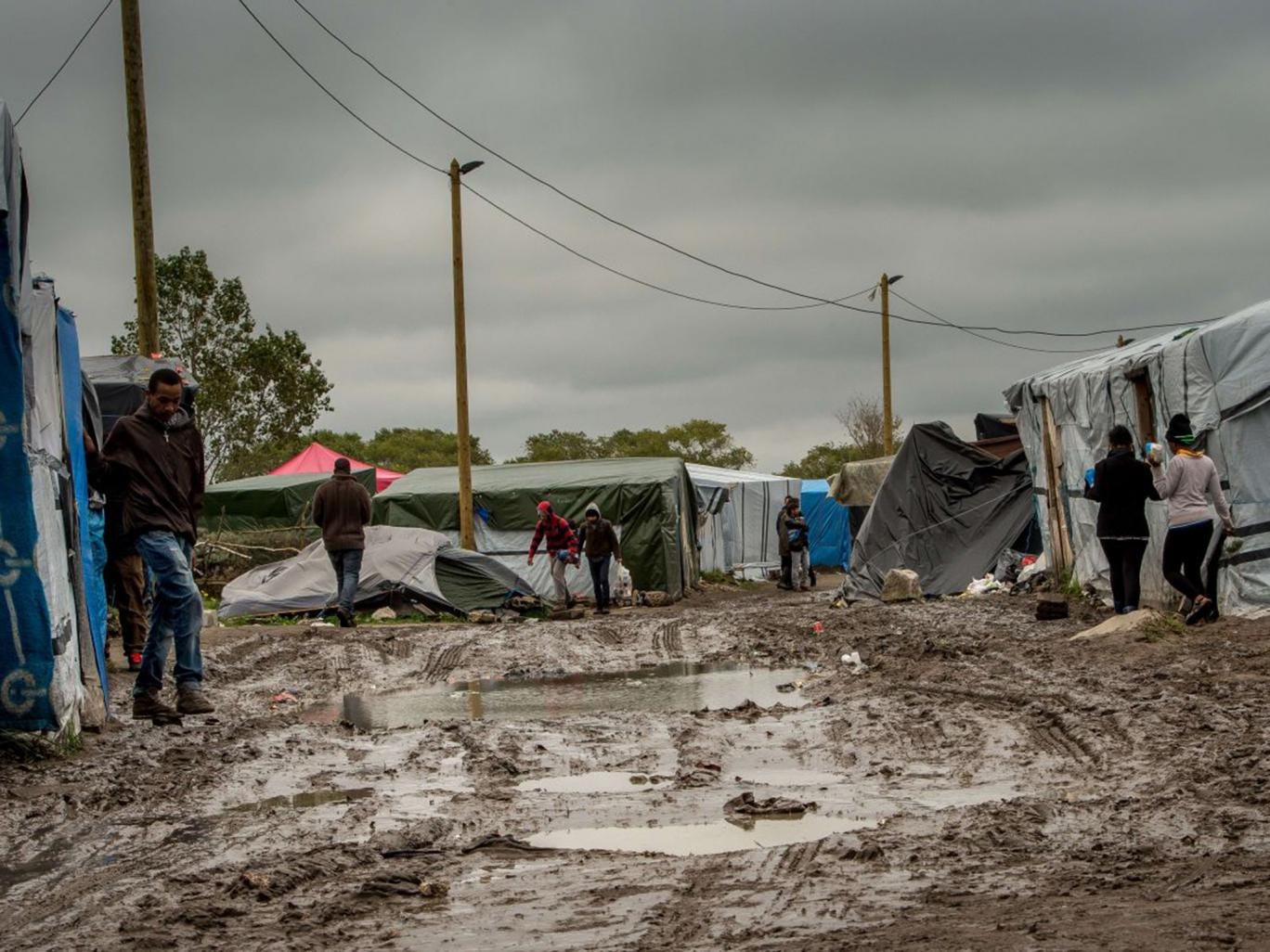
In this Tuesday, Nov. 3, 2015, file photo, tents and waste are reflected in a puddle inside the migrants camp near Calais, northern France
© AP PHOTO/ MARKUS SCHREIBER
In this Tuesday, Nov. 3, 2015, file photo, tents and waste are reflected in a puddle inside the migrants camp near Calais, northern France
And according to Doctors of the World, the conditions that women and children are living in are "far below any minimum standards for refugee camps." Refugees living there told reporters they "feel like we are dying slowly."

During the recent Tribunal, the British judge noted the "acutely inadequate" measures taken by the British government to protect people living in the camp. 
It's not the first time the UK has been accused of putting border security before people. Britain's response at the height of the Crisis last summer was to spend ten million euros on fencing, floodlights security patrols and CCTV. 


Mr Justice McCloskey states the "heavy emphasis on the primacy of security, public order, policing and breaches of the law" and the "plight and predicament of the human beings involved qualifies for secondary consideration only."
Under the EU's Dublin Regulations, an asylum seeker must make their claim in the first country they arrive in. Because the young Syrian family were living in the migrant camp in Calais, the Home Secretary said their claim must be processed in France.
However, the Tribunal ruled in 2014 that the British government must operate the Dublin system whilst respecting human rights. This meant the Tribunal found in favor of the Syrian asylum seekers and ordered the Home Office to immediately allow three unaccompanied Syrian children and an adult to be reunited with their family in the UK.

According to human rights group, Liberty, "Their cases demonstrate the importance of our [Britain's] Human Rights Act in protecting children and families, often in extremely dire circumstances.

The ruling has been described by campaigners as a "great day for families and a terrible one for people traffickers." The detailed summary of the Tribunal concretes the reputation of the refugee camp in France.


--