07/02/2016


The New Yorker
A selection of stories from The New Yorker’s archive

Immigrants in America

“Remember, remember always that all of us, and you and I especially, are descended from immigrants and revolutionists,” Franklin D. Roosevelt once said, in an address to the Daughters of the American Revolution. He’s right—but that doesn’t make the immigrant experience any easier to grasp. If your family members came to America a few generations ago, their journey has been made vague by time. The struggles of present-day immigrants, meanwhile, are often obscured by difference.

This week, we bring you stories that make immigration vivid and concrete. Jill Lepore takes us back to Jamestown, reëxamining the story of America’s first immigrants. Edwidge Danticat, Chang-Rae Lee, and Akhil Sharma write about the experiences of immigrants from Haiti, South Korea, and India, respectively. Jeffrey Toobin explores the battle over immigration reform and meets immigrant families caught in legal limbo. And William Finnegan profiles the Univision anchor Jorge Ramos, who has become a powerful voice for Latino immigrants. (Last August, Ramos was escorted out of a press conference held by Donald Trump, who told him, “Go back to Univision.”) Collectively, these pieces show how the immigrant experience is changing—and how it remains a constant source of renewal and vitality in American life.
—David Remnick


American Limbo

There is a cruel asymmetry to immigration law: the people with the most at stake have the most trouble understanding it. This is because, even for lawyers, immigration law is notoriously complicated.

BY 

L'Héritage de la chouette - Où pourquoi nous sommes tous Grecs


L'Héritage de la chouette est un film documentaire français réalisé par Chris Marker, sorti en 1989.

Le film a pour sujet l'héritage de la Grèce antique. 

Chris Marker rencontre des hellénistes, des logiciens, des hommes politiques, des artistes et les interroge pour connaître l'influence de la Grèce antique sur le monde moderne.

--

Merci une fois de plus à Virginie Terrasse pour le lien.

--

Quelques détails:


Douze mots de racine grecque que Chris Marker décortique pour connaître l’héritage de la Grèce antique sur le monde moderne.
Des États-Unis au Japon, il a baladé sa caméra là où tout mot prend sens, il a rencontré des hellénistes, des logiciens, des hommes politiques, des artistes et a confronté leurs discours aux mémoires des cinémathèques.
  • 12 épisodes de 26 minutes chacun :
    • 1. Symposium ou les idées reçues
      • A Paris, Tbilissi, Athènes et Berkeley, des historiens se prêtent au jeu de la reconstitution du « symposium », le banquet grec, autour de tables garnies de mets et de vin. Dans ce premier volet et parfois dans les suivants, leur discussion à bâtons rompus explorent divers thèmes et rejoint, au fil des digressions, des interventions isolées.
    • 2. Olympisme ou la Grèce imaginaire
      • L’héritage de la Grèce, recomposé dans l’imaginaire contemporain, a parfois donné lieu à de terribles détournements au profit d’idéologies totalitaires comme le nazisme. Les jeux olympiques de 1936 à Berlin sont à cet égard symboliques, et la représentation du corps dans « Olympia » de Leni Riefensthal témoigne de la récupération d’un idéal au profit d’une toute autre esthétique.
    • 3. Démocratie ou la cité des songes
      • Que recouvre précisément le mot « démocratie » lorsqu’il désigne la cité-état antique ou nos systèmes politiques contemporains ? Quelles sont les anologies ou, au contraire, les différences radicales entre des réalités séparées de plus de vingt siècles ? Certains fonctionnements ne sont-ils pas propres à toutes les civilisations ?
    • 4. Nostalgie ou le retour impossible
      • Ithaque, emblème de la patrie lointaine que nul ne doit oublier : tel serait l’enseignement universel de l’« Odyssée » d’Homère. Quels liens peuvent se tisser entre une Grèce moderne dont l’histoire fut tourmentée par tant d’exils et la Grèce antique dont l’héritage est revendiqué par toute l’humanité ? Pour Vassilikos, Ionatos et Svoronos, le mot qui définit le mieux les Grecs est « nostalgie ».
    • 5. Amnésie ou le sens de l’histoire
      • Fondée sur le témoignage ou « l’autopsie », qui signifie littéralement « se voir soi-même », notre conception de l’Histoire s’est beaucoup transformée depuis Hérodote. A des réflexions sur l’histoire, sur la relation entre politique et mémoire, succèdent les paroles de Vassilikos et de Kazan sur la génèse difficile de la Grèce contemporaine.
    • 6. Mathématique ou l’empire des signes
      • L’héritage que nous ont imposé les Grecs avec l’espace géométrique et le langage mathématique émerveille Serres. Pourtant, à la base de l’intelligence artificielle se trouve l’algorithme arabe qui apparaît déjà dans l’écriture hiéroglyphique ou cunéiforme. Andler évoque la recherche d’une articulation entre la logique parfaite d’Aristote et l’incertitude qui règne dans les sciences cognitives.
    • 7. Logomachie ou les mots de la tribu
      • Tous les sens de « logos » ont jailli d’un petit territoire entre Ephèse et Patmos. Selon Aristote, l’animal humain lutte avec une arme spécifique, la parole, et dans l’univers de la dialectique, ceux qui doivent s’entendre, explique Sissa, ne doivent pas se battre, mais utiliser tous les pièges de la persuasion. Le destin du logos serait-il la « logomachie », la bataille des mots ?
    • 8. Musique ou l’espace de dedans
      • « L’art a souvent voulu imiter le réel alors qu’il devrait créer des univers sans précédents », dit Xenakis qui, comme Ionatos, tente d’expliquer ici sa vocation musicale. Loin de là, Patmos, lors de la Pâque orthodoxe… sublime lieu d’élection pour une méditation sur la musique antique puis chrétienne.
    • 9. Cosmogonie ou l’usage du monde
      • Pour cette réflexion sur la création, Serres part de la statuaire grecque, puis Marker nous entraîne sur les pas d’une Koré de l’Acropole exposée à Tokyo. Le mystère de la cosmogonie divine est exploré par Castoriadis et Xenakis, qui s’interroge aussi sur la créativité de l’homme. Parmi les idoles que nous érigeons, Vernant présente la face monstrueuse de la Gorgone, miroir de la mort.
    • 10. Mythologie ou la vérité du mensonge
      • Il existe un ensemble de mythes auxquels nous nous référons toujours. Steiner s’interroge sur leur genèse et leur place dans le psychisme. Ploritis évoque leur propagation ; Yoshida montre qu’ils ont été transmis au Japon dont la religion présente de fortes affinités avec ce polythéisme grec dont Nietzsche fit un modèle de tolérance car il n’engendra aucun massacre.
    • 11. Misogynie ou les pièges du désir
      • La conception grecque de la sexualité était très différente de la nôtre. Que pensaient les Grecs du désir ? Murray et Sissa expliquent différents enjeux sociaux de l’homosexualité masculine. Objets de conquêtes ou mères, les femmes ont un statut d’éternelles mineures et semblent réduites au silence dans la cité. Pourtant, les dramaturges ont donné vie à des femmes hors du commun.
    • 12. Tragédie ou l’illusion de la mort
      • La scène débute dans un petit bar de Tokyo, La Jetée, où l’on discute des Atrides et d’Angelopoulos. La parenté entre la Grèce et le Japon est justifiée par Xenakis et Vassilikos, puis viennent des explications sur la tragédie. Mais qui est responsable du devenir de cet héritage ? Les Grecs modernes, proclame Minotis, aussitôt démenti par les images d’une « Médée » montée en Grèce par Yukio Ninagawa.
    • 13. Philosophie ou le triomphe de la chouette
      • Honneur à la chouette, emblème de sagesse : à l’instar du philosophe elle sonde les ténèbres… Exprimés avec passion ou austérité, les avis divergent sur la définition de la philosophie. Serres, avec gravité, récuse l’idée d’une philosophie au service du pouvoir, tandis qu’au cours du banquet réuni à Tbilissi, un hommage serein est rendu à l’art du dialogue et à la belle mort du philosophe.
        --


The Owl's Legacy (1989, Chris Marker)
Part 1 à 13


...


Part 13


06/02/2016

Copenhagen is waiting for them, such is the world... And Syria is waiting for us.


Edging towards the status of "institution".

This is what The Copenhagen Post has to say about the British band, that I, humbly, little nomadic woman who sometimes forget which is her mother tongue, think is one of the most creative and engaging groups of musicians that has been releasing music and more in my lifetime.

You can read the whole article below.


Meanwhile, this mini-tour of theirs has become a snowballing series of sold-out nights and a long series of acclaiming reviews.

This is what the band has to say about our world, our crisis, our main issues, that too many people refuse to see as the definition of our era.


Massive Attack on refugees in their first TV interview since 2008 - with Krishnan Guru-Murthy for Channel 4 News


--

On the journalist's blog:

http://blogs.channel4.com/gurublog/massive-attack-putting-refugees-centre-stage/4712


Massive Attack: putting refugees centre stage


Massive Attack performance in 2016 is a polished affair, more like a recital. Nothing seems left to chance. It is note perfect. And in the intimate setting of the Brighton Dome I wanted to applaud the end of each song, not cheer or jump up and down.
Rob is the one who does the talking for Massive Attack. G, his creative partner in the band, is utterly charming backstage, but has no interest in doing interviews. Fair enough. Rob clearly hates it too, but does it – very occasionally.
He’s a thoughtful artist and I get the sense he dreads the idea of sounding like a rock star with a cause. Bono perhaps has a lot to answer for.
Massive Attack always had strong political threads running through their performance but Rob hates the idea of preaching. He wants to provoke thought, not, he says lead it. This was to be his first television interview in several years.
Our “in” was the photographer and television journalist Giles Duley, who was blown up in Afghanistan and lost two legs and an arm.
Giles has spent months working for the UNHCR photographing refugees from Lebanon and Jordan through Greece and across Europe. His remarkable images, all shot on old fashioned film cameras, are arresting.
Before covering wars Giles was a music photographer so knew Rob anyway. When he saw the pictures he wanted to feature them strongly on the tour.
The images are put up on the traditional Massive Attack LED screen – once during a song but most strikingly at the end, in musical silence.
It was a risk – they didn’t know if people would stay to watch or just shuffle off towards the bar.
But if Brighton and Brixton are anything to go by the crowds are moved too. They stay, concentrate, cheer moments such as an image “Refugees Welcome”.
If, as Rob says, our humanity will be judged in history by our response to Syria’s refugees, the response of the Massive Attack crowd is a good sign. Better perhaps than what is being achieved in reality by our leaders.

--

Copenhagen Post review:


Already massive, they’re edging towards institution status


Massive Attack2

February 6th, 2016 1:00 pm| by Jonathan Mackley


They may be three decades old, but Massive Attack are still selling out venues like it’s the early 1990s. It’s a testament to the calibre of musical prowess this band still wields.
Some of their most notable songs don’t even have choruses, but who needs them when you’ve got such dramatically atmospheric dynamics!
Their debut LP, Blue Lines, was included in Rolling Stone’s 500 Greatest Albums of All Time. You’ve heard the standout track ‘Unfinished Symphony’ a zillion times, even if you can’t quite remember its name.
These and other psychedelic, soundtrack-like and DJist sonic techniques formed a much-emulated style journalists began to dub ‘trip hop’ from the mid-90s onwards.
Their more conventional shows remain awesome spectacles too. With giant LED screens allowing them to apply their music to political and social backdrops, and an expanded live line-up that features a revolving selection of guest vocalists, the brooding disquiet of their most recent studio effort, Heligoland, has been weaved in seamlessly alongside cuts from ‘90s classics Mezzanine and Blue Lines.
Having evidently mastered both the recorded and live elements of their craft, Massive Attack’s staying power has moved them beyond simply being one of Britain’s most vital musical groups – they’re edging towards institution status.
You leave their concerts happy, energised and with a new-found need to get involved in righting the wrongs in the world.

Reasons of wrath: Nightmare in Calais


Rage and wrath... When will human being learn to treat their fellow human beings as they deserve? I'm ashamed to hold a French passport when I read this.

I'll be in Calais in two weeks, here is where you can help us:

https://fr.ulule.com/dici-dailleurs/supporters/

And in you're in Paris, come to our fundraising gig:
https://www.facebook.com/ceuxdicietdailleurs/?fref=ts


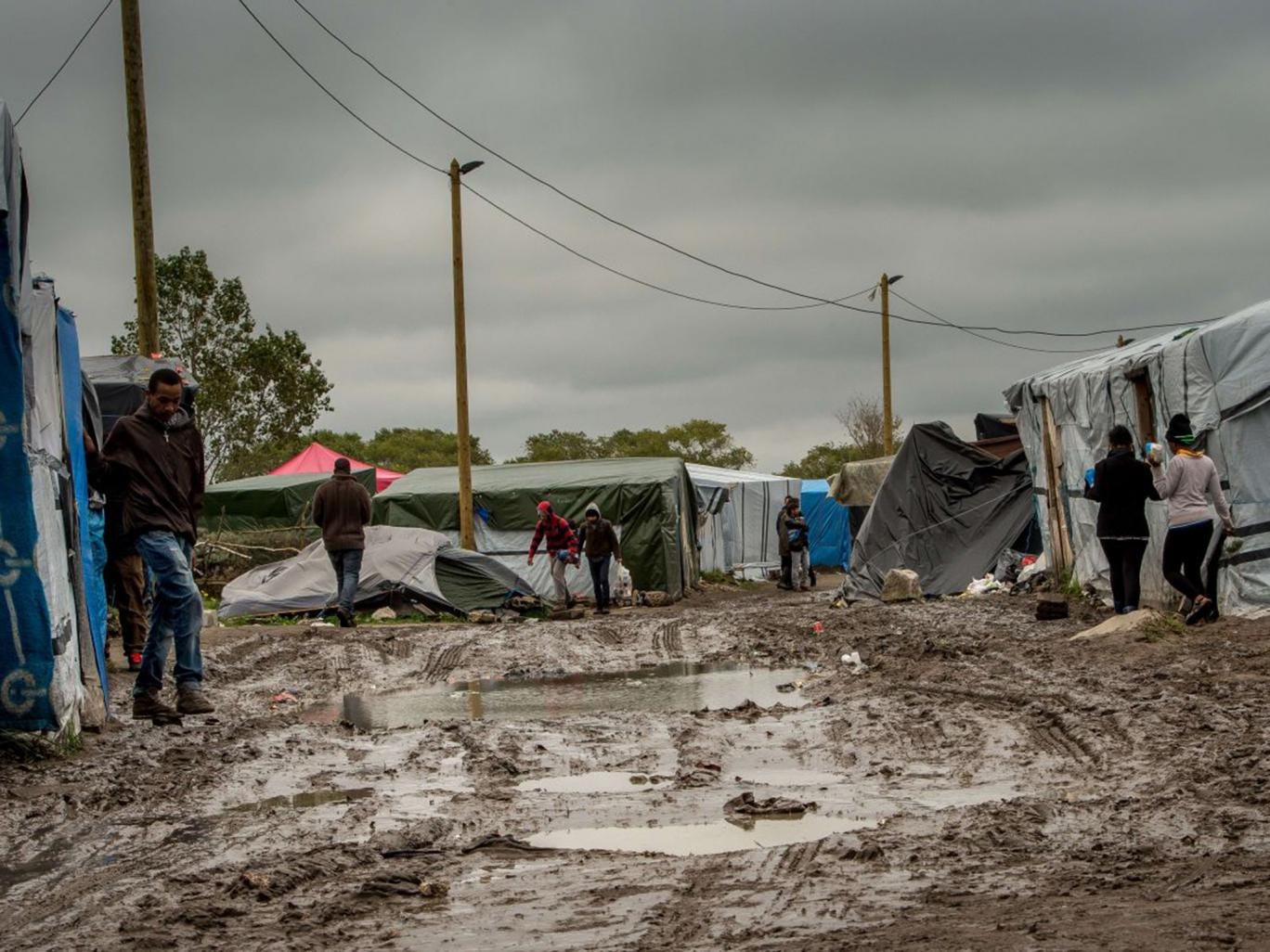
Calais Jungle: French prosecutors investigate alleged 'endemic' of attacks on refugees

One man suffered a black eye and a broken jaw
Cameron has promised that the UK will take 20,000 Syrian refugees over the next five years AFP
French authorities are investigating at least six alleged attacks on refugees at the makeshift Calais Jungle migrant camp.
Volunteer legal teams have described the rise in attacks on migrants as 'endemic".
It is currently believed 5,000 refugees are living at the camp.

Attacks on 'Jungle' migrants investigated by French prosecutors

Marianne Humbersot, the head of a legal centre opened by volunteers in the camp about a month ago, says she has been told of 20 attacks in the last two weeks.
Many migrants do not want to make a complaint to the police, she says.
The investigations have not yet identified any individuals, but Jean-Pierre Valensi, one of the main prosecutors in the region, says they know they drive a black BMW and use metal weapons.
The move was part of a new housing project which is aimed at improving conditions in the camp.

--


And today a demonstration against migrants is happening in Calais despite an official forbid:


Read here in French:


La manifestation de Pegida maintenue à Calais, malgré l'interdiction

Les autorités craignent des débordements samedi lors de la marche du mouvement d'extrême droite contre la présence des migrants. Le général Christian Piquemal, qui a commandé la légion étrangère de 1994 à 1999, fera partie du cortège.

Malgré l'interdiction préfectorale décidée par le ministre de l'Intérieur Bernard Cazeneuve, le mouvement d'extrême droite Patriotes européens contre l'islamisation de l'Occident (Pegida) est déterminé à maintenir samedi sa manifestation à Calais contre la présence des migrants. Et ce malgré les sanctions pénales encourues. Par crainte des débordements et pour «veiller à faire appliquer l'arrêté préfectoral», un important dispositif de sécurité a été prévu, indique la préfecture du Pas-de-Calais.
Dans leur déclaration de manifestation, les organisateurs de Pegida avaient annoncé 800 à 1000 personnes. Avec un manifestant de marque, inattendu, qui fait la joie du mouvement: le général de Corps d'Armée Christian Piquemal, combattant d'élite qui a commandé la légion étrangère de 1994 à 1999 et a longtemps présidé l'Union nationale des parachutistes (UNP). Il a rédigé un communiqué annonçant sa venue à Calais, révolté par l'interdiction préfectorale. «Nous maintenons notre participation, apolitique, qui se fera dans l'ordre, le calme et la discipline des “vieilles troupes” ; j'y serai présent physiquement, martèle le militaire en retraite. Il y aura dans nos rangs des personnes vulnérables (femmes, enfants, personnes âgées et/ou handicapées) et il n'est donc pas question, à aucun moment, de se confronter aux forces de l'ordre autrement qu'amicalement: des consignes précises ont été données et un personnel de sécurité veillera à leur application. C'est donc confiant dans le futur déroulement de notre action que j'invite tous les Patriotes et associations patriotiques à se joindre à nous». Pour la plus grande satisfaction de Pegida: «Que fera le Préfet, va-t-il envoyer de la lacrymo sur un général en retraite, et pas n'importe lequel?», interroge Loïc Perdriel, qui dirige la branche de Pegida en France.

Thylacine


THYLACINE - Moskva [Transsiberian album]


THYLACINE - Chaman [Transsiberian album]


THYLACINE - Pleasure ⎜Official Video⎜


Thylacine - Live @ Festival Les Nuits Claires


05/02/2016

For Calais


British Tory MP visits Lesbos and ask David Cameron for compassion for the refugees


Heidi Allen tells The Independent: 'I was prepared to be upset – I wasn’t prepared for the sheer scale'

Read the story on The Independent's website: 

http://www.independent.co.uk/news/uk/politics/take-more-refugee-children-from-europe-tory-mps-tell-david-cameron-after-mission-to-lesbos-a6850601.html


--


Take more refugee children from Europe, Tory MPs tell David Cameron following mission to Lesbos


A group of Tory MPs has urged David Cameron to take more refugee children from within Europe after witnessing first hand the "sheer scale" of the desperate situation on a Greek island at the centre of the crisis. 
The three MPs met with immigration minister, James Brokenshire, after travelling to Lesbos, where up to 6,000 asylum-seekers arrive from Turkey every day to squalid conditions and total administrative chaos.
Last week, the Prime Minister rejected calls from charities to take in 3,000 unaccompanied children who had already arrived in Greece and Italy, saying Britain would focus its efforts on Syria and other conflict zones.
The Independent can reveal that he now faces growing pressure to reconsider that approach from his own MPs, who reported back to Government with their findings last night.
Heidi Allen, the MP for South Cambridgeshire, Caroline Ansell, the member for Eastbourne and Jo Churchill for Bury St Edmunds were taken out to Lesbos by Save The Children, one of the main charities providing relief to the thousands of refugees as they arrive on the island.
The three MPs met with Mr Brokenshire before they left on the trip in order, Ms Allen says, to be “filled in on the Government’s strategy” for the region.
But Ms Allen said that after seeing “the discarded life jackets, the broken ships and battered limbs” of people arriving in Lesbos, she would “bang every drum” to get the Government to do more for genuine asylum-seekers within Europe’s borders.

Speaking to The Independent, she acknowledged Mr Cameron’s concerns about the “pull factor” of providing help to people who have made the journey to Europe themselves – possibly encouraging more to do so.
Nonetheless, she said: “I defy any country, and I would drag them to the table myself if I have to, if we identify however-many thousands of unaccompanied children who genuinely have not a soul in the world [not to do more to help them].
“We will find homes for them,” she said.
Save The Children say around 26-27,000 unaccompanied children turned up on Europe’s shores last year – but admit that this is just a best guess because of failures processing new arrivals.
And Ms Allen said that Government's must act now to help solve the crisis: “At the moment the difficult position is we just don’t know how many [unaccompanied children] there are,” she said. “And the faster we can process these people, the faster we can find out whether they do have true refugee status, then the faster we can work out how to help them and identify those children.”

‘I was prepared to be upset – I wasn’t prepared for the sheer scale’

save-the-children-1.jpg
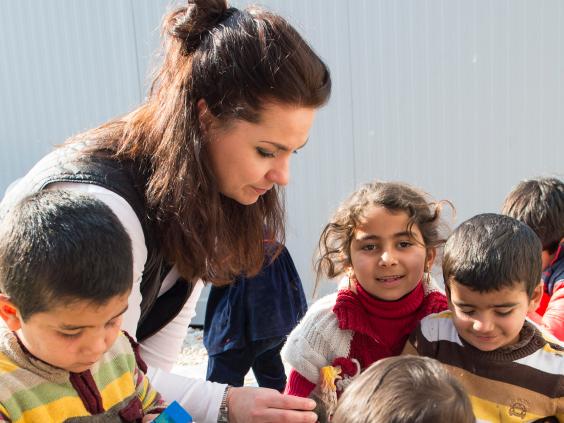
Conservative MP Heidi Allen plays with Syrian refugees during a visit to Lesbos, Greece (Matt Crossick/Save The Children)
Ms Allen said she agreed to the trip with Save The Children when she had a “gut instinct we should be doing more”, without a clear idea of what that would mean.
She says she was told of the need to “relieve the administrative pressure”, and even “wondered whether there could be a military operation… with people turning up on an island met by men in green uniforms”.
“We have seen such uncontrolled immigration, and countries risk losing their compassion because they are overwhelmed,” she said. “It seems to me if you are a person looking at the statistics and infrastructure you will be terrified and batten down the hatches and say no more.”
She said she had “been privileged to lead a beautifully sheltered life” and, up until last week, had never met anyone “who had gone through this”.
When the MPs were there, though, they saw the boats people arrive in, helped distribute supplies and sat down with men, women and children who had fled from conflict.
 “I was prepared to be upset by it all – I wasn’t prepared for the sheer scale,” she said.
“I’ll never forget the sight of a woman slightly younger than me, walking along with her two little children and barely able to open her eyes because her face was so obliterated by black eyes and bruising.
“And she didn't need to say a word, at a glimpse she told you exactly where she’s come from. It was absolutely heartbreaking, and I’ve never seen anything like it in my life.”

'We need to step up'

Ms Allen said she was proud Britain had pledged to take in 20,000 refugees, as well as being “second only to America” in the amount it has contributed towards solving the crisis financially.
But she said she would also press the Government to do more for unaccompanied children in Europe and called on Europe as a whole to address the administrative issues preventing them from being identified.
She is hoping to go to Italy next with Save The Children, where the authorities have a better grasp on who arrivals are and where they have come from. 
“If I do get to Italy and I see there are unaccompanied children who have been identified, then I will be pushing hard [on the Government] because I feel that we do need to step up and take some of them,” she said.
“As the situation evolves and we get better at identifying children, I think there should be a review of that 20,000 figure,” she said. “I think that should be fluid.”

'A proud history of offering safe havens to children'

Ms Allen said her own rural constituency of South Cambridgeshire had not been called upon to take refugees yet as part of the 20,000 pledge, and said there were “great reservations” in the area about how people would be integrated into the community.
But having seen the situation in Lesbos, she said she would “want us to try” and do more if called upon by the Home Office. 
“We are extremely rural with very poor public transport links, so for the most part they would be stuck in the middle of nowhere and I don’t think that would be helpful.
“But I’ve had lots of people volunteering, and we would look to try and do something in the villages [near the city of Cambridge] where it might work.”
--


04/02/2016

Sicilia, amore mio


I want to thank my new home to lead the way! Sicily, I got you!

Article shared by the International Organisation for Migration (IOM) on The Times's website:

http://www.msn.com/en-us/news/world/how-one-sicilian-village-learned-to-love-migrants/ar-BBoM4fa?ocid=LENDHP

How One Sicilian Village Learned to Love Migrants


The Sicilian village of Sutera, like many in rural Italy was dying. Its population fell from 5,000 in 1970 to 1,500 and there was little hope of revival. Its schools and businesses were closing and farmers struggled to tend its fields of pistacchio and olives.
This year, its population has surged by 200 after the local mayor agreed to take in some of the thousands of migrants that have made the dangerous journey from Africa to the Sicily.
“We have always been a hospitable town,” says the Mayor of Sutera, Giuseppe Grizzanti. “Our name comes from the ancient Greek word Soter which means ‘salvation’ because, thanks to our geographical location, Sutera was a perfect stronghold against invasions. Two thousand years later, our town has rediscovered its vocation for hospitality, giving shelter to these families fleeing war.”
Sutera has more to offer than hospitality. Hundreds of its homes were empty and and it even had work to offer. “Sutera was disappearing,” says Grizzanti. “Italians, bound for Germany or England, packed up and left their homes empty. The deaths of inhabitants greatly outnumbered births. Now, thanks to the refugees, we have a chance to revive the city.”
The local school was once attended by hundreds of children, but it was reduced to one class with six pupils. It has had an influx of new pupils providing work for teachers. Other businesses such as chemists, squares, butchers, grocers and bars have also benefitted. Each morning, the elders of Sutera sip espresso with their new neighbors. They chat casually, tell jokes and learn a few words of each other's languages.
Here, every August, local associations organize the “festival of hospitality”, an event that attracts visitors from all over Sicily. The refugees cook typical dishes from their homeland, sing songs and perform traditional dances.
The situation in Sutera shows that a warm welcome can have an economic impact. The money to host immigrants comes from the European Union, which guarantees refugees a modest sum of money for food and other necessities and good accommodation.
This money allows Alex Ukunboru, 39, to live with his wife in a spacious apartment with kitchen, living room, bathroom, two bedrooms and a small balcony, overlooking a green countryside with olive groves. This house once belonged to one of the many inhabitants of Sutera who left for England in the 1980s to find work and without the arrival of asylum seekers it would likely remain vacant forever.
“I came to Sutera last October, from the state of Edo in Nigeria," says Ukunboru. "In 2008, I moved to Libya where I worked as a waiter and driver in Benghazi. When the war broke out I found myself trapped in the city. As soon as we had the chance, my wife and I escaped aboard a boat and we arrived in Sicily last September.”
“Here I have found peace,” says Alex, who, in a few months, will become a father. “The people are friendly, the house is spacious, and we'd love to stay here. It would be nice if my son could grow up in Sutera.”
Like most of the refugees accommodated in Sutera, Alex is now looking for work in Sicily. Some of them have already found jobs. Jala, 30, a Pakistani woman, works as a waitress at one of the village restaurants, Civiletto, which serves a delicious local dish of broad beans with ravioli and porcini mushrooms. Mohammed, 34, a Syrian works with local farmers. Binta, 27, from Gambia, takes care of the elderly of Sutera, cleaning their houses and cooking their meals.
“This village is perfect for those of us looking for a bit of stability after years of running away,” Assoma says. “Some of my countrymen, throughout the rest of Europe, are still living in camps, or in tent cities in the cold and without any privacy. Here we feel like citizens, and we are treated with respect by all.”
Santina Lombardo, the coordinator of the E.U. project says that there are 40 families in Sutera at the moment. "Some have found work in other parts of Italy and take off once more. However, many want to stay and this always fills me with pride.”
Some Sutera residents treated the arrival of the first asylum seekers with suspicion. All over Sicily, crimes and assaults were attributed to migrants, sometimes falsely. “Not everyone took it well at first,” says Mario Maniscalco, 26, a university student who was born and lives in Sutera. “But we Italians were also refugees once. And not all of us who disembarked at Ellis Island, in the United States, were good people.
“After all, we exported the mafia to New York from Sicily. The trick is to recognize the suffering, to understand that these people don't risk their lives at sea for a fun holiday, but because they definitely risk losing their lives if they remain in their own land.”
Last April, an estimated 700 migrants drowned in the Mediterranean Sea. That day hundreds of elderly and young people gathered in the main square in Sutera and chalked an outline of the continent of Africa, which was illuminated by candles. The locals of Sutera, natives and newcomers, prayed for the entire evening.
"In the square, that day, there were also people who did not want refugees in Sutera,” says Mario. “I saw them cry together with the immigrants. Because, in the end, you are at a crossroads. You must decide whether to close the doors or reach out to the refugees. Sutera went one step further and decided to embrace them.”
Other villages have imitated Sutera, finding that arrival of migrants provides an opportunity rather than a problem.