Journalist at RFI (ex-DW, BBC, CBC, F24...), writer (on art, music, culture...), I work in radio, podcasting, online, on films.
As a writer, I also contributed to the New Arab, Art UK, Byline Times, the i Paper...
Born in Paris, I was based in Prague, Miami, London, Nairobi (covering East Africa), Bangui, and in Bristol, UK. I also reported from Italy, Germany, Haiti, Tunisia, Liberia, Senegal, India, Mexico, Iraq, South Africa...
This blog is to share my work, news and cultural discoveries.
Official music video for ‘When We Fall', from a brand new four track ‘double B-side’ EP, featuring two tracks from BEAK and two from their ‘alter-ego’ KAEB.
Co directed by Alex Garland & Rob Hardy.
Featuring Sonoya Mizuno (Ex Machina).
The 4 track EP features ‘The Meader’ and ‘The Broken Window’ by BEAK and ‘When We Fall’ and ‘There’s No One’ from KAEB, the latter featuring vocal contributions from Californian based artist Jonwayne
Cinquième cinéaste invitée de la série multimédia d’Arte Reportage « Réfugiés », Yolande Moreau a passé une dizaine de jours dans les jungles de Calais et de Grande-Synthe en janvier 2016.
Elle en revient avec un film témoignage dans lequel alternent les interviews réalisées sur le « terrain » avec les textes écrits par Laurent Gaudé et lu par l’actrice et réalisatrice. Après Régis Wargnier au Népal, Pierre Schoeller en Irak, Agnès Merlet au Liban et Claire Denis au Tchad, Yolande Moreau propose une œuvre personnelle. Ni reportage ni documentaire, dans cet entre-deux assumé, elle nous emmène pendant 30 minutes « Nulle part, en France ».
De Yolande Moreau, Elsa Kleinschmager, Sébastien Guisset, Fred Grimm, Hania Osta et Laurent Gaudé - ARTE GEIE – France 2016
A website I read almost every Sunday. Wise and inspired quotes and texts from immense writers on music, art and writing.
Today:
Aldous Huxley on the Transcendent Power of Music and Why It Sings to Our Souls
“There is, at least there sometimes seems to be, a certain blessedness lying at the heart of things, a mysterious blessedness.”
BY MARIA POPOVA
Extracts:
Huxley considers music’s singular capacity for expressing the inexpressible:
In a different mode, or another plane of being, music is the equivalent of some of man’s most significant and most inexpressible experiences. By mysterious analogy it evokes in the mind of the listener, sometimes the phantom of these experiences, sometimes even the experiences themselves in their full force of life — it is a question of intensity; the phantom is dim, the reality, near and burning. Music may call up either; it is chance or providence which decides. The intermittences of the heart are subject to no known law.
But the most complete experience of all, the only one superior to music, is silence:
When the inexpressible had to be expressed, Shakespeare laid down his pen and called for music. And if the music should also fail? Well, there was always silence to fall back on. For always, always and everywhere, the rest is silence.
In a different piece from the same collection, the uncommonly breathtaking title essay “Music at Night,” Huxley revisits the subject of humanity’s most powerful medium of expression:
Moonless, this June night is all the more alive with stars. Its darkness is perfumed with faint gusts from the blossoming lime trees, with the smell of wetted earth and the invisible greenness of the vines. There is silence; but a silence that breathes with the soft breathing of the sea and, in the thin shrill noise of a cricket, insistently, incessantly harps on the fact of its own deep perfection. Far away, the passage of a train is like a long caress, moving gently, with an inexorable gentleness, across the warm living body of the night.
[…]
Suddenly, by some miraculously appropriate confidence (for I had selected the record in the dark, without knowing what music the machine would play), suddenly the introduction to the Benedictusin Beethoven’s Missa Solemnis begins to trace patterns on the moonless sky.
Huxley exhales:
TheBenedictus. Blessed and blessing, this music is in some sort the equivalent of the night, of the deep and living darkness, into which, now in a single jet, now in a fine interweaving of melodies, now in pulsing and almost solid clots of harmonious sound, it pours itself, stanchlessly pours itself, like time, like the rising and falling, falling trajectories of a life. It is the equivalent of the night in another mode of being, as an essence is the equivalent of the flowers, from which it is distilled.
--
This inspired a quote from a text by Patti Smith:
“Blessedness is within us all,” Patti Smith wrote in her beautiful elegy for her soul mate, and it is the revelation of this blessedness that Huxley celebrates as music’s highest power:
There is, at least there sometimes seems to be, a certain blessedness lying at the heart of things, a mysterious blessedness, of whose existence occasional accidents or providences (for me, this night is one of them) make us obscurely, or it may be intensely, but always fleetingly, alas, always only for a few brief moments aware. In theBenedictusBeethoven gives expression to this awareness of blessedness. His music is the equivalent of this Mediterranean night, or rather of the blessedness at the heart of the night, of the blessedness as it would be if it could be sifted clear of irrelevance and accident, refined and separated out into its quintessential purity.
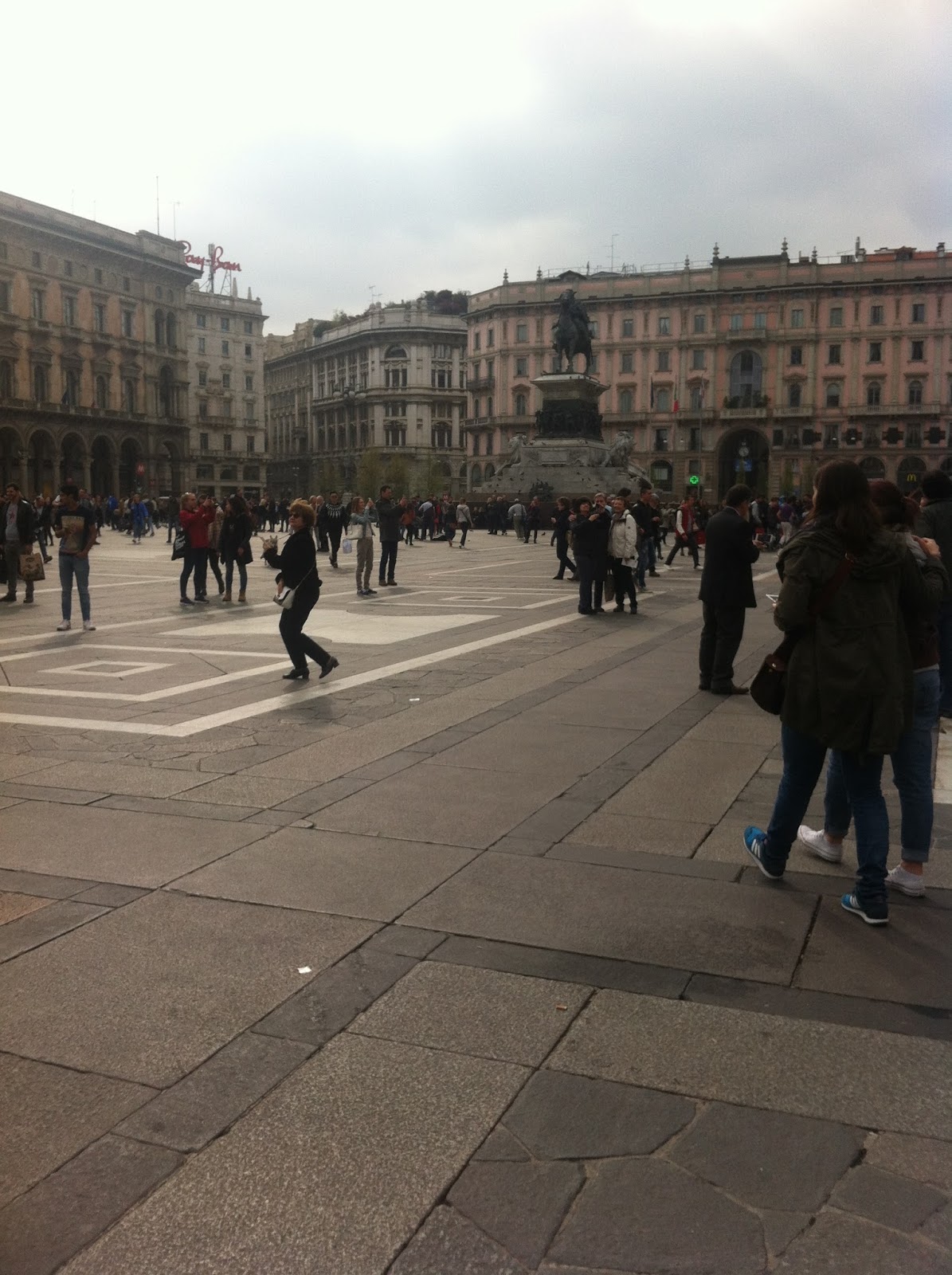
Beautiful exhibition in Milan's Hernandez Gallery, dedicated to women's art.
Woman's Essence
Painting by Anne Cazaubon, artist, performer and journalist from Paris. This piece was produced in January 2015, after the attack on Charlie Hebdo and is named 'La Réponse', 'The Answer'.
--
More paintings and photographs:
--
The gallery opening and introduction speech by Anne:
"Nothing that is worthwhile or important will come easily. We are guaranteed to be challenged, to doubt, to fear—yet those are the qualities that tell us that what we are about to face matters deeply".
"If the world came together now to step up efforts to stop the war in Syria, and in the meantime meaningfully helped the people who fled from it, there would be no need to erect new borders and turn people back on boats. Refugees would no longer represent a crisis, but a group of people who have been given access to a safe and dignified life in exile." – Melissa Fleming, UNHCR Spokesperson.
As the war in Syria enters its sixth year, blocked borders and folded arms now greet people trying to escape bombs and bullets.
Neighboring countries have taken in almost 5 million refugees and are close to capacity. Lebanon and Jordan have told the world they can manage no more unless recent pledges of massive new infrastructure and development support are met.
Turkey, host to 2.7 million Syrians, has agreed to take on even more of a refugee hosting role in exchange for $6 billion and the lifting of visa restrictions for its own citizens. This deal with the European Union is intended to cut off smuggler-run sea routes to Europe in exchange for resettlement of Syrian refugees from Turkey.
Aid organizations have voiced concern over the humanitarian implications of Friday’s agreement between the European Union and Turkey, aimed at stopping the flow of refugees and migrants entering Europe via Greece’s Aegean islands.
In theory, and only if missing human rights safeguards are swiftly putinto place in Greece and Turkey, this pact might herald the end of dangerous boat crossings for some refugees — and a fairer sharing of Syrian refugees among EU member states.
But the jury is also still out on whether desperate people — including the second two largest groups of people, Iraqis and Afghans, for whom no special resettlement scheme is foreseen — will find access to asylum and the basic survival services closer to home. If not, experience shows that alternative routes will be quickly created by cunning and ruthless people smugglers. Inevitably, these routes will be as, if not more, dangerous and deadly.
For those who do make it to Europe, reception will be fraught with rejection. Here, refugees, once greeted with remarkable sympathy, are finding themselves linked through fear to the same terrorist groups they fled. They are, too often, falsely labelled “irregular migrants,” implying that the trouble they left at home was poverty, not war.
‘Crisis’ in context and meaningful solutions
This is a crisis for refugees, not a crisis for Europeans. The 1 million that have arrived since August 2015 represent a mere 0.2 percent of Europe's population of 500 million. Over 90 percent came from Syria, Iraq and Afghanistan. Almost all of them said they left because of violence and war. Those who had been living as refugees in neighboring countries said they did not have the means to educate and feed their children.