Journalist at RFI (ex-DW, BBC, CBC, F24...), writer (on art, music, culture...), I work in radio, podcasting, online, on films.
As a writer, I also contributed to the New Arab, Art UK, Byline Times, the i Paper...
Born in Paris, I was based in Prague, Miami, London, Nairobi (covering East Africa), Bangui, and in Bristol, UK. I also reported from Italy, Germany, Haiti, Tunisia, Liberia, Senegal, India, Mexico, Iraq, South Africa...
This blog is to share my work, news and cultural discoveries.
Trailer For Tribeca’s Controversial Documentary, ‘The Banksy Job’
This rather controversial documentary called The Banksy Job follows “art terrorist” AK47 as he plans a heist to steal a piece of Central London artwork by Banksy... says the press.
Why? Because the enigmatic Banksy didn’t sign a print for AK47. The film follows the heist, which was pulled off in broad daylight and the response to the theft and subsequent ransom, which was for it to be stolen right out from under AK47’s nose.
Deadline dropped the trailer for The Banksy Job on Friday, hyping up the Sunday Tribeca debut of the documentary.
Street art, urban art, graffiti?
Whatever you call it, urban art is constantly evolving and challenging the meaning and means of contemporary art.
Soon in paris :
The First Ever International Street Art Fair Is Heading to Paris
Nathaniel Ainley — Apr 17 2016
At long last, street art is finally getting the recognition it deserves. On April 22nd, up-and-coming stars as well veteran art makers will convene in Paris at the Le Carreau du Temple for the first ever international Urban Art Fair, a three day expo dedicated to promoting the works of street art’s major players. The weekend will be jam-packed with institutional presentations, lectures, and group exhibitions from an assemblage of prominent galleries throughout western Europe. The show will feature works from heavy hitters like Banksy, Nick Walker, and The London Police.
The fair is set to host an all-star lineup of speakers involved in all different areas of the art industry. The program includes legendary graffiti artist Torrick Ablack, better known as Toxic, Italian art lawyer Andrea Pizzi, and Swedish art critic and author Jacob Kimvall, just to name a few.
“As a creative artist it’s crucial to be open - to feel. You can’t do it with a closed heart. You almost have to hand over your soul to that action.” - PJ Harvey --
U.S. Plans to Step Up Military Campaign Against ISIS
People fled their homes during fighting between Iraqi security forces and the Islamic State in Hit, a city in the Anbar Province, on Wednesday.
(Khalid Mohammed/Associated Press)
Credit
ABU DHABI, United Arab Emirates — The Obama administration is preparing to broaden its military campaign against the Islamic State in Iraq and Syria by increasing the number of Special Operations forces who advise Syrian rebels, and it is also considering the addition of Army attack helicopters to the fight against militants in Iraq.
The goal would be to accelerate what United States officials said on Saturday was momentum behind Iraqi security forces and American-backed rebels in Syria fighting the terrorist organization.
Inside Syria, the administration is prepared to add dozens of Special Operations forces to the 50 who now advise and assist Syrian rebels fighting the Islamic State, say three Defense Department and military officials. The additional trainers, who could total as many as 200, would be able to expand their instruction to Syrian Arab fighters, who are likely to play a pivotal role in capturing Raqqa, the Islamic State’s de facto capital in Syria, the officials said.
The administration’s plans for Iraq are more complicated.
Pentagon officials would like to increase efforts to advise and train Iraqi security forces for the anticipated assault on Mosul, Iraq’s second largest city and the Islamic State’s main stronghold in the country. The plan calls for shifting trainers who are already in the country to positions closer to Mosul, the officials said. They would also like to deploy Apache helicopter gunships — which are already in Iraq, but used only to protect American personnel — and order them to participate in the battle for Mosul.
But the government of Iraq’s prime minister, Haider al-Abadi, has been battling internal political turmoil. His challenges include political opponents, rampant corruption and an economy weakened by low oil prices.
The military options under consideration — which could be announced in the next several days — were described by five Defense Department and military officials who spoke on the condition of anonymity because final decisions are pending in Washington and Baghdad. Administration officials said on Saturday that announcing or even proposing increased American assistance is a delicate diplomatic task that could further imperil Mr. Abadi’s position.
Defense Secretary Ashton B. Carter made clear on Saturday that the administration will increase its military efforts to defeat the Islamic State, also known as ISIS or ISIL, but he did not discuss specifics.
“You should expect us, to see us, doing more,” he said at a news conference at the Al Dhafra air base as he opened travels in the Middle East. “It will be consistent with the same approach, but it’ll be across all the domains, right up to cyber.”
Mr. Carter described the administration’s approach as one that will use members of the American armed services to help accelerate the military campaign against the Islamic State, but will not replace Iraqi security forces or Syrian rebels.
There are roughly 5,000 American service members in Iraq, according to current Pentagon estimates, but the number often varies, sometimes daily, by hundreds.
Mr. Carter’s comments come at a time when Iraqi militias and military forces have been making notable progress on the battlefield against the Islamic State, including seizing parts of Hit, a city in Anbar Province, this month.
Last Wednesday, Col. Steven H. Warren, the military spokesman in Iraq, said that the initial phase of the American-led campaign against the Islamic State, with the intent of degrading or weakening the fighters, was complete, and that allied forces were in the second phase of the operation.
“During this phase, we will enable our partners to dismantle the enemy, fragment his forces, isolate his centers of gravity and liberate the terrain he holds,” he said.
But even as the campaign against the Islamic State is showing gains in Iraq and Syria, the group’s franchises in places like Libya, as well as its external operations in Europe, are increasingly lethal.
On Saturday, Mr. Carter met with American service members, including pilots, who are stationed at the Al Dhafra air base and are part of the air campaign over Iraq and Syria. He said that in the coming days he would be meeting with American commanders leading the efforts to defeat the Islamic State.
“We continue to look for, and identify ways of accelerating that, and as we find those we will do them,” Mr. Carter said, adding that the administration would seek the approval of Iraqi government there.
Mr. Carter said that gaining the support of President Obama to do more in Iraq has not been an obstacle.
“We’ve gotten approval from the White House every time the chairman and I have gone to ask for something that we’ve needed to accelerate going way back to last year,” Mr. Carter said, referring to the chairman of the Joint Chiefs of Staff, Gen. Joseph F. Dunford, Jr., who will also be traveling in the region in the coming days. “So that isn’t really the issue for us, the issue for us is yet identifying more ways to accelerate the campaign.”
“… where our real home might be is tricky to say. In a way that is the point. Some people say that is the body, but I think the body is more a channel that leads us home. Ultimate reality is our home. It is here and now, and it is not a special piece of what is happening. We imagine that we are on a journey, that life is a journey, but we are home from the beginning. This is not an easy thing to accept.”
In February, two artists got on a cargo ship, and retraced one of the routes of the Transatlantic Slave Triangle – from the UK to Ghana to Jamaica, and back.
Their memories, their questions and their grief took them along the bottom of the Atlantic and through the figurative realm of an imaginary past.
It was a long journey backwards, in order to go forwards.
This show is what they brought back.
Commissioned by Yorkshire Festival, Theatre Bristol and MAYK. Supported by Arts Council England, and 200 kind and generous supporters who donated towards our voyage across the Atlantic.
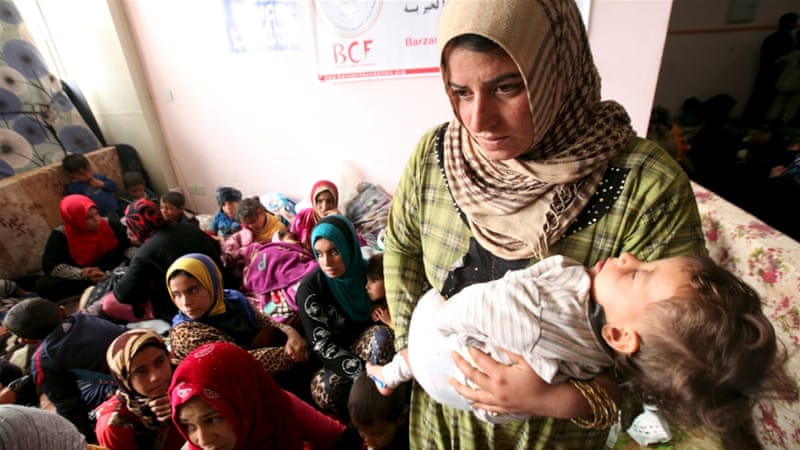
"Even by our most conservative estimates, this could be the largest population movement anywhere in the world this year". Lise Grande, UN's humanitarian coordinator for Iraq
The long fight to retake Iraq’s second-biggest city, Mosul, has begun
--
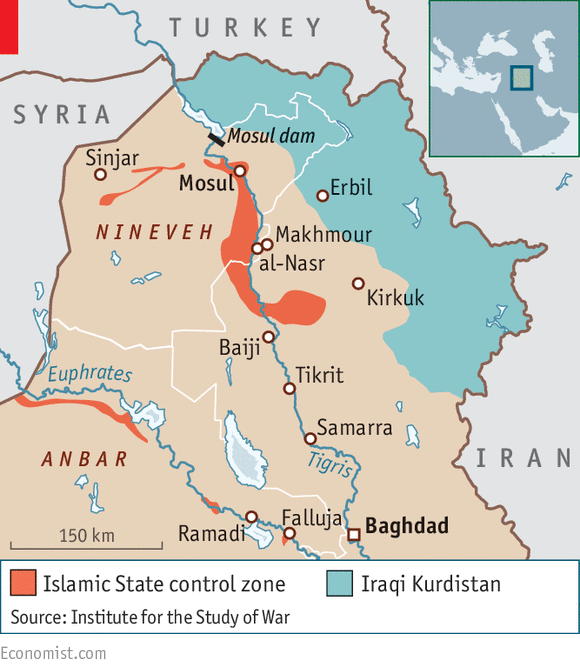
IT WAS not an auspicious start. On March 24th the government in Baghdad announced the beginning of operations to retake the city of Mosul, Iraq’s second largest, from Islamic State (IS). The first phase went well. An Iraqi force of about 5,000 quickly overran several villages. But within a few days progress stalled, when a counter-attack by no more than 200 IS fighters resulted in the loss of the village of al-Nasr and the high ground it sits on. Some 20 Iraqi soldiers were killed. An American marine also died from a rocket attack on a small American “fire base”, established to provide artillery support, an indication of America’s expanding role in the conflict.
Iraqi officials still talk positively about pushing IS out of Mosul before the end of the year. It is a big prize: the mainly Sunni Arab city had a population of 2m when it fell to IS in June 2014, and is the key to regaining control of the northern province of Nineveh. But the setback at al-Nasr has been a reality check. Just to take and hold al-Nasr, the local operations command says it needs to bring in more tribal fighters and police.
Military analysts reckon there is, in fact, little prospect of a concerted attempt to regain Mosul before 2017. Michael Pregent, a former Intelligence Officer who served as an adviser to Kurdish peshmerga fighters in 2005-06 and worked with Sons of Iraq during the 2007 surge (and is now at the Hudson Institute, a think-tank), says no force large enough to do the job has been built. One under-strength Iraqi division with some American military advisers will not cut it. Pentagon sources reckon that a force of at least 40,000 will be needed.
The problems do indeed appear immense. Iraqi intelligence puts IS’s fighting strength in Mosul at around 10,000, although the Americans think that the number is dwindling as IS comes under pressure elsewhere. Whatever the precise figure, IS has had the best part of two years to build multilayered defences. Mr Pregent says that although there are reasonably capable peshmerga forces to the east of Mosul that can help, these units have little interest in trying to take a city that will never be a part of Kurdistan and in which their presence would provoke ethnic tensions.
The Shia question
The same concerns, only more so, apply to the Shia-dominated Hashd al-Shaabi, or Popular Mobilisation Units. Their leaders claim that it will be impossible to regain control of Mosul unless they are involved. However, when Iraqi security forces (ISF) drove IS out of Ramadi, the capital of largely Sunni Anbar province, earlier this year, the Baghdad government, under pressure from the Americans, ordered the Hashd, some of which are trained by Iran, to stay away. They did not want a repeat of the sectarian reprisals that marred the retaking of another Sunni city, Tikrit, last year.
There are other risks in deploying the Hashd for the assault on Mosul. In a survey carried out in February by an Iraqi polling firm that included 120 respondents in Mosul, 74% said they did not want to be liberated by the mainly Shia Iraqi army on its own, while 100% said they did not want to be liberated by Shia militias or Kurds. That does not mean Mosul’s inhabitants support IS—according to a nationwide survey in January, 95% of Iraqi Sunnis oppose it—but it does suggest that they are at least as fearful of their potential liberators as they are of their oppressors. One solution would be to bring more Sunnis into the Hashd, but it will be hard to rebalance a force that consists of some 120,000 Shias and only about 16,000 Sunnis.
Mr Pregent says that the force that eventually goes to Mosul must be mostly Sunni. He argues that it should be recruited from among the American-trained soldiers and officers who were purged from the army by the former prime minister, Nouri al-Maliki. He reckons that there are as many as 50,000 such men, some of them sitting in camps for internally displaced people, who, with an offer of some back pay, would be keen to join up.
Another factor in the battle for Mosul will be the size and role of American forces. Air strikes are a given, but the Pentagon has said that it wants to set up more fire bases of the kind that came under attack last month. Both Ashton Carter, the defence secretary, and General Joe Dunford, the chairman of the joint chiefs of staff, have put forward plans that are believed to include, among other things, the deployment of more special forces and Apache helicopter gunships. These could operate from a new airbase at Erbil, 20 minutes’ flying time from Mosul, if allowed to do so by the Iraqi Kurdistan authorities.
However, the White House has yet to agree. Barack Obama’s pledge of no “boots on the ground” has worn thin, but there is little indication that he is ready to sanction military support on the scale needed to regain Mosul. That may have to wait until the election of a new president—another reason to suppose that Mosul will be in IS hands until next year.
The enemy also gets a vote, at least on the battlefield. Patrick Martin of the Institute for the Study of War, a think-tank in Washington, DC, notes that a recent spate of spectacular suicide-attacks by IS in the south suggests that its strategy is now to destabilise Iraq’s southern provinces, thus putting pressure on the Iraqi army and the Hashd to restrict their operations in the north and west. IS knows that the fall of Mosul will signal, in effect, its defeat in Iraq; so it is determined to delay that moment for as long as it can. It may one day lose its bloody grip on the city. But when, how and at what cost it will be liberated, remains to be seen.
"Mon message est modeste : « Lavez-vous les dents ! » Cela veut dire : prenez soin de vous-mêmes ! Soyez aussi sains que possible. Evitez les vices et tout ce qui pourrait faire de vous des esclaves ! C’est quelque chose que j’ai décidé très jeune en voyant ma mère sur le point de s’effondrer lorsqu’elle n’avait plus de cigarettes, elle qui pouvait fumer trois à quatre paquets par jour. J’ai choisi résolument d’être libre et de n’être dépendante de rien. Sauf de l’art peut-être. Ou de l’amour. C’est une philosophie de préservation de soi-même. Le reste"… --
Patti Smith : « Evitez tout ce qui pourrait faire de vous des esclaves ! »
LE MONDE | • Mis à jour le | Propos recueillis par Annick Cojean
S’il n’y avait eu la détermination de ma mère à me mettre au monde et me maintenir en vie. J’étais tellement malade ! C’était en 1946, et on ne savait pas alors soigner l’infection broncho-pulmonaire avec laquelle je suis née. Les médecins ignoraient si je pourrais survivre et mon père, me tenant dans ses bras, a passé des heures et des heures dans la vapeur d’une baignoire afin que je puisse respirer. Il m’a sauvé la vie. C’est donc avec un immense sentiment de gratitude que j’ai entamé ma vie et s’il n’y avait eu d’autres raisons, la volonté de remercier mes parents aurait été suffisante pour me donner la rage de vivre. Je n’ai donc jamais fait de choses stupides qui puissent me mettre en danger, ni connu le moindre problème avec l’alcool ou la drogue. Au contraire ! J’ai toujours fait de mon mieux pour préserver cette vie si précieuse qu’ils m’avaient donnée. Et c’est encore le cas.
Votre génération a affronté beaucoup de périls, vos amis ont été décimés.
C’est vrai. J’ai perdu plein de jeunes amis au Vietnam. Beaucoup ont aussi succombé à la drogue, au sida. Et puis il y a eu le cancer… Mon petit bateau a affronté des mers houleuses que j’ai eu une chance folle de pouvoir négocier. Je suis toujours là.
Chance ? Force ? Volonté ?
Enthousiasme forcené pour la vie, les gens, la nature, les plantes, les arbres, les fleurs sauvages, les voyages. Et plus que tout, appétit insatiable pour le travail des autres. Vous n’avez pas idée de l’importance qu’ont eue les livres dans mon enfance. Je ne pensais qu’à ça : un nouveau livre ! Vite un nouveau livre ! Pinocchio, Peter Pan, Alice au pays des merveilles, Le magicien d’Oz, Les quatre filles du docteur March, des intrigues, des romans policiers, et au fur et à mesure que j’ai grandi, un flux sans fin d’ouvrages plus merveilleux les uns que les autres. Ils m’ont propulsée dans la vie. Et puis il a évidemment tout le reste : le rock and roll, l’opéra, la peinture, la photographie, le cinéma, Godard, Bresson, Kurosawa, Jackson Pollock et Sylvia Plath… Tout le génie de l’esprit humain. Toutes ces œuvres à découvrir qui me rendent heureuse d’être en vie et me donnent l’envie de poursuivre mon propre travail.
Plusieurs deuils vous ont terrassée. Où avez-vous trouvé l’énergie de vous redresser et l’envie de créer à nouveau ?
Après la mort de Fred, mon mari, suivie un mois plus tard de celle de Todd, mon frère bien aimé, j’ai été anéantie, physiquement, émotionnellement. Je ne pouvais plus rien faire, mais je savais que le désir et l’élan créatifs, bien qu’anémiés, étaient encore vivants. J’ai commencé à faire des Polaroids. C’était simple et immédiat. Et si la photo était bonne, je me sentais valorisée. Pendant plusieurs mois, j’en ai pris une à deux par jour. Une seule le plus souvent. Et ces photos ont contribué à mon salut. Ma première responsabilité était bien sûr de m’occuper de mes enfants et je n’avais guère la force de faire beaucoup plus. Mais ces photos furent de petits pas pour reconstruire mon énergie et me donner le courage de réaliser le disque que j’avais initialement prévu de faire avec Fred. En hommage. Des amis m’ont beaucoup aidée à me remettre sur pied. Mais j’aime tellement travailler !
Malgré cette énergie, intacte, il émane de vos poèmes et de vos livres une grande mélancolie.
Lorsque j’ai écrit M Train, je souffrais d’un malaise diffus que je ne parvenais pas à identifier. J’affrontais l’absence bien sûr, et une succession de deuils difficiles qui m’avaient fait perdre la joie. Mais ce n’était pas que cela. C’est vers la fin du livre que j’ai compris l’origine de ce malaise persistant. Mon âge ! Mon âge me rattrapait ! 67 ans à l’époque. Et bientôt 70. Oui, j’avais franchi une ligne. Et oui, je vieillissais ! Il était temps que je me confronte à ma propre chronologie. Temps que j’envisage le temps limité qu’il me restait sur cette planète pour voir mes enfants et réaliser tous les projets que j’avais en tête. Jamais je n’avais encore pensé à cela. J’ai toujours été insouciante de mon âge et de mon apparence. Puérile. Mais la froideur de la chronologie s’imposait brutalement. J’ai fini par accepter cette réalité, ou du moins me réconcilier avec elle. Et maintenant que j’ai identifié la racine de ce qui me rongeait, je me sens beaucoup mieux.
Comment peut-on pallier l’absence ?
J’ai appris que lorsqu’on perd des êtres aimés, l’amour qu’on a partagé avec eux ne meurt pas. L’amour ne meurt pas ! Votre mère peut mourir mais ça n’interrompt nullement son amour à votre égard. Il est là, il est en vous ! Il faut vous accrocher à cela. En écrivant mon livre, je sentais une chaleur qui envahissait mon cœur et j’ai compris que c’était l’amour de mon frère. Il aidait à raviver la petite flamme vacillante à l’intérieur de moi. Et je fais tout pour qu’elle ne s’éteigne pas. Parce que l’amour est autour de moi. Celui de mon père, de ma mère, de Robert Mapplethorpe, de mon mari, de mes chiens. Je suis peut-être seule, à ce stade de ma vie, en termes de compagnon, mais je ne suis pas sans amour ! Et le fait de pouvoir écrire et de sonder ma tristesse infinie, me permet de la retourner et de découvrir son pendant qui est la joie. Je n’écris pas intentionnellement une célébration de la vie. Mais le seul fait de travailler sur des impulsions créatrices prouve que la vie est là. Ardente.
Avez-vous l’impression de travailler sous le regard de vos disparus ?
C’est un sujet si délicat ! J’essaie de ne pas édicter de règle ou de dire quoi que ce soit de définitif là-dessus. Mais c’est vrai que je peux parfois sentir Robert juste à côté de moi, ou ma mère. Il n’y a pas si longtemps, j’essayais de prendre une photo et je n’y arrivais pas. Mon sujet était là, pourtant. Mais je ne parvenais pas à cadrer. Qu’est-ce qui cloche ? me disais-je, agacée. Et soudain j’ai senti la présence de Robert : « Bouge un peu, à gauche, là, un peu plus haut. » J’ai fait : « Ok. Oui, bien sûr. » Et c’était bon… Parfois, quand les choses se passent vraiment bien pour moi, presque trop bien, quand j’ai l’impression de sauter de pierre en pierre au-dessus du gué sans tomber dans l’eau, je me dis : « Tiens, c’est ma mère qui m’aide ». Ou quelqu’un d’autre. Et je sais qu’il arrive que William Burroughs ou mon mari marche avec moi. Ou moi avec eux. Mais c’est quelque chose de fragile, qui se dissipe rapidement si vous vous approchez de trop près. En tout cas, je crois dans ces choses. Je ne veux rien exclure.
Encore faut-il être attentif ?
On ne maîtrise rien. J’étais auprès de mon grand ami Allen Ginsberg quand il est mort. Et il y a eu quelques bouddhistes pour dire : « C’était sûrement un mauvais bouddhiste car il ne part pas ! Il semble vouloir rester ici ! » Et c’est vrai que j’ai pu sentir la présence d’Allen pendant des semaines. Quand Robert est mort, je l’ai senti à mes côtés pendant des mois. Je pouvais être occupée à plier des vêtements, et je le voyais. En revanche, d’autres personnes que j’ai aimées sont parties instantanément, loin, très loin, pfffttt ! Libérées de leurs chagrins ou de leurs souffrances physiques. On ne peut pas leur demander de se manifester, on ne peut que se tenir prêt. « Ce n’est pas que les morts ne parlent pas, disait Pasolini. C’est qu’on a oublié comment les écouter. » J’ai lu cette citation avant même d’être concernée par une perte douloureuse, et ce fut très instructif. C’est comme Jim Morrison qui chantait : « You can’t petition the Lord with prayers. » Il faut faire le vide en soi et attendre. De sentir Dieu en vous. Ou votre mère. Mais on ne peut rien exiger. Juste être ouvert à la visite et se sentir reconnaissant lorsqu’elle se produit. Ce n’est pas très différent de Jeanne d’Arc qui entendait des voix ou de Bernadette de Lourdes recevant la visite de la Dame. Elles ne commandaient rien. Ce n’est ni un tour de magie ni un spectacle de cirque. Ce n’est pas non plus scientifique. Mais c’est le côté poétique de la foi.
Votre famille était extrêmement religieuse ?
Ma mère surtout. Ma sœur Linda l’est encore profondément. Et moi, enfant, j’étais fascinée par l’idée de Dieu. Dès que ma mère m’en a parlé, à l’âge de 2 ou 3 ans, j’ai adoré ce concept. Cela signifiait qu’il y avait quelque chose de plus grand que nous vers lequel pouvait flotter notre imagination et à qui nous pouvions parler. Et puis à mesure que j’ai vieilli, la religion avec son carcan de règles et d’intermédiaires entre Dieu et nous m’est devenue insupportable. Quelle tyrannie ! Je n’ai pas perdu de vue Dieu ou Jésus, mais j’ai abandonné la religion et ses règles qui me rendaient claustrophobe.
Quelle a été la plus grande chance de votre vie ?
D’avoir survécu à tant de maladies. Je ne peux pas vous dire le nombre de fois où ma mère a pleuré devant un médecin qui lui prédisait que je ne survivrais pas. Mais ce n’était pas que de la chance. Je voulais tellement vivre ! Et puis j’ai bien sûr eu le privilège de rencontrer Mapplethorpe à 20 ans et toute une série de gens merveilleux : Ginsberg, Burroughs, Corso, Sheppard… Mais peut-on parler uniquement de chance ? Car rien n’a été facile vous savez, rien ne m’a été offert sur un plateau. J’étais maigrichonne, ingrate, j’avais une vilaine peau, les gens se moquaient de moi. La vie aurait pu être très différente si je n’avais été une grande travailleuse et si je n’avais bossé toute ma vie. Avec cette conviction, acquise très jeune, que mon destin serait lié à l’art et que je serais un jour écrivain. Je l’ai désiré dès l’âge de 8 ou 10 ans. C’est peut-être ça ma plus grande chance.
D’où vous venait cette conviction que l’art était la chose la plus importante de la vie ?
C’est ce qui m’interpellait ! J’ai grandi dans ces années 50 où les gens, sortant de la guerre, et avec un conformisme inouï, croyaient embrasser la modernité en rêvant de maisons standards, de vêtements en polyester et d’objets tout neufs, de préférence en plastique. Tout ce que je détestais ! J’avais la tête plongée dans les photos de Julia Margaret Cameron et de Lewis Carroll, je rêvais de l’accoutrement des poètes du 19ème siècle, j’adorais les tasses en porcelaine anglaise dont les gens se débarrassaient dans les marchés aux puces et je me jetais sur leurs vieux livres dont ils préféraient lire un condensé dans le Reader Digest. Ce monde était évidemment dominé par les hommes, et les filles, maquillées et choucroutées selon des règles précises, ne pouvaient espérer devenir autre chose que secrétaires, cuisinières, coiffeuses ou mères. Insupportable pour moi ! Avec mes longues tresses, mes chemises de flanelle rouge et mes salopettes, je rêvais d’autre chose. Jo March écrivant son livre m’avait bouleversée, et puis Frida Kahlo, Marie Curie… Quelle bouffée d’air frais lorsque j’ai débarqué à New York en 1967. Quelle possibilité de se réinventer ou simplement d’être enfin soi-même !
Comment expliquez-vous que tant de jeunes gens de 20 ans suivent vos apparitions dans les concerts ou les librairies et vous considèrent comme une icône ?
Je me sens privilégiée car ils m’apportent leur énergie et peut-être se reconnaissent-ils un peu en moi ? Vous savez, quand j’ai fait mon album Horses en 1975, c’était à destination de tous ceux qui, comme moi, étaient un peu des moutons noirs, totalement en marge, et persuadés d’être seuls. J’ai fait Horses pour leur faire savoir que quelqu’un parlait leur langue. Et qu’il faut avoir le courage d’être soi. Mais le chemin que je propose n’est pas le plus facile ! La chanson My blakean year dit : « One road was paved in gold and one road was just a road. » Eh bien c’est le second que j’ai choisi, un chemin de dur labeur, un chemin de sacrifices. Mais un chemin plein de gratifications car suivre sa pulsion créative et aller au bout de ses rêves débouchent sur de la joie.
Vous leur parlez à ces jeunes ? Vous vous sentez une responsabilité à leur égard ?
Allons ! Ils expérimenteront par eux-mêmes les surprises que réserve la vie et ils apprendront de leurs propres erreurs. C’est ainsi qu’on grandit. Quand ils me demandent : « Patti, qu’est-ce qu’on devrait faire ? » mon message est modeste : « Lavez-vous les dents ! » Cela veut dire : prenez soin de vous-mêmes ! Soyez aussi sains que possible. Evitez les vices et tout ce qui pourrait faire de vous des esclaves ! C’est quelque chose que j’ai décidé très jeune en voyant ma mère sur le point de s’effondrer lorsqu’elle n’avait plus de cigarettes, elle qui pouvait fumer trois à quatre paquets par jour. J’ai choisi résolument d’être libre et de n’être dépendante de rien. Sauf de l’art peut-être. Ou de l’amour. C’est une philosophie de préservation de soi-même. Le reste…
Comment la jeune Patti Smith fauchée mais pleine d’espoir, vivant dans un squat de New York en 1967, regarderait-elle la star de 70 ans qui signe à Paris un livre chez Gallimard ?
Je crois qu’elle serait heureuse de ce que je suis devenue. Elle regretterait peut-être de me voir aujourd’hui sans boyfriend, mais elle se reconnaîtrait, dans mon travail et dans ma façon d’être. Je ne lui serais pas une étrangère.
Official music video for ‘When We Fall', from a brand new four track ‘double B-side’ EP, featuring two tracks from BEAK and two from their ‘alter-ego’ KAEB.
Co directed by Alex Garland & Rob Hardy.
Featuring Sonoya Mizuno (Ex Machina).
The 4 track EP features ‘The Meader’ and ‘The Broken Window’ by BEAK and ‘When We Fall’ and ‘There’s No One’ from KAEB, the latter featuring vocal contributions from Californian based artist Jonwayne

 Mr brainwash, Bansky. Presented by 34 Fine Art, Cape Town, London. Images courtesy the Urban Art Fair
 JonOne, Liberté, Egalité, Fraternité. Presented by Editions Lézarts Urbains, Paris
 Vermibus, Ceniza Y Sed, Solvent on Original Advertising Poster, 120 x 170cm, 2015 - © OPEN WALLS Gallery 2015, Courtesy Private Collection – Paris. Presented by OPEN WALLS Gallery, Berlin