Journalist at RFI (ex-DW, BBC, CBC, F24...), writer (on art, music, culture...), I work in radio, podcasting, online, on films.
As a writer, I also contributed to the New Arab, Art UK, Byline Times, the i Paper...
Born in Paris, I was based in Prague, Miami, London, Nairobi (covering East Africa), Bangui, and in Bristol, UK. I also reported from Italy, Germany, Haiti, Tunisia, Liberia, Senegal, India, Mexico, Iraq, South Africa...
This blog is to share my work, news and cultural discoveries.
To commemorate the twentieth anniversary of the death of the socialist historian Raphael Samuel, along with the fortieth anniversary of the journal he helped to found, History Workshop Journal. A weekend of discussion, celebration and debate bringing together activists, community historians, students, teachers, writers, artists, practitioners of history, from inside and outside universities Talks, films, screenings, theatre, song, dance, walks and talks Stands, exhibitions, caucuses, debates
THEMES INCLUDE What is radical history? ● History and radical struggle ● Utopianism, radical visions and visionaries ●Radical education ● Radical religion ● Gender and sexuality ● Race, ethnicity, and activism ● Radical London ● The politics of housing ● Radicalism and the university ● Radical arts and aesthetics ● Radical archives, radical publishing ● History online ● Oral history ● Protest movements ● Class, communities, labour history ● Local and global connections ● Peace activism
The conference takes place over three days, at Queen Mary University of London, with a pre-conference day event at Birkbeck.
THURSDAY 30 JUNE: pre-conference day event RADICAL UTOPIAS, with Sasha Roseneil, including workshop and screening on Greenham Common, and roundtable discussion ‘Feminism and Radical Utopianism, Past and Present’. This pre-conference event will be held at Birkbeck, University of London, organised by Birkbeck Centre for Gender and Sexuality and Birkbeck Institute for the Moving Image
FRIDAY 1ST –SUNDAY 3RD JULY: RADICAL HISTORIES/ HISTORIES OF RADICALISM
Queen Mary University of London, Mile End Rd, London E1 Friday 1st to Sunday 3rd July, conference at Queen Mary, University of London Mile End Road, London E1 Chargeable, registration essential. Booking for QMUL Radical Histories conference Fee: Full price £50, Unwaged £25, Day rate £20, Unwaged £10.
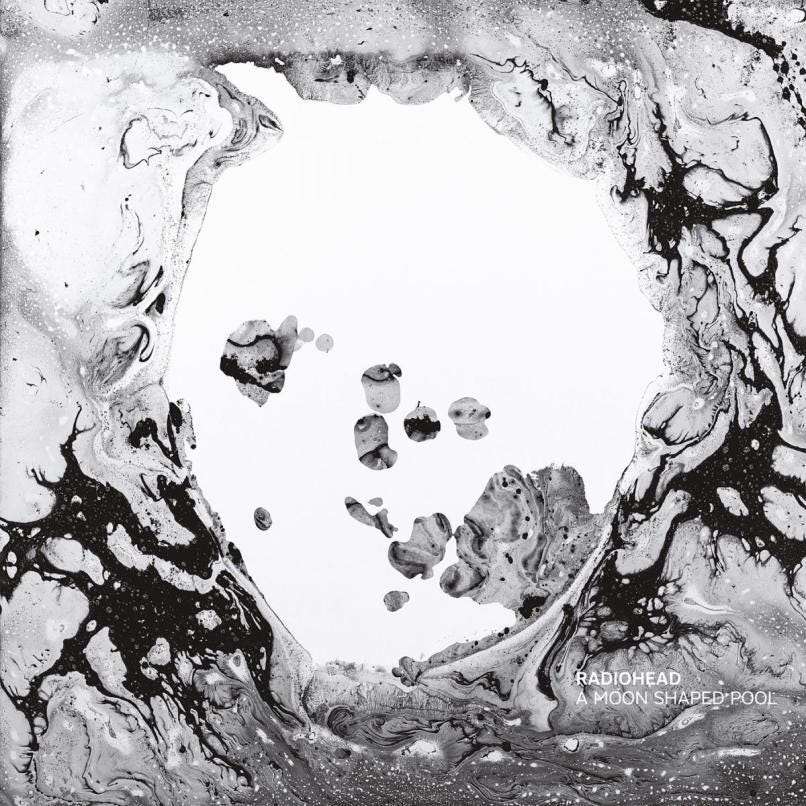
Radiohead’s hotly-awaited new album, titled A Moon Shaped Pool, has finally been released.
The band’s ninth album has been made available to purchase digitally via their official website, where you can also preorder both Vinyl and CD versions for the 17th June.
A Moon Shaped Pool leaked two hours before its official release time on Google Play, with eager fans dissecting the album before being officially released.
The 11-track record is available to stream through both Tidal and Apple Music, but is yet to be made available on Spotify.
Both previously released singles “Burn the Witch” and “Daydreaming” feature on the album. The latter’s music video was directed by There Will Be Blood’s Paul Thomas Anderson, as was widely rumoured before its release.
Fans were speculating that the new album would be called Dawn Chorus after the band set up a new company with the same name in October 2015.
Yorke mentioned an unfinished song called “Dawn Chorus” in an interview from 2009, while the first Sunday of May - the day they released “Burn the Witch” - is known as International Dawn Chorus Day.
The meaning behind Dawn Chorus remains a mystery, as there is no track on the album with that title.
A Moon Shaped Pool's tracklisting as follows:
‘Burn The Witch'
'Daydreaming'
'Decks Dark'
'Desert Island Disk'
'Ful Stop'
'Glass Eyes'
'Identikit'
'The Numbers'
'Present Tense'
'Tinker Tailor Soldier Sailor Rich Man Poor Man Beggar Man Thief'
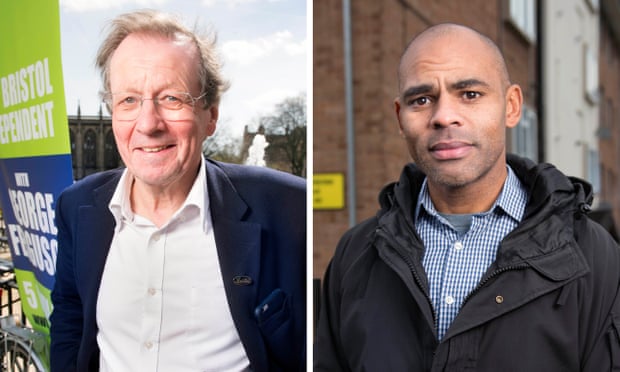
Independent candidate George Ferguson, left, will be replaced as mayor of Bristol by Labour’s Marvin Rees. Photograph: Adrian Sherratt for the Guardian
Bristol elects Labour's Marvin Rees as new mayor
The Labour candidate took 68,750 votes ahead of his rival George Ferguson's 39,577
Labour’s Marvin Rees has been elected as the new Mayor of Bristol, defeating rival George Ferguson of Bristol First at the second count.
Mr Rees, who was defeated by independent candidate Mr Ferguson in 2012, took 68,750 votes ahead of Mr Ferguson's 39,577 at the second count.
The Labour candidate also led the first preference votes with 40.4 per cent (56,729) ahead of Mr Ferguson’s 23.1 per cent (32,375). His victory is coupled with the turnout in Bristol almost doubling to 45 per cent from 2012.
Jeremy Corbyn, who travelled to Bristol on Saturday, has offered his congratulations, describing Mr Rees as "another Labour mayor who will stand up for their city".
Conservative candidate, Charles Lucas, beat the Green Party's Tony Dyer to third place, while Lib Dem candidate, Kay Barnard, came in fourth, followed by Ukip's Paul Turner.
Speaking after his victory, Mr Rees said: "One of the things I can do in the coming months is to show how we can be involved in electoral politics as a family.
"If you don't make politics family-friendly, you end up with a certain type of politician.
"We need family people elected and we need to make space for them. I am going to make space for my family."
Mr Ferguson, who has held the position of Mayor of Bristol since 2012, thanked his victor for "giving me my life back".
"It has been an amazing three-and-a-half years. I knew we were up against it first time but I knew we were even more up against it second time, especially as I am a great advocate for us having all-out elections."
Bristol was an important target for Labour, with Mr Rees leading a lively campaign in the area.
Mr Rees previously told the Guardian, that a win for him in Bristol, and for Sadiq Khan in London, would indicate real political change: “I think the Bristol election is important to national Labour.
“In myself and Sadiq you see evidence of the fact that Labour offers real political change. Look at our backgrounds. Sadiq is the son of a bus driver, I’m the mixed race son of a single white woman who spent time in a refuge.”
Mr Corbyn has backed Mr Rees throughout his mayoral campaign, making several visits to the city.
Speaking to the Bristol Post last month, Mr Corbyn said: "[The election] is an opportunity for the people of Bristol to elect a mayor who is going to deliver for this city and the council for this city.
"It's a test for the party to get its message across - the message of opposition to austerity, the message of dealing with the housing crisis which is gripping this country - and we are doing our best to do that."
Mayoral wins in London, Bristol, Salford and Liverpool have been a major boost for Labour, which had suffered the humiliation of slipping to third place in Scotland, once a stronghold for the party.
In Wales, Labour lost control of the Welsh Assembly after the totemic seat of Rhondda fell to the Plaid Cymru leader Leanne Wood.
But in English council elections, the party faired less badly than many pundits had expected – losing only 25 seats of the 1,200 it was defending.
The party also retained control of key councils such as Crawley, Southampton, Norwich and Hastings, where its vote had looked vulnerable.
Mr Rees will take office on Monday when he will be officially sworn in at a ceremony at Bristol Museum, M-shed.
Marvin Rees: the Bristolian bearing the weight of Labour hopes
FacebooTwitterPinterest
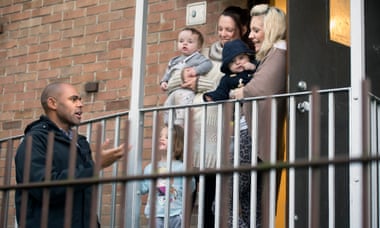
Rees talks to mothers outside the laundry room of a block of flats. Photograph: Adrian Sherratt for the Guardian
Rees wants to become mayor to help the city’s poor, but he also knows how much a win would boost Corbyn’s leadership
Marvin Rees, Labour’s candidate for the Bristol mayoralty, is chatting to two mothers on the Long Cross estate. They are complaining about the syringes dropped on the waste-ground near their flats, the rubbish spilling from bins, the traffic congestion. “It’s not too great around here. We don’t feel part of the Bristol you see on the telly,” says Shannon Ogborne, 20. “There are a lot of people doing well in this city but we don’t see that out here.”
But he will face a battle over the next few months to retain power. Labour was devastated when Rees, the favourite for the mayoralty in 2012, was pipped by Ferguson, and will fight even harder for the 43-year-old in 2016. A key argument will be that, while many parts of Bristol are doing well, there are pockets of deprivation where things may be getting worse.
There is an intriguing side issue, too, of course. The mayoral race in Bristol – where Labour has three MPs and the biggest group on the city council – will be a key test of whether Jeremy Corbyn may have a long-term future as party leader.
It is not surprising, then, that Rees, who has given up his job as a public health manager to run for mayor, is already out and about, keen to investigate Ferguson’s record.
“George is a decent fella,” Rees said. “He has done a lot to raise the profile of the city. He’s a fantastic presenter, a storyteller. He’s gone around the world representing Bristol. We need to assess to what extent that has played back into real benefit for the city. Has it played back into the lives of real Bristolians? Has it led to quality jobs, access to childcare, economic inclusion?”
Bristol has just completed its year as European Green Capital, but Rees said he was struck by one particular publicity image: “It was of a piece of land ripped from the Earth and floating away.” Clinging to the land were some classic Bristol landmarks – including the Clifton suspension bridge.
“That encapsulates the problem,” Rees said. “You have this beautiful story that is ascending into the heavens. You imagine the rest of the people looking up wishing they were part of that story. We should find it morally challenging that in many ways there’s a story of Bristol that is racing off over the horizon and leaving people behind.”
A report presented to City Hall seems to back up some of Rees’s concerns. The More Than A Roof strategy concluded that Bristol was a “city of inequalities with persistent health and wellbeing gaps between different parts”.
It said housing was becoming increasingly unaffordable for many people and that the number of rough sleepers continued to rise. It also suggested too many local people were struggling to get the good jobs from which smart outsiders were benefitting.
“Despite the prosperity within the city, there are substantial problems of deprivation in parts of Bristol,” the report said. “The neighbourhoods that do not share the city’s prosperity often have insufficient good housing, transport and access to employment opportunities.”
An academic study by Robin Hambleton, from the University of the West of England, and David Sweeting, of the University of Bristol, was also striking.
It found a “significant increase” in the visibility of city leadership. In 2012, 24% of citizens thought the city had visible leadership, and by 2014, this figure had risen to 69%. But the report made clear that people from the poorer areas of Bristol felt much less represented than those from the wealthier areas: “These differences between different socio-economic groups suggest that more effort is needed to advance the cause of social inclusion in the democratic governance of the city.”
Rees says the key job of the mayor is to ensure Bristol is a great place for everyone, rich and poor. “If it doesn’t work, you end up with a fragile society and loose social ties that leave you vulnerable to the type of social disintegration we saw ending in the 2011 summer riots.
“Inequality is also an economic liability; inequality costs. We have to spend public money dealing with the consequences of inequality whether it be poor health, poor educational attainment … It means we don’t get the workforce we need, we end up importing workers because kids born in the city don’t have access to the high-quality education needed.”
Rees’s campaign is likely to take a different tack to 2012, when he was keen simply to talk about what he believed in rather than criticise his opponents. This time he is expected to take on Ferguson head-to-head, and talk more about his own story.
Rees is of mixed race and the son of a retired nursery nurse, Janet, who will introduce him when he launches his campaign this weekend at his old primary school. He lived for a while on the Long Cross estate, a largely white, working class area, where he faced racist abuse. He did well at school, went on to university, worked in the media as well as the health sector, and came to the Labour party and politics through Operation Black Vote.
It clearly irks Rees that during the last campaign Ferguson was the focus of the media, who appeared taken by his promise of politics that was independent of any party. He said he believed reporters swallowed a line that, because Ferguson looked different (he is known for his red trousers) and did not speak like a regular politician, he was anti-establishment.
“It’s all right saying you’re going to be independent [but] you have to deliver on that, you have to take Westminster on.” He said the London mayor and Conservative politician, Boris Johnson, had stood up to the government more than Ferguson.
(...)
Rees voted for Andy Burnham as leader, but said he liked Corbyn. “I love the fact he is raising questions that need to be raised about the very nature of the way we do politics and economics. I think he’s a symptom of people’s search for authenticity in politics. I like him – and he made my mum comfortable when he met her; that means a lot to me.”
L’ARTISTA NOTO COME BANKSY NON È ASSOCIATO NÉ COINVOLTO IN QUESTA ESPOSIZIONE MUSEALE. TUTTE LE OPERE PRESENTI IN MOSTRA PROVENGONO DA COLLEZIONISTI PRIVATI INTERNAZIONALI E NESSUNA OPERA E’ STATA SOTTRATTA ALLA STRADA.
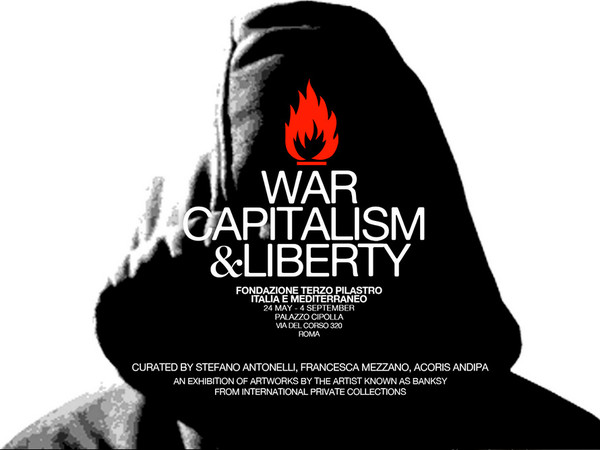
COMUNICATO STAMPA:Guerra, Capitalismo & Libertà, sono le tematiche contemporanee affrontate in questa mostra attraverso le opere del principale street artist internazionale noto come Banksy. Una grande mostra sull’artista che si terrà a Palazzo Cipolla, dal 24 Maggio al 4 settembre 2016.
La mostra comprende un esteso corpus artis su Banksy proveniente da collezioni private internazionali. Saranno esposti dipinti originali, stampe, sculture e oggetti rari, molti di questi mai esposti in precedenza. È una mostra no-profit, caratterizzata da una forte componente didattica destinata alle scuole, che costituisce un’esauriente rassegna scientifica dell’artista noto come Banksy.
L’artista, originario di Bristol, ha influenzato enormemente la scena artistica a livello mondiale ed è oggi considerato il massimo esponente del movimento artistico conosciuto come Street Art. Nella mostra sarà messa in luce la sua visione artistica di fronte agli avvenimenti sociali e politici internazionali, dalla serigrafia di alcune scimmie che dichiarano ‘Laugh Now But One Day I’ll Be in Charge’ (Ridete adesso ma un giorno saremo noi a comandare), passando per l’agghiacciante immagine di ‘Kids on Guns’. Banksy è una delle figure più discusse, dibattute e acclamate dei nostri tempi, il suo anonimato ha catturato l’attenzione del pubblico internazionale già dalla fine degli anni Novanta.
È un artista urbano che utilizza una vasta gamma di supporti, dalla pittura su tela, alle serigrafie e sculture, alle grandi installazioni, creando delle scenografie animate in cui ha coinvolto, occasionalmente, anche animali viventi. I suoi lavori sono caratterizzati da umorismo e umanità, intendono dare voce alle masse e a chi, altrimenti, non sarebbe ascoltato da nessuno. Un esempio è il suo recente commento alla crisi dei rifugiati: un grande stencil fuori l’ambasciata francese di Londra. Il suo anonimato e il suo rifiuto a conformarsi spiegano la difficoltà a inquadrare e definire un artista di tale portata; proprio per questo, non è mai stata esposta all’interno di un museo privato, una rassegna delle sue opere.
La Fondazione Terzo Pilastro (già Fondazione Roma Terzo Settore) ha riunito questa collezione, ampia e senza precedenti, grazie a prestatori provenienti da tutto il mondo. La mostra metterà in luce le grandi capacità artistiche di Banksy, attraverso la sua carriera ed evidenziandone le principali fonti di ispirazione: GUERRA, CAPITALISMO e LIBERTÁ.
Anche se l’artista mantiene il pieno anonimato, si pensa che Banksy sia nato a Bristol nel 1974. Partendo dalla scena metropolitana della città inglese, l’artista, per necessità di creare opere di grandi dimensioni in poco tempo, ha unito il graffiti writing allo stencil, creando il suo stile che lo distingue da chiunque altro. Nei suoi lavori, dai murales alla scultura all’installazione, Banksy esprime un commento satirico, sociale e politico giocando e traendo spunto dal contesto nel quale si trovano le sue opere. La prima mostra dell’artista si è tenuta a Bristol nel 2000 al Severn Shed. Nel 2002, Banksy ha esposto alla 33 1/3 Gallery di Los Angeles e l’anno seguente è stato incaricato di disegnare due copertine all’album Think Tank dei Blur. Il lavoro di Banksy si espande a livello internazionale: lungo la striscia di Gaza, sul versante palestinese, ha dipinto nove immagini. Nell’estate 2009 si “è impossessato” del Bristol Museum & Art Gallery con una mostra che ha attratto oltre 300.000 visitatori. L’artista ha inoltre realizzato un film documentario “Exit Through The Gift Shop”, ottenendo una nomination agli Oscar. Ad oggi, nessuna galleria rappresenta in maniera esclusiva Banksy. Nel 2013 ha realizzato un progetto situazionista a New York chiamato “Better Out Than In”: in una delle varie attività sparse per la città ha venduto le sue tele su una bancarella per $60 USD ai turisti.
Il 2015 ha visto l’apertura di DISMALAND: un grande parco a tema da lui rinominato ‘Bemusement Park’, il contrario del parco divertimenti, dove visitatori di ogni età e provenienza sono stati accolti da uno staff depresso e poco collaborativo. All’interno del parco una mostra, curate dallo stesso Banksy, ha riunito artisti di grande rilievo, tra cui Damien Hirst e Axel Void. Nello scorso dicembre Banksy ha poi deciso di trasferire le strutture di Dismaland a Calais per ospitare i rifugiati. In questa occasione ha prodotto una serie di murales, tra cui ‘The Son of a Migrant from Syria’ (‘Il Figlio di un Emigrante dalla Siria’) che raffigura cinicamente Steve Jobs.
L’ARTISTA NOTO COME BANKSY NON È ASSOCIATO NÉ COINVOLTO IN QUESTA ESPOSIZIONE MUSEALE. TUTTE LE OPERE PRESENTI IN MOSTRA PROVENGONO DA COLLEZIONISTI PRIVATI INTERNAZIONALI E NESSUNA OPERA E’ STATA SOTTRATTA ALLA STRADA.
Rome is on standby to spot anonymous graffiti artist Banksy after reports the Italian capital is to host the biggest ever exhibition of Banksy's work this summer.
The exhibition, "War, Capitalism & Liberty" is the first time so many of Banksy's stencils and paintings will be displayed together — and the first introduction to other street artists for the Rome Foundation Museum.
According to Italian newspaper, La Repubblica, the artwork will go on display on May 24 until September 9 at the Fondazione Rome Arte-Musei gallery in Palazzo Cipolla. All of Banksy's work has been certified as originals and have been sent to the museum on loan from private collectors from around the world.
"War, Capitalism & Liberty" has been curated by Stefano Antonelli and Francesca Mezzano and rumors are already rife that Banksy — who has never revealed his identity — will pay the exhibition a visit.
Banksy, the anti-capitalist street artist and curator from Bristol netted millions for sea-side town Weston-super-Mare in Somerset after more than 150,000 visited his Dismaland Bemusement Park in five weeks in 2015.
Visit Somerset said Dismaland boosted local businesses by US$30.5 million. Hotels were full every night and a taxi driver told Sputnik that he had never been so busy, driving people back to Bristol each night — the city where Bansky made his name — by never revealing it.
Stenciling Social Injustice
Following the success of Dismaland, Banksy shifted his focus and spray can to the refugee crisis facing Europe. He shipped off the remnant of the Bemusement Park to Calais to provide shelter to people living in a refugee camp.
BANKSY.CO.UK
Steve Jobs by Banksy
An image of Steve Jobs, Apple founder and son of a Syrian refugee was soon stenciled on a wall near the camp. Banksy got to work in the French town of Calais where he painted his own version of Romantic artists, Theodore Gericault's Raft of the Medusa, which features a luxury yacht and a helicopter with the words: "We're not all in the same boat."
Back in Britain, a mural recently appeared opposite the French embassy in London taken from the musical Les Miserables, depicting a young girl crying with tear gas billowing in front of her from a CS can and a QR code which linked to a video showing French police firing rubber bullets at refugees to break up a camp.
PIXABAY
Banksy's mural opposite the French embassy in London highlighting the use of teargas on refugees by the French police.
In Rome, the focus for the biggest ever Banksy exhibition is not to reveal his identity but to unravel the rhetoric of his art.
La ville de Palerme rend hommage à Letizia Battaglia, pionnière du photojournalisme italienne qui, durant plus de trente ans, n'a eu de cesse de documenter l'emprise de la mafia sur la Sicile. L'exposition "Letizia Battaglia Anthologia" s'achève, mais ce travail est à retrouver dans le livre publié aux édition Drago, "Anthology".
“My relationship with Palermo has always been a mix of anger and sweet despair. I see her sickness and it angers me. I would like to leave but I can’t, I love her morbidly and I still have so much to do in my city.” Letizia Battaglia
Drago is proud to announce its new project: an anthology of Letizia Battaglia’s extraordinary photographic work, from 1971 to 2016.
Letizia Battaglia (Palermo, 1935) is a Sicilian photographer and photojournalist. Although her photos document a wide spectrum of Sicilian life, she is best known for her work on the Mafia. Over the years, Battaglia took some 600,000 images whilst documenting the ferocious internal war of the Mafia, and its assault on civil society. Battaglia sometimes found herself at the scene of four or five different murders in a single day. She photographed the dead so often that she described herself as a moving morgue. “Suddenly,” she once said, “I had an archive of blood.” A large selection of her iconic black and white images will be presented in the catalogue, guiding the reader along a journey into one of post-war Italy’s darkest periods. Drawing from Battaglia’s personal archive the book also includes more recent projects. It offers a unique approach to her genre-defining photography (often linked to that of American ‘crime’ photographer Weegee) and a chance to reflect on the role of photography as an individual and collective means for taking action, bearing witness, providing evidence and documenting history.
-
Letizia Battaglia (born 5 March 1935) is an Italian photographer and photojournalist. Although her photos document a wide spectrum of Sicilian life, she is best known for her work on the Mafia. She was born in Palermo, Sicily. Married at 16, she took up photojournalism after her divorce in 1971, while raising three daughters. She picked up a camera when she found that she could better sell her articles if they were accompanied by photographs and slowly discovered a burning passion for photography. In 1974, after a period in Milan during which she met her long-time partner Franco Zecchin, she returned to Sicily to work for the left-wing L’Ora newspaper in Palermo until it was forced to close in 1992.[1] Battaglia took some 600,000 images as she covered the territory for the paper. Over the years she documented the ferocious internal war of the Mafia, and its assault on civil society. Battaglia sometimes found herself at the scene of four or five different murders in a single day. Battaglia and Zecchin produced many of the iconic images that have come to represent Sicily and the Mafia throughout the world. She photographed the dead so often that she was like a roving morgue. “Suddenly,” she once said, “I had an archive of blood.” Battaglia also became involved in women’s and environmental issues. For several years she stopped taking pictures and officially entered the world of politics. From 1985 to 1991 she held a seat on the Palermo city council for the Green Party, from 1991 to 1996 she was a Deputy at the Sicilian Regional Assembly for The Network. She was instrumental in saving and reviving the historic center of Palermo. For a time she ran a publishing house, Edizioni della Battaglia, and co-founded a monthly journal for women, Mezzocielo. She is deeply involved in working for the rights of women and, most recently, prisoners. In 1993, when prosecutors in Palermo indicted Giulio Andreotti, who had been prime minister of Italy seven times, the police searched Battaglia’s archives and found two 1979 photographs of Andreotti with an important Mafioso, Nino Salvo, he had denied knowing. Aside from the accounts of turncoats, these pictures were the only physical evidence of this powerful politician’s connections to the Sicilian Mafia. Battaglia herself had forgotten having taken the photograph. Its potential significance was apparent only 15 years after it was taken. In 1985 she received the W. Eugene Smith Grant in Humanistic Photography. In 1999 she received the Photography Lifetime Achievement of the Mother Jones International Fund for Documentary Photography. In 2007 she received the Erich Salomon-Preis, a ‘lifetime achievement’ award of the Deutschen Gesellschaft für Photographie (DGPh) and the most prestigious prize in Germany. In 2009, she was given the Cornell Capa Infinity Award by the International Center of Photography. In 2005, she appeared in the documentary Excellent Cadavers based on the 1995 book by Alexander Stille. Battaglia plays the role of survivor and passionate eyewitness. Battaglia has a cameo appearance in the 2008 Wim Wenders film Palermo Shooting as a photographer.