14/12/2016

MIA


If I wasn't me, I would want to be M.I.A. !!
But I'm me and it'll have to be good enough :)

Still tough, M.I.A.:


Clique x M.I.A.


Published on 3 Oct 2016
Mouloud Achour a rencontré M.I.A, à l’occasion de la Fashion week.
Au programme : Le Swagistan, son enfance au Sri Lanka, le peuple tamoul, son engagement à l’égard des réfugiés et son doigt d’honneur au concert du Superbowl.

Clique c'est une galerie de portraits d'acteurs du quotidien et de sujets qui dessinent les contours du monde de demain.
Chaque semaine, une nouvelle vidéo !

Abonnez-vous à la chaîne Clique : http://bit.ly/10UoT5i
Toutes les vidéos sur http://bit.ly/1cY7eJq


13/12/2016

Pour Alep... Demain à Paris


  Appel d'Amnesty :


MANIFESTATION

SOLIDARITÉ AVEC LES VICTIMES À ALEP


 Quand : 14.12.2016 au 14.12.2016
 Où : Place Stravinsky, Rue Brisemiche, 75004 Paris

MERCREDI 14 DÉCEMBRE À 18H

Rendez-vous à Paris sur la Place Stravinsky à côté du Centre Pompidou pour manifester votre solidarité avec les victimes d’Alep ! 
Venez habillés de rouge, ou avec un détail rouge (foulard, bonnet). Nous mettons à votre disponibilité des bougies. 

SOLIDARITÉ AVEC LES VICTIMES À ALEP 

A l’heure où les forces gouvernementales syriennes sont en train de prendre le contrôle de la quasi-totalité de l’Est de la ville d'Alep, des dizaines de milliers de civils doivent être protégés de toute urgence. 
Les événements des dernières 24 heures indiquent que des civils vivant dans ces secteurs seraient victimes d’actes de représailles commis par les forces loyales au gouvernement syrien : détention arbitraire, torture, disparition forcée et exécutions extrajudiciaires. Le Haut-Commissariat de l’ONU (HCDH) aux droits de l’homme dénonce l’exécution d’au moins 82 civils, dont 11 femmes et 13 enfants, par les forces pro-gouvernementales. 
« Nous avons été informés que des forces pro-gouvernementales ont pénétré dans des habitations et tué les civils qui s’y trouvaient, y compris les femmes et les enfants », a dit le porte-parole du HCDH, Rupert Colville.
Aujourd’hui, les blessés ne peuvent pas être évacués, et ceux qui essayent de fuir risquent leur vie. 
Nous demandons que : 
- Les parties au conflit autorisent les civils, s’ils le souhaitent, à quitter la ville sans restriction et en toute sécurité, et que leur évacuation soit facilitée.
- Un accès humanitaire soit garanti pour que l’aide dont ont besoin les civils puisse être acheminée.
- Les bombardements cessent.
- Des observateurs puissent assurer le respect des droits humains et du droit international humanitaire.
Nous vous appelons à venir nombreux pour exprimer votre solidarité avec les civils d’Alep.

SOYONS NOMBREUX. SOYONS SOLIDAIRES. MONTRONS AU PEUPLE D’ALEP QU’IL N’EST PAS OUBLIÉ.

Ils appellent au rassemblent :
- Amnesty International France
- CCFD - Terre Solidaire
- Collectif pour une Syrie libre et démocratique
- FIDH
-MRAP
- Souria Houria


Lien : https://www.amnesty.fr/agenda/solidarite-avec-les-victimes-a-alep


--

In English, read also from Amnesty:
https://www.amnesty.org.uk/press-releases/aleppo-reports-execution-style-killings-point-war-crimes


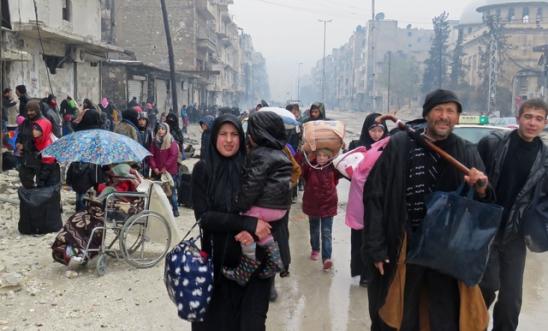
Civilians fleeing fighting in Aleppo earlier today © Stringer/AFP/Getty Images

Aleppo: reports of execution-style killings point to war crimes

Urgent call for independent monitors to ensure civilian protection and humanitarian access for life-saving aid
 
World has looked on as Aleppo has been ‘transformed into a mass grave’ - Lynn Maalouf
 
Shocking reports from the United Nations that scores of civilians have been extrajudicially executed by advancing Syrian government forces in eastern Aleppo point to apparent war crimes, said Amnesty International. Amnesty is making an urgent plea for all parties to the conflict to protect the civilian population.
 
The UN human rights office said it had reliable evidence that up to 82 civilians were shot on the spot by government and allied forces who entered their homes, or at gunpoint in the streets, over the past few hours.  
 
Lynn Maalouf, Research Deputy Director at Amnesty International’s Beirut office, said: 
 
“The reports that civilians - including children - are being massacred in cold blood in their homes by Syrian government forces are deeply shocking but not unexpected, given their conduct to date. Such extrajudicial executions would amount to war crimes.
 
“Throughout the conflict Syrian government forces, backed by Russia, have repeatedly displayed a callous disregard for international humanitarian law and utter disdain for the fate of civilians. In fact, they have regularly targeted civilians as a strategy, both during military operations and through the mass-scale use of arbitrary detention, disappearances and torture and other ill-treatment. 
 
“As government forces gain full control of eastern Aleppo the risk that they will commit further atrocities raises grave fears for thousands of civilians still trapped.
 
“In recent months the world, including the UN Security Council, has watched from the side-lines as civilians have been slaughtered on a daily basis and eastern Aleppo has been flattened and transformed into a mass grave. The global inaction in the face of such inhumanity is shameful. The lack of accountability for war crimes and crimes against humanity has allowed the parties, particularly government forces, to commit such crimes on a mass scale.
 
“It is now crucial that independent monitors are deployed to ensure that the civilian population is protected and that humanitarian access is granted so that life-saving aid can reach all those in need.”
 
At present those injured cannot be evacuated and those trying to flee are risking their lives. Amnesty is calling for all parties to the conflict to allow civilians wishing to flee the fighting to be granted safe passage to leave the area. As government forces advanced in recent weeks, civilians in eastern Aleppo told Amnesty they feared revenge attacks. Last week the UN reported that hundreds of men and boys went missing from government-controlled areas. 
 
Lynn Maalouf added:
 
“Amnesty International has previously highlighted the Syrian government’s widespread and systematic use of enforced disappearance to attack the civilian population in what has amounted to crimes against humanity. It is crucial that independent monitors are deployed to prevent further enforced disappearances, torture and other ill-treatment.” 

12/12/2016

My homage to Alberto Burri's Sicilian Land Art Masterpeace, 'Il Grande Cretto'


A Concrete Rebirth


Alberto Burri’s monumental land art project in Sicily finally came to completion—in the artist’s centennial year


Visitors can walk on top of the blocks or in the fissures between. More than 3,000 people attended AudioGhost68, which celebrated the work’s completion. Photo by Valentina Glorioso.


SICILY – In October 2015, the art world celebrated the centenary of influential Italian painter Alberto Burri with a major exhibition at the Guggenheim Museum in New York. In the same month Il Grande Cretto, Burri’s land art project in Sicily, was finally completed after 30 years—and the monumental work is now inspiring artists worldwide.
It was conceived by Burri in 1984 as a memorial to the town of Gibellina, destroyed when a violent earthquake struck western Sicily on January 15, 1968. The quake killed more than 400 people and left hundreds injured and a thousand homeless, evoking expressions of sorrow and sympathy throughout Italy.
Placed directly over the ruins of Gibellina, the 86,000-square-foot Il Grande Cretto is composed of large semi-rectangular blocks of white concrete a little more than five feet high. The blocks are broken by deep fissures that create walkable paths roughly corresponding to the ancient town’s pattern of streets.
The work’s title, which means “The Large Cretto,” establishes it as a huge, horizontal version of the cretti, or “fissures,” paintings that Burri created in the 1970s by inducing fissures or cracks in large black or white monochromatic fields of paint. The land art piece is so gigantic and imposing that it’s difficult to believe it came from the mind of an artist whose earlier works were scaled to the walls of galleries and museums.
The work was conceived when a new incarnation of the village, Gibellina Nuova, was planned a few kilometers away from the old site, and its art-loving mayor, Ludovico Corrao, engaged architects, urban planners, and artists of international renown in its construction. After a decade, Corrao realized that one name was missing from the roster of major artists working on Gibellina Nuova: Alberto Burri, celebrated worldwide since his retrospective at the Venice Biennale in 1960. So Corrao contacted Burri in 1984, and the artist agreed to take part—with a caveat.
Many pieces of public art had already been installed in Gibellina Nuova and Burri was not interested in intervening in the new city; his attention was drawn to the ruins, dubbed Gibellina Vecchia (“old Gibellina”). “His interest in Gibellina was stimulated by the tragic story of the town and the topography and site-specificity of the place,” says Emily Braun, curator of the Burri retrospective at the Guggenheim.
He proposed a gigantic work of land art to completely cover the ruins left by the earthquake. With artistic sensitivity and foresight unusual in an Italian politician at the time—unusual in politicians anywhere and at any time—Corrao sensed that, although the somber work was bound to be provocative, it would eventually come to be seen as a masterpiece and an appropriate homage to the deceased.

From Prison Camp to Gallery
Born in 1915 in Città di Castello, a small town in the Umbria region of Italy, Burri took a degree in medicine in 1940 and was forced to serve in World War II, first as a frontline soldier and then as a physician. Captured by American soldiers in Tunisia in May 1943, he was sent to a prisoner-of-war camp in Hereford, Texas. Assigned to peel potatoes in the camp kitchen, he began drawing on the burlap sacks the potatoes came in. Soon he was painting, and an art career was born.
Burri came back to Italy in 1946, arriving in a ruined Naples before settling in Rome. “The dire poverty of the south—exacerbated by the war and occupation—was what he first saw upon his return as the boat carried him back to Naples for his repatriation,” explains Emily Braun.
With Lucio Fontana and Piero Manzoni, Burri was a powerful force in Italian art in the 1960s, particularly influencing the painters who were later to start the arte povera movement: Alighiero Boetti, Mario Merz, and Giuseppe Penone, advocates of an art full of symbolic power in opposition to American pop and minimalism. Burri became known for his sacchi (bags or burlaps), cumbustioni (burnt plastic on canvas), and cretti—artworks mixing painting and sculpture.

Il Grande Cretto, A Unique Piece in the World of Land Art
The construction of Il Grande Cretto was launched in 1984, and it was three-quarters completed by 1989. But due to a lack of public funding, the project was halted for more than a quarter century, only to be completed 20 years after Burri’s death, on its original plan.
“His contribution to land art is singular,” says Emily Braun. “His Grande Cretto is a site-specific memorial based on an urban footprint. Moreover, the ‘style’ of the work, a cretto, relates to his own painterly vocabulary and process-interests as much as it does to the symbolism of an earthquake.… It strikes a balance between his personal vision as an artist and honesty to what happened there, drawing out the seismic power of the earth itself and the depths of the tragedy.”
Imbued with a spirit of mourning and commemoration, the Cretto is very different from American land art of the mid-1960s and ’70s and the work of British artists such as Richard Long and Andy Goldsworthy. It serves as “a memorial in and of the land, a record of the land or the earth, [which] was disastrous for human life,” says Emily Braun. “It represents a moment seized in time, as well as serving as a larger metaphor of cycles of nature and of life and death.”
The piece also places a capstone on the significance and influence of Burri, which reaches far beyond the Italian art world.

Celebrating and Interpreting a Masterpiece
To celebrate the piece’s completion, last October, the Gibellina Nuova city councillor in charge of art, sport, and tourism, Giuseppe Zummo, invited Giancarlo Neri to create an audiovisual performance.
Neri, born in Naples and now based in Rome, is one of Italy’s major installation artists and public art creators. Originally a painter, he later devoted himself to large public installations in the United States, Brazil, and Europe. He had already created light shows for Il Grande Cretto in the early 2010s; in 2015 he chose to collaborate with a friend, the Bristol-based artist Robert Del Naja, who is also a founding member of the British trip-hop band Massive Attack and has family connections to Naples. Together they created an installation/event entitled AudioGhost68.
Having placed portable radios within the Cretto to broadcast a soundtrack of audio from the year 1968, the artists invited Gibellina Nuova’s citizens into Burri’s labyrinthine masterpiece, giving each of them a flashlight. “One thousand white fireflies move and dance in the night in all directions inside the ‘veins’ of the Cretto, their moving light forming a great luminous mosaic in constant evolution,” Neri wrote in a press release. “[In] the air, came the sounds and voices of a long-gone era, a year that changed the world for a long moment but that here, in Gibellina, like a true Apocalypse, marked the end of it.”
“Alberto Burri’s Grande Cretto, remembering but also hiding the tragic event under concrete, represents a return to life through art,” Del Naja wrote.
More than 3,000 people attended the event, some of them coming for the first time to the site of the town where their family members used to live. For Emily Braun, this event “shows how alive the work continues to be.”
Since then, Il Grande Cretto has continued to inspire. In the summer of 2016, an exhibition dedicated to arte povera at the Centre Pompidou in Paris highlighted a painting by Burri, Rosso è Nero, and ended with the screening of three films shot in Gibellina. Raphaël Zarka’s film is very sober, taking a documentary approach to describing the site. Thierry De Mey filmed a dance performance in the Grande Cretto, and the third film, by Petra Noordkamp, was commissioned by the Guggenheim Museum to retell the whole story of the Sicilian city.
“The three films are presented in dialogue with the paintings and with the Grande Cretto itself,” explains Frédéric Paul, curator of the exhibition. “Even those who feared Burri’s megalomania have now recognized the impressive creativity of the Grande Cretto.”
In Gibellina, Giuseppe Zummo continues to program choreography and art events in the Cretto. A film shot by Giancarlo Neri and Giuseppe Lanno during the performance of AudioGhost68 was screened in Naples at Artecinema, the International Festival of Films on Contemporary Art, in early October 2016. Thanks to contemporary artists and the participation of local people, Gibellina Vecchia has never been more alive.

At AudioGhost68, this light and sound installation by Giancarlo Neri and Robert Del Naja featured hundreds of portable radios and a soundtrack from 1968. Photo by Stefano Esposito.

ISSUE 55


Freelance journalist and writer Melissa Chemam has been covering news and culture for 13 years. Born in Paris, she has lived in Prague, Miami, London, and Nairobi. Her nonfiction book about Bristol was published in France in October 2016.

--


11/12/2016

Patti Smith for Bob Dylan


Such a amount of emotions....

All the important beautiful forms of expression I love and making sense united together.
Thank you Patti Smith.
And thanks to those who brought me closer to her...


Patti Smith - 'A Hard Rain's A-Gonna Fall' 
(ceremonia Nobel 2016)


Bob Dylan - 'A Hard Rain's A-Gonna Fall' 
March 10th 1964


09/12/2016

John Lennon, 1980-2016


It's been thirty six years he's gone. All my life.
Reading this, feeling like sharing.


-

The John Lennon quotes that are still painfully relevant in this troubled world


On 8 December 1980, John Lennon was shot four times in the back outside of his apartment building in New York City. He was 40 years old. Lennon's words still ring just a true today as they did in his own lifetime. Here are The Independent's selection:

"A dream you dream alone is only a dream. A dream you dream together is reality."

"If everyone demanded peace instead of another television set, then there'd be peace."
"You either get tired fighting for peace, or you die."
"We all have Hitler in us, but we also have love and peace. So why not give peace a chance for once?"
"We've got this gift of love, but love is like a precious plant.... You've got to keep watering it. You've got to really look after it and nurture it."
"What we’ve got to do is keep hope alive. Because without it we’ll sink."
"If someone thinks that love and peace is a cliche that must have been left behind in the Sixties, that's his problem. Love and peace are eternal."
web-john-lennon-get.jpg
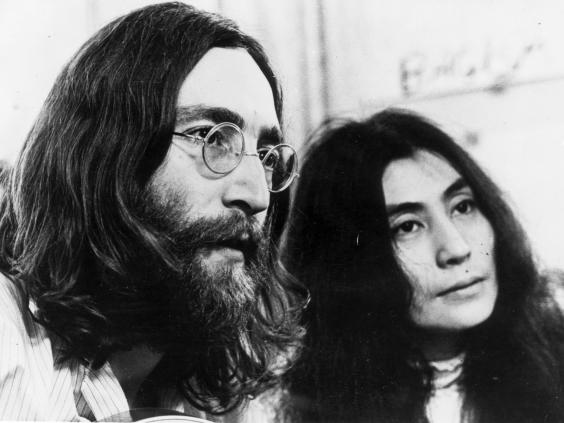
John Lennon with his wife, Yoko Ono, photographed in 1969 (Getty)
"I can't wake you up. You can wake you up. I can't cure you. You can cure you."
“Our society is run by insane people for insane objectives. I think we’re being run by maniacs for maniacal ends and I think I’m liable to be put away as insane for expressing that. That’s what’s insane about it.”
 “Produce your own dream. If you want to save Peru, go save Peru. It’s quite possible to do anything, but not if you put it on the leaders and the parking meters. Don’t expect Carter or Reagan or John Lennon or Yoko Ono or Bob Dylan or Jesus Christ to come and do it for you. You have to do it yourself.”

07/12/2016

'The Colour Blue'


Music, you know...
Music and places.
Music and encounters.
Music and its lyrics, they can tell so much... So much better. And it's a universal language.

I am such a lucky traveller. Well, apart from the fact that there is no luck. There is just, well, the road.

This is for Northern Ireland.
Thank you, beautiful, soulful place.


Ciaran Lavery & Ryan Vail - 'The Colour Blue'


Ciaran Lavery & Ryan Vail-The Colour Blue

For all that you want you never have it all 

Lying on my back a-waiting for your call
Images are stacked, the radio is low & my heart is too

Sleeping in your bed I wonder where you go 
Walking all your floors, I've tickets to the show
See you dancing, hands all glorious & cold in the colour blue

So I put on my suit & I race toward the light 
And I chase your shadow from here into the night
If what I want from this world has been pushed out with the tide.. 

Then do I want you now? 
Is the space too close?
She chews her gum with her mouth closed, 
But her eyes say so


-

Check also on SoundCloud:
On FB: 


Le 360 - Paris Music Factory


Grande nouvelle chez nous à La Goutte d'Or!!


La 360 Paris Music Factory arrive à Barbès 


Lundi 5 décembre a eu lieu la présentation du 360- Paris Music Factory, futur complexe entièrement dédié à la musique, et la première pierre du projet a symboliquement été posée. 


Le rendez-vous est fixé au FGO Barbara, le centre musical Fleury Goutte d'Or-Barbara, établissement culturel de la Ville de Paris dédié à la diffusion, à l'accompagnement et au développement de projets artistiques pour les musiques actuelles. Une chanteuse fait des vocalises pendant qu'on installe des salades de fruits et méchouia. Acteurs du monde associatif, riverains, représentants de la mairie du 18e ont fait le déplacement pour la présentation de ce futur lieu transverse et innovant. 

Saïd ASSADI, le directeur du 360, également fondateur d'Accords croisés,  qui œuvre depuis 1997 pour la production et la promotion des grandes voix du monde, explique: "Ce projet est une aventure collective qui s'inscrit dans une économie sociale et solidaire et repose sur un principe de solidarité et d'utilité sociale".

Le bâtiment, prouesse architecturale faite de bois, métal et béton, entièrement ouvert sur l’extérieur, au cœur du quartier Barbès à la Goutte d'or, proposera toutes les activités nécessaires à la conception musicale. Il a pour vocation à devenir un lieu de rencontre pour les acteurs du monde musical, mais aussi pour les Parisiens, en partie grâce de la salle de concert qu’il abritera. Le 360 Paris Music Factory est un lieu multiple qui va vivre au rythme de vie de la création musicale, de la production et la diffusion.

Un lieu multiple et transversal

Au rez-de-chaussée, un studio de répétition et d'enregistrement permettra  d'accompagner le travail de création et de formation artistique dans sa globalité.Au premier étage, un restaurant, lieu de convivialité et d’échange, avec une grande baie vitrée, sera ouvert sur la rue. Il proposera des plats donnant la priorité au circuit court de production alimentaire et permettra l'insertion professionnelle de jeunes Parisiens.Au cœur du bâtiment, une salle de spectacle d'une capacité de 150 à 300 places, les gradins étant rétractables. permettra une grande proximité entre les artistes et les spectateurs.

Un incubateur d'entreprise est prévu, avec un espace de co-working, qui aidera à pérenniser l'activité des start-up en résidence. Au 4e étage, des bureaux partagés, où se trouveront, entre autres, Vox Populi Label, feront office d'espaces de mutualisation des compétences, rassemblant tous les maillons de la chaîne de la filière musicale, générant une synergie entre elles.

Au 5e et dernier étage, une résidence d’artistes, hébergera jusqu'à 8 artistes nationaux et internationaux pendant le temps de création et production, ce qui leur permettra de réduire leur coût et de travailler dans des conditions optimales.Enfin, sur le toit, un potager géré par Topager alimentera en produits frais le restaurant. Les déchets de ce dernier étant eux-mêmes réutilisables pour le potager. 

Un lieu au cœur d'un système de valorisation des quartiers

Saïd ASSADI, insiste sur "le rôle important de l’œuvre culturelle". Il clôt son discours avec ces mots:  "le 360 est l'objet transculturel dont la société a besoin, véhiculant des valeurs de solidarité et ayant une réelle utilité sociale et qui permettra aussi de lutter contre l'uniformisation de la musique, car ce sont aux petites entreprises de défendre la diversité des identités musicales". 

Le 360 s’inscrira de plus au cœur d’un Nord-Est parisien riche en lieux d’innovation culturelle, comme le 104 ou le Mila, dans la façon novatrice que Paris souhaite adopter pour concevoir de nouveaux équipements. Il participe de la vitalité des quartiers populaires. vise à devenir un lieu de rencontre pour les acteurs du monde musical, mais aussi des Parisiens, au travers de la salle de concert qu’il abritera.


-

Voir la présentation vidéo :

Le 360 - Paris Music Factory


Naissance du projet 360 - Paris Music Factory. Découvrez la vidéo de présentation de ce futur lieu qui servira à promouvoir toute la diversité culturelle d’un monde en mouvement à travers un espace de création multifonctionnel. 

Les grandes voix du monde au cœur de Paris. Pour s’y faire entendre, bien sûr ; et surtout pour s’y construire.

Le 360 propose aux entreprises de la musique et du spectacle vivant, le meilleur de la technologie, un espace de mutualisation pour s’adapter au rythme de vie de la création, de la production et de
la diffusion. 

Ce projet a trouvé un premier soutien auprès de la Ville de Paris et de la Région Ile de France.

Ma passion est de donner la possibilité d’entendre et de voir une large variété d’artistes miroir de la diversité culturelle d’un monde en mouvement. 

Avec Accords Croisés, l’entreprise que j’ai fondée il y a vingt ans pour développer les carrières d’artistes venus de tous les continents, je suis témoin de cette richesse. Le festival

Au Fil Des Voix, initié il y a dix ans, apporte une visibilité aux nouvelles créations, dans la double optique d’une représentativité des cultures et d’une démarche artistique contemporaine.

Pendant ces années, j’ai observé aussi les mutations et contraintes économiques du secteur culturel et plus particulièrement celui de la musique dite « indépendante ». Et je suis convaincu aujourd’hui de la nécessité à rester créatif et innovant pour permettre aux petites et moyennes structures de continuer à faire vivre leurs projets. Cette créativité ouvre un dialogue entre économie et culture.

Il manquait donc un modèle économique innovant soutenant les artistes dans la transmission d’un patrimoine culturel et dans leur refus de l’uniformité ; permettant aux artistes d’enrichir et de renouveler leur créativité par la rencontre et le dialogue avec d’autres cultures, et avec le public. Il fallait un lieu avec un incubateur d’entreprises pour les métiers de la musique.

Le 360 est donc ce lieu de création et de production transculturelle. 

Au-delà de cet outil professionnel, c’est avant tout une aventure collective, une initiative privée qui s’inscrit dans l’économie sociale et solidaire, un lieu qui, à l’encontre du repli sur soi, promeut le vivre-ensemble. 

Au coeur de ce quartier vivant et attachant de la Goutte d’Or, il apporte des perspectives d’éducation musicale et transculturelle, et s’affirme parmi les extraordinaires atouts multiculturels de Paris et de la France.

Said Assadi
Fondateur

05/12/2016

Et si Bristol m'était contée... Trax Magazine n°198


"Si Bristol m'était contée"...

Joli titre pour la chronique de mon livre dans le Trax Magazine n°198 qui sort aujourd'hui. 
Un immense merci à Olivier Pernot qui a vraiment compris ma démarche et ma passion ! 

En kiosque jusque début janvier.


'Just Like Honey'


  Readers here know my passion for bees and any reference to honey and beehives...

So here is the song of the day, brought back by waves of electronic sharing...


The Jesus And Mary Chain - 'Just Like Honey'


Listen to the girl
As she takes on half the world
Moving up and so alive
In her honey dripping beehive
Beehive
It's good, so good, it's so good
So good
Walking back to you
Is the hardest thing that
I can do
That I can do for you
For you
I'll be your plastic toy
For you
Eating up the scum
Is the hardest thing for
Me to do
Just like honey
Just like honey
Just like honey
Just like honey
Just like honey
Just like honey
Just like honey
Just like honey
Just like honey
Just like honey
Just like honey
Just like honey
Just like honey
Just like honey
Just like honey
Just like honey
Just like honey


04/12/2016

LÉAUD DE 5 À 7


Parlons cinéma ! Dans le numéro de Transfuge de décembre, retrouvez mon portrait de l'unique Jean- Pierre Léaud :


Transfuge n°104
Jerry Lewis Drôlissime

Décembre 2016


Comme chaque année en décembre, Transfuge met entre parenthèses les oeuvres et chef-d'oeuvres contemporains pour sonder les classiques. Le Père Noël 2016 n'est pas une ordure, il nous apporte Jerry Lewis, Jon Voight, Charles Dantzig, Simon Liberati et de nombreuses autres perles à mettre sous le sapin.
 

- LÉAUD DE 5 À 7

La Mort de Louis XIV met en lumière la présence incroyable d'un des plus grands acteurs de l'histoire du cinéma français. Jean- Pierre Léaud. Portrait Par Mélissa Chemam 

- MACADAM COWBOY, DÉLIVRANCE, LE RETOUR :

rien que pour ces trois films l'acteur Jon Voight mérite le qualificatif de mythique. Transfuge l'a interviewé au Four Seasons de Beverly Hills. Introduction et propos recueillis par Jean-Paul Chaillet

--


Jean-Pierre et Albert Serra à L'avant-première de La Mort de Louis XIV
fin octobre au MK2 Quai de Seine :