Journalist at RFI (ex-DW, BBC, CBC, F24...), writer (on art, music, culture...), I work in radio, podcasting, online, on films.
As a writer, I also contributed to the New Arab, Art UK, Byline Times, the i Paper...
Born in Paris, I was based in Prague, Miami, London, Nairobi (covering East Africa), Bangui, and in Bristol, UK. I also reported from Italy, Germany, Haiti, Tunisia, Liberia, Senegal, India, Mexico, Iraq, South Africa...
This blog is to share my work, news and cultural discoveries.
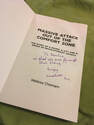
This book came out a year ago...
With the minimal promo. But it's still getting so much heartwarming feedback!
I received a message from Quite, Ecuador, in Latin America, from a reader who ordered three books, and this new review came up on Amazon.
(I still recommend to find it in a proper bookshop though!)
Thought this was an excellent read. It is well researched, knew many of the names and locations from my own youth (largely spent at the Dugout) and the descriptions were accurate and authentic. It was interesting to read how the band developed, especially around the art, politics and meaning of the lyrics.
Melissa Chemam is a freelance journalist, associate lecturer in journalism at UWE Bristol and author of the book Massive Attack - Out of the Comfort Zone (2019).She has reported on migrations issues in East/Central Africa and Western Europe for the BBC World Service and other international broadcasters for many years. We met through her book really, I arranged a phone interview with her because the subject looked amazing, a subject that has never really been written about before. The interview turned into a lovely conversation leading to a friendship and I'm honoured to have her contributing to Phacemag.
My latest review on the Dora Maar exhibition at the Tate Modern, London, a highlight of French Surrealism and a powerful female artist who used photography, painting and inspired many other artists inside the movement - for the website thisistomorrow:
Art made by women is gaining the space it deserves in international museums and galleries. Tate Modern receiving this Dora Maar exhibition is a high point in this attempt to unearth treasures from some of the world’s greatest artists, until now too often overshadowed by art history. It also stands as a mesmerising voyage across artistic periods of the 20th century.
This exhibition has been long anticipated and is the largest retrospective of Surrealist artist Dora Maar ever held in the UK, after a first showing at the Centre Pompidou in Paris in summer 2019. Known for her intense relationship with Pablo Picasso, having inspired some of his most famous colourful cubist portraits including ‘The Weeping Woman’, Henriette Theodora Markovitch (daughter of Croatian architect Joseph Markovitch, 1874–1969 who took his family to Argentina in 1910) was a talented photographer, painter, experimenter and an early activist, close to the Surrealists’ circle. One of her closest friends was the artist Nusch Eluard, married to the celebrated French poet Paul, author of the poem ‘Liberty’ among many other unforgettable texts of the deeply troubled 1930s and 40s. Dora Maar, which became her pseudonym after her first years working as an acclaimed fashion and advertisement photographer in Paris, produced some of her first strong personal work by photographing Nusch and experimenting with superimposition and collage, as seen in the second room of the exhibition.
Tate Modern here highlights how vast, rich and varied Maar’s work was, over five decades, in striking curatorial choices. It powerfully repairs an injustice in the history of art. Moving chronologically from her first photographs to her experimental return to the dark room, the exhibition displays different phases of a sublime career, kick-started in an iconic place and time: Paris in the 1930s within the Surrealist movement.
Maar’s first provocative photomontages naturally stand out, from her self-portraits to her pioneering advertising photographs. Her eye for the unusual becomes prominent in her next steps, when she embraced street photography in like Paris’ outskirts, war-torn Barcelona and impoverished parts of London. The fourth and fifth rooms are dedicated to Maar’s love for the “everyday strange” and plunge into Surrealism, at a time where her political consciousness grew deeply. Like most of the Surrealists she chose to focus her art on the subconscious power of the mind and its visual representation, through poetic montages and collages - of shells and hands, legs and city views, most of them untitled but inspired by theories on dreams and the unconscious.
Arriving in the room that explores her connections to Picasso, it is evident how much Maar’s work influenced Picasso as much as he influenced her, if not more so. Documenting the evolution of Picasso’s sketches for ‘Guernica’ in 1937, Maar directly inspired ideas for the composition of what became his first political piece. The last rooms focus on Maar’s painting and her late return to photography, through experimental manipulation of images away from the camera and the outside world, inside her own rich mind. The strength of her body of work and the scale of her career and its influence is undoubted.
One wonders how many other female artists remain in the shadows of history, a place designated not only by art historians and curators but by their male peers also.
I've met for the 3rd time with Knowle West boy Tricky, a few months ago, here in our beloved Bristol, and that interview was published in France in the brilliant music magazine Tsugi.
Tricky is one of the legends of the 1990s British music scene, pioneer in experimentations and in breaking down boundaries. He is back with a new EP baptised '20,20', out on 6 March 2020. ‘Lonely Dancer’, recorded with the female singer Anika, who collaborated with Geoff Barrow of Portishead’s fame in Bristol in 2010, is the first song to be released.
Melissa Chemam, journalist & author of the best selling 'Massive Attack Out Of The Comfort Zone', met with Tricky a few weeks ago in his hometown of Bristol for the release of his highly acclaimed autobiography : 'Hell Is Around the Corner'. Read their incredibly enlightening conversation below. Best pp
Tricky talks to Melissa Chemam
How the hell did I get where I am?’ This question repeatedly comes back in this book retelling Adrian Thaws’ life, more known under his nickname: Tricky. He’s one of the rappers/producers who changed the sound of British music in the mid-1990s, along with his mates from Bristol, Massive Attack, Smith & Mighty, Roni Size, Alpha and Portishead. Since his first album, Maxinquaye, nominated for a Mercury Prize in 1995, he has released 12 others LP, as set up his own label, False Idols, and put out countless EPs.
The latest is due out in early March, and will be followed by a European tour in the spring, a great occasion to look back at Tricky’s amazing journey, representative on the UK’s brilliant diversity. His recent biography is a thrilling look at his troubled youth in an impoverished area of Bristol, Knowle West, at his incredible rise to fame, and the making of his ever-evolving groundbreaking sound. After writing a book about the Bristol scene, Out of the Comfort Zone, released in March 2019, for which I met Tricky in Paris twice, I sat with him again, this time in his hometown the day before the book release. He was then finishing the EP coming out next week.
What sparked the desire to write your autobiography?
Somebody asked me if I wanted to do a biography and I said yes. I gave an interview to the co-author and he transcribed it. I didn’t even read it once finished! It’s weird to read about your own life…
Reading through this text, it’s obvious we recognise your voice, your drive, your personality… Did you feel like sharing more about yourself with your fans or that you had to set some records straight?
No, nothing like that, there was no big concept behind doing this book. I was not trying to look back on my life. I didn’t think of the process; I was asked to do it and said yes, it’s as simple as that.
Everyone states that you had an incredible life… But you don’t see it this way, how so?
People tell me all the time that I had an outstanding life and a difficult childhood, but to me it was all very normal. I had a happy childhood. I loved my family; I had a good time in Knowle West, South Bristol, where I grew up. I lived with my grandmother and on the other side of the road lived her own mother. Not everybody gets to know their own great-grandmother! A social worker once said to me that, to her views, I had an ‘unstable’ childhood, losing my mum so young, living with my aunt then my grandma, etc. But to me it was totally normal.
Wasn’t it also abnormally violent?
Violence was also normal to me. Because we were a poor neighbourhood and tough times in though places make tough people. I was never a violent person myself, but I lived around tough men and women. Most of my uncles were in prison regularly. It was simply a low-income area.
Did music save your life?
I went into music for fun, it was never a business for me, or a plan. It was always a relaxing thing for me, without any pressure. I never felt I had to have success; I just did. I never felt the need to go on big tour and to headline festivals. My Knowle West vibe again, I just wanted to do things my own way. I’m not a criminal socially, but I am mentally, in a way. Some of the most fascinating elements of your productions are your collaborations, with Massive Attack, Martina Topley-Bird, PJ Harvey, Björk, Alanis Morissette, etc. Do you prefer working with others?
I love working with other people, yes. Sometimes comes somebody you meet and a few days later you hear them singing your words, that’s beautiful. Going to the studio with another artist is always interesting. Most of the time for me everything goes really fast. I meet someone I want to work with and invite them in the studio. I like that feeling of being uncomfortable there because you hardly know each other, there is a nervous energy. It can work or not but that’s the challenge. Creativity can come from that confrontation.
ou were discovered first on Massive Attack’s first album, Blue Lines, how do you see this experience 30 years later?
The first track I did with them was ‘Daydreaming’. I was so young at the time, I had no clue of how to release a track alone. And D (3D – aka Robert Del Naja) was my mate; we were always together in the clubs, in the same underground scene, from the Wild Bunch years. I was not at all interested in keeping a track for myself. I still hear people telling me how much they love it.
Then you worked on their second album, Protection, before going solo, and years later you worked with 3D again; he wrote ‘Take It There’ to sing with you and contacted you, did you accept right away after all these years?
I did, and he came to Paris where I lived in 2011. He said that the song had my vibe, that it’d be great to have me on it. But then he worked on it again and again and it only came out something like five years later!
Your music is a constant search for Maxine Quaye, your mother who died when you were 4 years old. In the book, you say that hadn’t she been taken away from you, you would never have become who you are… does it still feel true?
All my albums are a search for her. Most of my lyrics are from her, I believe. It’s a woman’s writing. She was writing poetry when she was young but she would never have been published at the time. So I did it for her through my music and my words. Sometimes I feel like it’s almost like she died for me…
What’s next for you musically?
A new album! It doesn’t have a name yet but should come out in September 2020. There will be a couple of other EPs before then, and some release for my label, False Idols, I love releasing other artists.
You’ve travelled the world, lived in a lot of places, in New York, LA, Paris, Moscow, Berlin, what does Bristol represent to you?
I used to find it hard to come back but now I really like it. I’m spending Christmas here for instance, and I really feel it’s my city. I see family, and friends, I go to the same pubs as I was young and sometimes I run into guys I used to see there 30 years ago.
You also changed the city, you and Massive Attack, you open the door to so much possibility in the music and art scene, are you aware of it?
With music, yes probably, but it’s time to forget it! We need something new. Because of that nostalgia, younger artists don’t get played enough. Like Khan and Young Echo, these artists are creating a new sound. They need to get recognition; we need to move on!
Melissa Chemam is a freelance journalist, associate lecturer in journalism at UWE Bristol and author of the book Massive Attack - Out of the Comfort Zone (2019). She has reported on migrations issues in East/Central Africa and Western Europe for the BBC World Service and other international broadcasters for many years. We met through her book really, I arranged a phone interview with her because the subject looked amazing, a subject that has never really been written about before. The interview turned into a lovely conversation leading to a friendship and I'm honoured to have her contributing to Phacemag. Best pp
The African Art fair 1-54 has been taking place this weekend:
1-54 Marrakech 2020 | A day at the fair, highlights from collectors
1-54 Marrakech returned to La Mamounia, 22-23 February 2020.
2020 EDITION
1-54 has carefully selected 20 leading galleries from 10 countries (Belgium, Côte d’Ivoire, Egypt, France, Germany, Italy, Morocco, Senegal, South Africa and the United Kingdom) to exhibit at the third edition of the fair in Marrakech.
The fair will showcase the work of more than 65 artists, both emerging and established, working in a wide variety of mediums and from a range of geographical locations comprising 20 countries.
It was always important for Founding Director, Touria El Glaoui to initiate 1-54 on the African Continent, and in February 2018, the fair was successfully launched in Marrakech. This has allowed the fair to broaden its reach and further diversify its portfolio of exhibiting and promoting gallerists as well as artists who are connected to Africa, adding to the global network 1-54 has cultivated over the past seven years. Marrakech is home to one of the continent’s most dynamic arts scenes and 1-54 Marrakech aims to build on the city’s creative energy fostered by its artists, galleries and institutions.
1-54 Marrakech will be accompanied by 1-54 Forum, the fair’s extensive talks and events programme, which will include artist talks and panel discussions with international curators, artists and cultural producers, to be held at La Mamounia, ESAV and Le 18 in parallel to the fair. For the 2020 Marrakech edition, 1-54 Forum will be curated for the first time by independent art space, The Showroom, London. The project will be led by The Showroom’s curatorial team and takes its methodology from the organisation’s programme of engagement with its local north-west London community, Communal Knowledge. Entitled On focus: Communal Knowledge at Large, 1-54 Forum will explore the potential of that methodology to be translated to other contexts. Nurtured by the insightful contributions of local and international agents, 1-54 Forum will become a platform to interrogate multiple practices of socially engaged art, leading to the production of a new roadmap of organisational and institutional collective methodologies originated by this encounter between artists, activists, institutions and community organisers. The full 1-54 Marrakech 2020 Forum Programme will be announced in January 2020.
1-54 will also present a wide programme of bespoke events in partnership with Musée d’Art Contemporain Africain Al Madeen (MACAAL), musée YVES SAINT LAURENT marrakech, Montresso* Art Foundation, LE 18, Comptoir des Mines Galerie and Institut Français, amongst others. Full details of the 1-54 Public Programme to be announced in January 2020.
-
Touria El Glaoui, the director and founder of 1-54, also promoted African art for years.
She is quoted in The Guardian today saying that only in the last decade have institutions begun to take it seriously: “At the Tate the collection was global but they were just missing an entire continent,” she said.
Tate and MoMa 'playing catch up' in collections of modern African art
Art fair founder says western institutions belatedly investing in contemporary art from Africa
Asked whether major western art institutions were now trying to catch up by acquiring more African art, El Glaoui said: “One-hundred per cent. They’re not even hiding it.” She said that trying to get their attention had been a “slow, gradual process”, but that their investment in contemporary works from Africa was crucial. “We know when the Tate gets focused on something it brings more credibility and more gravitas to whichever part of the world they are focusing on,” said El Glaoui.
-
Now all this shows that times are changing.
I try to go every year to the London edition and interviewed Touria in October 2018, for DW.
Le choix de Londres comme base s’est imposé rapidement à la fondatrice, Touria El Glaoui, pour son statut de capitale internationale, multiculturelle, ouverte sur le monde et pour sa situation géographique au carrefour de plusieurs continents. Rencontre sur place avec ce reportage de Mélissa Chemam qui a également suivi quelques artistes.
LYCHEE ONE UNIT 1, 39 GRANSDEN AVENUE LONDON, E8 3QA
27-29TH OF FEBRUARY 2020
PRIVATE VIEW: 27TH OF FEBRUARY, 6-9PM
Text by Mala Yamey
“The screen transformed into a kind of automatic painting...the initial image of a flower becomes a fish, which in turn becomes a hen, before being transformed into a human face and finally the head of a faun.”
(Steven Jacobs ‘Framing Pictures’, 2012 on Picasso painting on glass in Paul Haesaerts’ film Visite à Picasso)
DIVE is a large-scale immersive audio-visual installation conceived by artist Enya Lachman-Curl, film maker Tim Fok, designer Robbie Thompson and composer Joseph McGann. Tim’s film captures Enya’s process as she applies cerulean blue oil paint onto a glass triptych: the camera faces the glass frontally, capturing her creative actions. Set in complete darkness, the visitor is invited to explore the film, projected onto three screens, with only the lights of Enya’s brushstrokes to guide them.
One of the many projects I was the main researcher for in 2017/2018:
Raoul Peck, the Oscar-nominated director of I Am Not Your Negro, is teaming with HBO for Exterminate All the Brutes, an ambitious four-part hybrid docu-series that will explore the exploitative and genocidal aspects of European colonialism.
The project is being culled from three books: Sven Lindqvist’s 'Exterminate All the Brutes', Roxanne Dunbar-Ortiz’s 'An Indigenous People’s History of the United States' and Michel-Rolph Trouillot’s 'Silencing the Past'.
I suggested to include Roxanne Dunbar-Ortiz's work.
Raoul Peck Teams With HBO On Colonialism Docuseries ‘Exterminate All The Brutes’; Josh Hartnett To Topline Scripted Portions
Raoul Peck, the Oscar-nominated director ofI Am Not Your Negro, is teaming withHBOforExterminate All the Brutes, an ambitious four-part hybrid docuseries that will explore the exploitative and genocidal aspects of European colonialism.
The project is being culled from three books: Sven Lindqvist’sExterminate All the Brutes, Roxanne Dunbar-Ortiz’sAn Indigenous People’s History of the United Statesand Michel-Rolph Trouillot’sSilencing the Past.
The series will draw from documentary footage and archival material along with animation and interpretive scripted scenes, withJosh Hartnettto play the lead role in the latter sections.
The aim is to tell a sweeping story from America to Africa in which history, contemporary life and fiction are intertwined. Peck will deconstruct the making and masking of history through a personal voyage into some of the darkest hours of humanity.
“This project has been my biggest challenge so far,” Peck said Tuesday in a release announcing the project. “It forced me to question not only our common knowledge but also my own experience as a filmmaker. I’m excited that HBO is supporting that vision.”
The docu-series is from Velvet Film, with Peck and Rémi Grellety the executive producers. Velvet Film and ICM Partners are repping international sales rights.
Peck won the Outstanding Arts & Culture Documentary Emmy last year forI Am Not Your Negro, in which James Baldwin tells the story of race in modern America via his unfinished novelRemember This House. It was nominated for the Oscar in 2017.
''Lonely Dancer'' from Tricky's upcoming EP '20,20' out on 6 March 2020.
Stream & download 'Lonely Dancer' Feat Anika and pre-order EP here: https://FalseIdols.lnk.to/2020