23/05/2020

'Soulmates'


Bristol sound today:


The Desert - 'Soulmates'


-


[Verse 1]

I said "do you believe in soul mates?"
He said "yeah I found mine
She grew bored of me
We were talking down broken lines"

I said "you ever make someone cry?"
He said "I'll leave a cheek shiny clean
Cuz I can fake that kind
When I'm mean I'm mean
I don't really mean it
I don't really mean it."

[Chorus]

Goes down so easy
Comes back so hard
I love the feelin'
It never lost
It never it never it never lost

[Verse 2]

I said "do you ever get lonely?"
He said "do you?"
I said "it's growing on me
I'm pretty used to it by now."

Nothing ever changes
I'm still stood under a spot light
With a mic and secret I don't need to tell
I prefer to talk to strangers
You know I'd choose you
If I knew how
If I knew how

Nothing ever changes
I'm still stood under a spot light
With a mic and secret I don't need to tell
I prefer to talk to strangers
You know I'd choose you
If I knew how
If I knew how

[Bridge]

You know I love you
Even though I never tell you
At least not in those words
Ooh how it hurts
You know you know I love you
Even though even though I never tell you
At lea.. At least not in those words
Ooh ooh ooh how it hurts
Ooh ooh ooh


21/05/2020

The Quarantini Podcast: Episode 5 - with Kindness By Post


A Quarantini with Kindness By Post


In this episode, Dr Amy Pollard, Founder and Director of the Mental Health Collective talks about one of its projects, Kindness By Post.
We also have music and our usual round up from Bristol, UK and around the world.

Music
Opening and closing music: Hot Flu, The Old Bones Collective
SAIYAAN- A song for hope, written by Bharat Goel
Singer: Gurashish Singh

Production:
Hosts: Melissa Chemam and Pommy Harmar
Producer: Pommy Harmar


19/05/2020

Postpone Bristol Mayor and councillor pay increases


A message from Suzanne Audrey in Bristol:


It looks as if the the Mayor, Cabinet and key councillors are happy to take the large pay increases they voted for.

It seems very insensitive and inappropriate to have voted for their own pay increases during the Covid-19 pandemic when so many people are facing financial difficulties. It would have been better to follow the advice of the renumeration panel i.e. to wait until after the local elections.

I have checked the legal situation with officers at Bristol City Council and have been informed that it would have been possible to delay the pay awards.

If the petition is signed by 3,500 people from the Bristol area it will trigger a debate in full council. This will be an opportunity to hear why the pay increases went ahead when other people are taking pay reductions. 

Please share the petition with others so that we can at least have that debate. 

Thank you and best wishes during this difficult time.
Suzanne Audrey


13/05/2020

Arundhati Roy's latest on our digital economy in times of health crisis


A powerful text for Progressive International


Arundhati Roy: Our Task is to Disable the Engine


Storied author and PI Council member Arundhati Roy on Covid-19 and the "super-surveillance" state.


While the human race is momentarily incarcerated, and even as a record-size hole opens in the ozone layer above the Arctic, the earth has given us an indication of her ability to heal. Even in our moments of sickness and loss we cannot help but hold our collective breath in wonder at the show she has put on. But plans are afoot to put an end to all of that. 

In India, for example, just in these last few days, a large portion of a tiger reserve is about to be turned over to a religious gathering—the Kumbh Mela—which attracts tens of millions of Hindu pilgrims. An elephant reserve in Assam is being marked off for coal mining, and thousands of acres of pristine Himalayan forest in Arunachal Pradesh marked off for submergence by the reservoir of a new hydroelectric dam. Meanwhile, not to be outdone, President Trump has signed an executive order allowing mining on the moon.

In very much the same way as the coronavirus has entered human bodies and amplified existing illnesses, it has entered countries and societies and amplified their structural infirmities and illnesses. It has amplified injustice, sectarianism, racism, casteism and above all class inequality.

The same formations of state power that have been indifferent to the suffering of poor people and have indeed worked towards enhancing that suffering are now having to address the fact that sickness among the poor is a veritable threat to the wealthy. As of now there is no firewall. But a firewall will appear soon. Perhaps in the shape of a vaccine. 

The powerful will elbow their way to the head of the spigot, and the old game will start up all over again—the survival of the richest. Already the world is witnessing job losses on a scale that is unimaginable. I write this on International Labor Day, one hundred and thirty-one years after the Haymarket massacre in Chicago and the workers’ struggle for the eight-hour working day. Today Indian Industry is pressurizing the Government to dismantle what little is left of labor rights and allow for a twelve-hour working day.

Right now, while we are all locked down, they are moving their chessmen around pretty fast. The coronavirus has come as a gift to authoritarian states. In country after country—Bolivia, Philippines, Hong Kong, Turkey, India—governments are using the lockdown to move against their critics. 

In India, students, activists, academics and lawyers who are seen to have been prominent faces in anti-government protests are being arrested under a draconian antiterrorism law that could keep them in prison for years. And those who have served the government’s Hindu nationalist agenda, no matter how violent or egregious their crimes, are being promoted, pampered and favoured.

Pandemics are not new. But this is the first in the Digital Age. We are witnessing the convergence of the interests of national level authoritarians with international disaster capitalists and data miners. Here in India, it’s all happening at speed. Facebook has signed up with India’s biggest mobile phone network, Jio, thereby sharing its 400 million WhatsApp user base. Bill Gates is showering praise on Prime Minister Modi, hoping no doubt to amass profits from whatever protocol is rolled out. On Modi’s recommendation, the surveillance/health app Arogya Setu has already been downloaded by more than 60 million people. It has been made compulsory for government employees. It has also been made compulsory for government servants to donate one day’s salary to the mysterious PM CARES Fund, which will not be publicly audited.

Pre-corona, if we were sleepwalking into the Surveillance State, now we are panic-running into the arms of a super-surveillance state in which we are being asked to give up everything—our privacy and our dignity, our independence—and allow ourselves to be controlled and micromanaged. Even after the lockdowns are lifted, unless we move fast, we will be incarcerated forever.

How do we disable this engine? That is our task.


-


We are building a coalition of progressive media outlets to report stories and share perspectives from around the world.
Every day, the Wire translates important stories from our partner publications, providing you with coverage of struggles and social movements worldwide.
Sign up to the Progressive International Briefing.


11/05/2020

A Quarantini with Josh Eggleton


This week's new cocktail from The Quarantini Podcast is out!

In Ep. 4 I talked to Josh Eggleton, Michelin chef from the Pony & Trap, and Aine Morris from @bristolfooduni & @caringinbristol.

The help feeding Bristol's homeless.

We also have music + our usual round up!


A Quarantini with Josh Eggleton

We share a Quarantini with Josh Eggelton this week, Michelin-star chef from the Pony and Trap. He tells us about his work with the Bristol Food Union helping to feed Bristol's homeless.
We also have music and our usual round up from Bristol, UK and around the world.
Music:
Gotta Be Patient (Confination Song VI), Stay Homas ft Judit Neddermann
Stay with the Light, Jane Kitto, Perfect Blue Sky
Hosts: Melissa Chemam and Pommy Harmar
Producer: Pommy Harmar
Opening and closing music: Hot Flu, The Old Bones Collective


listen here:
https://the-quarantini.captivate.fm/episode/a-quarantini-with-josh-eggleton


-


And to complement this episode, here's an extract from the video recording of my interview with Josh:


on Zoom Iate ApriI, for our Quarantini Podcast, Ep. 4. Bristol Food Union has been working with Caring in Bristol to provide food for the most vulnerable and the frontline workers in the South West of England.
To help, look at their websites: https://bristolfoodunion.org & https://caringinbristol.co.uk


10/05/2020

Fiona Apple on Acknowledging Indigenous Lands with Native American activist Eryn Wise


How great is this?

And if an artist doesn't put some light on such stories, who will?

Well done.


Fiona Apple on New Album “Fetch the Bolt Cutters” 

& Acknowledging Indigenous Lands 

- On Democracy Now


“I’ve heard that it’s actually making people feel free and happy,” Apple said, “and it might be helping people feel alive or feel their anger or feel creative. And that’s the best thing that I could hope for.” 

Her record includes an acknowledgment that the album was “Made on unceded Tongva, Mescalero Apache, and Suma territories.” 

We also speak with Native American activist Eryn Wise, an organizer with Seeding Sovereignty, an Indigenous-led collective that launched a rapid response initiative to help Indigenous communities affected by the outbreak.


More here: https://truthout.org/video/fiona-apple-on-her-new-album-and-acknowledging-indigenous-lands/


-

In relation, here is the most powerful book I worked on in the past few years about the history of North America, by Roxanne Dunbar-Ortiz. I worked with her at Velvet Film. 
Eye-opening: reddirtsite.com

AN INDIGENOUS PEOPLES’ HISTORY OF THE UNITED STATES FOR YOUNG PEOPLE

Authors: Roxanne Dunbar-OrtizDebbie ReeseJean Mendoza


    Spanning more than 400 years, this classic bottom-up history examines the legacy of Indigenous peoples’ resistance, resilience, and steadfast fight against imperialism.

    Going beyond the story of America as a country “discovered” by a few brave men in the “New World,” Indigenous human rights advocate Roxanne Dunbar-Ortiz reveals the roles that settler colonialism and policies of American Indian genocide played in forming our national identity.

    The original academic text is fully adapted by renowned curriculum experts Debbie Reese and Jean Mendoza, for middle-grade and young adult readers to include discussion topics, archival images, original maps, recommendations for further reading, and other materials to encourage students, teachers, and general readers to think critically about their own place in history.

    Roxanne Dunbar-Ortiz is a historian, author, memoirist, and speaker who researches Western Hemisphere history and international human rights.
    Roxanne Dunbar-Ortiz grew up in rural Oklahoma, the daughter of a tenant farmer and part-Indian mother. She has been active in the international indigenous movement for more than four decades, and she is known for her lifelong commitment to national and international social justice issues. After receiving her Ph.D. in history at the University of California at Los Angeles, she taught in the newly established Native American Studies Program at California State University, Hayward, and helped found the Departments of Ethnic Studies and Women’s Studies.

    06/05/2020

    Banksy's new piece:


    Nouveau reportage : Solidarité en Angleterre


    Mon récent reportage pour la radio allemande DW en cette première semaine de mai :

    pour écouter


    VU D'ALLEMAGNE

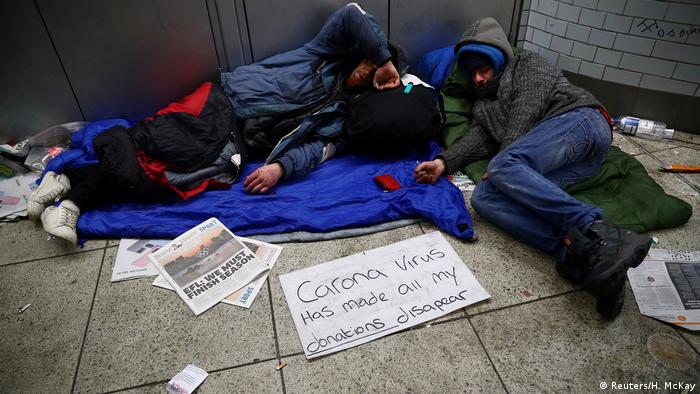
    L'Allemagne et le 8 mai 1945 // Solidarité envers les sans-abris en Angleterre

    Le 8 mai 1945, la capitulation de l'Allemagne nazie mettait fin à la Seconde Guerre mondiale, une période qui a marqué comme aucune autre la mémoire européenne et allemande. // En Angleterre, pays durement touché par la pandémie de Covid-19, la solidarité s'organise autour des sans-abris.


    Solidarité avec les sans-abris en Angleterre 
    Face à un système public défaillant, la solidarité est assurée par des citoyens et associations
    Face à un système public défaillant, la solidarité est assurée par des citoyens et associations
    On verra ce que l'Histoire retiendra de cette drôle de période que le monde vit actuellement… Face au Covid-19, chaque pays essaie de trouver ses solutions. Certains comme le Royaume-Uni ont tenté dans un premier temps de laisser le virus se répandre pour atteindre une immunité collective.
    Une stratégie qui a été abandonnée lorsque les chiffres ont commencé à prendre des proportions inquiétantes. La stratégie britannique a d'ailleurs laissé les voisins européens mais surtout ses citoyens perplexes. Après avoir renoncé à laisser agir l’immunité, le Premier ministre a lui-même été hospitalisé en soins intensifs.
    Parallèlement, pour palier l’absence de nombreux services publics dans un pays qui a connu des années de restrictions des dépenses publiques, ce sont les citoyens et associations caritatives qui mettent en place des mesures de soutien et de solidarité.
    Reportage de Melissa Chemam en Angleterre. 

    Ont contribué Ã  cette émission: Ralf Bosen, Melissa Chemam et Anne Le Touzé

    -


    -


    Depuis l’expansion mondiale de la pandémie SARS-CoV-2, la stratégie du Royaume-Uni a laissé nombre de ses voisins européens et de ses citoyens perplexes… Mais après avoir renoncer à laisser agir l’immunité, le Premier ministre a lui-même été hospitalisé en soins intensifs. Parallèlement, pour palier à l’absence nombreux services publics dans un pays qui a connu des années de restrictions des dépenses publiques, ce sont donc les citoyens et associations caritatives qui mettent en place des mesures de soutien et de solidarité. Reportage – socialement distant – de Melissa Chemam en Angleterre. 

    -

    Des applaudissements pour les soignants… 
    En lieu et place de budget d’urgence pour les services publics.
    Voilà l’une des illustrations de la frustration qui gronde au Royaume-Uni.

    Les citoyens britanniques sont encouragés à rester chez eux depuis fin mars, mais peuvent sortir se promener sans autorisation. Les parcs sont également restés ouverts. Et les cafés et restaurants été fermés plus tard qu’en Europe continentale… 
    Mais ce laisser-faire, s’il rend le confinement moins difficile, a aussi laissé les plus vulnérables à l’abandon. Les maisons de repos souffrent de manque de main d’Å“uvre, tout comme les hôpitaux publics.

    Un autre exemple : la plupart de sans-domicile se sont trouvés sans ressources et sans possibilité de s’isoler dans un intérieur. 

    Pour remédier à cette crise humanitaire, ce sont des associations qui s’organisent, comme Caring in Bristol, dans l’ouest de l’Angleterre. Ben Richardson en est le directeur.

    Ben Richardson, directeur de Caring in Bristol : « Ce qui s’est passé dans plusieurs villes est que les personnes sans domicile ont été retiré des rues ou des auberges où elles ne peuvent pas s’isoler pour être placer dans des hôtels. Cela s’est fait très vite et nous avons dû adapter nos services, pour répondre à leurs besoins, et le premier est qu’elles ont faim. La plupart des services de distribution de nourriture dont bénéficiaient les personnes vulnérables ont cessé abruptement, pour plusieurs raisons. Donc mon association de relogement s’est adaptée pour fournir un soutien vital en terme de nourriture, et produire environ 6500 repas par semaines qu’une véritable armée de bénévoles distribue. Des chefs de restaurants nous ont rejoints. Nombre d’entre eux n’ont plus de travail en ce moment donc nous les avons recrutés pour cette opération. Nous avons pu 2 à 3 cuisines en moins d’une semaines, grâce aux personnels de ces restaurants qui ne peuvent plus travailler, pour mettre en place cette opération. Maintenant ce dont nous avons besoin c’est d’un soutien financier. De toute évidence, ce projet coûte beaucoup d’argent à l’association et nous n’avions pas prévu un budget pour cela. Mais c’est important de parler de la valeur de ce travail et que des gens soient en mesure de nous soutenir d’une manière ou d’une autre. » 

    Le plus exigeant pour l’association est d’organiser ces distributions de nourriture quotidiennes. On croise souvent leurs camions, comme celui de Josh Eggleton, chef connu et à la tête de pas moins de 6 restaurants dans la région. 

    Josh Eggleton : « Je me suis retrouvé rapidement à travailler à temps plein avec Caring in Bristol, pour lancer l’initiative CHEERS DRIVE : il s’agit de distribuer trois repas par jour aux personnes vulnérables relogées. Nous avons mis en place trois cuisines, et pour cela un partenariat très organisé, avec Dom du restaurant Pasta Loco, moi-même et mon équipe, tous des volontaires, et l’équipe du café Emmeline. On travaille tous les jours, produisant environ 1000 repas par jour, et c’est fantastique. Personnellement, j’éprouve un très grand plaisir à nourrir les gens et c’est super de pouvoir se lever le matin, contribuer dans cette période de crise, et continuer à nourrir les gens. C’est vraiment thérapeutique aussi, et bon pour rester mentalement fort. » 

    Pour Ania Morris, fondatrice de la Food Union, il est important de ne pas seulement compter sur des dons et de rendre cette activité viable à moyen terme. 

    Aisne Morris, Food Union : « Il est aussi important de dire que notre union est autant basée sur la collaboration et la solidarité que sur le caritatif et la charité. Beaucoup d’initiatives font actuellement appel à des dons, mais nous trouvons des fonds auprès d’entreprises aussi, en plus du public, et nous payons aux restaurants impliqués 4 livres par repas produits. Ils sont ensuite distribués aux employés de la santé en première ligne, aux travailleurs sociaux et aux communautés les plus vulnérables. Le concept est de créer aussi un flux de revenus pour les restaurants, qu’ils utilisent pour acheter les produits alimentaires aux fournisseurs. Donc oui, nous nourrissons les personnes vulnérables et sans abris, mais nous essayons aussi de générer des sources de revenus pour toutes la chaîne de production alimentaire. » 

    A Londres comme à Hasting ou encore Liverpool, ces associations cuisinent aussi pour les employés médicaux, pendant que des citoyens lambda fabriquent des masques artisanaux ou organisent les courses pour des malades. 

    Des pétitions ont tout de même émergé pour exiger la production nationale de masques pour les soignants ainsi que des augmentations de salaires pour les infirmiers et des visas pour le personnel médical étranger de la NHS, qui dépend en grande partie de médecins européens, asiatiques et africains. Dans la 5e Ã©conomie mondiale, c’est un paradoxe dont souffre cruellement des millions de victimes et héros du Covid19.

    Melissa Chemam en Angleterre pour la DW. 


    05/05/2020

    Arnolfini: Exhibitions to come post lockdown!


    Bristol’s International Centre

    for Contemporary Arts.
    We are delighted to announce plans for our major exhibitions post lockdown, sharing the common, pertinent theme of portraiture, family and friends, with Chantal Joffe and in Hassan Hajjaj’s The Patha touring exhibition by New Art Exchange, Nottingham, curated by Ekow Eshun.
    Whilst we can’t yet confirm when these exhibitions will open we wanted to share them with you and give you an insight into what’s next at Arnolfini, and hopefully give you something to look forward to. Alongside this we are working on our plans for how we can open safely respecting all of the requirements for social distancing and visitor safety.
    In the meantime, please read on as to what will await you and what we have for you ahead of then.
    READ MORE.
    MINIBABE.
    Every other year, in collaboration with the Centre for Fine Print Research at UWE, Arnolfini hosts BABE, the Bristol Artists' Book Event.
    The next BABE is scheduled for 2021, but this spring we’re presenting a mini version via our website, exploring ways to enjoy artists’ books during the Covid-19 lockdown.
    MiniBABE is online now, come and have a browse!
    ARCHIVE.
    Pictured, left to right, Annabel Lawson (later Rees), Jeremy Rees and John Orsborn
    in front of a painting by Peter Swan
    Lockdown has given us an opportunity to delve into the extensive Arnolfini archive. We've pulled out some treats to share with you here and will have more to come before too long.

    We have also been working with our friends at Bristol Archives to bring you a selection of artist interviews with some of the many that have exhibited at Arnolfini over the years. We'll start releasing them later this month, so please keep an eye and ear on our socials and website.

    Ahead of our 60th anniversary year in 2021, we'd love to hear your memories around Arnolfini and Bush House. Please drop us a line at archive@arnolfini.org.uk
    -
    ARNOLFINI RECOMMENDS.

    Wells Contemporary have extended the date for their awards submissions until 1 August 2020. All shortlisted works will be displayed in a virtual exhibition with a view to present in Wells Cathedral when it is safe to do so.

    Hauser & Wirth offer a selection of exhibitions online including a collection of drawings from Louise Bourgeois spanning 60 years

    RWA Bristol invite you to contribute to their Active Art Wall, take part in workshops for children and download activity packs, as well as take part in their Secret Postcard Exhibition online.

    Watershed have a super selection of online content, for all ages, to stream and download.

    Spike Island present an online screening of Kidlat Tahimik's long-form collage film, Why Is Yellow the Middle of the Rainbow, exploring a decade of American neocolonialism in the Philippines and the US.
     
    Twitter
    Facebook
    Website
    Instagram
    Copyright © 2020 Arnolfini, All rights reserved.


    Podcast - Ep. 3: A Quarantini with Rosedale House


    New episode!!


    THE QUARANTINI PODCAST
    Listen here: Episode 3


    Episode 3

    FULL
    Published on:

    4th May 2020


    A Quarantini with Rosedale House


    This week we 'visit' Rosedale House, a care home for people with dementia. Manager Julie Edwards and Deputy Manager Nikola Penevski tell us about life under lockdown and how the residents and staff are getting on.
    We also have our usual round up and excitingly we bring you a recipe for a quarantini made by Derek Brown, author of Spirits, Sugar, Water, Bitters: How the Cocktail Conquered the World.
    Music:
    Covid 19, La Guerre, Patrick Sese Buluku
    Merci Pour Tout, Vanessa Paradis
    Opening and closing music: Hot Flu, The Old Bones Collective

    Hosts: Melissa Chemam and Pommy Harmar
    Producer: Pommy Harmar

    -

    THE QUARANTINI PODCAST 

    Listen here: Episode 3


    Episode 3

    FULL
    Published on:

    4th May 2020