21/10/2020

Black History Month: With Bristol artists and activists making a major difference


Busy week, busy month, busy year...

Here is my first article for the wonderful and deeply needed independent publication Byline Times for Black History Month: 


‘We Want the Ability, Space & Time to Retell Our Own History’


21 October 2020


Melissa Chemam speaks to campaigners and creatives taking part in Black History Month in Bristol, where the statue of slave trader Edward Colston was brought down in June and discussions about past and present racism continue to run deep


Michael Jenkins is a film-maker and activist. Since 2015, he has been working on a film about his city’s relationship with the “myth of Edward Colston” for his own Bristol-based production company, Blak Wave.

For him, 2020 has been a game-changing year. For Black History Month, he has been invited to share the first trailer of his film Colston: A Bristol Story at the Bristol Old Vic theatre, one of the oldest in the UK, as part of five events curated by the award-winning Bristol playwright Chinonyerem Odimba.

“My father is mixed-race, his father is from Jamaica and his mother from Swindon; and my mother is from Domenica so, for me, retelling the history of Caribbean people is a passion and a duty,” Michael says. “With this film, I hope to help people get a better understanding of people like Edward Colston.” 

For over a century, the slave trader has been celebrated in Bristol as a philanthropist and a benefactor. “Do we really want to celebrate people like that?” Michael asks. 

In June, Colston’s statue in Bristol city centre was torn down during a Black Lives Matter protest. Since that day, Bristolians have been fiercely debating the consequences of the watershed moment.

Michael Jenkins

Before the statue fell, a group known as Countering Colston had been campaigning for its peaceful removal by the city council for years. The former Lord Mayor and current Green City Councillor Cleo Lake had managed to remove his painting from the city hall a couple of years before. American British historian Madge Dresser and film-maker and Professor Dr Shawn Sobers had worked on a plaque to rebalance Colston’s history, but it was not approved by the current mayor Marvin Rees, himself half-Jamaican.

“For long, I thought I would conclude my film with the pose of this plaque,” Michael adds, “but the democratic process was not allowed to go through. So it was only natural the statue would eventually go in some other way.”

Michael was born in Southmeads, Bristol. His parents had moved to Bath to avoid constant racism. When he learned about American and Caribbean history as a 12-year-old, mainly through films such as Spike Lee’s Malcolm X, he started developing a keen interest in history and a passion for cinema. “I grew up followed by the police just because I was black, so I had to educate myself to understand the deeper reasons,” he explains. 

“At 12 or 13, when in Bristol, I couldn’t care less about the statue. But then I heard that the band Massive Attack refused to play in the city’s auditorium, because of its name, Colston Hall. And, in 2007, an exhibition also retraced that part of the city’s history. Then I looked around and saw that Colston and his organisation, the Merchant Venturers, were still celebrated everywhere in Bristol, almost like a cult.” 

Colston Hall recently changed its name to the Bristol Beacon, while the Colston Girls School also announced that it would be changing its name. A pub has changed names too, but Colston still seems to haunt the area.

At some point, white people will have to give up their seat to others, for a while, so that we can properly live together.

Aisha Thomas

For Michael, the discussions being had around Bristol’s history are positive in that the issues they are raising are now less hidden, compared to neighbouring cities such as Bath or Oxford.

“All we want now is the ability, space and time to retell our own history, and our own stories,” he says. “That’s my mission and my goal.”

His film, a passion project for which he had no funding, is now complete and will be shown by the end of the year in local cinemas such as the Watershed and the Cube.


COVID and Racism

Aisha Thomas, an educator, TEDx speaker and activist, is also a guest at the Bristol Old Vic’s series of events for Black History Month. She is the founder of Representation Matters and was invited to talk at the weekend about education as a tool of resistance and how the National Curriculum can be made fairer and more explanatory for all British children.  

A teacher and associate principal, the mother-of-two is constantly engaging with her community on these issues, with 2020 being a very unusual year for her profession.

“COVID completely knocked us down and then there was the issue of racism,” she says. “For instance, I was screamed at in the street. A woman refused to let me be in the same queue as her at the local supermarket, saying black people brought everyone COVID. So, on top of suffering, we have to explain that, if people of colour are more affected by pandemics, it’s not about genetics, but about having jobs in the frontline, or less access to healthcare.”


Aisha Thomas


Following the killing of George Floyd in America, she says that some of her pupils came to her crying, saying “Miss, it’s so hard being black”. She wrote an open letter to the school “to explain how we live through this”.

As a result, Aisha managed to introduce some books to discuss in her classroom, such as Akala’s Natives. She believes it is necessary to start educating children about prejudice as early as possible.   


Living History

Other Black History Month events in Bristol discussed women in creativity, considered how to decolonise universities, and celebrated the tradition of the Caribbean carnival in Britain – embodied by St Paul’s Carnival in Bristol and Notting Hill in London. 

Speakers also addressed the need to celebrate the positive part of black history. University of the West of England Bristol lecturer, broadcaster and activist Roger Griffith gave a talk about the 1963 Bristol Bus Boycott, which saw black activists protest against the local transport company refusing to employ people of colour. The movement contributed to bringing about the first Race Relations Act in 1965. 

Meanwhile, the historian Roger Ball discussed the impact of the 1980 St Pauls riots in a Caribbean neighbourhood n Bristol, which saw young black boys protest police brutality.   

“Segregation pays and it still continues,” says Aisha. “Marginalised people want change but we need allyship. At some point, white people will have to give up their seat to others, for a while, so that we can properly live together.”

We’re definitely not there yet. 


-


A podcast episode with NHS workers and the Migration Museum's exhibition on healthcare

This episode is really dear to my heart! 

Have a listen: https://the-quarantini.captivate.fm/episode/a-quarantini-with-the-nhs


A Quarantini with the NHS


In the final episode of season 3 we celebrate the NHS.

At a NHS Workers Say No protest march in Bristol, we hear from NHS nurses including Alex Oldham and Shannon O’Sullivan.

From the Migration Museum, Robyn Kasozi (pictured) talks about the brand new free online exhibition - Heart of the Nation: Migration and Making of the NHS.

And we have poetry from NHS staff, from the book These Are The Hands, Poems from the Heart of the NHS, Foreword by Michael Rosen, Fair Acre Press. (You can buy it here).

PLUS - our usual round up of positive responses to the virus from around the world....

Music: 

The NHS Song (parody SOS, ABBA)

Hot Flu, Seb Gutiez, The Old Bones Collective - opening music


Hosts: Melissa Chemam and Pommy Harmar

Producer: Pommy Harmar


A Quarantini with the NHS


AFRICA AT ARNOLFINI: Upcoming art book


Dear friends,

I hope this finds you all well. 

For those of you who worked with me on this, thank you so much for your time, and here is more about the book.

For everyone, a little insight.

With my best wishes,
melissa 


 Africa at Arnolfini | Interview 

We're creating a little art book with some lovely people !! 

This is the final result of my residence at Arnolfini this unordinary year… 
A book on the African and Caribbean artists the gallery invited to exhibit over 60 years!

I've been working on it since April and it'll be out next spring. More soon… 


Africa at Arnolfini | Interview with Arnolfini’s Writer in Residence, Melissa Chemam

Posted Tuesday 20 October 2020


To coincide with Black History Month, our writer in residence Melissa Chemam talks to us about her new project


What are you writing about, Melissa?
After about six months as the writer-in-residence at the Arnolfini, writing short pieces on women artists, feminism and resistance worldwide, we had the idea of assembling a little art book. A text dedicated to all the African, Caribbean and Afro-Caribbean British artists who Arnolfini has invited to exhibit over the years since 1961… That was in April and it sounded very relevant to me, as I’ve spent most of my adult life as a reporter on African news, in and out of Africa; I’ve worked for a film production company from Haiti; and as the daughter of Algerian immigrants to Paris, I’m a member of the African diaspora myself.

I started working on this book that is now to me a sort of short history of “Black Art” in the UK. Some of the artists are from the UK, others were born in Trinidad, Jamaica, Morocco, Sudan or Ghana, so it gives me room to try to weave together the different parts of the African continent, as well as the “triangular” routes that bind it with the Americas and Europe. These are themes that have haunted my work as a journalist, researcher and writer since the mid-2000s as well.

How have you been researching it?
I’ve started by trying to get in touch with some of the artists and curators. Some sent me articles, links, video recordings about their art, from back then and from now. Others have had the time for an interview. Then I’ve looked into catalogues, at Arnolfini, and also at Bristol Archives (which was a great chance to visit this wonderful place, despite the current Covid restrictions). Writing about art is one of my favourite endeavours as a writer, because it allows so much depth, and to dig into all different sorts of subjectivities. And the rest is about my own memories of some of the exhibitions, or some of these artists’ work in other places, as well as things I was researching from 2015 for my previous book, on Bristol’s music and graffiti scene Out of the Comfort Zone (Tangent Books, 2019).

Could you tell us a bit about your relationship with Bristol?
Before I came to Bristol, I had lived in London for years and thought I knew and loved England… But Bristol revolutionised my vision of the UK. I came after years reporting mainly in Africa, to write more about art and music than about immigration and politics. I came precisely because it has links with both the Americas and Africa. Links with the consequences of colonial conquests, from the 1500s up to recently.

The city was then the European Green capital. I immediately fell in love with Bristol people and their energy. I felt a strong sense of community here, and an interest in climate justice, so I came again and stayed for weeks. I met so many people – artists, writers, historians, curators, charity workers, etc. I walked mostly, from the Arnolfini and Watershed to St. Andrews and Gloucester Road, or Trinity in Easton and artists’ homes in Clifton, in Hotwells and Bedminster, in St. Paul’s and St. Werburgh’s. I stayed in these different neighbourhoods with different people of different ages and origins and always found commonalities. Bristol became both an exciting territory to explore and a familiar second home. It’s been quite a unique experience for me.

I moved here finally a year ago, and since we have been through a lot… First there was Brexit! Then the Covid crisis, with the quasi-impossibility to travel… For a nomad like myself, it took a special place to not feel desperate. I walked almost daily along the Harbourside or in one of Bristol’s parks. And of course Edward Colston’s statue was torn down! A statue which I had discussed with a member of Massive Attack very early on…

Bristol and I, it’s a weird relationship, in a way. I’m from a North African background, lived in warm climate for years, and always thought I would one day settle somewhere like Italy… And sometimes some Bristolians can be a bit territorial, so I can feel like it’s delusional to want to be part of such a city, with complex history, divisions. I regularly wonder: where do I fit? But I’m still here and there is mostly joy, learning and friendship on a daily basis!

Are there any spoilers or favourite stories you’d like to share?
My favourite show at the Arnolfini was definitely ‘Vertigo Sea’ by Ghanaian British filmmaker John Akomfrah, in 2016! His work with the Black Audio Film Collective and lately Smoking Dogs Film has had a huge influence on my tastes in art and reflections on our post-modern world… The other show on the top list is ‘Trophies of Empire’; my discussion with Keith Piper was very insightful, notably on what ‘Black Art’ really means, between a political meaning to a more sociological perspective, not even strictly racial. In the 1970s, the most radical British ‘Black’ artist in the UK was probably Rasheed Araeen, born in 1935 in Karachi. Then Jamaican and other Caribbean British artists like Sonia Boyce and Frank Bowling revolutionised the artistic landscape. And more recently, African artists born on the African continent have left their mark, etc. It is a fascinating journey, and everything but one-sided.

-

Melissa’s book will be launched in March 2021, as part of the celebrations to mark Arnolfini’s 60th anniversary. More information to follow. 

Frank Bowling will be exhibiting at Arnolfini in Summer 2021.


Read on Arnolfini's website: 

https://arnolfini.org.uk/africa-at-arnolfini/?fbclid=IwAR3iuErzpTJiAzAIW4RTBzfelYCttiSHyoczsyMo2skmHQcWJy3WVH5a4-A


Daydreaming, still...


Latest piece on music history... For the Reader's Digest

Massive Attack & the birth of the "Bristol Sound"

Melissa Chemam


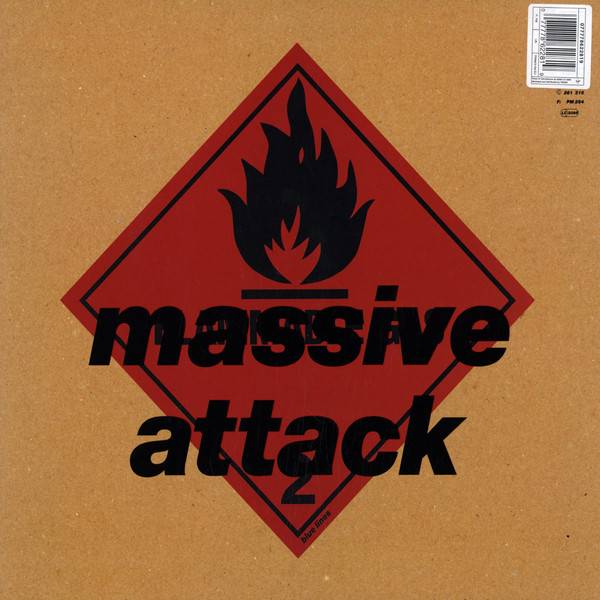
Thirty years ago, on October 15, 1990, the song “Daydreaming” by Massive Attack came out, six months before their debut album, Blue Lines. The song opened so many directions for Black British music. While writing a book about the “BristolSound”, I met many of these musicians and their collaborators, to retell this story.

Released with a slick black and white video, with a hot climate fusing England and the Caribbean, “Daydreaming” reached number #81 in the UK Singles Chart, a first for a Bristol band.

The single featured Tricky, 3D and Shara Nelson on vocals, mixing rap, dub and reggae influences with a pinch of soul and funk, and opened a new era.

From reggae and punk to hip-hop and electro, came the “Bristol Sound”

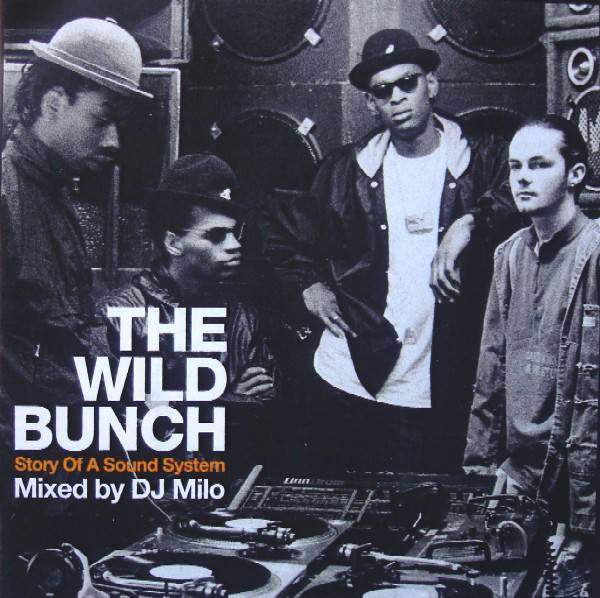
Before forming Massive Attack in 1988, Daddy G, Mushroom and 3D hung out in a club called The Dug Out. They were part of The Wild Bunch, a loose collective created by DJ Milo and Nellee Hopper in 1980. Milo, G and Mushroom are of Caribbean origins, and grew up to the sound of reggae and soul. 3D, born in an Italian-English family, and Nellee were as obsessed with Black music.

Reggae has indeed had a major influence on Bristol since the 1970s. The music helped immigrants to understand their post-colonial situation at a time of hostility. Bands like Black Roots and Talisman, DJs like Tarzan the High Priest and DJ Derek popularised the style in pubs and at St Paul’s Carnival. Soon, younger DJs started organising “blues parties” and events in warehouses or clubs like the Dug Out, described as Bristol’s little Studio 54 of the 1980s.

"Graffiti and rap came out of the cultural void left by punk"

“Graffiti and rap came out of the cultural void left by punk,” 3D told me. “I started writing vocals for Wednesdays at The Dug Out. It was very selective; The Wild Bunch wouldn’t let many on the mic. Daddy G did some reggae-style toasting. Willy Wee had a more New-York-style MC thing. And then there was me.”

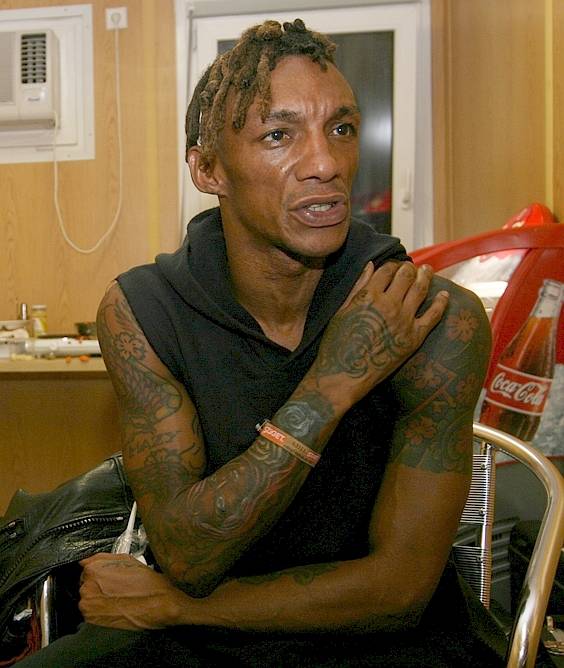
Also part of the scene were young rappers from the same humble immigrant origins, like Tricky. Born of English, African and Jamaican parentage, Adrian Thaws aka Tricky infused his music with Bristolian and Caribbean references. He met The Wild Bunch in 1987. “It was a great time for us all,” he says, “we didn’t care about money, only about making the best music possible. I slept at friends’ or in squats. It was a life of total freedom.”


Tricky

In 1989, the collective dissolved though, and Nellee Hooper joined Soul II Soul in London, producing their second album, Vol. II: 1990—A New Decade, which peaked at number 1 on the UK Albums Chart.

3D and Mushroom started working with the Swedish singer based in London, Neneh Cherry, producing songs for her first album, Raw Like Sushi, released in 1989. Her partner and manager, Cameron McVey, saw a potential in the unconventional group and encouraged them to record… That’s how of Massive Attack came about and the songs that formed Blue Lines.

“Daydreaming” 30 years on

This mix of soul vocals and hip-hop started with a track, “Daydreaming”.

The band sampled the song “Mambo” by West-African French musician Willy Badarou, from his album Echoes (1984), adding their raps and soulful lyrics. 

Tricky was then 20 years old, was not part of the band but collaborated with 3D on lyrics. “It’s the first track I worked ever,” he told me. “I was so young at the time; I had no clue of how to release a track alone. 3D was my mate; we were always together in the clubs, in the underground scene. I was not at all interested in keeping a track for myself back then. I still hear people telling me how much they love it.”

The song, in a very Massive Attack way, was “reworked dozens of times”, 3D told me, with many producers like himself, Cameron Mc Vey and Johnny Dollar.

Massive Sound, Massive Influence

Since the release of Blue Lines in 1991, the song as well as “Unfinished Sympathy” and “Safe From Harm” have become some sort of national anthems.

Massive Attack has released four other albums, Tricky—14, and bands like Portishead have emerged from the city. The Bristol sound produced a new chapter for the history Black British Music, Massive working Horace Andy and the Mad Professor (who remixed their albums in dub versions), Nigerian Scottish singer Nicolette, Bristol stars Martina Topley-Bird and Yola, also inviting Black artists from the US such as Mos Def and Snoop Doggy Dog. Their influence is heard in the sound of London Grammar as much as Lana Del Rey.


Massive Attack live

More recently, they featured Young Fathers, Roots Manuva, Saul Williams and James Massiah, who read one of his poems on “Dear Friend” in 2016. “It was an incredible opportunity,” James told me. “An A&R at a record label sent one of my poems to their producer and we had two sessions before locking it in.”

In 1991, John McCready wrote in The Face magazine: “Hip hop heroes or Bristol’s answer to Pink Floyd? Either way, Massive Attack are the sound of 1991.” A sound that still resonates.


20/10/2020

Bristol Students’ want a Rent Strike to complain about their lockdown conditions


Latest article: for West England Bylines

Bristol Students’ Rent Strike


-

16/10/2020

“What Lies Ahead” - A Conversation with Arundhati Roy & Colson Whitehead

New article:

https://themarkaz.org/magazine/a-conversation-with-arundhati-roy-amp-colson-whitehead 


  TMR

A Conversation with Arundhati Roy & Colson Whitehead

The novelists and essayists discuss these difficult times, the rise of neo-fascism in India and the U.S., and “What Lies Ahead.”


As part of the Brooklyn Book Festival, Indian and American authors Arundhati Roy and Colson Whitehead were invited to read from their work and to discuss “What Lies Ahead.” Both have new books out. The reading, followed by a conversation, showed how much the two largest democracies in the world, currently deeply challenged, have in common.

Melissa Chemam

Arundhati Roy has been issuing a siren call to the world against India’s fascist government for several years, while Colson Whitehead, as a New York writer in the Black community, has been confronted with decades of police brutality, as well as the advent of President Donald Trump, who openly embraces white nationalists. 

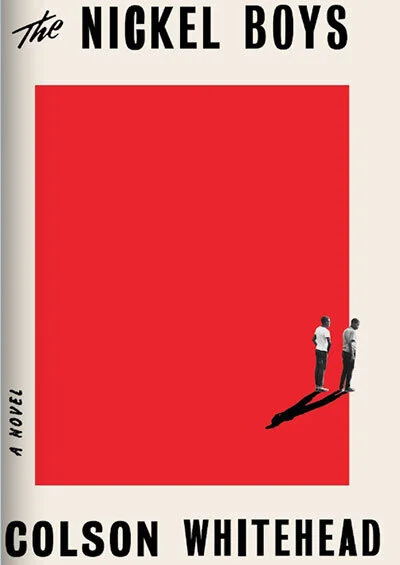
The Nickel Boys   won the 2020 Pulitzer Prize in Fiction

The Nickel Boys won the 2020 Pulitzer Prize in Fiction

In a virtual conversation that took place on October 4th, summarizing what for her are the commonalities between her work and that of Whitehead, author of the Pulitzer-Prize winning novels Underground Railroad and The Nickel Boys, Arundhati Roy—author of The God of Small Things and The Ministry of Utmost Happiness—mused, “It is, sadly, the writer’s fate to look at things with aching eyes, and not to blink...It’s the writer’s fate to look at the world’s fate.”

The two immensely talented writers couldn’t be further apart, as some 11,000 kilometers lie between New Dehli, India and Long Island, New York where each resides and from where each spoke remotely. Yet even as you factor in their different experiences in life, and their varied texts, when you listen to them concomitantly, the whole world starts to make sense.

For Roy, the current situation is the result of the 2,000-year-old Indian caste system, as much as an effect of 200 years of brutal British colonial rule—a reality she compared with the United States. “These two countries are built on denying the horrors of what they consider to be civilization. That’s what connects writers like Colson and myself. 

“[Whitehead’s] Underground Railroad haunted me for years,” she said after Whitehead read from his work, “first because it’s so beautifully written and so powerful.” She cited anti-caste writers before her who have pointed out the connections between slavery in the US, the caste system in India and apartheid in South Africa. “However, there is no underground escape for any victim of the caste system here in India. There is no way to run away from it. Here, peoples’ minds are so vertical, so hierarchical, that Indians don’t know how to make it horizontal and create solidarity.” 

To these thoughts, Whitehead responded that his novels always depict power structures and their violence, from slavery to our days, because these have to be uncovered. “I have to be all in,” he added, to confront the truth of what is country has remained. 

Both writers have been challenged by the events of 2020, whether the current pandemic or the Black Lives Matter protests. 

“For me, unfortunately, the current level of racism in America just proceeds from the same old business against Black people,” lamented Whitehead. “I grew up in New York in the ‘80s, when we’d have a famous case every three years…Police brutality hasn’t changed, even if now it is getting filmed on cell phones and these videos are seen by millions of people... When my books came out in Spain and in France, readers wrote me that they found them so prescient. But how could they be to me? This has happened so many times. America has remained the same.”   

And the Covid-19 pandemic only amplified inequalities in the United States.

Arundhati Roy concurred as she compared the situation in India. “The pandemic was like an autopsy of a place in deep trouble: the lockdown forced ten million people to walk thousands of kilometers in one of the largest displacements in our recent history. In India a lockdown doesn’t insure social distancing, only some physical compressing. It only made things worse… Meanwhile, many violations of our rights are occurring daily. Just five minutes from my house [in New Delhi], there is a notorious police station, where friends I’ve known for years are being held, are being interrogated; there’s a massive sweep of arrests of all activists who rose up against the anti-Muslim citizenship law. As you know, there have been hundreds of Muslims lynched by mobs which are filmed and put up on YouTube.” 

Brooklyn Book Festival moderator Anderson Tepper asked the two authors how the pandemic had affected their writing, a question that seemed to put Roy in disarray. She blamed the lockdown for an inability to easily articulate the many crises India is facing. “It’s like there are firing squads everywhere,” she said.

Tepper also wondered how Roy reacted after her essay in the Financial Times, “The Pandemic Is A Portal” circled the world across the net in April, almost like a calming mantra. In that piece, Roy wrote about the privatization of healthcare in India and how the free market is wreaking havoc among the less fortunate. But she also wrote:

Who can think of kissing a stranger, jumping on to a bus or sending their child to school without feeling real fear? Who can think of ordinary pleasure and not assess its risk? Who among us is not a quack epidemiologist, virologist, statistician and prophet? Which scientist or doctor is not secretly praying for a miracle? Which priest is not — secretly, at least — submitting to science? 

“Yet,” she reckoned, appalled, “most people only quoted the last paragraph from that long essay.”

“Historically,” she wrote at the end of the column, “pandemics have forced humans to break with the past and imagine their world anew. This one is no different. It is a portal, a gateway between one world and the next.”

Yet for now she’s observed that in her country, the pandemic has only been “a portal for decisions that shouldn’t be made. The Indian government has suddenly changed the laws for agriculture, corporatized farming and privatized mining. The main point of my writing is about the violence, the privatization of healthcare, the lack of hospitals in India…That has happened to a lot of my writing: people take a quote from it and forget the main points.”

She cannot say she remains optimistic, though social media responses to her essay suggest that she is. That’s why she started writing political essays in the first place, after the release of The God of Small Things, facing praise for the novel but harsh backlash for her opinions. Her writing is now a weapon to fight the new nationalistic Hindu project. “It’s too hard to have other long-term plans,” she admitted during this online event.

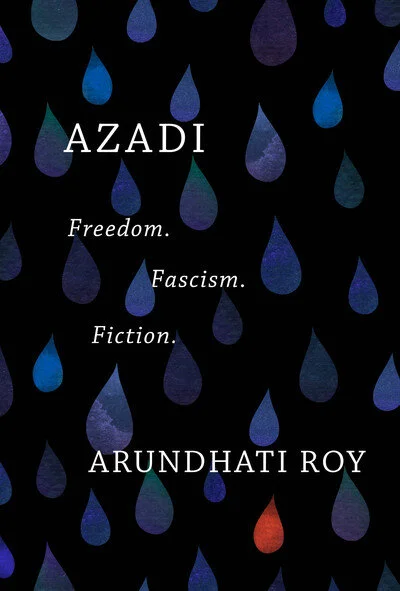
Arundhati Roy’s new collection from  Haymarket Books .

Arundhati Roy’s new collection from Haymarket Books.

Her new collection of essays, Azadi: Freedom. Fascism. Fiction, published by Haymarket Books this fall, helps us find parallels in the current numerous cases of extreme rightwing forms of fascism all over the world, from the US to Turkey and Brazil. It includes texts and lectures written over the past two years.

The first roots of nationalism in South Asia, the book reminds us, were consequences of the post-colonial era—India obtained its independence from the British Empire in 1947 at the cost of a partition with Pakistan and Bangladesh, along with deadly wars and huge shifts of populations, now responsible for Muslim-Hindu hatred. The politics of nationalism also resulted in an increasing differentiation in the languages themselves, in the former “Hindustan” into two separate ones, with discrete scripts—now called Hindi and Urdu—which enabled more discrimination.

The other root cause of the rise of violence emerged slowly after the collapse of the Soviet Union, when India’s alliance with the US opened wider doors to a stronger, more destructive form of capitalism. 

Like many other observers, Roy hoped that Modi wouldn’t be reelected in 2019. But he was. “Only a year into his second term,” Roy wrote in the Paris Review in September this year, “through a series of horrifying moves, Modi has changed India beyond recognition. The infrastructure of fascism is staring us in the face, the pandemic is speeding up that process in unimaginable ways, and yet we hesitate to call it by its name.” And she can only see parallels with the situation in the United States.

Roy sees writing as a form of response. “My mind is in a mess right now! I haven’t found a way to write further about all this at the moment; there are so many crises on so many levels.” But when asked, “What lies ahead?” Roy pondered…and finally replied: “Reimagining the world. Only that.” And who could disagree?

As for Colson Whitehead, he tries to remain optimistic too. “If I thought Donald Trump were to be re-elected again in November, I’d probably go insane,” he told The Observer recently. “So, I have to think it won’t happen for my own sanity’s sake and for my children’s futures. One wants to be cautiously optimistic that these protests will make something happen, but also they might not.”

His new novel, Harlem Shuffle, will be published in 2021, and he’s already started working on another one. “There is always a fear of screwing up,” he confessed, “but I’m still doing the work. My anxiety has become some good quality control.”

These days—like the main character in her novel The Ministry of Utmost Happiness, Arundhati Roy remains anxious about the future of India’s communities, especially for the new generation, increasingly divided by Modi’s fascist and anti-Muslim rhetoric. As for Colson Whitehead, we will revisit with him on matters of anti-Black racism, police brutality and the neo-fascism of Donald Trump, after November 3rd.

tmr-end-of-article-logo-50pix.jpg

Melissa Chemam is a Bristol-based journalist and author, and a contributing editor at The Markaz Review.


-


Read the 2nd issue of The Markaz Review here.