Journalist at RFI (ex-DW, BBC, CBC, F24...), writer (on art, music, culture...), I work in radio, podcasting, online, on films.
As a writer, I also contributed to the New Arab, Art UK, Byline Times, the i Paper...
Born in Paris, I was based in Prague, Miami, London, Nairobi (covering East Africa), Bangui, and in Bristol, UK. I also reported from Italy, Germany, Haiti, Tunisia, Liberia, Senegal, India, Mexico, Iraq, South Africa...
This blog is to share my work, news and cultural discoveries.
Just a few photos, really... There is so little we can do from here.
London had a big march too and the Palestinian Ambassador spoke strong words on the BBC. I really wish the UK would take responsibility and recognise the imbalance in the conflit, the utter injustice for the Palestinians, the horrible breaches of human rights, and the current situation of apartheid..
The Markaz Review is open for submission on this theme:
GAZA
- Call for Submissions, Pub. Date 15 July 2021
No place is safe in Gaza but everyone dreams of better tomorrows—every Gazan is looking for the sky and access to the sea. As the late Anthony Bourdain once remarked, “The world has visited many terrible things on the Palestinian people, none more shameful than robbing them of their basic humanity.” Make no mistake— Gaza is Palestine and the subject of TMR’s July 2021 issue.
The siege of Gaza is the longest siege of a city or a major land area in modern history. Even the worst, most brutal sieges of the 20th century, in Madrid and Leningrad, lasted less than three years, while the siege of Sarajevo stretched on for four. Meanwhile Gaza struggles into its 14th year, often without electricity, sanitation and proper food and medical supplies, even in the face of Covid. In March of 2018, desperate for major relief, Gazans organized the Great March of Return, an organic protest movement along the barrier fence with Israel that lasted until December of the following year; while barely getting the world’s attention, thousands of Gazans were injured by Israeli sniper fire, and hundreds were killed.
As we write, Gazans are waiting for the next war. It could come tomorrow, next week, or next year. No one knows when, but dread remains in the air the people breathe — their fear strangely co-existing with hope— hope that it will be possible to be a human being and a Palestinian at the same time.
TMRseeksessays, short stories, poetry, videos, podcasts and art that helps us think more clearly about Gaza and see Gazans as Palestinians and as a people fighting for freedom, the freedom we all deserve.
Please submit your query to editor-at-the-markaz no later than June 30th. The deadline for copy is July 10, 2021:
This week, focus on how the arts responded to the past 12 months...
To do so, I interview artist Susan Thomson who gives us her thoughts about the pandemic.
She talks about her recent film essay 'The Cytokine Storms', in which she explores the colonial echoes of the UK government’s response to the Covid-19 pandemic.
CIRCA is delighted to host on its website 'The Cytokine Storms' (2020, 38 mins), a film-essay by regular contributor Susan Thomson. Written and directed by Thomson, this lyrical essay film explores the colonial echoes of the UK government’s response to the Covid-19 pandemic. The film looks at colonial responses to the Irish and Indian famines, laissez-faire economics and indifference to marginalised lives, interweaving contemporary personal and geopolitical events. The film is accompanied by a newly commissioned essay where Thomson takes us through the genesis of the film.
-
ALSO on this episode - we've got a stunning brand new track Willing from Lady Nade - she says: 'Willing is a message of acceptance, loyalty and friendship, particularly poignant after this prolonged period of separation. All too often we try to be the person we think other people want us to be rather than ourselves. Willing is a celebration of who we are and we can support each other.'
PLUS - we bring you our usual round up of positive responses to the virus from around the world....
Music:
-'Willing', Lady Nade
-'Hot Flu', Seb Gutiez, The Old Bones Collective - opening music
Though these past few years have brought improvement, too often Black voices are left out of the conversation on environmentalism and sustainability. So is the Global South in general. In mainstream western media, white activism is celebrated, even from places where the climate emergency has so far had a smaller impact than in parts of Africa, America and Asia – ravaged by floods, droughts and other disasters affecting biodiversity.
A symbol of this appropriation was the photograph where the young Uganda activist Vanessa Nakate was posing with other teen activists including Swedish school-striker Greta Thunberg… A photo entirely media cropped to feature ‘Greta’ at the centre, erasing Vanessa altogether!
Nonetheless, environmental researchers and activists have been doing an incredible job from the Global South for decades. And one of the most admirable voices in that field was certainly Wangari Maathai, who was a pioneer from the 1960s and has left a mark with her work.
Wangarĩ Muta was born on 1 April 1940 in the Nyeri District in central Kenya, under Britain’s colonial rule, in a kikuyu family, the ethnic majority. She was taught English at a young age and sent to a Catholic school. She was sheltered there during the first years of the Mau Mau uprising, which later led to the liberation of Kenya in December 1963.
Luisa Neubauer, Greta Thunberg, Isabelle Axelsson, and Loukina Tille, as they appeared in the photo initially posted by AP. Markus Schreiber / AP
The uncropped photo featuring Nakate that was later uploaded by AP. Markus Schreiber / AP
In September 1960, she was chosen to take part in a programme to study in the United States with 300 other Kenyan students, receiving a scholarship to go to Kansas. She majored in biology, with minors in chemistry and German. She then studied at the University of Pittsburgh for a master’s degree in biology, where she first practiced environmental restoration. Wangari received her MSc in biological sciences in 1966 and returned to Kenya, where she was supposed to start a position as a research assistant to a professor of zoology at University College of Nairobi. Yet, on arrival, the position had been given to someone else, which, she always believed, was due to gender bias.
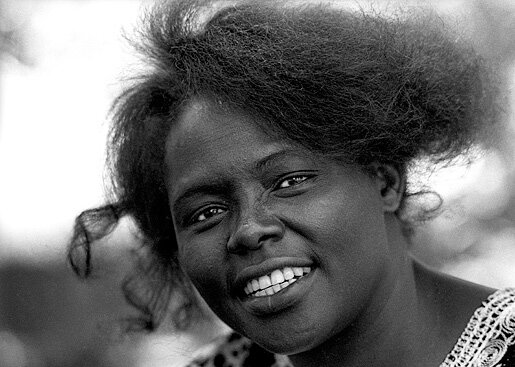
Portrait of Wangari Maathai taken in 1989 by David Blumenkrantz
After two month, she was offered a job as a research assistant in the School of Veterinary Medicine at University College of Nairobi by Professor Reinhold Hofmann. There she met Mwangi Maathai, her future husband, in 1966. She soon started a PhD at the University of Giessen in Germany and, from 1969, worked as an assistant lecturer. In 1971, she became the first Eastern African woman to receive a PhD, from the University College of Nairobi, which became the University of Nairobi the following year.
Once married and a mother, Maathai continued to teach, as a senior lecturer then associate professor, also the first woman in Nairobi appointed to these positions, and started campaigning for equal benefits for the women working at the university. Her interest in activism grew and she joined numerous civic organisations in the early 1970s, including the Kenya Red Cross Society and the Environment Liaison Centre, established in 1974.
To her, environmental degradation soon appeared at the root of most of Kenya’s problems, and when her husband became an elected Member of Parliament, she started campaigning for more jobs in environmental restoration and tree planting.
Only a few years later she founded the Green Belt Movement, encouraging women especially to create tree nurseries. The indigenous, grassroots, and non-governmental organisation, based in Nairobi, took a holistic approach to development by focusing on environmental conservation, community development, capacity building, and women’s rights.
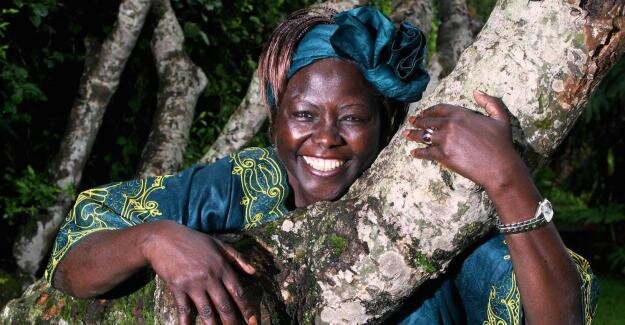
Wangari Maathai
In 2003, then divorced, she herself became an elected Member of the Parliament of Kenya, serving as assistant minister for environment and natural resources in the government of President Mwai Kibaki.
A social, environmental and political activist, Wangari Maathai became the first African woman to win the Nobel Peace Prize in 2004. She passed away on 25 September 2011 but her legacy is immense and unforgettable, an inspiration for environmentalists in Africa.
I feel thankful to all the people who made it possible, I could not have done it without you.
"Pure Heart" was co-produced by Robert Del Naja and Euan Dickinson
A lot more to come
Pure Heart · Martina Topley Bird
Pure Heart
℗ Martina Topley-Bird
Released on: 2021-05-07
Producer: Martina Topley Bird
Producer: Robert Del Naja
Producer: Euan Dickenson
Producer: Natasha Graham
Engineer: Euan Dickenson
Engineer: Martina Topley Bird
Engineer: Ian Caple
Lyricist: Natasha Graham
Composer Lyricist: Martina Topley Bird
- 'How France’s Colonial Past Explains Its Racism Today'
Both sides of the channel could learn from this. For instance on the Haitian Revolution and how/why Arabs are also victims of racism for instance...
Despite resistance from French elite, there’ve been growing calls for France to recognise and apologise for its violent colonisation of millions of people in Africa and Asia. In fact, by 1901, France ruled 79 million people over 4.6 million square miles.
“Where would France be without its colonies in the Caribbean?” asks Professor Mame-Fatou Niang.
“Where would France be without its huge possessions in Sub-Saharan Africa? Where would France be without its possessions in Asia, without Algeria?”
After my guest lecture today on "Decolonising the Everyday", we discussed music videos and post-colonial awareness...
Here is probably one of the most powerful ones ever made:
M.I.A. - 'Borders'
This video reminds me of so many episodes of my journalism journey... In Somalia... in Dadaab, Kenya, one of the largest refugee camps in the world... in Iraq... In Ventimiglia, north of Italy at the border with France... And of course in Calais.
Strangely, as a woman who often had to accept to be told off by men, as a North African, who often had to accept to be silenced in my own country, this video makes me feel empowered. So thanks to MIA.
“To love.
To be loved.
To never forget your own insignificance.
To never get used to the unspeakable violence and the vulgar disparity of life around you.
To seek joy in the saddest places.
To pursue beauty to its lair.
To never simplify what is complicated
or complicate what is simple.
To respect strength, never power.
Above all, to watch.
To try and understand.
To never look away.
And never, never to forget.”
Who in France did not dance the “Mia” in 1994? The track on the second album of IAM’s Ombre est lumière made this collective of rappers and breakdancers from Marseille — absolute fans of New York rap — known throughout the country. If IAM remains little known to the English-speaking public, it nevertheless reflects the incredible journey of French rap, and the unexpected appearance of Marseille on the cultural map.
“Mia” was a dance explosion but also the chronicle of a city that until then had only made rare appearances on French television, almost always on the nightly news. The song invaded the French media space with a video clip directed by the filmmaker Michel Gondry, who worked at the time with the biggest stars of music, from Björk to Massive Attack.
“In the early 80’s, I remember the parties / Where the atmosphere was hot and the guys would come in / Stan Smith on their feet, looking cold”
rapper Akhenaton, whose real name is Philippe Fragione, intones: “They scanned the room with the three-quarter leather rolled around their arm,” all over a sample of George Benson’s “Give Me the Night”, released in 1980, slowed down and covered with hip-hop pulses.
“This song eludes all known musical references,” wrote Jean-Marie Jacono in the popular music magazine Volume! in 2004. “It’s neither a typical rap song nor a dance song, even if it evokes the parties of the Marseille nightclubs of the 1980s.”
It propelled the rap group — still a relatively underground genre in France in 1993/94 — to the forefront – a first for a group from Marseille. “’Je danse le mia’ was revenge, not only for Marseille, but for the whole of France on Paris,” says music journalist Rebecca Manzoni, of the national radio station France Inter.
But the way was long before leading to this small jewel of French rap...
The origins: a sound exploration from the Planet Mars
To understand this unexpected path, we have to go back to 1985, when the young Philippe Fragione and Eric Mazel join the team of “Vibrationn”, a program created by Philippe Subrini on Radio Sprint. They formed a first group in 1986 called Lively Crew, very inspired by New York rap, which included five members called Akhenaton, DJ Kheops, Nasty Mister Bollocks, MCP One and Studio.
They gave their first concert in March 1986 in the 7th district of Marseille, in a festival of reggae upon the invitation of Massilia Sound System, a group of Occitan expression founded in 1984. The following year, Akhenaton and Kheops left to spend the summer in New York, where they hunted for records. The sounds that inspired them were those of Kool G Rap, Rakim, Big Daddy Kane, Wutang Clan, Run DMC.
Back in Marseille, Akhenaton and Kheops join Shurik ‘n and Kephren of the group B-Boy Stance and in 1988 take the name IAM, acronym of Imperial AsiaticMan. The group was inspired by Asian and Egyptian mythology and popular cinema. Two other members joined them in 1989: Imhotep and Freeman. All of them, except one, have taken the names of pharaohs: Akhenaton, Cheops, Imhotep and Kephren.
The group toured France, then recorded a first album entitled De La Planète Mars, which was released in March 1991. IAM claimed its Marseille heritage and considered it a "full-scale attack from the planet Mars.” The album went gold a few years after its release.
They also add North African rhythms and instruments.
And their storytelling rap evokes the proximity of the city of Marseille to the African continent.
“Even if the group remains musically very New York,” explains music critic Bertrand Dicale, “it is from the beginning very creative, with reggae influences, a claimed ethnic diversity — it brings together an Italian, a Comorian/Malagasy, an Algerian, Muslims and a ‘Frenchman’. In this, they are deeply Marseillais. But at the same time, the group rejects clichés: with Shurik’n and Akhenaton, you don’t hear local stereotypes about pastis, creeks, sunshine...”