17/05/2012

May 2012 - The looming question: Where to in 2013?

Almost five months on the road and it's not over. I'm chilling and writing in Nairobi and still have a few travels ahead: in Italy in June then in DRC if all goes well, before London in July/August.

I have travelled to eight countries so far since the beginning of 2012 and I must say I still haven't found the perfect place to live in, to work from and where to write.


(The best view in Mogadishu)

Somalia facinates me but, hey, it is not yet the perfect timing to settle there...

How is Paris those days, pals? Has spring finally arrived? Or a political spring maybe?

Or maybe I should have stayed in London all the way...


 (Trafalgar Square under the sun)


Luckily, I'll have a second chance, as I'll be there again this summer.

So where to spend 2013? These five months did not really help finding an answer. Any advise is welcome!


16/05/2012

Algeria, independence and feminism

I don't think I had time to post this link before... An interview on Algeria for Deutsche Welle, realised earlier in February ahead of the commemoration of the Algerian independence:

Link to audio (in French):

http://www.dw.de/dw/article/0,,15830619,00.html

50 ans après l'indépendance, la situation des femmes est problématique


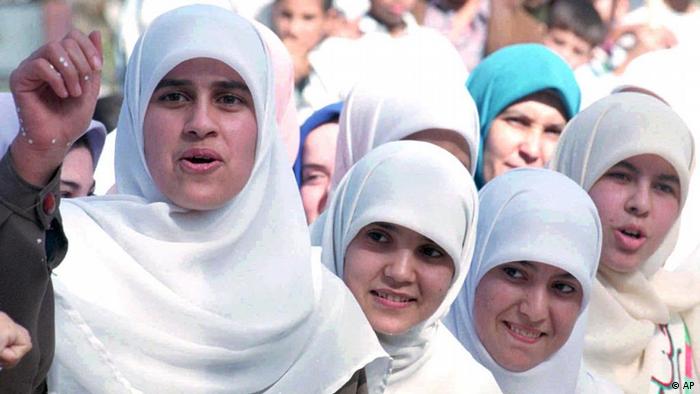
Groupe de femmes en Algérie

Les Algériennes ont joué un rôle important dans la guerre de libération. Mais de nos jours, leur situation reflète-t-elle leur engagement passé ? 

L'Algérie du XXIème siècle n'est plus la même que celle des années 1950-1960. Parmi les évolutions sociales qu'a connues le pays, celle de la place de la femme. Malgré leur rôle à l'époque de la guerre d'indépendance, beaucoup d'Algériennes sont à présent reléguées au foyer.

Une situation que dénonce Wassyla Tamzali, militante algérienne pour les droits des femmes. Selon elle, aujourd'hui les femmes sont complètement absentes des mouvements politiques en Algérie.  

Cliquez sur le lien ci-dessous pour écouter son interview au micro de Mélissa Chemam.


Mon reportage sur le rapport du PNUD en francais


Le PNUD dénonce le paradoxe subsaharien

Le lien pour l'audio:

http://www.dw.de/dw/article/0,,15952869,00.html

L'Afrique subsaharienne reste la région au monde la plus affectée par l'insécurité alimentaire. C’est ce que relève un rapport du PNUD. Une situation qui contraste avec la forte croissance économique dans cette région. 

Selon le programme des Nations unies pour le développement, une personne sur quatre souffre de malnutrition en Afrique au sud du Sahara. Une situation qui contraste avec la forte croissance économique observée dans cette région. Il s’agit d’une première. Le PNUD a publié ce mardi un rapport sur le développement humain spécialement dédié au continent africain. Le lancement de ce rapport était organisé ce matin à Nairobi en présence de Mwai Kibaki, le président de la République du Kenya.

La faim freine la reprise économique

L’une des conclusions avancées par le Programme des Nations Unies pour le développement dans ce rapport est que l'Afrique subsaharienne ne pourra pas maintenir sa reprise économique actuelle si elle n'élimine pas la faim, qui touche presque un quart de sa population. C’est ce qu’a souligné Helen Clark, Administrateur du PNUD :

« Le rapport est optimiste. Il précise que l’Afrique a les moyens de créer un avenir sur en matière de sécurité alimentaire. Il s’y trouve des terres disponibles pour l’agriculture, il y a des réserves d’eau et le rapport souligne donc qu’il faut des politiques efficaces dans les secteurs clé ».

Impossible de surmonter l'insécurité alimentaire par un effort exclusivement centré sur l'agriculture

Le Rapport affirme qu'il est impossible de surmonter l'insécurité alimentaire par un effort exclusivement centré sur l'agriculture. Il appelle donc à mettre en place une nouvelle approche couvrant de multiples secteurs, allant de l'infrastructure rurale aux services de santé, en passant par de nouvelles formes de protection sociale. Les partenaires occidentaux du PNUD étaient également représentés lors du lancement. Selon Bernard Rey, chef des opérations de l'Union européenne pour le Kenya, il est désormais temps de mettre fin à la dépendance vis-à-vis de l’aide d’urgence en matière alimentaire.

Le Rapport reconnait qu'il n'y a pas de solution miracle, mais soutient qu'il est possible d’atteindre la sécurité alimentaire en adoptant des mesures immédiates dans quatre domaines critiques : l’amélioration de la productivité agricole, le renforcement de la résilience, l’autonomisation et la justice sociale.« L'Afrique possède les connaissances, la technologie et les moyens nécessaires pour mettre un terme à la faim et à l'insécurité alimentaire », a conclu Dr Gettu.

Auteur : Melissa Chemam
Edition : Kossivi Tiassou

15/05/2012

UNDP first Africa Human Development Report 2012

The lauch of the first Africa Human Development Report 2012 is taking place this morning (May 15) a the Nairobi UN compound.

It is presented by UNDP head Helen Clark, with the presence of Kenyan President Mwai Kibaki, as well as Kenyan ministers and UNDP experts.

According to Helen Clark, 'Africa can build a food secure future', and this is the core issue of the report.

Sub-Saharan Africa cannot sustain human development unless it eliminates the hunger that affects nearly a quarter of its people, the United Nations Development Programme (UNDP) argues in the newly released Africa Human Development Report 2012: Towards a Food Secure Future.

Looking beyond agriculture, the report looks into four broad categories of policy options: agricultural productivity, nutrition, resilience and empowerment.


Details from UNDP website:

Sub-Saharan Africa has the highest prevalence of hunger in the world. Until this situation improves, the human development prospects of millions of Africans will remain at risk. UNDP’s first Africa Human Development Report shows that food security and human development reinforce each other.

If African countries are to realize their long-term potential, the report says, they must boost agricultural productivity to both improve the availability of food and reduce poverty. Policies to enhance nutrition are central to ensuring that access to food translates into human development. The report argues further that local populations must have the resources and decision-making power to produce and consume nutritious food throughout the year, overcoming the risks represented by continuing conflict, climate change and variations in food prices.

These drivers of change, by ending the ravages of hunger and malnourishment, will nurture capabilities and conditions for human development. A well-nourished and empowered population, in turn, is more likely to seek education, participate in society and expand its productive and human potential. With the right policies and institutions Africa can sustain this virtuous cycle of higher human development and enhanced food security.

13/05/2012

Hello Kenya!


So, the African spring tour continues...

I arrived in JKIA late yesterday, Jomo Kenyatta International Airport, after a very interesting, hard-working and passionate week in Ethiopia. Now I am back in Nairobi for further research on food security and on Somalia.

I have to say even arriving at JKIA is a pleasure. After the chaos in Addis' Bole Airport yesterday, long queues and disorganisations - two hours standing in lines... - my arrival was quick, and free of trouble. No queue at the visa counter, luggage right on time, foreign exchange office open and friendly and efficient. Even the taxi driver, a nice young Kenyan called Kennedy who used to dream of becoming a journalist was smiley and agreeable. We chatted about the excessive rains and Nairobi news roads like we had been working together for years...

Maybe Kenya just seems friendly to me because I lived here and I love it so much, and it is all very subjective. But then, welcome subjectivity and so nice to see you again Nairobi!

I am staying for the first time in the neighbourhood called Gigiri, next to the United Nations compound and the US Embassy thanks to wonderful generous and welcoming friends that I cannot thank enough! It is a tremendous change from the house I used to live in in Brookside, Westlands, with another great friend, and from the City Centre where I used to spend most of my time in and about the BBC office.

I am now working from the Java House Cafe and will later do my grocery shopping in the Village Market Mall. A new life seems to begin. But unfortunately this time it is only for eight days. Let's enjoy to the max.

See you Nairobians. 


12/05/2012

My article from Tunis for the World Press Freedom Day


WORLD PRESS FREEDOM DAY
May 3, 2012
-
By Melissa Chemam
-
World Press Freedom Day: Tunisia leads the way in a stagnant Africa

Zied Mhirsi is an eternal optimist. And 2011 won’t turn him down. He has seen his country, Tunisia, change radically in terms of political and social issues and he believes it is time to make the Tunisian press play a life changing role. Zied Mhirsi is the manager of the first news website in English, Tunisia Live.
“After the revolution, Tunisians were having high hopes but lots of questions remained unanswered”, he admits. “One of journalists’ main problems nowadays is the lack of new laws and of a new Constitution, for this means the former laws are still in application to punish the media. But the context has already changed so much; there are no more censorship in Tunisia, for newspaper as well as the web; it is a major achievement”. Zied Mhirsi very much realised the work he is doing now with Tunisia Live would not have been possible at all two years ago, but that improvements are still necessary. “Now we also have to reform ourselves and to see some cleaning among the old guard of journalists who were so close to the former regime”.

As decades-old authoritarian regimes have vanished from Tunisia and countries like Egypt, Libya and others in the Arab World, freedom of the press gained precarious new footholds last year, according to a survey by the watchdog group Freedom House released Tuesday. “For the first time in eight years, global media freedom did not experience an overall decline”, according to the Freedom House report, “however, due to downgrades in some previously free countries, the percentage of the world’s population living in societies with a fully free press has fallen to its lowest level in over a decade”. The report, Freedom of the Press 2012: Breakthroughs and Pushback in the Middle East, found that three countries - Egypt, Libya, and Tunisia - experienced significant improvements as a result of the Arab Spring. “Dramatic gains in press freedom in Tunisia and Libya in particular marked major breakthroughs for countries long governed by autocratic rulers”. Outside the Middle East and North Africa region, positive improvements were seen in countries including Burma, Indonesia, Niger, the Philippines, Thailand, and Zambia.

It is one on the reasons why World Press Freedom Day, WPFD, is commemorated in Tunis, Tunisia, this year, 3-5 May, jointly by the UNESCO and Tunisian Government. The event intends to prove that media freedom has the “power to transform societies”. It does “by enlightening the decision making process with information, and thus empowering individuals to take control of their destinies”, the UNESCO says. In this context, media freedom plays a crucial role in the transformation of society by reshaping its political, economic and social aspects.


And Tunisia Live and the Centre for Developing Communication (CDC) organised a round table entitled “Media and Governance: Sustaining the Pioneering Role of Tunisia in the Arab Awakening”, sponsored by the African Development Bank (AfDB).

Africa still appears in bad rankings
But if North Africa evolves, the rest of the continent still remains press unfriendly, especially the Horn of Africa.
According to Amnesty International, the number of journalists killed increase from 2010 to 2011, and the number of those arrested nearly doubled. As protests spread across the Middle East and North Africa, so did crackdowns by security forces seeking to distort the first draft of history. In only the first few months of 2012, 17 journalists have already been killed around the world.
In its 2011 report, Reporters without Borders, RSF, shows that overall, 2011 took a heavy toll on media freedom, especially in the Arab world. Of the total of 66 journalists killed in 2011, 20 were killed in the Middle East - twice as many as in 2010. China, Iran and Eritrea continue to be the world’s biggest prisons for the media. According to RSF, among the 10 most dangerous cities for journalists in 2011 are Abidjan, in Côte d’Ivoire, Cairo in Egypt, Misrata in Libya and Mogadishu in Somalia. Four out of ten are in Africa.
The Committee to Protect Journalist in New York City, CPJ, declared Eritrea the most censored country in the world in 2011, followed by North Korea, Syria, Iran and Equatorial Guinea. Again, two African countries are in the first five on the list. For this list, CPJ considered only countries where restrictions are imposed directly by the state, but underline that in Somalia, journalists also practice extensive self-censorship in the face of extralegal violence. And in the runner-up can be found two other African countries: Ethiopia and Sudan. Addis where “censorship has become far more restrictive in recent years and the government of Meles Zenawi appoints managers of broadcasters and state newspapers and licenses all media; anti-terrorism legislation criminalizes any reporting that the Ethiopian government deems favourable to opposition movements designated as terrorist”. And in Sudan where “authorities frequently confiscate newspapers, which are the widespread form of media and security forces have increasingly confiscated newspaper editions wholesale to inflict financial losses on publishers.
 Shutting out international media and imposing dictatorial controls on domestic coverage, the Horn of Africa nation of Eritrea has emerged as the world's most censored country, the Committee to Protect Journalists has found in its newly updated analysis of press restrictions around the globe”, CPJ writes. No foreign reporters are granted access to Eritrea, and all domestic media are controlled by the government. Ministry of Information officials direct every detail of coverage. “Every time a journalist had to write a story, they arrange for interview subjects and tell you specific angles you have to write on,” an exiled Eritrean journalist told CPJ, speaking on condition of anonymity. Then in Equatorial Guinea, “all media is controlled, directly or indirectly, by President Teodoro Obiang”, the report says.
We can at this stage only hope that the North of the continent will inspire the rest.


Addis - Nairobi

Last day in Ethiopia after a very inspiring trip from Addis Ababa to Assosa, in the northern part of the country.

I visited different organic farming site with the Swiss foundation Biovision and the Afican NGO Bioeconomy Africa.

I will be flying tonight to Kenya for further research.

Reports to come soon, in French and English.

Next trips to Africa: probably Zimbabwe later in May and DR Congo in June.


 Cheers.


11/05/2012

Flying Doctors

Hello everyone,

Greeting from Ethiopia.

Here is the link to my TV report on AMREF flying doctors:

 http://www.tv5.org/cms/chaine-francophone/Revoir-nos-emissions/quoi-de-neuf-doc-/Episodes/p-21157-La-medecine-volante-Les-flying-doctors-de-l-AMREF.htm

I filmed the interviews in nairobi in January and the report is now available on TV5 website. It is in English with French subtitles.

More on Ethiopia, and food security issues soon.

Cheers, M

07/05/2012

First article from Mogadishu

Mogadiscio reprend goût à la paix

Par Melissa Chemam Mis à jour | publié


LE FIGARO ACTUALITÉ International


http://www.lefigaro.fr/international/2012/05/06/01003-20120506ARTFIG00143-mogadiscio-reprend-gout-a-la-paix.php  

French Election - A night of loss...


French Election - 6 mai - UMP
Melissa Chemam
BBC Afrique
--
Le résumé de mon papier pour BBC Afrique depuis La Mutualité ou étaient rassemblés les militants UMP. 
--
 
Jusqu'au dernier moment la plupart d'entre eux voulaient y croire, agitant drapeaux bleu blanc rouge, scandant le nom du Président sortant et chantant la Marseillaise...

Et pourtant, les plus lucides étaient déjà résignés. Les chiffres avaient filtrés dans l’après-midi dans les médias étrangers et sur les réseaux sociaux, difficile de s'illusionner longtemps.

Mais la déception reste amère pour ces centaines de militants fervents qui semblent craindre le prochain mandat comme la peste...
Malgré l’ambiance morose, c’est un accueil triomphal qui a été accordé à Nicolas Sarkozy par ses partisans, un chef de parti arrivé bien plus tôt que prévu a la Mutualité, dès 20h20 et dont le discours ne s’est certainement pas éternisé…
Vers 21h, la plupart des militants quittaient le quartier.
La défaite est numériquement tolérable, autour de 52% pour le socialiste François Hollande contre 48 pour le sortant, mais symboliquement, le rejet est flagrant : Nicolas Sarkozy est l’un des rares présidents français de la Vème République a n’avoir pas été réélu et est parmi ceux resté le moins longuement au pouvoir, un mandat de cinq ans.
Son bilan a été sévèrement critiqué par ses adversaires mais aussi par les anciens alliés centristes et révèle déjà les divisions à venir au sein de son parti l’UMP.

Mélissa Chemam, à la Mutualité à Paris, pour BBC Afrique.