08/03/2014

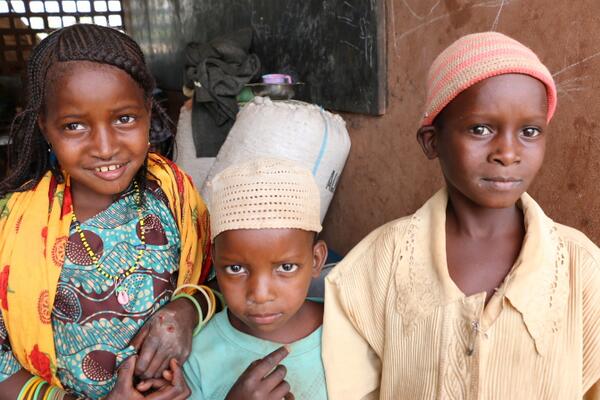
WFP and Women - in Bangui

March 8 is a symbolic date for Women's rights, not for women as such.
In one day in the whole year, what can be done? 
Just willing to show examples of courage from those women I meet every day in the Central African Republic.

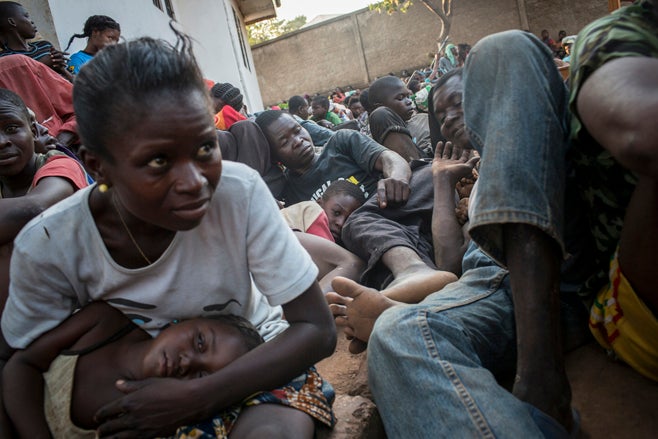
Here at the Freres Castors' church, quartier Castor, Bangui, 3th arrondissement, women struggling to get some food for their whole family:


March 8: For women of Central African Republic


 is International Women's Day. 

Here to women/mothers in the  calling for peace and 

fighting for their family


--

Women from Bossangoa


06/03/2014

UN OCHA warns about "the implistic notion of a ‘religious conflict’ in CAR"


CAR: The simplistic notion of a ‘religious conflict’


The town of Bambari in the Central African Republic’s Ouaka Province, has been spared the spiral of violence that has left countless communities torn apart across the country. It serves as a reminder that the crisis in CAR cannot be easily defined as a ‘religious conflict’.
Bambari’s Muslim, Catholic and Protestant leaders regularly organize gatherings – bringing together the different groups in an effort to maintain and strengthen the town’s cohesion. Gael Koumsoupon, a young Christian truck driver is an eager attendee.
He says he does not mind when these meetings are held at the local Mosque. Like other members of his community, he has always lived in peaceful, understated coexistence with his Muslim neighbours.
“Everybody in town supports peace initiatives,” he says, matter-of-factly. “If civilians are threatened in other parts of the country, they can seek refuge here, whatever their religious beliefs.”
Singa Edith, a mother of three agrees. “In Bambari things are different and I regret what is happening elsewhere. Muslim people should not have to leave the country.”

Feb 2014, Bambari, CAR: Students from Bamabari's Christian and Muslim communities during a lesson at the town's school. The peaceful coexistence of different religious groups in Bambari and in towns across the country serves as a reminder that the crisis in CAR cannot be easily defined as a 'religious conflict'. Credit: TRIANGLE/Erwin Daragne

As important as water or food

Maintaining this dialogue and trust between Bambari’s communities is one of the priorities of the humanitarian groups in the town.

“The humanitarian community in the region is doing its utmost to preserve this cohesion,” says Narcisco Rosa-Berlanga, the Head of OCHA’s sub-office in Bambari. “It is as important as providing water or food.”
The groups are in constant contact with the town’s religious leaders, a dialogue that includes ongoing discussions about the possibility of relocating at-risk Muslim communities from other parts of CAR to Bambari.

“We feel safe here”

Bambari is not an exception. Over the past several weeks, more than 600 Muslim Fulani, fleeing attacks by armed militias, have taken refuge in the village of Tatale, in Ouham-Pende Province in the country’s north-west. The Christian population there is determined to protect them.
“We feel safe here,” says the Imam, who is still visibly shaken and exhausted. “The population of the village and surrounding areas have even collected food for us.”
A young woman cradling a baby in her arms explains that her community has nowhere to go and will stay in Tatale. “Christian women are helping us here. We go to the market and fetch water at the well together.”

Shared history, poverty and fear

Some Fulani children are now attending the school in Tatale, even though many of them lost their school books when they fled their homes.
Despite the strong sense of cohesion, life is difficult in Bambari and Tatale. Potable water is scarce, and food is running low as farmers have been too afraid to attend their fields. Livestock has been stolen and health centres looted and ransacked by armed groups. All live in fear of future attacks by ex-Seleka and Anti-Balaka militias, a shared experience that further strengthens the bonds between the communities.
Humanitarian actors have managed to expand their presence in Bambari but have remained cut off from Tatale after the bridge leading to the village collapsed.
“It is too easy and far too simplistic to call the crisis in the country a religious conflict,” says Barbara Shenstone, OCHA Head of Office in CAR.
“However, there is no doubt that across the country, the targeting of communities based on their religious beliefs has eroded the social fabric. It will take a long time for the country to heal from these wounds.”


CENTRAFRIQUE : ACF ALERTE FACE A L’EXPLOSION DE LA MALNUTRITION


Mardi 03 Mars 2014
COMMUNIQUE DE PRESSE

REPUBLIQUE CENTRAFRICAINE :
ACTION CONTRE LA FAIM ALERTE FACE A L’EXPLOSION DE LA MALNUTRITION

Action contre la Faim alerte face à l’explosion à Bangui du nombre de personnes prises en charge pour la forme la plus grave de malnutrition ; la malnutrition aigüe sévère. L’insécurité et l’effondrement économique du pays ajoutés aux causes structurelles de la malnutrition ont un véritable impact sur les personnes les plus vulnérables. Le nombre de personnes souffrant de malnutrition risque d’encore augmenter avec l’entrée dans la période de soudure* jusqu’en août/septembre prochain. 


En janvier et février 2014, les équipes d’Action contre la Faim constatent le triplement des admissions d’enfants malnutris dans les programmes nutritionnels de l’association par rapport aux mêmes mois les années précédentes. Plus de 1200 enfants ont été admis en traitement en février, et 1000 en janvier. A la même période les années précédentes, ces programmes accueillaient autour de 350 enfants. La couverture des programmes d’ACF s’est améliorée au long des années, mais une telle augmentation est le signe d’une dégradation forte de la situation nutritionnelle pour les plus pauvres.


Si une certaine amélioration de la sécurité dans Bangui a pu permettre à la plupart des centres de santé de ré-ouvrir et aux familles d’y accéder plus facilement, contrairement à décembre 2013, les 10 structures de santé soutenues par Action contre la Faim sont aujourd’hui débordées par la situation. 
C’est particulièrement le cas du Complexe Pédiatrique de Bangui qui reçoit les cas les plus graves nécessitant une hospitalisation : « L’hôpital pédiatrique compte à la base 56 lits pour les hospitalisations d’enfants malnutris. Or en février 256 enfants pour ce seul hôpital ont dû être admis dans l’unité nutritionnelle. Des équipes supplémentaires ont été embauchées et Action contre la Faim a déjà ajouté 3 grandes tentes pour faire face à l’afflux. Nous allons sans doute devoir en construire une quatrième. Tout le monde est débordé là-bas et l’hôpital a atteint les limites de ses capacités » explique Nicolas Fuchs, responsable de la mission d’Action contre la Faim en République centrafricaine.

En plus du soutien aux structures de santé de quartier, des équipes mobiles circulent d’un site de regroupement à l’autre pour dépister et prendre en charge les enfants atteints de malnutrition. Lors de ces dépistages actifs, les taux de malnutrition relevés sont extrêmement inquiétants avec notamment plus de 7% de malnutrition aigüe sévère parmi les 5000 enfants dépistés en février. On parle généralement d’urgence lorsque ce taux se situe au-dessus de 2%. 
« Nous voyons également de plus en plus de personnes venant de la lointaine périphérie de Bangui pour se faire soigner en ville car les centres de santé et la prise en charge nutritionnelle n’ont pas pu reprendre dans une grande partie du pays. Dans l’arrière-pays, nombreuses sont les familles qui vivent cachées en brousse dans des conditions sanitaires effroyables. Il est extrêmement difficile de les atteindre tant qu’elles sont cachées. Cela laisse présager une potentielle aggravation de la malnutrition. La situation en province nous préoccupe donc également beaucoup » ajoute Nicolas Fuchs.
Les équipes d’ACF suspectent également des cas de malnutrition aiguë sévère chez des adultes dans des sites particulièrement enclavés : phénomène extrêmement rare, c’est un signe fort de la gravité de la situation.

Action contre la Faim alerte sur l’impact énorme que la crise politique et sécuritaire a pour les familles centrafricaines. « La catastrophe humanitaire est immense et s’aggrave. La communauté internationale et humanitaire doit renforcer ces efforts tant humains que logistiques et financiers pour y faire face » poursuit Nicolas Fuchs.

*La période de soudure correspond à la période entre deux récoltes où les agriculteurs ont épuisé leur stock précédent et doivent attendre la récolte suivante.

New humanitarian crisis for those fleeing violence in CAR, according to Amnesty International


COMMUNIQUE DE PRESSE
5 march 2014
 
Chad/CAR: New humanitarian crisis for those fleeing violence in CAR

3
Thousands of people forced to flee the violence in the Central African Republic (CAR) are now facing another humanitarian catastrophe in neighbouring Chad, said Amnesty International. The rainy season is due to start shortly and unless shelter, food and medical facilities are urgently made available their already desperate situation will quickly deteriorate.
 
A delegation from Amnesty International has spent the last two weeks interviewing survivors of violence in CAR and visiting the sites where they are staying along the Chad / CAR border and in the capital N’Djamena. The delegates found thousands of people who had been neglected by the authorities and humanitarian agencies, many suffering from severe malnutrition and with no shelter other than the shade of trees. Among them were a large number of children, many separated from their families in the chaos, and in urgent need of assistance.
 
“The situation is quite dire. We saw people who had been living in the open for weeks waiting for promised assistance. The rainy season is about to start, rendering many areas inaccessible, and bringing the added threat of waterborne diseases,” said Christian Mukosa, Central African Researcher at Amnesty International.
 
“It is unacceptable for thousands of men, women and children who were forced to leave CAR in fear of their lives, to die here in Chad for lack of even the most basic assistance. It is important that the Chadian government and the international community including the UN agencies urgently assist these people and ensure that they have security, access to food, medical services, and adequate shelter.”
 
Some of the sites where people are seeking refuge are dangerously close to the ongoing violence in CAR. Sido, in the south-east of Chad, is less than a kilometre from the border with CAR and hosts more than 8,000 people.
 
Having camps so close to the border is also contributing to increasing insecurity and vulnerability of refugees. One woman told Amnesty International that the Seleka commander who had attacked her in CAR had now moved into the camp she had fled to. Another refugee told the organization that he fears for his life after recognising at least four ex-Seleka fighters among the population of the site he was staying in.
 
“There is a real sense of fear in the camps as people from all sides of the conflict find themselves living alongside perpetrators of human rights abuses. It is an extremely dangerous situation, and with no security in place it’s just a matter of time before the conflict spreads,” said Christian Mukosa.
 
The team encountered only a few representatives from the Chadian authorities and humanitarian agencies and most people are forced to fend for themselves.
 
“The Chadian Government must take responsibility. They sent their army into CAR to rescue Chadians whose lives were in danger, but now they are sending them to communities without the resources to look after them,” said Christian Mukosa.
 
It is now clear that the Chadian government is struggling to cope with the huge numbers of people coming in. It is urgent that the international community coordinates efforts to assist the authorities to avoid a new humanitarian crisis.
 
It is also important that a coherent system is put in place to identify refugees and ensure that they receive the international protection they deserve. The UN Refugee Agency (UNHCR) and the Chadian authorities must coordinate and ensure that the process starts in all sites as soon as possible.

--


Note to the editors
· Since December 2013, more than 70,000 people from CAR have registered as refugees in Chad. They were fleeing killings and other serious human rights abuses currently taking place in CAR. These people were evacuated by plane, some provided by the Chadian Government, and by convoys escorted by the Chadian Army. Others found their own way across the border. Most of the evacuees are Muslims, born in CAR but originally from Chad, but Amnesty International also saw evidence of people coming from CAR, Cameroon, Senegal, Côte d’Ivoire, Nigeria, Niger, Sudan and Congo.
· The Amnesty International delegation conducted more than 200 interviews, in both CAR and Chad over the last three weeks.  In Chad they visited several sites (including the social centre number 7 and at Gaoui in N’Djamena,) and Sido, Damaya, Doba, Bekoninga, Gore and Moundou in southern Chad along the border with CAR.
· Amnesty International’s concerns were brought to the attention of the Chadian authorities including at meetings with the Minister of Social affairs and the Minister of Human Rights.
 

04/03/2014

Bossangoa Muslim community: only a 1.000 left


In Bossangoa, 5.000 Muslims used to live peacefully before the crisis worsend in December 2013.

All have had to flee and got displaced. Now only 1.000 remain and they wish to leave for the extreme north of the Central African Republic, says Imam Ismail Nafi and his deputy Mahamat Mango.

According to the religious authority, WFP is the only agency helping them, and their are in need of mostly everything.

Some still managed to raise goats and to sell a few products, as they used to on the now destroyed market, to survive.

Here are some insight into their daily life at the Liberte school:


  1. Muslim family in where supplies are the only help 5000 fleeing ppl received, many now left:

  2. I also visited the Muslim area of where supplies are the only help 1.000 ppl left received


The mosque and the market have been completely destroyed two months ago:


WFP food distribution in Bossangoa: mothers receiving Plumpu Sup for their children


Bossangoa, 5-7 décembre 2013 : rappel des faits


La ville de Bossangoa a connu le chaos et une bataille meurtrière début décembre 2013, qui révèle le basculement de la situation en Centrafrique.
Rappel de faits avec quelques articles et références :


HUMAN RIGHTS WATCH
  •  

  • Des habitants de Bossangoa, dans l'ouest de la République centrafricaine, cherchent à s’abriter lors d’une attaque par des forces anti-balaka contre des combattants ex-Séléka le 5 décembre 2013. La Force multinationale de l'Afrique centrale (FOMAC) est intervenue pour protéger la population civile.
--

A lire, le rapport de Human Rights Watch:

"Les affrontements ont commencé à Bossangoa vers 14h00. Nous étions dans le quartier musulman, occupés à porter secours à un blessé ayant survécu à un massacre lorsque sont arrivés de nombreux véhicules transportant des combattants de l'ex-Séléka lourdement armés, prêts à se battre. En même temps que des centaines de civils, nous nous sommes précipités vers la base de la Force multilatérale d'Afrique centrale(FOMAC), qui pouvait offrir une sécurité relative. Contrairement à l'habitude, les soldats du maintien de la paix avaient laissé les portes de la base ouvertes. Trop souvent dans le passé, les troupes africaines et onusiennes de maintien de la paix ont fait très peu d'efforts, sinon pas d'efforts du tout, pour protéger les civils des environs des attaques par des groupes armés, fermant les portes de leurs bases et abandonnant les civils à leur sort quand les balles commençaient à siffler".

--

"Alors que les combats s'intensifiaient, le commandant de la FOMAC, le capitaine Wilson de la République du Congo, a mobilisé ses troupes avec un sens de l'urgence et un courage remarquables, les déployant à travers la ville pour protéger les dizaines de milliers de personnes déplacées qui étaient réfugiées dans l'église catholique ou dans d'autres sites.
Quand je l'ai informé de la situation de la plupart des travailleurs humanitaires qui se trouvaient bloqués à l'intérieur d'une enceinte sur la ligne de front des combats, il a ordonné sans hésitation à ses troupes de se rendre sur place, parvenant à faire évacuer les travailleurs juste à temps.
Pendant des heures, les soldats de la FOMAC, déployés au milieu de violents combats, se sont activés pour maintenir une distance entre les belligérants et les civils vulnérables. Alors que la ville tombait aux mains des combattants anti-balaka, le capitaine Wilson a ordonné à ses hommes de boucler le quartier musulman, afin d'éviter des meurtres de représailles de la part de milices chrétiennes. Un des soldats de la paix de la FOMAC a été grièvement blessé à la poitrine durant les combats.
Étant donné que des combats se déroulent dans de nombreuses régions de la République centrafricaine, les dangers auxquels est confrontée la population civile ne peuvent qu'augmenter. Demain, malheureusement, nous compterons les victimes des violents affrontements d'aujourd'hui.
Mais l'attitude courageuse du capitaine Wilson et de ses soldats de la paix africains nous donne l'espoir que leurs efforts – dans le contexte élargi d'une mission de maintien de la paix des Nations Unies – peuvent effectivement protéger la population civile".

--

BBC 

Living in fear in Bossangoa, Central African Republic

7 December 2013 Last updated at 16:38 GMT
French troops in the Central African Republic are expanding their operations, in an effort to restore order following sectarian fighting.
France is increasing its presence in the CAR to 1,600 troops to help peacekeepers deal with rising violence between Muslim and Christian militias.
Meanwhile, thousands of people in the country remain in fear of further violence and there are concerns about the humanitarian impact of the unrest.
Thomas Fessy reports from the town of Bossangoa, where many people have fled to a military base in search of sanctuary.

--
AFP
Lire aussi cette dépêche :

Centrafrique : A Bossangoa, les musulmans attendent de partir, la peur au ventre

BOSSANGOA (© 2014 AFP) - Ils ne sont plus que quelques centaines, cantonnés de fait dans un camp de fortune où ils manquent de tout et craignent tout le monde. Les quelques musulmans qui vivent encore à Bossangoa n'attendent qu'une chose, la peur au ventre: fuir la Centrafrique.

Coiffé de son chèche noir et blanc, les traits marqués, Mango Jimé paraît plus que ses 58 ans avec sa barbichette grisonnante.
Il a deux femmes et douze enfants dont la plupart ont fui Bossangoa, à 250 km au nord-ouest de Bangui, il y a 15 jours à bord de camions escortés par des soldats tchadiens dépêchés par N'Djamena pour mettre à l'abri ses ressortissants et d'autres musulmans.
Direction un camp du HCR, le Haut commissariat de l'ONU aux réfugiés, à Gore, au Tchad, à 225 km de là, de l'autre côté de la frontière.
"Les anti-balaka ont tout détruit, ils viennent tous les jours pour nous menacer, ils ont des armes", dit-il. Lui est né à Bossangoa et n'a jamais vécu ailleurs. "Mais s'il y a un camion, je pars", clame-t-il. "Je veux un camion vers le Tchad, vers le Cameroun, vers la sécurité".
Depuis des mois, les violences qui secouent Bossangoa ont coupé cette ville en deux, jetant dans les camps de déplacés des milliers de civils.
En décembre, ils étaient 40.000 chrétiens à camper à l'évêché pour fuir les exactions des Séléka, ces combattants pour la plupart musulmans qui avaient pris le pouvoir à Bangui en mars 2013.
A un kilomètre de là, de l'autre côté de la route, jusqu'à 7.000 musulmans s'étaient réfugiés à l'école Liberté, pour fuir les vengeances des milices anti-balaka majoritairement chrétiennes.
Depuis lors, beaucoup de chrétiens se sont réinstallés en ville. Le camp de l'évêché s'est un peu vidé mais 15.000 personnes y campent encore sous un bout de bâche.
Côté musulman, beaucoup ont fui le pays et on ne compte plus qu'un petit millier de déplacés terrorisés. Entre les deux communautés, la tension est au maximum et la "peur est totale", comme le dit le vicaire général de l'évêché, Frédéric Tonfio.

Musulmans interdits de marché
Les musulmans racontent que leurs maisons ont été brûlées et pillées, leur mosquée saccagée. Ils disent que les anti-balaka les empêchent de travailler sur le marché central qui vient de reprendre du service cette semaine après plusieurs mois d'inactivité.
"Nous sommes bloqués et menacés partout. Il n'y a pas un musulman qui peut se déplacer dans les quartiers ou même se rendre à l'hôpital", a expliqué l'imam du camp des musulmans à la patronne des affaires humanitaires de l'ONU, Valerie Amos, venue sur place jeudi.
"La situation est pénible, nous n'avons plus de quoi manger, on ne peut pas travailler, nous vous demandons de nous amener au Tchad", lui a dit le vieil imam.
"Aujourd'hui ils ont même empêché des marchandises d'arriver au camp. Nous n'avons plus de sucre, plus rien à manger", a dit la présidente du camp, Kadjidja, à la responsable onusienne.
En face, le vicaire décrit des chrétiens "sans maison" et pétris de "peurs". Peur des soldats tchadiens réputés proches des musulmans, des anti-balaka censés les protéger, "des (éleveurs musulmans) Peuls armés qui sont dans la brousse", dit-t-il.

"Nettoyage basé sur la religion"
"Ces derniers jours, une grande peur s'est installée à Bossangoa", regrette Seydou Camara, le coordinateur de l'Unicef dans la ville.
"Depuis que les camions tchadiens sont venus, les musulmans vivent dans une peur totale. Les chrétiens commencent à rentrer chez eux. C'est comme s'il y avait un nettoyage basé sur la religion, c'est ça la réalité", dit-il.
"Les musulmans ont été terrorisés et menacés. On les a empêchés de se déplacer jusqu'à ce qu'ils comprennent qu'il fallait qu'ils partent", raconte-t-il, ému.
Le 13 février, un pick-up rempli d'anti-balaka lourdement armés est arrivé en ville pour patrouiller. "Ils sont restés là depuis. Ce qu'ils font n'est pas clair mais ils ont des lance-roquettes", commente un humanitaire.
De son côté, Valerie Amos est ressortie de son déplacement à Bossangoa en se disant "choquée" par "les maisons brûlées, les habitants traumatisés, des civils innocents qui subissent de plein fouet les violences".

Shots from Bossangoa, Central African Republic: children at WFP food distribution and camp, church