12/04/2015

Le Pape François a reconnu ce matin le génocide arménien en tant que tel


Séisme en Turquie...

 En réaction, la Turquie rappelle son ambassadeur au Vatican :

   Ankara, 12 avr 2015 (AFP) - La Turquie a annoncé dimanche qu'elle rappelait pour consultations son ambassadeur au Vatican, après les déclarations du pape qui  a employé, pour la première fois, le terme de "génocide" à propos des massacres des Arméniens il y a 100 ans.
   "Notre ambassadeur au Vatican, Mr Mehmet Pacaci, est rappelé en Turquie pour consultations", a annoncé le ministère des Affaires étrangères dans un communiqué.

--

Read more - In French and English:

@AFP: #UPDATE: the pope used the word during a mass to mark the centenary of the Ottoman Turk killings of Armenians http://t.co/CptB2150kc


@RFI: #urgent Vatican: le pape François utilise le mot «génocide» autour du massacre des Arméniens de L'Empire Ottoman au début du 20e siècle http://t.co/LJlPu5KGGN


@melissachemam: RT @guardian: #Pope Francis calls #Armenian slaughter 'first #genocide of 20th century' http://t.co/WTxNNLxLOe

--

Le pape François évoque le « génocide » arménien

Le Monde.fr avec AFP et AP |  • Mis à jour le 
Le terme est en train de provoquer un incident diplomatique. Dimanche 12 avril, dans le cadre solennel de la basilique Saint-Pierre de Rome, le souverain pontife a utilisé publiquement pour la première fois le terme hautement symbolique de « génocide » pour qualifier le massacre des Arméniens perpétré il y a cent ans. Sans surprise, la réaction de la Turquie ne s'est guère fait attendre : Ankara a convoqué à la mi-journée l'ambassadeur du Vatican pour évoquer la question et a ensuite rappelé son propre ambassadeur au Vatican.
« Au siècle dernier, notre famille humaine a traversé trois tragédies massives et sans précédent. La première, qui est largement considérée comme “le premier génocide du XXe siècle”, a frappé votre peuple arménien », a déclaré le pape lors d'une messe prononcée pour le centenaire du génocide (1915-1917) à l'invitation de l'Eglise catholique arménienne, citant un document signé par son prédécesseur Jean Paul II en 2001.« Occulter ou nier le mal, c'est laisser une blessure ouverte saigner sans la panser », a-t-il expliqué en ouvrant la cérémonie, en présidence du président arménien Serge Sarkissian et du patriarche Nersès Bedros XIX des Arméniens catholiques.

Une première publique


Probablement informée par avance des intentions de François, l'ambassade turque au Saint-Siège a annulé une conférence de presse prévue dimanche. Sur le réseau social Twitter, le ministre des affaires étrangères turc, Mevlut Cavusoglu, a jugé quant à lui « sans fondement » et « loin de la réalité historique » l'utilisation par le pape François du mot « génocide ».
Même si Jean Paul II avait déjà utilisé le terme, à l'écrit, le terme dans une déclaration commune avec le patriarche arménien Karenkin II, c'est la première fois qu'il est prononcé publiquement par un pontife.

(...)

Une « main tendue » encore timide

Des propos qui avaient alors provoqué une vive réaction du gouvernement islamo-conservateur turc. « Ce que l'on attend du pape, c'est qu'il contribue à la paix dans le monde, avec toute la responsabilité de la place spirituelle qu'il occupe, pas qu'il ressorte des différends du passé », avait déclaré le ministre des affaires étrangères turc, jugeant sa déclaration « inacceptable » et susceptible d'« affecter de façon irréparable les relations bilatérales » entre le Vatican et Ankara.
Les Arméniens estiment que 1,5 million des leurs ont été tués entre 1915 et 1917, à la fin de l'Empire ottoman. Nombre d'historiens et plus d'une vingtaine de pays, dont la France, l'Italie et la Russie, ont reconnu un génocide. La Turquie affirme pour sa part qu'il s'agissait d'une guerre civile dans laquelle de 300 000 à 500 000 Arméniens et autant de Turcs ont trouvé la mort.
Le gouvernement turc a néanmoins fait quelques gestes de repentance, comme des condoléances présentées en 2014 par le premier ministre Recep Tayyip Erdogan, aujourd'hui président de la Turquie, aux descendants des victimes.
A l'occasion de son voyage en Turquie, en novembre dernier, le pape François avait salué le geste d'Erdogan, qu'il avait qualifié de « main tendue » et appelé à la réconciliation. De son côté, l'Eglise apostolique arménienne a l'intention de canoniser collectivement, le 23 avril prochain, les victimes d'un massacre perpétré à l'initiative du gouvernement des « Jeunes Turcs » d'alors, qui fit plus d'un million et demi de morts dans les rangs de la population arménienne et d'autres minorités chrétiennes.

--


Pope Francis calls Armenian slaughter 'first genocide of 20th century'

(Guardian) 

Pontiff’s comments are likely to anger Turkey, which denies that the deaths 100 years ago constituted genocide

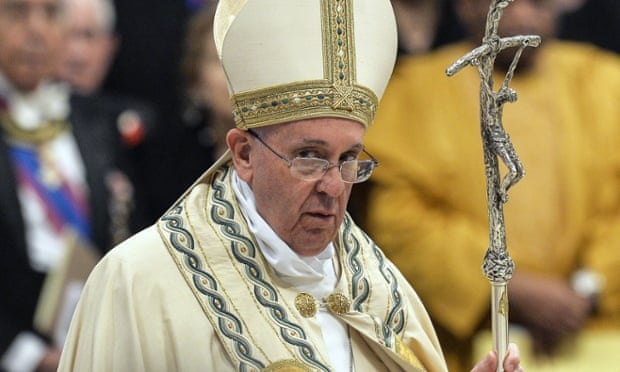
Pope Francis marked the 100th anniversary of the slaughter of Armenians by calling it “the first genocide of the 20th century” – a politically explosive pronouncement that is likely to anger Turkey.
Francis, who has close ties to the Armenian community from his days in Argentina, defended his pronouncement by saying it was his duty to honour the memory of the men, women, children, priests and bishops who were “senselessly” murdered.
“Concealing or denying evil is like allowing a wound to keep bleeding without bandaging it,” he said at the start of mass on Sunday in the Armenian Catholic rite in St Peter’s Basilica honouring the centenary.
Historians estimate that up to 1.5 million Armenians were killed by Ottoman Turks around the time of the first world war, in what is widely viewed by genocide scholars as the first genocide of the 20th century. However, Turkey denies that the deaths constituted genocide, saying that the toll has been inflated and that those killed were victims of civil war and unrest.
Turkey’s embassy to the Holy See cancelled a press conference planned for Sunday, presumably after learning that the pope would utter the word “genocide” over its objections.
Several European countries recognise the massacres as genocide, though Italy and the United States have avoided using the term officially given the importance they place on Turkey as an ally.

--

Turkey anger at Pope Francis Armenian 'genocide' claim


BBC:


Turkey has criticised Pope Francis for using the word "genocide" to describe the mass killing of Armenians under Ottoman rule in World War 1.
Ankara immediately summoned the Vatican's envoy after the Pope made the comments at a service in Rome.
Turkey's Foreign Minister described it as "far from the historical reality".
Armenia and many historians say up to 1.5 million people were killed by Ottoman forces in 1915. Turkey has always disputed the number of dead.
The dispute has continued to sour relations between Armenia and Turkey.

'Bleeding wound'

The Pope made the comments at a Mass in the Armenian Catholic rite at Peter's Basilica, attended by the Armenian president and church leaders.
He said that humanity had lived through "three massive and unprecedented tragedies" in the last century.
"The first, which is widely considered 'the first genocide of the 20th Century', struck your own Armenian people," he said, in a form of words used by a declaration by Pope John Paul II in 2001.
Pope Francis also referred to the crimes "perpetrated by Nazism and Stalinism" and said other genocides had followed in Cambodia, Rwanda, Burundi and Bosnia.
He said it was his duty to honour the memories of those who were killed.
"Concealing or denying evil is like allowing a wound to keep bleeding without bandaging it," the Pope added.
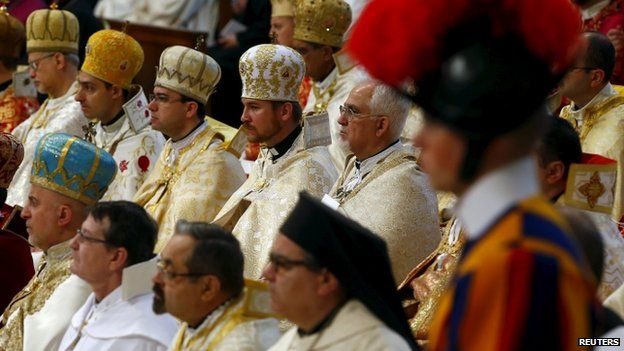
Members of the Armenian clergy at the ceremony - 12 April
Many members of the Armenian clergy were at the ceremony
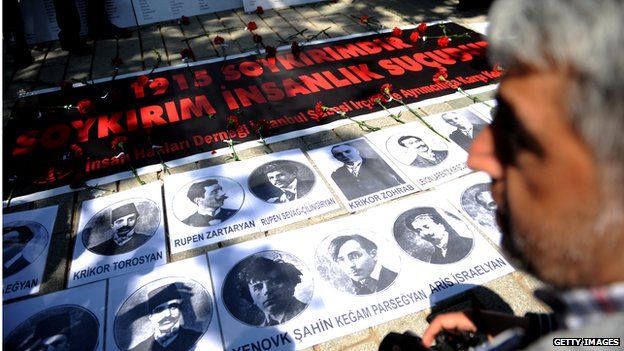
A person looks at portraits and a sign reading "1915 is a Genocide. Genocide is a crimes against humanity" during a demonstration on 24 April 2013 in Istanbul
Turkey rejects the use of the term "genocide" to describe the 1915 mass killings of Armenians

Turkey said it summoned the Vatican's ambassador to Ankara, Archbishop Antonino Lucibello, to seek an explanation over the comments.
The foreign ministry said it felt "great disappointment and sadness" at the Pope's remarks, which it said would cause a "problem of trust" between them.
"The Pope's statement, which is far from the legal and historical reality, cannot be accepted," tweeted Turkey's Foreign Minister Mevlut Cavusoglu.
"Religious authorities are not the places to incite resentment and hatred with baseless allegations," he added.

line
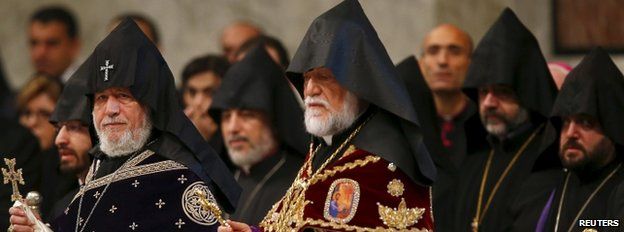
Armenian clergy at the ceremony in St Peter's Rome - 12 April

Analysis: David Willey, BBC News, Rome

Pope Francis, who visited Turkey last year, would have been perfectly conscious that he would offend the moderate Muslim country by his use of the word "genocide".
But the Pope's powerful phrase "concealing or denying evil is like allowing a wound to bleed without bandaging it" extended his condemnation to all other, more recent, mass killings.
It now remains to be seen how far his remarks will impact upon the Vatican's future relations with moderate Muslim states. It was a bold decision but totally coherent with Pope Francis' philosophy of open discussion about moral arguments.
Pope Francis' focus today on Armenia, the first country to adopt Christianity as its state religion, even before the conversion of the Roman Emperor Constantine, serves as yet another reminder of the Catholic Church's widely spread roots in Eastern Europe and the Middle East.

line

'Political conflict'

In 2014, for the first time, Turkish PM Recep Tayyip Erdogan offered condolences to the grandchildren of all the Armenians who lost their lives.
But he also said that it was inadmissible for Armenia to turn the issue "into a matter of political conflict".
Armenia says up to 1.5 million people died in 1915-16 as the Ottoman empire split. Turkey has said the number of deaths was much smaller.
Most non-Turkish scholars of the events regard them as genocide. Among the other states which formally recognise them as genocide are Argentina, Belgium, Canada, France, Italy, Russia and Uruguay.
Turkey maintains that many of the dead were killed in clashes during World War I, and that ethnic Turks also suffered in the conflict.


11/04/2015

Kenya : le vice-président William Ruto vise le camp de réfugiés de Dadaab


 Au Kenya, le vice-président William Ruto relance le débat sur le camp de réfugiés de Dadaab : il a annoncé avoir demandé au Haut Commissariat de l'ONU de fermer le camp en mois de trois mois, un camp accueillant en effet plus de 300.000 réfugiés somaliens arrivés depuis 1991 et le début de la guerre civile en Somalie. Une déclaration choc. 

--

Mélissa Chemam pour Rfi

-- 

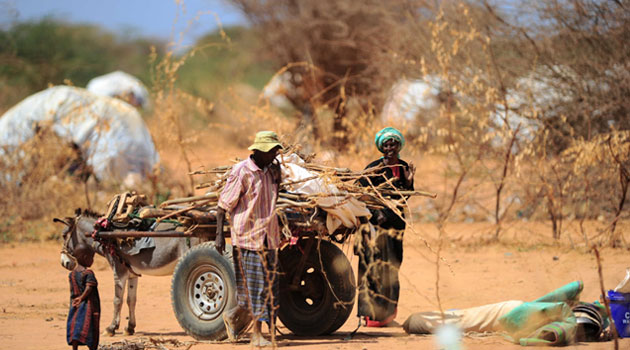
Dadaa, nord-est du Kenya, 2011
© Mélissa Chemam

Le vice-président kenyan a fait cette déclaration lors d'une adresse dans la ville de Nyeri cet après-midi, dans la province centrale du Kenya. Il a annoncé que le gouvernement kenyan a donné au Haut Commissariat aux Réfugiés de l'ONU (HCR) trois mois pour fermer le camp de Dadaab et déplacer les réfugiés. Il a mis en garde que sans action du HCR pour fermer le camp, les autorités kenyanes déplaceraient elles-mêmes les réfugiés.

Cette déclation de Willima Ruto intervient quelques jours après que des leaders de la région du nord-est du Kenya ont demandé la fermeture du camp de réfugiés, une demande déjà formulée en septembre 2013 après l'attaque du centre commercial de Westgate à Nairobi - qui avait fait 67 morts.

William Ruto a également comparé l'attaque de Garissa par les miliciens somaliens d'Al Chebab au 11 septembre 2001 à New York.

Il a appelé à un changement radical de politique sécuritaire en conséquence.

Ces dernières semaines, le Kenya a aussi lancé un projet de construction d'un mur le long de la frontière somalienne.


UN CAMP SATURE

Le camp de Dadaab accueille en effet plus de 335.000 réfugiés dont la plupart sont des Somaliens qui ont fui la guerre civile dans leur pays depuis 1991.

Mais pour les ONG travaillant avec la gestion des réfugiés dans la Corne de l'Afrique, cette demande est irréaliste et répond à des arguments populistes.
D'abord parce que le Kenya a signé les accords en matière de droits des réfugiés, et puis parce qu'un tel déplacement est pratiquement impossible, surtout en trois mois.

Pour Rufus Karanja, porte-parole du Comité Danois pour les Réfugiés, très présent à Dadaab, cette demande ne prend pas en compte la présence d'autres réfugiés dans ce camp, le 2e plus grand d'Afrique : dont des Éthiopiens, Sud Soudanais et Congolais. De plus, la situation même de la Somalie ne permet pas d'envisager le retour de réfugiés.

Enfin, les ONG de défense des droits de l'homme insistent sur le fait que le Kenya n'a jamais prouvé les liens entre la présence des réfugiés et les attaques terroristes, qui sera l'argument central de cette demande de clôture.

Le camp est cependant régulièrement attaqué par les chebabs qui y cherchent ravitaillement et y propagent leur propagande...

Le HCR n'a pour l'instant pas répondu.


KENYA / SOMALIA: Kenyan Deputy President claims he wants to send Somali refugees back


Insane idea. Half a million Somalian refugees live in Kenya...
Read more:

SATURDAY, APRIL 11, 2015

DP William Ruto orders UN to close Dadaabs refugee camp in 3 months


Link to the Daily Nation: 


“We have asked the UNHCR to relocate the refugees in three months failure to which we shall relocate them ourselves,” he warned/XINHUA-File

Deputy President William Ruto has given the United Nations three months to close the Dadaab refugee camps failing which Kenya will forcefully return them to Somalia.
The Deputy President's comment comes days after leaders from north eastern Kenya called for the closure of refugee camps in the region and moving of their occupants to Somalia.
The leaders from three counties on Monday said the Dadaab camps should be shut down because it is where Al-Shabaab terrorists plan attacks.
Garissa Township MP Aden Duale and more than 20 leaders from the region, who made a 12-point pledge to help fight terrorism, also promised to donate Sh15 million to survivors of the Garissa University College terrorist attack and families of those killed.
The attack left 148 people dead, including 142 students. Al-Shabaab claimed responsibility for it. It is the worst since the August 1998 US embassy bombing in Nairobi, in which 213 people were killed.


LATEST NEWS FROM KENYA


Just sharing:


Kenya criticised for closure of money transfer firms following Garissa attack

NGOs caution that revoking licences of remittance companies over fears they are linked to al-Shabaab will hit a vital lifeline for ordinary citizens


Friday 10 April 2015 

Garissa
Afraid of Rainbows

Washing the blood off the walls of a place of learning


Statistics released by Kenya’s anti terrorism unit cite an attack every eight days. They’ve counted 133 attacks and 264 people killed since the two-year military operation. Then there were the 274 casualties in the Nineties bombing of the US embassy in Nairobi. And going even further back, there was the bombing of the Norfolk hotel a decade earlier that left 20 dead. The number of Kenyans killed in this ever increasing brutality exceed 1 000. We commissioned one of the nation’s finest investigative journalists to give us insight into what is happening in a land once known for lazy safaris and spectacular sightseeing.

Text:

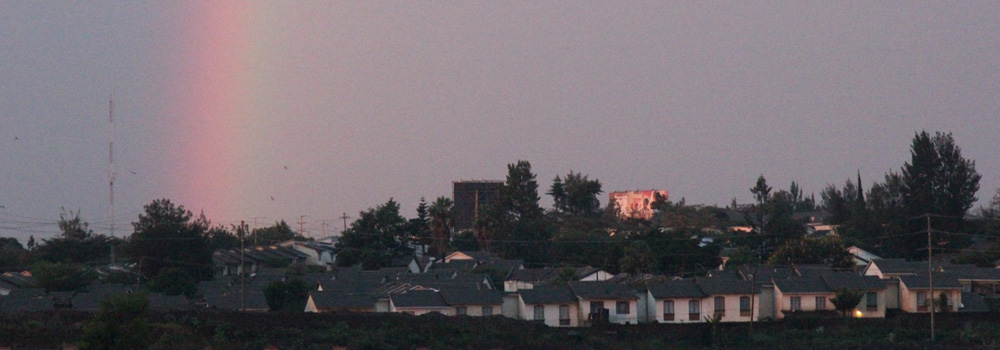
Just in from a reggae DJ gig at a Nairobi club, I chanced upon this view of a rainbow over the Langata bypass. For us fishermen at the lake, it is a woeful sight. It signifies the end of the rains and the onset of a long spell of harsh sun. The dreaded season when fish stock disappears and competition mounts for dwindling supplies with neighbouring countries.
This contrast of beauty and hopelessness occupied my mind for a while. Then as I got closer to home my worries about the rainbow disappeared. From Garissa, a town where the Tana River flows forcefully from the Aberdare Mountains no matter the season, came news that shook me. Shook the world.
Al-Shabab gunmen, the reports said, had cornered 700 learners in a dawn attack on April 2nd. They were killing mostly non-Muslim students at Garissa University, about 200 kilometres away from our border with Somalia the home country of Al-Shabab.
The news flowed in torrents. I glimpsed at the sky again and saw the rainbow had vanished. Perhaps it was mindful that its novel beauty could no longer linger in the face of such ugly, such incomprehensible happenings.

A Wounded Nation

At the end of the day-long ordeal the attackers, four of whom were killed, had left a trail of 148 people murdered. Close to 100 were in a critical condition.
The nation too is deeply wounded.
The gunmen, one of them described as a law graduate and son of a local government security official, demanded that the October 2011 invasion and occupation of parts of Somalia by the Kenya Defence Forces (KDF) must end.
In his immediate reaction to the Garissa killings, our President Uhuru Kenyatta controversially ordered that more than 10 000 recruits, rejected by the Supreme Court due to a corrupt hiring process, had to report to the police training school as soon as possible.
The KDF followed up a couple of days later with an air raid inside Somalia.
“We bombed two Shabab camps in the Gedo region. The two targets were hit and taken out, the two camps are destroyed,” army spokesman David Obonyo announced.
In the aftermath Kenyans struggled to comprehend what had happened. And we began to question. On social media, inside public transport, in local pubs… Wherever I went, the same questions. Why did it take eight hours for anti-terror officers to arrive and eventually engage the killers?
Eight hours is the time it takes to fly from Nairobi to Johannesburg, enjoy an hour-and-a-half in the Rainbow nation and then return to Nairobi.
Many commentators agree that we have not learnt important lessons from the shocking Westgate terror attack in 2013 that left more than 60 people of different nationalities dead.

Security Buffer Zone

Corruption in government and within the forces has been blamed for the string of terrorist attacks that has befallen this country since the KDF trundled into Somalia ostensibly to pin down Al-Shabab far away from Kenyan borders.
Six years ago, security agencies together with the Somali Transitional Government and with the backing of the Intergovernmental Authority on Development (IGAD) embarked on a recruitment and training process of Somali fighters. Their aim was to confront Al-Shabab and create a security buffer zone between the border of Kenya and the Jubaland border region.
A parliamentary committee set up to study the process discovered that local politicians and government security officials had corruptly secured recruitment slots for their kin who were to be paid a handsome sum of up to US $1 000 (R 11 820) a month to join forces with the Transitional Authority Government (TFG) in its bid to crush Al-Shabab, particularly in the Kenyan border region.
According to a report last June in the Daily Nation retired KDF major and security expert, Mr Bashir Abdullaiah, was quoted saying that the plan, though noble, was bound to fail from the start.
“The plan was good. Train Somali youths and not Kenyans to create a buffer zone between Kenya and Somalia. However, it was infiltrated by Kenyans who received this training and later filtered back into the population and back to their families. Kenya should have handled it the way Ethiopia did to the ones they trained. Put them under the command of their military so that you can monitor them long after the war. These people are today roaming and killing people in parts of Kenya,” said retired Major Bashir.
Local chiefs among other members in the security chain were involved in recommending recruits for the training. Most of the recruits hailed from Garissa, notably among them is the mastermind of the Garissa attack, Mohamed Mohamud. A bounty of 20 million Kenyan Shillings (R 2,56-million) has been placed on his head.
Mohamud, a teacher at a madressa in Garissa, worked with the KDF as a commander in the southern Somali Ras Kamboni militia under the warlord Ahmed Madobe, a former Islamist commander-turned-Kenyan ally. 

A Plan Gone Wrong

Due to poor planning and monitoring, most of the 3,000 trainees were left to their own designs and did not remain border patrols as planned. Many of them being Kenyans who returned home.
Revelations that one of the Garissa attackers was a university law graduate and son of a local chief debunked the myth that Al-Shabab terror recruits are wild-eyed, unemployed youth in Somalia. Or that they are Somali refugees found in the Kenyan camps and urban settlements such as the sprawling Eastleigh estate, referred to locally as “Little Mogadishu”.
A commentator on Facebook attracted a lot of applause when he posted:
“While Al shabaab are busy recruiting graduates of law, our security systems recruit tall, D+ materials with 32 teeth as if they are going for a biting contest.”
The order to recruit security forces formerly dismissed by the court has caused division among Kenyans. We are split between those who support a bigger police force and those who believe the president has subverted the law by admitting, “corrupt” offers into the force.

Corruption To Blame?

“He has announced he will ignore a court order on recruitment of 10 000 new police officers, halted because of corruption. By ordering their illegal recruitment, he is undermining his own anti-corruption crusade! And it makes our efforts to combat terrorism harder. For if people pay to become police officers and soldiers, how can they then take the necessary risks to combat terrorism or corruption?” writes commentator and activist Maina Kiai in the Daily Nation.
It is corruption that has allowed terrorism to spread so effectively throughout Kenya. This helps to explain our insecurity despite having one of the most formidable militaries in the region. Kenya, according to the Stockholm International Peace Research Institute (SIPRI), is among the top spenders in military budgets purchasing 19.8 billion Kenyan shillings worth of advanced weapons from 2010 to 2014, up from 919.4 million Kenyan shillings between 2005 and 2009.
“Entrenched corruption in the security system allows Al-Shabaab to move freely in and out of Kenya and carry out such attacks with ease,” said civil rights activist Boniface Mwangi in wire reports.
Arms caches are also abundant in Garissa and other towns along the border that has rightly earned the title of ‘porous’. Cashing in on corruption very effectively, the combatants managed to transport their arms to the capital city, the border towns of Garissa and other areas. Kenya has become an easy market for access to illegal arms.
I am very scared. I fear looking up. I don’t want to see rainbows. I don’t want to look down…. At the newspaper in front of me. I am afraid of even more terrible headlines that could emanate from just about anywhere in this once peaceful country.
I think of the Tana river running red with the mud of the last of the rainy season and I weep for a town that will never ever wash all of the blood from the walls of a place of learning.
Argwings Odera is a Freelance Investigative Journalist based in Nairobi Kenya. In recent times his life was threatened because of his critical coverage of a dam project in western Kenya. A local resident himself, Odera saw many faults in the Sondu Miriu Dam project that the mainstream media had missed.
--
More soon.


Mali : Il n'y aura pas de paraphe d'accord à Alger le 15 avril prochain


Mon dernier papier pour RFI et Rfi.fr :

MALI  ALGÉRIE  MNLA

Nord du Mali: la CMA ne paraphera pas le projet d’accord de paix

mediaLe médiateur algérien Ramtane Lamamra avec le secrétaire général du MNLA, Bilal Ag Acherif, le 1er mars 2015.AFP PHOTO / FAROUK BATICHE
Selon le MNLA, la Coordination des mouvements de l'Azawad (CMA) ne va finalement pas parapher le projet d'accord de paix. L'Algérie invitait pourtant depuis plusieurs jours toutes les parties du dialogue inter-malien à une cérémonie prévue pour parapher l'accord le 15 avril à Alger, affirmant que la CMA « avait notifié sa décision de procéder au paraphe de l'accord ».

Dans une lettre envoyée jeudi à tous les protagonistes du dialogue malien, le médiateur algérien Ramtane Lamamra invitait toutes les parties à être présentes le 15 avril. Il affirmait que la Coordination des mouvements de l’Azawad serait présente pour cette cérémonie symbolique de paraphe de l'accord.
Pourtant, le porte-parole du MNLA, le Mouvement de libération de l'Azawad, affirme désormais que les amendements émis par la CMA n'ont pas été pris en compte et que toutes les parties membres de la Coordination sont d'accord pour ne pas signer : « Nous confirmons que les mouvements réunis au sein de la Coordination des mouvements de l’Azawad, la CMA, ont décidé suite à de larges consultations et des échanges de ne pas parapher les documents dits "Accord pour la paix et la réconciliation au Mali", indique Moussa Ag Attaher.Le point crucial qui constitue l’épine dorsale des aspirations légitimes du pays de l’Azawad, c’est la réalité du statut politique et juridique de l’Azawad, et ce statut est complètement ignoré dans les documents, alors que ce statut politique demeure le nerf de notre lutte et de notre combat depuis toujours. »
Dans son courrier, le ministre algérien indiquait que la cérémonie de paraphe serait l'occasion d'ouvrir de « nouvelles consultations informelles de courte durée pour clarifier et arrêter la méthodologie » en vue de la signature et de la mise en œuvre de l'accord de paix.
Le gouvernement malien ainsi que des groupes proches de Bamako ont déjà paraphé ce texte le 1er mars dernier. Les autres membres de la Coordination ne se sont pour l'instant pas exprimés officiellement. Mais selon le MNLA, celle-ci reste unie et demande la poursuite des discussions.

--

Le communiqué du MNLA diffusé hier soir sur leur site :

La CMA déclare ne pas pouvoir parapher l'accord en son état actuel

 10 Avr 2015


Coordination des Mouvements de l’Azawad
Communiqué de Presse

La Coordination des Mouvements de l’Azawad  / CMA informe l’opinion nationale de l’Azawad et l’opinion internationale qu’en réponse à sa lettre du 04 avril 2015 le chef de file de la Médiation, par lettre officielle en date du 06 Avril 2015,  l’a informée de l’organisation du paraphe, le 15 Avril 2015 à Alger, de  « l’accord pour la paix et la réconciliation au Mali ». 
La CMA, tout en réaffirmant sa disponibilité à donner toutes les chances à l’aboutissement d’un paraphe, réitère, encore une fois, son attachement à la prise en compte des amendements qu’elle a remis à la mission internationale, le 17 mars 2015 à Kidal, amendements qui constituent l’essentiel des revendications de l’AZAWAD.
Par conséquent, la CMA, informe  qu’elle ne pourra pas parapher « l’accord pour la paix et la réconciliation au Mali » dans son état actuel et à la date indiquée.
La CMA  remercie vivement la médiation et particulièrement son chef de file pour les efforts inlassables déployés avec dextérité et dévouement depuis bientôt une année. En même temps elle réaffirme son ferme engagement à poursuivre le dialogue tout en sollicitant la médiation pour davantage d’efforts afin de prendre en compte les préoccupations issues de la volonté du Peuple de l’Azawad.

Fait à Nouakchott, le 10 Avril 2015
Pour  La commission de communication de la CMA
Mossa Ag Attaher


10/04/2015

"Take Me Back To Beautiful England"


PJ Harvey 

"The Last Living Rose"

(Let England Shake)


Goddamn' Europeans!
Take me back to beautiful England
& the grey, damp filthiness of ages,
fog rolling down behind the mountains,
& on the graveyards, and dead sea-captains.

Let me walk through the stinking alleys
to the music of drunken beatings,
past the Thames River, glistening like gold
hastily sold for nothing.

Let me watch night fall on the river,
the moon rise up and turn to silver,
the sky move,
the ocean shimmer,
the hedge shake,
the last living
rose quiver.


Bristols' graffiti - Early days


 Bristol, capital of graffiti.

Here's a reminder with two photographs taken by Beezer on Jamaica Street, near Stoke Croft in Saint Pauls' neighbourhood, Bristol's Caribbean hub then and now.

This is why I keep on coming back, Bristol. You had it all by then. You're still thriving today. Looking forward.


3D painting The Day The Law Died on Jamaica Street around 1984-85:


© Beezer


© Beezer


Arts in Bristol: "Gravitas" at Purifier House


Gravitas

Gravitas explored the continual and complex relationships between human and animal. The exhibition brought together large-scale, monochrome oil on canvas paintings by Abigail Reed and the life-sized fabric sculptures of Dorcas Casey.
Responding to the exhibition space, Antlers Gallery presented two female artists working in a large, bold manner in order to convey the power and weight of the animal form, in relation to human scale. In Abigail’s paintings the animals are bursting out of the canvases whilst Dorcas’ sculptures are awkwardly juxtaposed with seemingly fragile furniture. In both cases the animal subjects have a sense of stature but their relationship to human objects evokes an air of vulnerability.
Dorcas Casey uses a variety of materials including fabric, wire and found objects to create startling portrayals of animal forms.  Her sculptures are inspired by the recurring motifs of animals which appear in her dreams – the familiar and comforting is merged with the menacing and unsettling. Impeccably fabricated portrayals of stags, pigs, and bulls are awkwardly placed in direct opposition to delicate antique furniture; they are suspended between strength and collapse, evoking the ambiguity of dream-like imagery.
Surrounding these sculptures were Abigail Reed’s immense oil paintings of: bulls, stags and horses. Standing strong and powerful within the canvas these works are almost sculptural in themselves and vying for the viewers attention. Her painting style is free and fluid; nothing is fixed as the dripping and cracking of the paint reveals the accidental, volatile and vulnerable nature of the medium and in turn life. Abigail sees her paintings as representations of ‘other’, something non-human which puts us in our place and stills our anxieties.

Gravitas
21 March – 21 April 2014
Everyday 10am – 6pm
Purifier House (waterfront entrance), Lime Kiln Road, Bristol, BS1 5AD
Preview: Thursday 20 March, 6-9pm
Artist Talk: Wednesday 2 April, 6.30pm
Gravitas Feast – 11, 12, 13 April, 7 – 10pm – tickets- http://foodandtheatrecompany.bigcartel.com


--


Tunisie: le projet de loi sur la lutte contre le terrorisme inquiète à Tunis


Résumé de mon entretien diffusé ce matin sur RFI :

TUNISIEDROITS DE L’HOMMETERRORISME

Tunisie: un projet de lutte contre le terrorisme inquiète les ONG

mediaPoliciers tunisiens à l'entrée du musée du Bardo, à Tunis, le 19 mars.REUTERS/Anis Mili

En Tunisie, le nouveau projet de loi de lutte antiterroriste du gouvernement tunisien inquiète les ONG de défense des droits humains. Le projet de loi de 2014 avait été mis de côté au moment des élections générales. Depuis l'attentat contre le musée du Bardo, les parlementaires entendent mener à bien un nouveau projet de loi pour renforcer la lutte antiterroriste.

Pour Human Rights Watch, ce texte autoriserait la garde à vue prolongée et affaiblirait les garanties judiciaires des personnes inculpées d’acte terroriste. Il lèverait également le moratoire sur la peine de mort, comme s’en inquiète Amna Guellali, chercheuse pour l'ONG à Tunis : « En Tunisie, il y a un moratoire sur la peine de mort. Donc les juges peuvent condamner les personnes à une peine de mort, mais cette peine n’est pas exécutée. Ce moratoire existe depuis 1991. Donc ici, la réintroduction de la peine de mort dans le nouveau projet peut donner lieu effectivement à une application de ces peines. Et ça peut représenter un recul par rapport à ce qui existait avant en Tunisie ».
Pour Amna Guellali, il est important que le Parlement garde à l'esprit que le débat sur le projet de loi doit rester rationnel et ne doit pas être influencé par l'émotion engendrée par les attentats : « Il est très important que le Parlement examine sereinement cette nouvelle loi et qu’il ne prenne pas des décisions hâtives, dictées par des questions politiques ou par la réactivité par rapport à l’événement parce que cela, finalement, ne serait que contreproductif et ne ferait qu’affaiblir encore plus la possibilité pour le système de lutter contre le crime terroriste ».

 
  • Tunisie