12/08/2015

PROJET ADANA: Projet d'aide aux enfants réfugiés syriens d'Adana (Turquie)


Permettre aux réfugiés syriens d'Adana (Turquie) d'accéder à l'éducation


Photo: association Projet Adana


Liens :

Le site: http://projetadana.wix.com/adana#!home/mainPage

Nous voulons effectuer une enquête qualitative et un recensement exhaustif des acteurs associatifs à Adana, en Turquie, qui mettent en place des projets de scolarisation pour les enfants réfugiés syriens. Nos résultats seront présentés sur notre site web, sous forme de cartographie interactive. Il est primordial que les initiatives des acteurs locaux soient connues, et que ces acteurs se connaissent entre eux, afin d’améliorer l’offre d’éducation aux enfants réfugiés.

Nous devrons ensuite garantir la diffusion de nos résultats, afin d’impulser des référencements similaires sur d’autres terrains.

Ainsi  nous  voulons contribuer à un meilleur ciblage et une meilleure mise en oeuvre de projets de scolarité.

Objectifs :

  • Cartographier les acteurs associatifs d’Adana grâce à un recensement et une analyse qualitative qui sera un apport pour les acteurs locaux.
  • Restituer notre projet sous forme d’un cycle d’événements d’informations et de débats organisé en collaboration avec des associations étudiantes et avec la participation de nos partenaires.
  • Diffuser et promouvoir nos résultats auprès d’associations, d’universités, et de collectivités locales, afin d’impulser un référencement sur d’autres terrains.


Actions :

Notre projet s’adresse à des associations locales, et internationales, qui mettent en oeuvre des projets de solidarités internationales. Plus précisément, il s’adresse directement aux acteurs qui cherchent à pallier aux manque d’accès à l’éducation des réfugiés syriens en Turquie.

Il s’adresse indirectement aux réfugiés syriens d'Adana, car ce sont eux les bénéficiaires finaux de notre projet, puisque nous voulons impulser de la coordination et de la coopération dans l’offre éducative.
Cependant notre projet s’adresse également à la population francilienne. Nous voulons tenir un cycle de conférences pour les étudiants de Paris 1 - Panthéon-Sorbonne, car les problématiques adressées par notre projet intéresse et mobilisent beaucoup la communauté étudiante.

Notre projet mettra à disposition une ressource afin de permettre aux associations de créer des partenariats et d’être plus efficientes dans leurs actions.

Nos résultats seront présentés sous forme de carte interactive, notre souhait est que cette ressource puisse être enrichie et appropriée par d’autres groupes étudiants, afin d’être élargie à d’autres territoires.

En effet, notre projet est un laboratoire pour des projets similaires qui peuvent avoir lieu sur plusieurs terrains. L’objectif final, la mise en réseau des initiatives d’éducations pour les réfugiés syriens, pourra être atteint si notre projet est mené à bien et dans les meilleurs conditions possibles, et qu’il incite des projets similaires sur d’autres terrains.

--

Infos supplémentaires sur la Syrie :

Ce qui s'apparente à la "plus grande catastrophe humanitaire du siècle" (Joseph O’Rourke) s'accentue depuis mars 2011 et a entamé sa cinquième année.

Les espoirs d'un avenir politique différent avortés par une crise sans précédents qui a fait  plus de 200 000 morts et près d'un million de blessés dans ce pays de 22 millions d'habitants ont laissé place à des conditions de vie extrêmement précaires et dangereuses, obligeant une grande partie de la population à migrer. Des régions entières se retrouvent sans électricité,  services sanitaires,  assainissement ou encore nourriture suffisante (Education for syrian refugees : the failure of second-gneration human rights during extraordinary crises, Joseph O’Rourke, 2015). Des millions de personnes ont été contraintes de se déplacer. Selon l'UNHCR, plus d'un syrien sur deux a été forcé de quitter son foyer, souvent à plusieurs reprises. En 2015, ces chiffres pharamineux continuent de s'accentuer et les départs de se multiplier (Overview : 2015 - Syria Response Plan and 2015-5016 regional refugee and resilience plan, 2015)

Le flux de réfugiés émanants de Syrie a dépassé toutes les prédictions et force est de constater qu'une pression de plus en plus importante pèse sur les pays d'accueil,  les agences de l'ONU, les gouvernements ou encore les ONG, entraînant des tensions sociales, économiques et politiques importante que l'aide internationale n'a pas su pallier. 

Les enfants sot parmi les plus touchés par le conflit syrien. Des centaines de milliers ont fui le pays et sont confrontés à des défis majeurs, notamment concernant leur éducation. 

Les conditions de vie précaires des réfugiés hors camps, vivant souvent dans des logements informels et gagnant jusqu'à trois fois moins que les turcs à emploi égal, associé à une crise qu'il faut envisager sur des décennies forcent à appréhender le développement des conditions de vie de ces populations sur du long terme et en favorisant leur intégration dans la société d'accueil.  L'éducation est un moyen incontournable pour reconstruire la vie des enfants à travers un quotidien sûr et durable, mais aussi l'avenir d'un pays, nécessitant une génération alerte sur les besoins, les problématiques mondiales et régionales, et innovante sur la manière d'envisager les solutions. Pour Kevin Watkins, "nowhere is a greater level of ambition more urgently required than in education"  (Education without borders : a report from Lebanon on Syria’s out of school children, Kevin Watkins, 2013)


Nous aider


Participer à notre projet est extrêmement facile et nous ne demandons pas d'aide financière.

  • Vous pouvez nous aider en montant des projets de partenariat, en continuant ce projet, en participant à notre cycle de conférences ... 
  • Vous pouvez nous aider à informer et sensibiliser sur l'éducation des réfugiés syriens en nous donnant accès à des espaces de communication.
  • Vous pouvez enfin nous donner accès bénévolement aux services suivants, : impression, traduction, logistique pour des conférences ...

N'hésitez pas à nous contacter !

--

English version:

Enabling syrian refugees in Adana (Turkey) to access an education

http://projetadana.wix.com/adana#!accueil-2/c1fi1


We want to conduct a qualitative and thorough survey of the associative sector in Adana, Turkey, active in education provision for syrian refugee children.  Our results will be presented on our website, as an interactive map. It is essential that the initiatives of local actors be known, and that those actors come to know each other, in order to improve educational opportunities.

We must then share and spread our results to motivate similar surveys in other areas.

We want to contribute to a better targeting and implementation of educational projects.


Objectives:

  • Map  the associative actors in Adana through a survey and a qualitative analysis that should help local actors.
  • Restore our project through a series of informative events for students, and of debates organised with other student association or our partners.
  • Disseminate and promote our results to associations, universities, and local administrations, in order to encourage similar surveys in other areas.


Our project is aimed at local and international groups implementing development and international solidarity projects. Specifically, it is aimed directly at actors that seek to correct the  difficulties of access to education for syrian refugees in Turkey.

It is indirectly aimed at the refugees of Adana, who are the final beneficiaries of our project, as we want to impulse more cooperation and coordination in the offer of education.

However, our project will also engage the population living in the Ile-de-France region (Paris and the neighbouring areas). Indeed we want to organise conferences for the students of our university Paris 1 - Panthéon-Sorbonne, as the issues touched upon by our project are of interest to the student community.

You can easily help us and participate in our project and we ask for no financial support.

  • you can help us by partnering up with us, by continuing our project, by coming to our events… 
  • You can help us inform and bring awareness on education opportunities for syrian refugees and by providing us with some communication space.
  • You can also volunteer to help with the following: printing, translation, logistics for events…


Do not hesitate to contact us !


--

Sur Twitter:


Projet Adana

@Projetadana FOLLOWS YOU

Deux étudiantes - Two students / Améliorer l'accès à l'éducation des réfugiés syriens à Adana en Turquie / Départ : septembre 2015 English / Français / Türkçe


--


Between Black and White...


 Writing about the video Baillie Walsh realised for Massive Attack's 'Daydreaming' and 'Unfinished Sympathy, here is a little comparison of the main videos that occupied our TV in 1990 and 91.

They surprisingly all evolve around the theme of black- and white-ness.

Here are they in chronological order:


Madonna, 'Vogue', March 1990


Massive Attack, 'Daydreaming', Octobre 1990


Massive Attack, 'Unfinished Sympathy', February 1991


Michael Jackson, 'Black Or White', November 1991


Enjoy.

11/08/2015

MUST READ ARTICLE ABOUT MIGRANTS REACHING EUROPE


In The Guardian:

10 truths about Europe’s migrant crisis

British ministers including Theresa May and Philip Hammond have made hair-raising claims about the dangers of migrants entering the country. But do the facts bear them out?

link: http://www.theguardian.com/uk-news/2015/aug/10/10-truths-about-europes-refugee-crisis

-

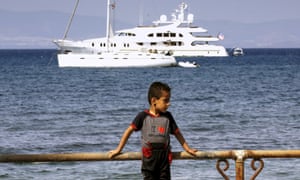
A young Syrian refugee in the Greek island of Kos.

 A young Syrian refugee in the Greek island of Kos. Photograph: YANNIS BEHRAKIS/REUTERS

When you’re facing the world’s biggest refugee crisis since the second world war, it helps to have a sober debate about how to respond. But to do that, you need facts and data – two things that the British migration debate has lacked this summer. Theresa May got the ball rolling in May, when she claimed on Radio 4 that the vast majority of migrants to Europe are Africans travelling for economic reasons. The media has followed suit, one example being the Daily Mail’s unsubstantiated recent assertion that seven in 10 migrants at Calais will reach the UK.
Foreign secretary Philip Hammond this week not only repeated May’s claimsabout African economic migrants, but portrayed them as marauders who would soon hasten the collapse of European civilisation. Hammond, like many people, could do with some actual statistics about the migration crisis. Here are 10 of the key ones:

62%

Far from being propelled by economic migrants, this crisis is mostly about refugees. The assumption by the likes of Hammond, May and others is that the majority of those trying to reach Europe are fleeing poverty, which is not considered by the international community as a good enough reason to move to another country. Whereas in fact, by the end of July, 62% of those who had reached Europe by boat this year were from Syria, Eritrea and Afghanistan, according to figures compiled by the UN. These are countries torn apart by war, dictatorial oppression, and religious extremism – and, in Syria’s case, all three. Their citizens almost always have the legal right to refuge in Europe. And if you add to the mix those coming from Darfur, Iraq, Somalia, and some parts of Nigeria – then the total proportion of migrants likely to qualify for asylum rises to well over 70%.

1%

If you read the British press, you’d think that Calais was the major battleground of the European migrant crisis, and that Britain was the holy grail of its protagonists. In reality, the migrants at Calais account for as little as 1% of those who have arrived in Europe so far this year. Estimates suggest that between 2,000-5,000 migrants have reached Calais, which is between 1% and 2.5% of the more than 200,000 who have landed in Italy and Greece. Just as importantly, there is no evidence to suggest that as many as seven in 10 have reached Britain after arriving in Calais. The Daily Mail admitted this several paragraphs into its article.

0.027%

Hammond said that the migrants would speed the collapse of the European social order. In reality, the number of migrants to have arrived so far this year (200,000) is so minuscule that it constitutes just 0.027% of Europe’s total population of 740 million. The world’s wealthiest continent can easily handle such a comparatively small influx.

1.2 million

There are countries with social infrastructure at breaking point because of the refugee crisis – but they aren’t in Europe. The most obvious example is Lebanon, which houses 1.2 million Syrian refugees within a total population of roughly 4.5 million. To put that in context, a country that is more than 100 times smaller than the EU has already taken in more than 50 times as many refugees as the EU will even consider resettling in the future. Lebanon has a refugee crisis. Europe – and, in particular, Britain – does not.

£36.95

Many claim that Britain is a coveted destination for migrants because of its generous benefits system. Aside from the reality that most migrants have little prior knowledge of the exact nature of each European country’s asylum system, it is not true that the UK is particularly beneficent. Each asylum seeker in Britain gets a meagre £36.95 to live on (and they are not usually allowed to work to supplement this sum). In France, whose policies are supposedly driving up the numbers at Calais, migrants actually receive substantially more. According to the Asylum Information Database, asylum seekers in France receive up to £56.62 a week. Germany and Sweden – the two most popular migrant destinations – pay out £35.21 and £36.84 a week respectively, only fractionally less than Britain.

50%

In the dog-whistle rhetoric of Hammond and Theresa May, the archetypal contemporary migrant in Europe is from Africa. But again, that’s not true. This year, according to UN figures, 50% alone are from two non-African countries: Syria (38%) and Afghanistan (12%). When migrants from Pakistan, Iraq and Iran are added into the equation, it becomes clear that the number of African migrants is significantly less than half. Even so, as discussed above, many of them – especially those from Eritrea, Darfur, and Somalia – have legitimate claims to refugee status.

4%

Last autumn, the EU opted to suspend full-scale maritime rescue operations in the Mediterranean in the belief that their presence was encouraging more migrants to risk the sea journey from Libya to Europe. In reality, people kept on coming. In fact, there was a 4% year-on-year increase during the months that the rescue missions were on hiatus. Over 27,800 tried the journey in 2015, or died in the attempt, until operations were reinstated in May, according to figures from the International Organisation for Migration. Only 26,740 tried it in 2014. The disparity suggests that migrants were either unaware of the rescue operations in the first place, or simply unbothered by their suspension – a thesis borne out by my own interviews. “I don’t think that even if they decided to bomb migrant boats it would change peoples’ decision to go,” said Abu Jana, a Syrian I met as he was planning to make the sea voyage earlier this year.

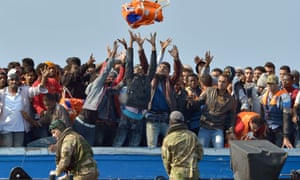
Royal Marines with migrants rescued off the Libyan coast in June.
TwittPinterest
 Royal Marines with migrants rescued off the Libyan coast in June. Photograph: Rowan Griffiths/Daily Mirror/PA

25,870

Contrary to the perception of the UK as the high altar of immigration, it is not a particularly major magnet for refugees. In 2014, just 25,870 people sought asylum in the UK, and only 10,050 were accepted. Germany (97275), France (68500), Sweden (39,905) and Italy (35,180) were all far more affected. When the ratings are calculated as a proportion to population size, the UK slips even further down the table – behind Belgium, Holland and Austria. If the ratings were calculated on 2015 rates, then even impoverished Greece would rise above the UK in the table. Just as tellingly, the UK has welcomed just 187 Syrians through legal mechanisms at the last count. Turkey has around 1.6 million.

€11bn

Hammond and David Cameron argue that the solution to migration is to increase deportations. They believe this will save Britain money, as less cash will be spent on paying each asylum seeker £36.95 per week. However, this strategy ignores the cost of deportations – whose alleged financial cost could rival that of the asylum seekers’ benefits bill. According to a series of investigations by the websiteThe Migrant Files, as many as €11bn have been spent on repatriating migrants to their countries of origin since 2000. A further billion has been blown on Europe-wide coordination efforts to secure European borders – money that could have been spent on integrating migrants into European society.

-76,439

Despite the hysteria, the number of refugees in the UK has actually fallen by 76,439 since 2011. That’s according to Britain’s Refugee Council, which crunched the numbers gleaned from UN data and found that the number of refugees in the UK fell from 193,600 to 117,161 in the past four years. By comparison, the proportion of refugees housed by developing countries in the past 10 years has risen, according to the UN, from 70% to 86%. Britain could be doing far more.


More Love and More of Bristol


Cigar Box Sessions: Lady Nade - '6am'


--

Our second track from Lady Nade is '6am' and it's one hell of a beautiful song.

Watch the more session tracks here: https://goo.gl/eVrggC 

Cigar Box Sessions: Lady Nade - 6am
http://www.ladynade.co.uk/

Director: Paul Stevenson
Camera: Joe Norledge, Paul Stevenson

Edit: Chris Urmston
Sound: TTW Audio Design
Graphic Design: Tom Lee Motion Design

Produced by visual hybrid
http://visualhybrid.co.uk/

Filmed at Drummond & Hammett Guitars, Easton, Bristol
http://www.drummondandhammett.com/

Special thanks to Lady Nade & Grillstock Smokehouses
http://www.ladynade.co.uk/
http://grillstock.co.uk/


10/08/2015

My love for Bristol in a poet's words


 This year I fell in love. Profoundly and meaningfully. With a city.
And as it is indeed a special place, I wasn't the first one falling.
Among others, the most significant is maybe English poet John Betjeman.

Sir John Betjeman famously described Bristol as "the most beautiful, interesting and distinguished city in England".

Of course, having passed away in 1984, he didn't get to know all the reasons why I came to love Bristol so deeply. But the words still are beautiful...

Here is his famous poem about the city.


Poem: Bristol by John Betjeman

Bristol waterside
"The flooded Avon shone..." Image: Julian Eley


Green upon the flooded Avon shone the after-storm-wet-sky
Quick the struggling withy branches let the leaves of autumn fly
And a star shone over Bristol, wonderfully far and high.
Ringers in an oil-lit belfry - Bitton? Kelston? who shall say? -
Smoothly practicing a plain course, caverned out the dying day
As their melancholy music flooded up and ebbed away,
Then all Somerset was around me and I saw the clippers ride,
High above the moonlit houses, triple-masted on the tide,
By the tall embattled church-towers of Bristol waterside.
And an undersong to branches dripping into pools and wells
Out of multitudes of elm trees over leagues of hill and dells
Was the mathematic pattern of a plain course on the bells.

Link: http://news.bbc.co.uk/local/bristol/hi/people_and_places/arts_and_culture/newsid_8118000/8118365.stm
--

And you listen to him talk about Bath and Bristol in this video:


--

Another poem, by Cathy Keal:

THE DOWNS
by Cathy Keal

Bristol, I've loved a lot of Dogs in my life, a sad excuse to get away and dream.
In the middle of the Downs, you rush to mind.
Bristol, you with your open space, your theatre of light.
Your poet's heart, art on feet on hillsides.
You with your river reed skies, and sun kissed chestnut trees.
The bees, the ritual calling of the breeze as the kite flies.

--


07/08/2015

3D and the Art of Massive Attack – in pictures in The Guardian


3D and the Art of Massive Attack – in pictures

This month, the Vinyl Factory publishes 3D and the Art of Massive Attack – a book that documents the visual history of the Bristol band. Here, Robert del Naja, aka 3D, explains the story behind some of the books best images

--

Link:
http://www.theguardian.com/music/gallery/2015/aug/07/3d-and-the-art-of-massive-attack-in-pictures

--


“This was taken on the set of the documentary Bombin’ (1987) - just a snapshot I took. It shows a very young Goldie, along with Brim and Bio from Tats graffiti crew in New York. I originally met Goldie and those guys at the Arnolfini gallery, when we were both spray painting and not making music yet.”

--


“These visuals were made for Massive Attack’s 100th Window Tour in 2003. It’s the first collaborative work I did with United Visual Artists. I wanted to produce a more kinetic show - using a pure LED format, to transmit data, pixel for pixel. Politically speaking, the visuals reflected what was happening around us at that time. It was the start of second Gulf War and I’d been very involved in the anti-war demonstration. Our tour began as the invasion started. The visuals acted as a reflection of the world and were updated in local language and used geo specific media.”

--


“This one’s called ‘Believer’ and is part of the Heligoland series I painted for the album. I like to make groups of paintings and flip the colours of some of them, like painting in negative. I painted 30 or 40 pieces for Heligoland. Some were sketches, not complete works, and some I deliberately left unfinished. They eventually became a collection that worked as a bigger idea. Like a series of songs for an album.”

--


“This is another image from the Heligoland album. I was trying to paint in lurid, bright colours for this series. Taking quite obnoxious, dark imagery and making it day-glo. I remember this from when I was buying antagonistic punk music, which was always pressed onto to this brightly coloured vinyl. Angry music with really bright colours. Provocative and ugly images painted in a bright garish way, with a theme of bad cultural stereotypes.”

--

And much more here:
http://www.theguardian.com/music/gallery/2015/aug/07/3d-and-the-art-of-massive-attack-in-pictures


Le monde d'après 1945


EDITORIAL DE « COMBAT », ALBERT CAMUS, 8 août 1945


Le monde est ce qu'il est, c'est-à-dire peu de chose. C'est ce que chacun sait depuis hier grâce au formidable concert que la radio, les journaux et les agences d'information viennent de déclencher au sujet de la bombe atomique. On nous apprend, en effet, au milieu d'une foule de commentaires enthousiastes que n'importe quelle ville d'importance moyenne peut être totalement rasée par une bombe de la grosseur d'un ballon de football. Des journaux américains, anglais et français se répandent en dissertations élégantes sur l'avenir, le passé, les inventeurs, le coût, la vocation pacifique et les effets guerriers, les conséquences politiques et même le caractère indépendant de la bombe atomique. Nous nous résumerons en une phrase : la civilisation mécanique vient de parvenir à son dernier degré de sauvagerie. Il va falloir choisir, dans un avenir plus ou moins proche, entre le suicide collectif ou l'utilisation intelligente des conquêtes scientifiques. 

En attendant, il est permis de penser qu'il y a quelque indécence à célébrer ainsi une découverte, qui se met d'abord au service de la plus formidable rage de destruction dont l'homme ait fait preuve depuis des siècles. Que dans un monde livré à tous les déchirements de la violence, incapable d'aucun contrôle, indifférent à la justice et au simple bonheur des hommes, la science se consacre au meurtre organisé, personne sans doute, à moins d'idéalisme impénitent, ne songera à s'en étonner. 


Les découvertes doivent être enregistrées, commentées selon ce qu'elles sont, annoncées au monde pour que l'homme ait une juste idée de son destin. Mais entourer ces terribles révélations d'une littérature pittoresque ou humoristique, c'est ce qui n'est pas supportable.
Déjà, on ne respirait pas facilement dans un monde torturé. Voici qu'une angoisse nouvelle nous est proposée, qui a toutes les chances d'être définitive. On offre sans doute à l'humanité sa dernière chance. Et ce peut-être après tout le prétexte d'une édition spéciale. Mais ce devrait être plus sûrement le sujet de quelques réflexions et de beaucoup de silence. 


Au reste, il est d'autres raisons d'accueillir avec réserve le roman d'anticipation que les journaux nous proposent. Quand on voit le rédacteur diplomatique de l'Agence Reuter* annoncer que cette invention rend caducs les traités ou périmées les décisions mêmes de Potsdam, remarquer qu'il est indifférent que les Russes soient à Koenigsberg ou la Turquie aux Dardanelles, on ne peut se défendre de supposer à ce beau concert des intentions assez étrangères au désintéressement scientifique. 


Qu'on nous entende bien. Si les Japonais capitulent après la destruction d'Hiroshima et par l'effet de l'intimidation, nous nous en réjouirons. Mais nous nous refusons à tirer d'une aussi grave nouvelle autre chose que la décision de plaider plus énergiquement encore en faveur d'une véritable société internationale, où les grandes puissances n'auront pas de droits supérieurs aux petites et aux moyennes nations, où la guerre, fléau devenu définitif par le seul effet de l'intelligence humaine, ne dépendra plus des appétits ou des doctrines de tel ou tel État. 


Devant les perspectives terrifiantes qui s'ouvrent à l'humanité, nous apercevons encore mieux que la paix est le seul combat qui vaille d'être mené. Ce n'est plus une prière, mais un ordre qui doit monter des peuples vers les gouvernements, l'ordre de choisir définitivement entre l'enfer et la raison.