07/01/2016

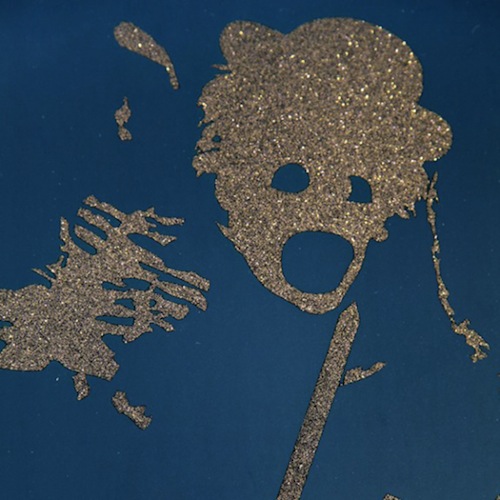
Calais: From Banksy's Steve Jobs to London Calling


An unknown person has added the words 'London Calling' in giant lettering over the top of the image - using the figure of Steve Jobs as the 'I':


--

Read more here :


Migrants deface Banksy artwork inside Calais jungle as SOLAR PANELS installed at camp

MIGRANTS have defaced a Bansky mural inside the Calais "jungle" camp, which has been fitted with solar panels.

04/01/2016

The Issue of Migration and the Art World


Interesting article.

Published in The Wall Street Journal last week. Link:

http://www.wsj.com/articles/in-europe-and-america-migrants-take-on-the-art-world-1451509444$


In Europe and America, Migrants Reach the Art World

Where to see the artists’ works


In Kader Attia’s installation “The Dead Sea,” a wave seems to have left behind a sinister cargo: jeans, sweaters and T-shirts, all in shades of blue and eerily empty, as if “the sea had rejected them,” the artist says. For many visitors, the work recalls the recent picture of a drowned Syrian boy and other images of refugees.

Though born in France, Mr. Attia, who also spent much of his childhood in Algeria, identifies with the Algerian teenagers he has photographed resting on huge concrete blocks and staring out at the Mediterranean. The installation and the photos above it form part of the exhibition “Streamlines: Oceans, Global Trade and Migration” at the Deichtorhallen, on view until March 13 in Hamburg, Germany.
The 45-year-old artist, now based in Berlin, is one of numerous contemporary artists delving into the highly charged issue of migration. “It’s one of the themes that are going to define the latter half of this century,” says London-based John Akomfrah, whose art often focuses on the subject. His 2015 video installation, “Vertigo Sea,” layers ethereal underwater scenes with shots of African migrants making ocean crossings. The three-screen piece, which made its debut at the Venice Biennale in May, will be at the Arnolfini gallery in Bristol, England from Jan. 16.
John Akomfrah's 'Vertigo Sea' (2015) which is a three-channel video installation with sound that runs 48 minutes. ENLARGE
John Akomfrah's 'Vertigo Sea' (2015) which is a three-channel video installation with sound that runs 48 minutes. PHOTO: SMOKING DOGS FILMS/LISSON GALLER
Frequently referencing the African diaspora, Mr. Akomfrah’s videos grow in part out of his own history. As a child, he moved with his mother from Ghana to the U.K. A solo show of his work at London’s Lisson Gallery, opening Jan. 22, will explore the subject in a two-part video installation with the working title “Auto-da-fé.” ​ A pervasive subject in the news of the past year—Germany alone accepted an estimated one million refugees—migration has long fascinated artists. Jacob Lawrence’s 1941 “Migration Series”chronicled the mass movement of African-Americans from the rural South to the North in a series of 60 paintings, while Dorothea Lange’s 1936 photo “Migrant Mother” remains an emblematic rendering of displacement during the Great Depression. Contemporary migration “will have a profound impact on what culture will be,” says Leah Dickerman,who curated an exhibition on Lawrence’s “Migration Series” at New York’s Museum of Modern Art in 2015.
In November, at Norway’s Trondheim Kunstmuseum, Oslo-based artist Vanessa Bairdreceived one of the country’s biggest art awards, the Lorck Schive Prize, for her large-scale mural, “I Don’t Want to Be Anywhere, but Here I Am.” Disturbing and surreal, the pastel work illustrates a dark fairy-tale like world with an ocean that, if you look closely, contains gruesome portraits of drowning refugees. The images are set against mundane daily activities, like reading a book or drinking tea. Ms. Baird says that she was inspired by a visit to the migrant community on the outskirts of Calais, France. The piece will be on display through Feb. 28.
Michele Mathison's 'Chapungu, Shiri yedenga (bird of heaven)' ENLARGE
Michele Mathison's 'Chapungu, Shiri yedenga (bird of heaven)' PHOTO: MICHELE MATHISON/TYBURN GALLERY
In Miami, at the Patricia & Phillip Frost Art Museum, Carola Bravo’s “Blurred Borders” project takes a personal route. The Venezuelan-born artist, who now lives in Florida, drew on her own experience migrating to the U.S. from Caracas four years ago. A video installation layers images of birds in flight, yellow butterflies and classic American artwork like Lawrence’s “Migration Series.” “The only way to belong to a new place is to mix—to mix what you bring with you, the best of you, and what your new country is offering you,” she says. “I decided my work had to do the same.”

Others see migration as a symbol of the larger human condition. “The migrant underlines this idea that we are always moving toward something else—that we are always incomplete,” says Niels Van Tomme, curator of a traveling exhibition entitled “Where Do We Migrate To?” now at the Värmlands Museum, in Karlstad, Sweden. The show, which ends Feb. 22, features work by some 20 contemporary artists who have placed migration at the center of their work.
In February London’s Tyburn Gallery will feature Michele Mathison’s sculptural work “Zimbabwe Birds” as a part of a solo show for the Johannesburg-based artist. The piece re-creates in cast-iron culturally significant stone carvings from the 13th and 14th centuries, later looted by British colonizers.
The work builds on the artist’s interest in displacement, a theme central to his 2014 work “Refuge,” in which he recreated 20 white tents, originally used as temporary housing for migrants, on an open field in Johannesburg. Over the course of the show, under pressure from wind and weather, the tents began to degrade.
“It’s part of the impermanence of the work, but also of the situation,” says Mr. Mathison.

--


The installation 'La Mer Morte' (The Dead Sea) by French artist Kader Attia on display at the Deichtorhallen in Hamburg, Germany, in December. PHOTO: MARKUS SCHOLZ/EPA


Remembering "Rock Against Racism"


New book by photographer Syd Shelton, documenting the movement "Rock Against Racism', sold by Autograph ABP:


http://www.autograph-abp-shop.co.uk/books/rock-against-racism


Syd Shelton

Rock Against Racism


Limited time offer, while supplies last! Order Rock Against Racism and get two vintage RAR badges with your book.
Christmas shipping has ended, all orders will be posted the first week of January 2016.

Autograph ABP announces the publication of a major new book of Syd Shelton’s photographs and graphic design produced for and about the British Rock Against Racism Movement of 1976-1981. The accompanying exhibition runs at Rivington Place, London EC2 from 2 October until 5 December 2015.
Rock Against Racism (RAR) confronted racist ideology in the streets, parks and town halls of Britain. RAR was formed by a collective of musicians and political activists to fight fascism and racism through music. Shelton’s photographs capture one of the most intriguing and contradictory political periods in British post war history, and for him this work was a socialist act, what he calls a ‘graphic argument’ on behalf of marginalised lives. Shelton photographed performers such as The ClashElvis CostelloMisty in RootsTom RobinsonAu Pairs and The Specials. He also captured the audiences at RAR gigs and carnivals across England, as well as what he calls ‘the contextual images’ of the lives and landscapes that often fuelled acts of racist violence.
The full colour publication features and essay by Paul Gilroy, Professor of American and English Literature at King’s College London, and an interview with Syd Shelton by Adam Phillips, formerly Principal Child Psychotherapist at Charing Cross Hospital in London, and now a writer and psychoanalyst, and Visiting Professor in the Department of English and Related Literature at the University of York.
The book is co-edited by Mark Sealy MBE Director of Autograph ABP andCarol Tulloch, Professor of Dress, Diaspora and Transnationalism at the University of the Arts London.
About Syd Shelton
Syd Shelton (b.1947) is a British photographer and graphic designer. He has worked in Europe, Australia and the United States. He co-edited and was art director of a series of photographic books: 24 Hours in Los Angeles (1984), the award winning Day in the Life of London (1984) and Ireland: A Week in the Life of a Nation (1986). His work was recently included in the exhibition Words, Sound and Power: Reggae Changed My Life at The British Music Experience: Britain’s Museum of Popular Music, O2 Arena, London (2012) and The Photographer’s Gallery exhibition The World in London.
About Autograph ABP
Established in 1988, Autograph ABP is a charity that works internationally in photography and film, cultural identity, race, representation and human rights.
Rock Against Racism is supported using public funding by Arts Council England. The publication of this work is supported by a grant from The Barry Amiel & Norman Melburn Trust.
  • Published by Autograph ABP, October 2015
  • 188 pages
  • 240 x 220mm
  • Case bound
  • 143 illustrations
  • ISBN 978-1-899282-18-0

--


31/12/2015

The real Jeff Buckley - in audio


 Jeff Buckley talking about music as a highlight in life, and Africa ruling Africa, about the potential failure of aid... About Mandela taking power in South Africa being the real revolution! About being a real nomad and lacking the sense of belonging...

"All people belong to the world". "People must belong to the Earth".

Amazing rarity!
Thank you to this wonderful site that I really read with conviction and love:

https://www.brainpickings.org/2014/09/11/jeff-buckley-interview/


Musicians are my heroes! (and painters too...).


--


Jeff Buckley on Music and Life: A Rare Interview with One of Creative History’s Most Tragic Heroes

“Be awake enough to see where you are at any given time and how that is beautiful and has poetry inside.”

In 1995, while working for an Italian radio station, journalist Luisa Cotardo conducted what would become the most candid, soulful, and profound conversation with legendary musician Jeff Buckley. His only studio album, the now-iconic Grace — which includes Buckley’s extraordinary cover of Leonard Cohen’s “Hallelujah,” the song for which he remains best-loved — had been released a few months earlier and Buckley had just performed in the town of Correggio in Northern Italy as part of his European tour. Less than two years later, at the age of thirty, he would drown by accident while swimming in Tennessee’s Wolf River during a tour, becoming one of creative history’s most tragic heroes — doubly so because Buckley’s critical acclaim only crescendoed after his death. Rolling Stone eventually proclaimed him one of the 100 greatest singers of all time.
Cotardo has kindly shared with me her recording of this rare and remarkably rich interview, in which Buckley discusses with great openness and grace his philosophy on music and life. Transcribed highlights below.
On why he chose not to include lyrics in the album booklet, a deliberate effort to honor music as a deeply personal experience interpreted and inhabited differently by each listener:
So that instead of people being compelled to read through the blueprint of the songs — instead of them looking at the dance steps ahead of time, they would just go through the dance. So that they would let the songs happen to them. Later on, they will find out what the meaning is, but for now — I mean, you know, we’re just meeting for the first time and it’s better… It’s better to grab your own reality from it right now instead of like, you know, read.
On what he seeks to communicate with his music, echoing composer Aaron Copland’s conviction about the interplay of emotion and intellect in great music:
[What I want to communicate] doesn’t have a language with which I can communicate it. The things that I want to communicate are simply self-evident, emotional things. And the gifts of those things are that they bring both intellectual and emotional gifts — understanding. But I don’t really have a major message that I want to bring to the world through my music. The music can tell people everything they need to know about being human beings. It’s not my information, it’s not mine. I didn’t make it. I just discovered it.
On the problem with Western charity efforts like LiveAid:
I would like for the starvation and oppression to end in Africa. I like for money from concerned people to go there, you know, to go to Africa, to aid. But … the real solution will come from Africa ruling Africa and not Britain ruling Africa, not America ruling Africa — it’s the only real key. If Africa rules Africa, that’s the only way that pattern of oppression from the outside can be stopped — not money, not only money. Money is a tool and it can be, I don’t know, I really don’t… It’s great that Mandela came out and took office in Africa. I think that’s the real revolution.
On place and what constitutes home and belonging for a global nomad like himself:
I don’t know what belonging means… I can only use my brain and intellectualize. I really wouldn’t able to tell you from the heart what belonging means… My memories of that place are my link to the place — memories of your experience in a place is your link… All people belong to the world. There is no exclusivity in that… The soil from America can differ from the soil in Malaysia, but its soil, it’s still the same. And the color of people’s skin can differ from place to place but it’s still skin. And, in that regard, there is no difference. People must belong to the earth and a traveller must belong to world somehow and the world must belong to her or him somehow. But, you know, then there’s the social level — that’s just the archetypal level, people usually live in the social level.
Echoing what Jackson Pollock’s father so poetically told his son in 1928, Buckley parlays this into his humble yet wonderfully wise advice on being in the world:
I have no advice for anybody except to, you know, be awake enough to see where you are at any given time and how that is beautiful and has poetry inside, even in places you hate.
On one’s journey of self-actualization and the organic letting go of dreams that no longer fit that journey:
It’s part of maturity, to project upon your life goals and project upon your life realized dreams and a result that you want. It’s part of becoming whole … just like a childish game. It’s honest — it’s an honest game, because … you want your life to hold hope and possibility.
It’s just that, when you get to the real meat of life, is that life has its own rhythm and you cannot impose your own structure upon it — you have to listen to what it tells you, and you have to listen to what your path tells you. It’s not earth that you move with a tractor — life is not like that. Life is more like earth that you learn about and plant seeds in… It’s something you have to have a relationship with in order to experience — you can’t mold it — you can’t control it…
--


30/12/2015

WAHA BALKANS - ACTION IN 6 LOCATIONS


Serbia has become a key country for refugees aiming to seek asylum in Western Europe. 1.000.000 refugees travelled from Greece to Western Europe in 2015, coming mainly from the Middle East and Asia. About 4.360 refugees arrived in Serbia on average per day.

From mid-September, WAHA International has treated over 14.000 patients transiting through Serbia, especially in cities at the Hungarian border, and in the capital, Belgrade. Thanks to the common good will and efforts, WAHA International and the charity Pomozi.ba, based in Sarajevo, organised action to provide medical services in six crucial locations, along the borders.

Film by Nicolas Blusson.

Thanks to WAHA Balkans' team.


WAHA BALKANS - ACTION IN 6 LOCATIONS


Radiohead's Gift


Radiohead - Spectre


Published on 25 Dec 2015
Radiohead's Soundtrack for the movie "Spectre"

--

Last year we were asked to write a tune for Bond movie Spectre. Yes we were ...........

.. As the year closes we thought you might like to hear it. Merry Christmas. May the force be with you ...

--

John Akomfrah’s hit film to get UK premiere in January - in Bristol


For once, the month of January, which has been a bit tricky for me the past seven years, and last year for all fellow French citizens, is full of promises and prospects.

I'll be in Bristol so to start, for, among other things, this fantastic event. See below and see you there. 

--

John Akomfrah’s Venice Biennale hit film to get UK premiere in January


Vertigo Sea will debut at the Arnolfini in Bristol before touring to Margate and Manchester

-
The Art Newspaper : http://theartnewspaper.com/news/news/john-akomfrah-s-venice-biennale-hit-film-to-get-uk-premiere-in-january/
-
John Akomfrah’s Venice Biennale hit film to get UK premiere in January
John Akomfrah © Smoking Dogs Films. Courtesy Lisson Gallery


John Akomfrah’s acclaimed film, Vertigo Sea (2015), which was unveiled at the Venice Biennale this year, is due to be premiered in the UK in January. The three-screen installation ponders man’s relationship with the ocean through, among other things, the whaling industry, the history of slavery and the refugee crisis. It is due to go on show at the Arnolfini in Bristol on 16 January 2016 (until 10 April) before touring to Turner Contemporary in Margate and the Whitworth Art Gallery in Manchester as part of the Arts Council England strategic touring programme. More venues are expected to be confirmed.

Vertigo Sea fuses archival footage of the whaling industry with shots of ocean life—taken with the BBC natural history unit—off the coast of the Isle of Skye, the Faroe Islands and northern Norway. It also includes shots of African migrants crossing the ocean in journeys fraught with danger, echoing the current crisis. 

The Arnolfini exhibition coincides with Akomfrah’s first show with Lisson Gallery, which will present new and recent work by the Ghanaian-born London-based artist (22 January-5 March 2016). 

Next year also marks the 30th anniversary of Handsworth Songs, a film by the Black Audio Film Collective (of which Akomfrah is a member) that examined the 1985 riots in Birmingham and London

A spokeswoman for Lisson says there are plans to show the seminal film, which drew crowds when it was shown at Tate Modern in the wake of the 2011 London riots. A venue and date have not been confirmed yet. 

--

29/12/2015

René Char...


Commune présence


Tu es pressé d'écrire,
Comme si tu étais en retard sur la vie.
S'il en est ainsi fais cortège à tes sources.
Hâte-toi.
Hâte-toi de transmettre
Ta part de merveilleux de rébellion de bienfaisance.
Effectivement tu es en retard sur la vie,
La vie inexprimable,
La seule en fin de compte à laquelle tu acceptes de t'unir,
Celle qui t'est refusée chaque jour par les êtres et par les choses,
Dont tu obtiens péniblement de-ci de-là quelques fragments décharnés
Au bout de combats sans merci.
Hors d'elle, tout n'est qu'agonie soumise, fin grossière.
Si tu rencontres la mort durant ton labeur,
Reçois-là comme la nuque en sueur trouve bon le mouchoir aride,
En t'inclinant.
Si tu veux rire,
Offre ta soumission,
Jamais tes armes. 
Tu as été créé pour des moments peu communs.
Modifie-toi, disparais sans regret
Au gré de la rigueur suave.
Quartier suivant quartier la liquidation du monde se poursuit
Sans interruption,
Sans égarement.

Essaime la poussière
Nul ne décèlera votre union.


René Char

                                  Le Marteau sans maître, 1934


28/12/2015

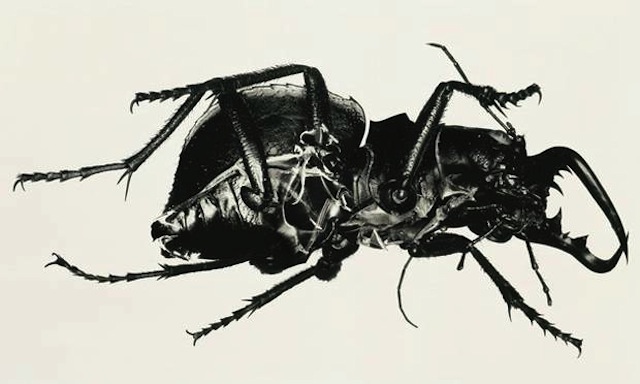
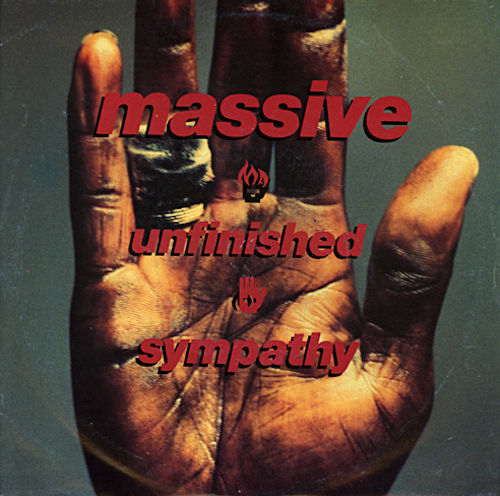
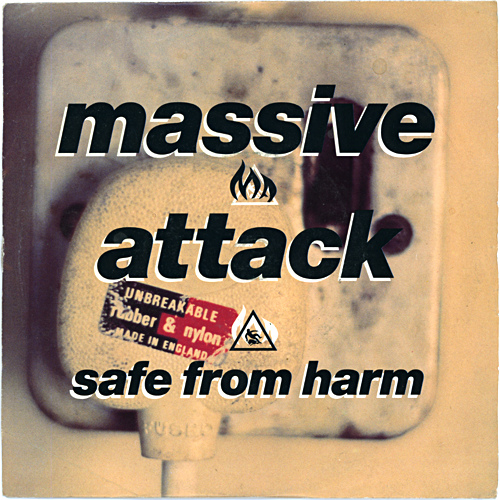
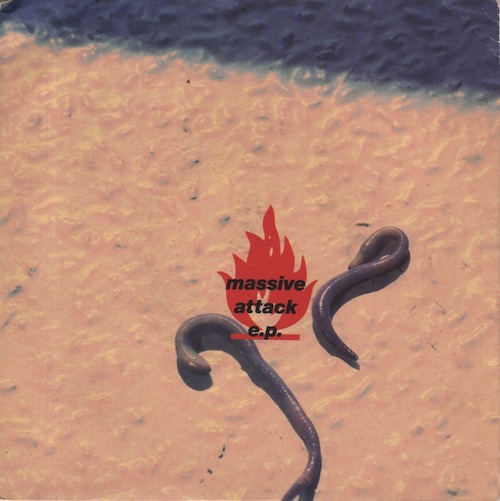
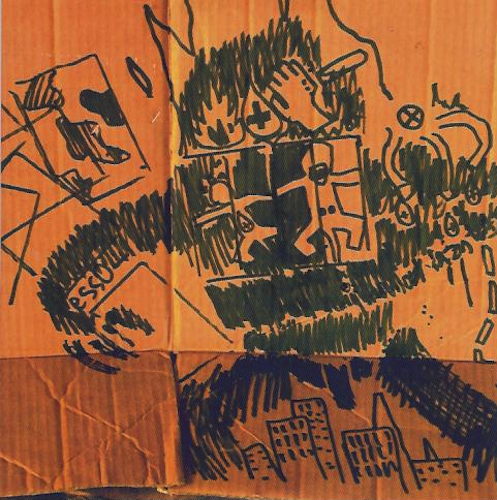
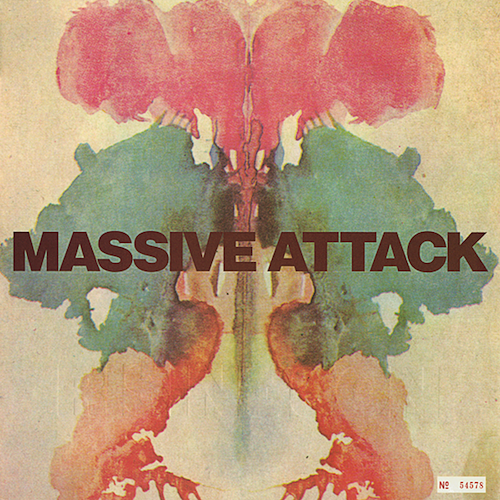
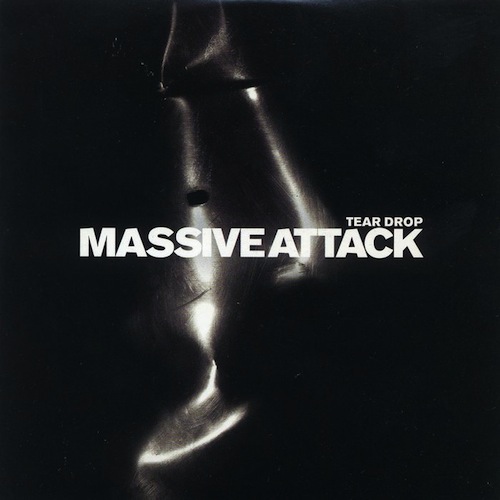
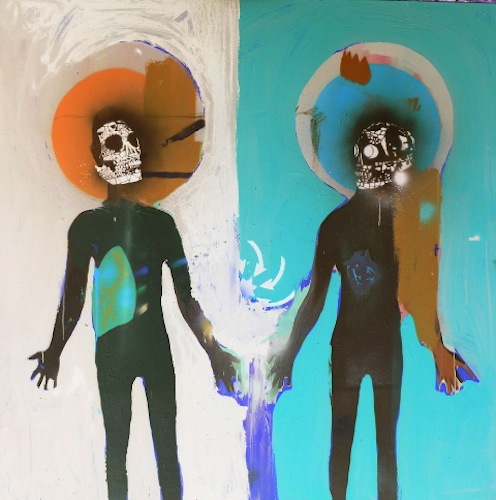
Massive Attack in 10 Covers


Beautiful sound!

Via The Vinyl Factory: http://www.thevinylfactory.com/vinyl-factory-releases/cover-versions-the-10-best-massive-attack-sleeves/


COVER VERSIONS: THE 10 BEST MASSIVE ATTACK SLEEVES