02/05/2016

'Blue Lines' 25 years on: Just One (Big) Love


Couldn't agree more :)


"The benefits of nostalgia also mean that Blue Lines is undeniably a classic. It was made with heart and soul and was a piece of pure artistic collaboration. No one has made anything like it since. RATED".

Read here:

http://standardissuemagazine.com/arts/rated-dated-blue-lines/?utm_content=bufferf56b9&utm_medium=social&utm_source=twitter.com&utm_campaign=buffer

Rated or Dated: Blue Lines

Twenty-five years after its release, Justine Brooks asks if Massive Attack’s debut album has stood the test of time.


Blue Lines album coverWhat and why: Pioneering spirit and Bristolian vibe are the key ingredients to this iconic album. It was the soundtrack to the three years I spent as a student in Bristol, where down at the Thekla we’d see 3-D, Mushroom, Daddy G and Tricky Kid walk in like royalty. Perhaps we’d even get to talk gibberish with Tricky in the bar after a gig.
I first remember hearing their sound in the Moon Club (later Lakota), in its pre-refurb days down in St Paul’s. What Massive Attack created was a new and laid-back club groove that expressed a particularly Bristolian personality. They were more than a band: they were the whole city and their sound was part of an emerging scene that also featured Neneh Cherry, Massive Attack’s fairy godmother who bankrolled them while they got Blue Lines off the ground.
Rated or dated: In this album, Massive Attack created something that defied definition. It wasn’t soul or reggae or dub or funk or hip hop, it was the boundary blurring lot of them and it wasn’t until later that people started calling it trip-hop.
It was this new trip-hop sound that took the whizzy, ecstasy-fuelled rave scene down a peg or two and was just as much at home on the dancefloor as in a beanbag-strewn chill-out zone. Music was never the same again after this genre-defying debut and in those nine tracks Massive Attack arguably created their finest work.
Each track flows effortlessly and deliciously into the next – from the splendour of Unfinished Sympathy into the witty and streetwise Daydreaming to the smoulderingly sexy Lately and the album’s hauntingly soulful finale, Hymn of the Big Wheel, a collaboration between Neneh Cherry and Massive Attack and written to feature the vocals of Horace Andy.
Massive_Attack_Daddy G By Festival Eurockéennes CC BY 2.0
Daddy G. Photo by Festival Eurockéennes, via Wikimedia Commons (CC BY 2.0).
Unfinished Sympathy, with its sweeping orchestrations and Shara Nelson’s soaring vocals, is the swooningly beautiful, anthemic superstar of Blue Lines and still incites spine-tingling elation in me to this day. But this album was about so much more: it was the voice of a generation.
Maggie this, Maggie that, Maggie means inflation” rapped Tricky in the 1990 single Daydreaming. Earlier that year we had filled the streets and protested against the poll tax. We were a country about to go to war in the Middle East and the fear was palpable, so much so that Massive Attack changed their name to Massive around the time of the Gulf War, for risk of sounding too belligerent.
Blue Lines is about a point in time and that is very much 25 years ago. And yet, listening now, the variety of vocals on this album, the laid-back yet epic vibe, the devastating basslines on every track, mean that despite it being of a particular time and place, it’s still amazing and it still sounds fresh.
The benefits of nostalgia also mean that Blue Lines is undeniably a classic. It was made with heart and soul and was a piece of pure artistic collaboration. No one has made anything like it since. RATED.


01/05/2016

About the Arnolfini Gallery, Bristol


I love John Akomfrah's film work and I love Bristol so much, this is just a cherry on the cake.
The showing of Vertigo Sea at the Arnolfini - that I saw more than four times... - was a moment to remember among the twelve weeks I've spent in the West country so far.

It's of course not the end of our love affair, Bristol.

Here are John Akomfrah's words in The Guardian about Bristol and the Arnolfini Gallery as it is nominated on the Museums of the Year shortlist.


Emporiums of inspiration: the Museum of the Year 2016 shortlist


From a Scottish country estate to a psychiatric hospital, the Museum of the Year shortlist is announced this week. Tracy Chevalier, Grayson Perry, Norman Foster, Antony Gormley and John Akomfrah champion their favourites


John Akomfrah on Arnolfini, Bristol


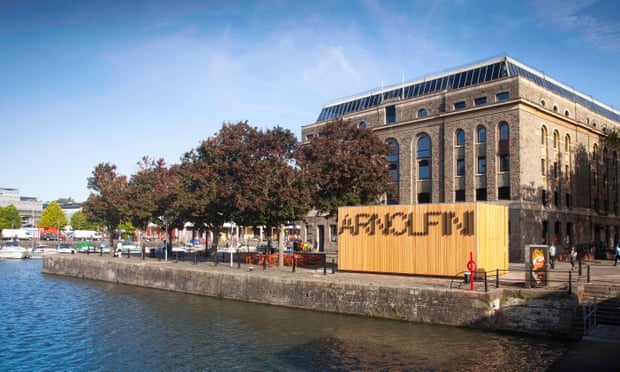
The Arnolfini.


The Arnolfini. Photograph: PR Image

I’m part of the generation that knew the Arnolfini in the 80s. Bristol had this incredible energy and a lot of it crystalised around the gallery. If you were in the city to watch bands or see shows then the Arnolfini was a Friday night watering hole, a refuge and the place you had to be to find out what was going on. It seemed tied up with the excitement of bands such the Pop Group, Rip, Rig + Panic and then Massive Attack. Almost inevitably, as the 90s went into the 00s, there was a sense that the venue had slightly lost that centrality; these things always move on. Which makes it all the more pleasing, and impressive, that in recent years the Arnolfini has again found its voice and place, and a new distinctiveness that chimes with people.

It has done this by keeping true to its roots – it was founded in 1961 – as one of the earliest interdisciplinary contemporary arts venues, presenting programmes of performance, dance, film and music alongside visual art. Last year it pulled off a significant coup in staging a large exhibition by Richard Long. It was a fine illustration of the level of its ambition as well as its capacity to successfully carry off big projects. The director, Kate Brindley, approached me about hosting the UK premiere of my video installation Vertigo Sea. That she came to me before the work had received any press, in effect before any critical consensus had gathered around it, impressed me. She really stuck her neck out and that sort of decisiveness and commitment, just being a bit ahead of things, has marked the Arnolfini out in recent years. The gallery then followed through in terms of execution and I was blown away by the quality of the installation. It is the best I’ve seen, and that includes the Venice Bienalle.

When the gallery moved in 1975 to its present home, a converted warehouse in the docks area, it was a trailblazer for a movement that has become the norm for cultural transformations of formerly rundown inner city areas. Its example was followed by Tate Liverpool, the Sage Gateshead and many other institutions. Back then the Arnolfini felt ahead of its time, so it is wonderful to see that it has found that role again; a home for ideas and work before they become orthodoxies.

--

The winner of the ArtFund prize for Museum of the Year 2016 will be announced at the Natural History Museum, London SW7, on 6 July. artfund.org.

--
--

A picture, by myself:


February 2015


Pop after Prince


Intéressantes questions soulevées par Slate.fr :


Le vertige d’une disparition est un poison quand il oriente vers le passéisme. Que dira-t-on quand il nous faudra enterrer Bob Dylan, Madonna, Stevie Wonder, Bruce Springsteen, Mick Jagger, Paul McCartney, Bono ou Patti Smith : la même chose que pour Prince et Jackson en encore plus alarmiste? Que dira-t-on, bien plus tard de Björk, Thom Yorke, des Daft Punk, des Massive Attack, de Bono? Que c’était vraiment, mais alors vraiment et définitivement mieux avant?

Lien :
http://www.slate.fr/story/117437/prince-bowie-jackson-mieux-avant


Le buzzPrince est mort, vive la pop


Deux des plus grands passeurs de son de l’histoire de la pop ont disparu à espaces rapprochés en 2016, David Bowie puis Prince. La mort du Kid de Mineapolis intervient aussi «peu» après celle de Michael Jackson. Cette proximité-là se discute davantage. Elle doit beaucoup à l’émotion collective, mais elle se défend: les superstars masculines des années 1980 auront abandonné, à «même pas» six ans de différence, des millions de fans ébahis, avant l’âge officiel de la retraite, qui n’existe pas pour ce beau métier, comme Paul McCartney continue de le montrer sur toutes les scènes du monde à 73 ans.
Pour saisir la pertinence du rapprochement entre les deux stars, il faut se souvenir que la diffusion du documentaire Doctor Prince and Mister Jackson, sur la rivalité entre les deux hommes, conçu de leur vivant, avait été avancée suite au décès de Jackson en 2009. L’heure de le visionner est définitivement atteinte.
Quel qu’ait pu être le lien intime tissé avec leur musique, le même mécanisme se met à l’œuvre quand des personnages aussi importants disparaissent. D’un coup, on ne les regarde plus comment avant, et surtout on les écoute plus comme avant. De leur vivant, nous avions des superstars respectées mais toujours évaluées dans tout ce qu’elles entreprenaient, qu’il s’agisse de musique, d’image marketing ou de comportements publics. La mort consommée, ne restent que les bons souvenirs et l’envie de plonger dans une œuvre désormais aboutie. Le tout dicté par un sentiment de proximité sans précédent. «Le public se réjouit de la mort d’une pop star, a osé Richard Mèmeteau, (auteur de Pop culture: Réflexions sur les industries du rêve et l’invention des identités), cette semaine sur France Culture. La pop star, cet ego gonflé par la célébrité, doit redevenir ce qu’elle était, c’est-à-dire un homme.»
Prenons l’exemple du solo de guitare délivré par Prince en 2004 sur le «While My Guitar Gently Weeps» en hommage à George Harrison, pour l’entrée de l’ex-Beatle au Hall of Fame. À l’époque, j’avais conçu une forme de tristesse à voir Prince conduire ce solo vers une démonstration en mode «tripoteur de manche»(pour rester poli). Au-delà même de l’appréciation esthétique que l’on peut exprimer pour ce type de performance très technique (je fais partie des sceptiques), elle démontrait une incompréhension du propos tenu par Harrison avec cette chanson. Gently weeps, «pleurer doucement», ou «sangloter délicatement», n’est pas le déchaînement démonstratif de Prince. Au lendemain de la disparition de l’artiste, d’autres sensations dominent en visionnant la séquence: la prestance invraisemblable du showman, le niveau du musicien virtuose, la certitude que ce moment restera plutôt pour de bonnes raisons.
Avec la mort des grands artistes, l’idée fait son chemin que l’humanité vient de perdre des personnes irremplaçables (c’est exact) et avec eux, une certaine idée de la capacité de la musique à parler du monde. Là, le terrain devient glissant, car la musique et la pop restent au-dessus des personnes qui en ont assumé le leadership. Francis Dordor a conclu son superbe article-hommage dans Les Inrocks sur la «majesté» qui manque à notre époque, comparée à celle du zenith Prince. D’autres –sur les réseaux sociaux notamment - ont communiqué sur le contraste saisissant entre les années 1980 florissantes et notre XXIesiècle présumé plus fade. C’est le versant le plus discutable de ces deuils en mondovision.
Le vertige d’une disparition est un poison quand il oriente vers le passéisme. Que dira-t-on quand il nous faudra enterrer Bob Dylan, Madonna, Stevie Wonder, Bruce Springsteen, Mick Jagger, Paul McCartney, Bono ou Patti Smith: la même chose que pour Prince et Jackson en encore plus alarmiste? Que dira-t-on, bien plus tard de Björk, Thom Yorke, des Daft Punk, des Massive Attack, de Bono? Que c’était vraiment, mais alors vraiment et définitivement mieux avant?
Dans les années 2010, les disques ne se vendent plus au supermarché, MTV et le Top 50 ont égaré leur influence, les magazines contribuent moins à la notoriété et au mystère qui caractérise les stars du rock. Jackson et Prince ont su nourrir cette industrie de leur talent visionnaire. Cela ne signifie pas que la génération YouTube, Spotify et des show encore plus élaborés doivent rougir du renouvellement qu’ils incarnent au détriment de ces superstars qui, autant être clair, avaient clairement décroché.
Si aucune figure n’écrase l’époque comme eux à la leur, c’est en bonne partie parce que le choix entre les propositions artistiques est sans égal aujourd’hui. Et encore: reste à prouver que nous avons le recul nécessaire pour être certain que l’impact de Rihanna, Pharell Williams, Kanye West, Beyoncé ou Eminem sur les consommateurs de musique d’aujourd’hui est inférieur à celui de Prince et de Michael Jackson.
La mort par assassinat de John Lennon, le 8 décembre 1980, reste probablement à ce jour la secousse la plus violente ressentie par la planète suite à la disparition soudaine d’une pop star. Tout concordait: l’absurdité de l’acte (meurtre sans mobile sérieux), la jeunesse de la star (40 ans), son influence planétaire («Imagine», la campagne War is Over), son impact sur le cours de l’histoire de la musique (on parle du fondateur des Beatles) et le lieu de la disparition (New York, capitale mondiale des médias de masse). Des millions de personnes observèrent en simultané dix minutes de silence à différents endroits de la planète; plus de 200.000 à New-York.
La mort de Lennon s’est produite un an après la disparition d’Elvis Presley, hors-jeu depuis très longtemps, mais figure tutélaire d’un genre –le rock– qui avait bouleversé le siècle musical comme seuls les Beatles purent le faire ensuite.
La tristesse était déjà une émotion légitime et le passéisme une tentation à fuir. En 1980, Michael Jackson et Prince débutaient à peine leur travail de redéfinition de la pop. Ils avaient 22 ans.
--

Music from Sahel


Digging into archives... TV report on music in Niger and its neighbours, April 2013, three years ago already!

Music, politics, borders, people, genius, eye-opening art and cultures of hope, still my favourite topics today.


Link:
https://www.youtube.com/watch?v=keefhud8quw&feature=youtu.be 


Iraq coming to London


Looking forward and see you there.


--

British Journal of Photography:


Iraqi photographers to exhibit their work at London art fair for first time

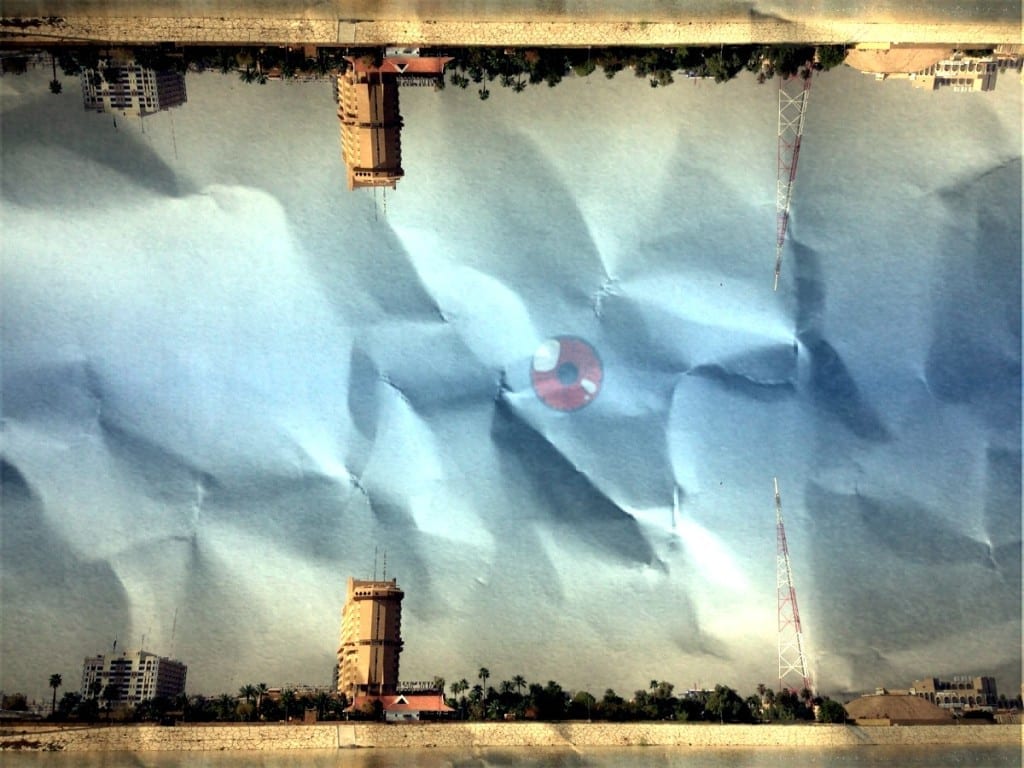
The Other Life © Akram Assam
Main image The Other Life © Akram Assam. All images © the artist, courtesy the Ruya Foundation
The Ruya Foundation is to bring 12 Iraqi artists, many of them working in photography as the only medium accessible, to London - the first opportunity for many of them to engage with the international art market.
A group of contemporary Iraqi photographers, most of whom live and work in Iraq, are to have their work exhibited and made available for acquisition at Art16 art fair in London.
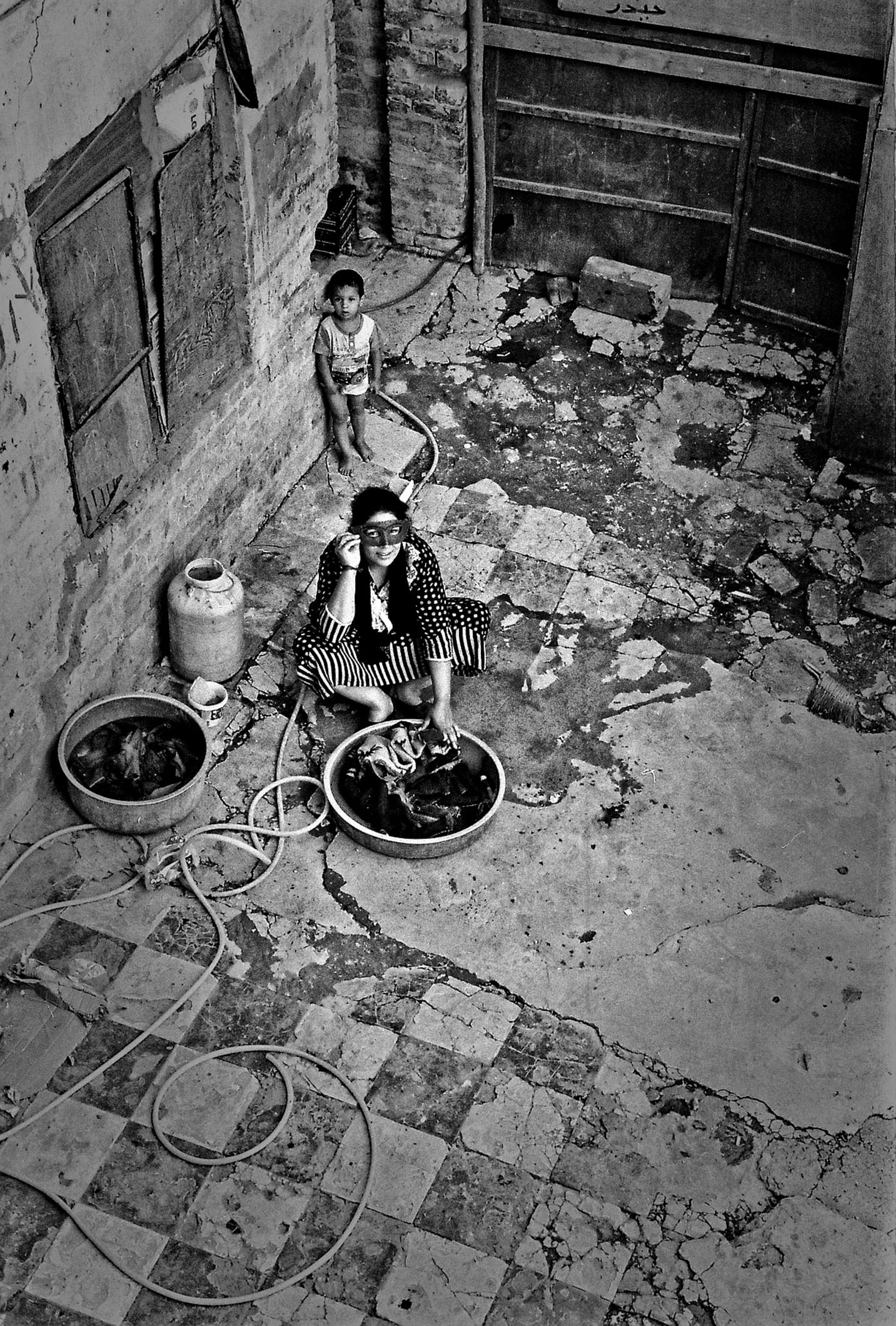
Night Workers © Ayman Al Amiri
The Ruya Foundation, a non-profit organisation founded to create international opportunities for, and foster recognition of, Iraqi contemporary artists, have partnered with Art16, marking the first occasion the 12 artists repped by the foundation can present their work at an international art fair, despite the foundation working with many of these artists for a number of years.
They will be joined by artists such as Jamal Penjweny, born 1981, who exhibited in the Iraq Pavilion at the 55th Venice Biennale 2013, and Nadine Hattom, born 1980, whose work is on display as part of ‘Parallel Projects’ at the sixth edition of the Marrakech Biennale.
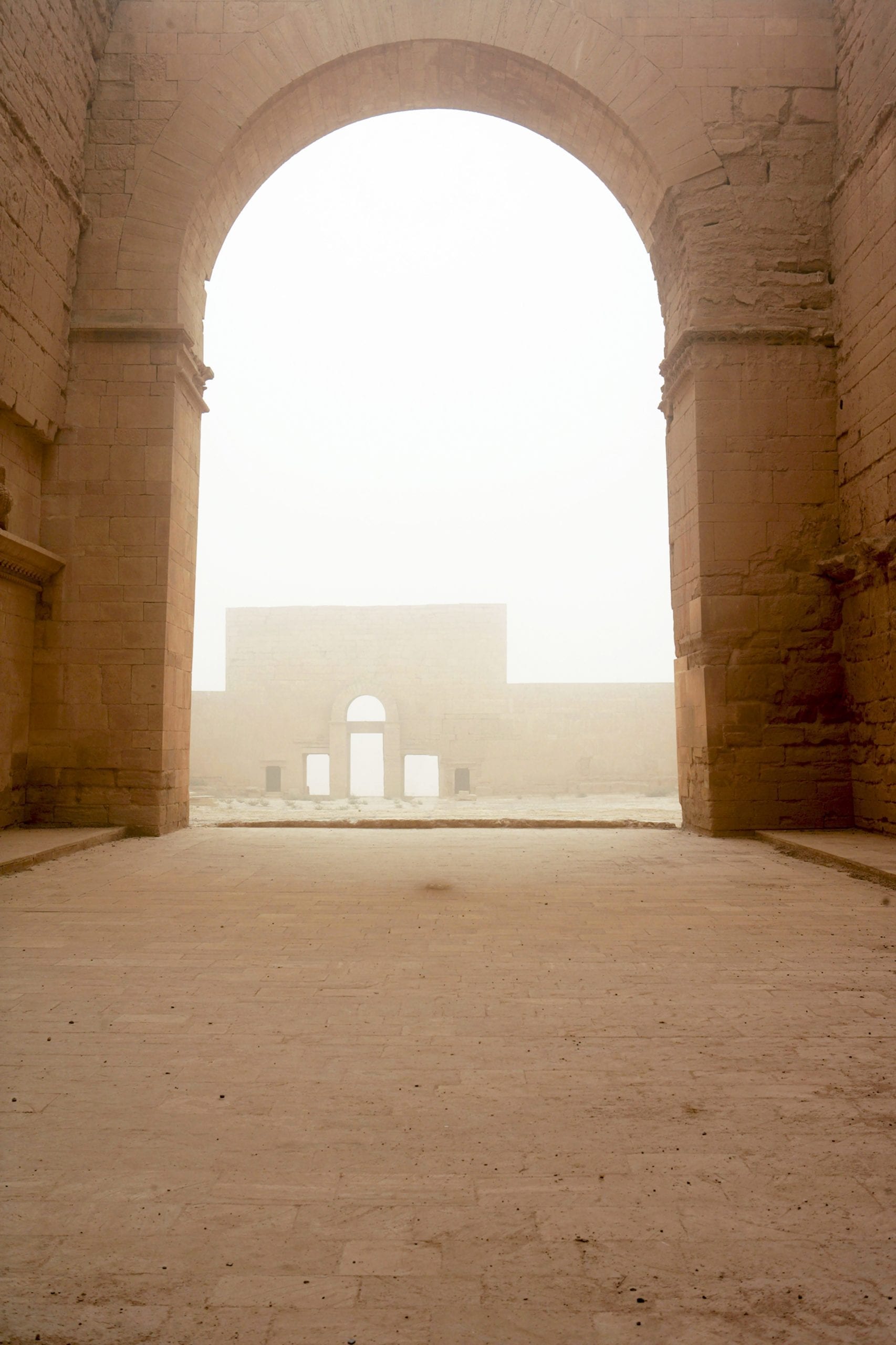
 A U.S. Marine with a ground combat element assigned to Delta Company, 2nd Light Armored Reconnaissance Battalion, Task Force Mechanized, Multi-National Force ñ West walks through the Hatra Ruins in the Jazeerah Desert in Iraq on July 20, 2008. The task force is conducting disruption operations in the area to deny the enemy sanctuary and prevent foreign fighters from accessing the area. DoD photo by Lance Cpl. Albert F. Hunt, U.S. Marine Corps. (Released)

A U.S. Marine with a ground combat element assigned to Delta Company, 2nd Light Armored Reconnaissance Battalion, Task Force Mechanized, Multi-National Force ñ West walks through the Hatra Ruins in the Jazeerah Desert in Iraq on July 20, 2008. The task force is conducting disruption operations in the area to deny the enemy sanctuary and prevent foreign fighters from accessing the area. DoD photo by Lance Cpl. Albert F. Hunt, U.S. Marine Corps. (Released) © Nadine Hattom
The particular emphasis on photography in the presentation reflects how accessible the medium is for artists living in Iraq.
Hattom and Penjweny are joined by Ayman Al Amiri, a Baghdad-based photographer who takes black-and-white photographs of street life in the city.
Works from his series ‘Baghdad’s street workers’ (2013–2014) will be on display, which feature frank yet surprisingly playful depictions of prostitutes in domestic settings in Baghdad.
Read © Sakar Abdullah Sleman
Also on display is Julie Adnan, whose multimedia project You May Go (2010–) includes photographic portraits of subjects holding up touristic images of countries they wish to visit or migrate to, in direct contrast to the landscape of Iraq that the subjects inhabit.
Ruya’s partnership with Art16 follows its launch of the first publicly accessible online database of Iraqi contemporary artists, which includes over 300 artist profiles. The majority of the artists on display at Art16 can also be explored on the database.
“At a very essential level, this partnership grants commercial opportunities to artists who are otherwise disenfranchised from the art market,” Ruya said in a statement.
Tamara Chalabi, Chair and Co-Founder of the Ruya Foundation said: “We are delighted to be partnering with Art16 to give contemporary Iraqi artists the opportunity to exhibit on an international platform. This is particularly vital at a time when the cultural infrastructure of Iraq is increasingly under threat.”
Ruya Foundation will exhibit at Art16, Olympia, London from 19 to 22 May 2016
--


Art16 returns to Olympia London from 20 – 22 May 2016, with the Collectors' Preview and First Night on Thursday 19 May. Since our inaugural edition in 2013, Art16 has become a highlight of London’s cultural calendar, kicking off the summer season with a compelling edit of international artists and galleries from more than 30 countries from around the globe.

The Fair will present over 1000 outstanding artworks from artists and galleries as far-flung as Senegal to South Korea, and Cuba to the Czech Republic, maintaining our unique commitment to showcasing exciting emerging talent alongside established contemporary artists.

Art16 unites art-lovers, collectors, gallerists and artists from around the globe, together with an engaging programme of free talks, expert-led tours and performances, and a highly anticipated revolving pop-up restaurant by Corbin & King, the duo behind The Wolseley and The Delaunay. Art16 is an unmissable occasion for art-loving Londoners and international collectors alike.

The 2015 fair attracted over 24,000 visitors and featured over 150 galleries from more than 40 countries around the world. Our commitment to showcasing galleries from around the world puts us in a distinct position within the market and the fair has affirmed its place on the international art fair calendar.

30/04/2016

De Luca e la luce


Incredible news...


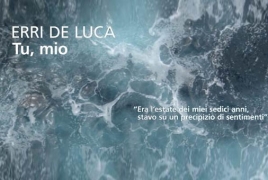
Erri De Luca’s Italian bestseller “Tu, mio” to get film treatment 

Erri De Luca’s Italian bestseller “Tu, mio” to get film treatment
PanARMENIAN.Net - “Machete” writer Álvaro Rodriguez and “Out in the Dark” director Michael Mayer are attached for a movie version of Erri De Luca’s Italian bestseller “Tu, mio” (“You, mine”), Variety has learned exclusively.
Paola Porrini Bisson and Oh!pen Productions are producing. Rodriguez and Mayer are adapting De Luca’s 1998 novel.
The book is set in post-war Italy and tells of a teenage boy who falls for an older woman with a dark secret. De Luca, whose “The Weight of the Butterfly” is in development with Dean Zanuck, was at the center of a free-speech trial in Italy for most of last year.
Bisson previously produced the Tribeca winner “The Nightshift Belongs to the Stars,” “A Musical Imprinting” and “Trees That Walk,” all penned by De Luca.
Mayer’s first feature, “Out in the Dark,” had its world premiere at the Toronto International Film Festival and went on to play over 125 film festivals. He is currently developing a feature adaptation of Brian Malloy’s YA novel “The Year of Ice” and a half-hour relationship comedy series with Israel’s Channel 10.
In addition to “Machete,” Rodriguez wrote “Shorts” and recently completed two seasons of “From Dusk Till Dawn: The Series” for the El Rey Network. He won the 2016 Mark Medoff Excellence in Writing Award and is developing “Outlaw,” a historical drama set in 1850s California with a Mexican hero from MGM TV.
Rodriguez is managed by Bob Sobhani and Jennie Frisbie at Magnet Management. Mayer is managed by Gary Ventimiglia and they are both with Stone, Genow, Smelkinson, Binder & Christopher.


TU, MIO


It's too early to retell in my own words the beauty and deep emotions transported by this text...
Here's an article written some time ago by another journalist.

I'll try to add some words when I come back from the land where live these feelings provoked by the sea and the fire, between Napoli and Ischia, between the present and the past...


 Tu, mio

Tu, mio
de
Erri de Luca
Gallimard
*
En deux livres, l'écrivain italien prouve avec éclat que la descente en apnée éclaire l'homme sur ce qui se vit en surface. Mémoire en eau vive.

Une troublante fascination secoue le lecteur à chaque parution d'un nouveau livre d'Erri de Luca. Est-ce la qualité des images, révélée par une économie de moyens? Est-ce davantage le maintien, la simplicité et la sensibilité de ses propos, la rigueur et la sagesse de ses jugements qui apportent cette part de lumière? Ou encore est-ce ces bouts de lui-même, ce "je" vécu, décliné comme une longue lettre qui résonne de cris et de chuchotements? Il faut lire Erri de Luca à haute voix -ses textes courts et denses s'y prêtent. Ses mots dégagent une force naturelle.

Ecrivain atypique, il travaille dans la marge. Depuis Une fois, un jour (Verdier, 1992), sa matière est un incessant sursaut de la mémoire contre la perte. Avec l'habilité du "brocanteur", il transporte son bric-à-brac personnel le long de ses récits. L'émotion naît de cette part inutilisable. "C'est le gaspillage (...) qui donne la valeur au résidu, au reste qui a survécu par grâce, distraction, hasard", écrit-il. Ses souvenirs douloureux de militant gauchiste, son travail d'ouvrier, son amour pour la Bible (cet agnostique traduit l'hébreu ancien), ses séjours en Bosnie à convoyer des médicaments dessinent une constante quête de la vérité, où le coeur n'est jamais absent. De cette singulière expérience, Erri de Luca puise quelques formules riches d'humanité dont l'écho le renseigne sur sa condition d'homme. Moraliste donc, mais plutôt sur le mode mineur, même s'il s'en défend : "Je suis trop pris au sérieux. Je n'écris rien. Ce ne sont que des notes autobiographiques. De toute façon, je ne peux pas raconter des histoires car toutes les histoires ont été inventées", nous expliquait-il (Mda n°17). La sienne, il ne cesse de la posséder. Enfant de l'après-guerre, il vécut à Naples, ville humiliée et occupée par les Américains. Rêvant de vagabondages, il s'engagea ensuite dans la violence publique durant les années 70, ces années de plombs où l'amitié se forgeait dans la rue et les postes de police. 

Contrairement à ceux de son âge, Erri de Luca n'a pas accompli son éducation sentimentale au bras d'une jeune fille mais au contact des livres de son père. Cette bibliothèque, remplie de décombres et de chambres à gaz, lui a donné la légitimité de se taire. D'une certaine façon, Tu, mio, aujourd'hui publié, raconte l'expulsion de cette parole.

Ce court récit est un noeud d'émotions, mêlé "d'amour et de fureur", un brusque appel du souvenir. Tu, mio, c'est l'histoire fulgurante d'un adolescent qui découvre l'irréversibilité d'un mal, le temps d'un été de vacances, sur une île au large de Naples. Nous sommes au milieu des années cinquante : la guerre est loin mais il reste des traces. Au pied du Vésuve, les Américains continuent d'entretenir "le plus vaste bordel de la Méditerranée". Sur l'île, les retraités allemands profitent sans gêne du soleil tyrrhénien. Tout cela semble naturel, sauf pour le garçon. Têtu, il veut comprendre, interroger, savoir comment se sont comportés les pères. Ont-ils résistés? L'apparence d'une demande de comptes : car "les vivants avaient durci leur silence, un cal sur la peau morte de la guerre". Double mutisme, en réalité : celui de la transmission (les parents), celui de la curiosité (les enfants). Entre deux parties de pêche, la peau couverte de sel, à jeter les lignes sur des bancs de rascasses, l'éveil d'une conscience s'opère. Les témoignages se font à voix basse, de peur de réveiller les sortilèges. Il y a Nicola le pêcheur qui a fait la guerre dans l'infanterie en Yougoslavie et pour qui "l'histoire n'était plus que ça, une façon d'accompagner le travail". Il y a surtout Caïa, une jolie fille dont tout le monde est amoureux. On ne sait rien d'elle, sinon qu'elle est orpheline. Le jeune narrateur apprendra que sa famille a péri en déportation, "peuple éliminé maison par maison". De cette rencontre scellée par ce secret naîtra une indéfectible complicité : un passé partagé, la parole d'une enfance retrouvée. Au point qu'à travers ce "garçon banal qui peut assumer tous les âges", Caïa y verra les signes de son père.

Tu, mio est peut-être le plus beau texte d'Erri de Luca. Reflet de cette mer calme et lumineuse qui borde le récit, un lourd silence accompagne chaque page et transpire jusqu'à la langue. Tout y est suggéré avec une étonnante intensité : la tendresse, le courage, la colère, le poids de la mémoire. Les images, d'une rare authenticité, se bousculent, poussées par les mots. L'écriture, simple, limpide, déploie un précieux équilibre, où le corps, la parole, l'espace trouvent naturellement leur place, comme si l'harmonie était une façon de tendre vers la vérité. Ce récit d'un affranchissement est aussi fondateur d'une responsabilité. Apprendre l'infamie et la lâcheté par l'écrit ou par la voix ne suffit pas, encore faut-il associer le geste guidé par cette obsession du rachat car, dit-il, "on ne se sent véritablement héritiers que d'une dette". Se sentant coupable d'être "arrivé trop tard", Erri de Luca grossira ainsi les rangs d'une génération soucieuse de "corriger le passé".

Invariablement, une exigence morale imprègne chacun de ses livres. Cela est davantage frappant en lisant ses fragments, un exercice taillé à sa mesure. Dans le sillage de Rez-de-chaussée (Rivages, 1996), est également publié Alzaia qui rassemble une centaine d'articles d'Erri de Luca, parus il y a deux ans dans le quotidien catholique Avvenire. Chacun débute par une phrase lue (une citation, un vers de l'Ancien Testament, un proverbe, un ex-voto...) à laquelle l'écrivain "accroche un commentaire". Si les thèmes sont divers -l'Holocauste, la Bosnie, la littérature, la politique, la jeunesse...- sa réflexion est guidée par le même sens de la tolérance et le refus de l'oubli. Sa plume parcourt l'homme et le monde, s'arrête sur un détail, une image, évoque les faiblesses et les vertus de la "mythologie moderne", témoigne de ses craintes mais sans aigreur, ni leçon. "Petit écrivain officiel", selon sa définition, Erri de Luca est un pèlerin égaré : il faut suivre ses chemins, souvent de traverse, et il n'est pas impossible qu'à un détour, un rai de lumière vous éclaire le regard. 


Erri de Luca
Tu, Mio

et Alzaia
Traduits de l'italien
par Danièle Valin
Rivages
140 et 232 pages

26/04/2016

Helping Yazidi Women in Northern Iraq


The city of Qadiya in Kurdistan has become a "home" for about 15.000 displaced Iraqi people.

This morning I visited the reproductive healthcare unit inside the camp, organized by WAHA International with the support of the German NGO Malteser.

Here are a few pictures of the main gynecologist, a nurse, their staff and a couple of Yazidi women who were waiting for consultation.

The official inauguration of the unit will happen on Thursday.

--

More soon.


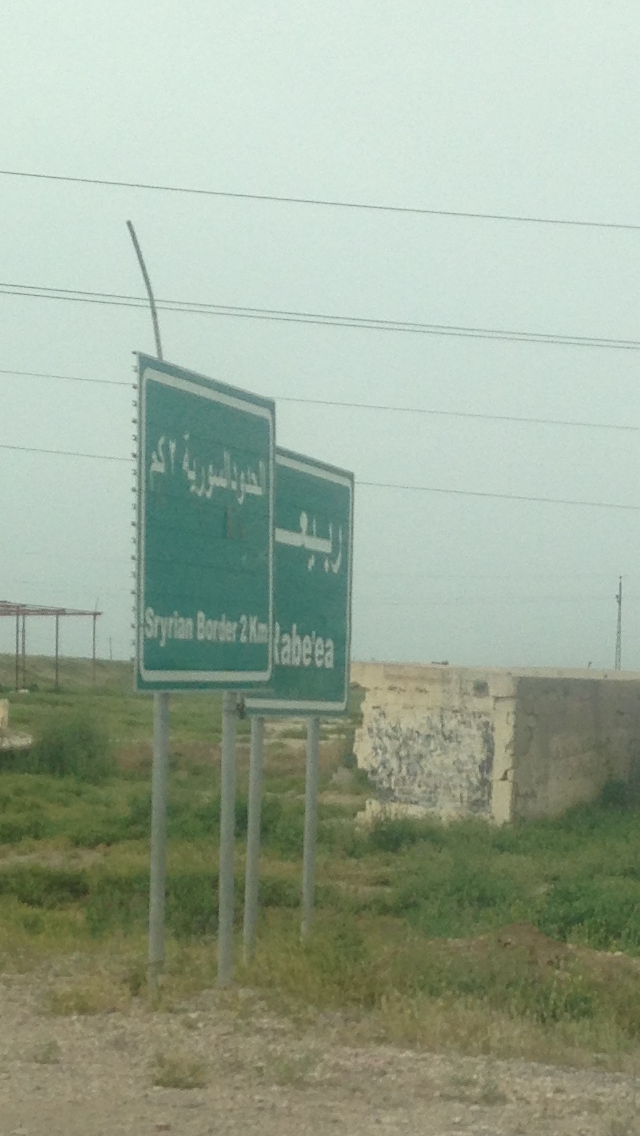
Middle-eastern borders


Northern Iraq, in and out of Iraqi Kurdistan and neighbouring provinces, following the border with Turkey and Syria, crossing the River Euphrates...