07/06/2016

Banksy's name has been given to a Bristol school - And he offers this mural in return


That's just how they do it in the West 
WHERE THE WALL
13 hrs
New BANKSY IN BRISTOL  BREAKING IT ON HERE BEFORE THE LOCAL MEDIA 😁😁
New ‪#‎Banksy‬ mural is painted at Bridge Farm Primary school in Whitchurch, Bristol. After painting it, he left a letter saying that he hopes the school don't mind him doing it!


--

In The Guardian :

Banksy leaves mural and cheeky note in Bristol school as thanks for tribute

Artist shows gratitude to Bridge Farm primary for naming house after him, but tells pupils ‘forgiveness is easier to get than permission’


The street artist Banksy has painted a primary school playground wall and left a note that could cause havoc with the school’s code of discipline – “remember it’s always easier to get forgiveness than permission” – in gratitude for the honour of having one of the houses of the school in Bristol named after him.
The painting, of a scribbly school girl bowling an alarmingly realistic burning tyre along the 14ft wall, and the note left for the school caretaker, appeared overnight at Bridge Farm primary school, in the city where the anonymous artist’s meteoric career began.
Pest Control, his agents who authenticate his work, promptly confirmed to the Guardian that the work is genuine – despite their warning “because many Banksy pieces are created in an advanced state of intoxication the authentication process can be lengthy and challenging” – and that the school has framed the note. Unusually the mural includes a signature, but in the tricky world of real and fake Banksy, that is no guarantee of authenticity.
The pupils had written to Banksy before Easter, telling him that they had voted to rename one of their four school houses in his honour. He is in good company: the others are Cabot, after the 15th-century Italian explorer John Cabot, who mounted three voyages of exploration from Bristol; Brunel after the engineer Isambard Kingdom Brunel, who slung the famous suspension bridge over the city’s Avon Gorge; and Blackbeard after the pirate said to have been born in Bristol. 

Site manager Jason Brady holding a letter left by Banksy at Bridge Farm primary in Bristol
Pinterest
 Site manager Jason Brady holding a letter left by Banksy at Bridge Farm primary in Bristol after he painted a mural on the side of one of the classrooms. Photograph: Claire Hayhurst/PA

Although many Banksy street pieces have been expensively peeled off their walls and dispatched to the auction room, to the anguish of local people who regarded them as gifts to their community, the school’s headteacher Geoff Mason has confirmed that they have no plans to sell it, and regard it as “inspirational and aspirational” for the pupils.
He will not be allowing the pupils to act on the artist’s suggestion that if they do not like the picture, they can add to it. The note to the school read: “Dear Bridge Farm, thanks for your letter and naming a house after me. Please have a picture. If you don’t like it, feel free to add stuff – I’m sure the teachers wont mind. Remember – it’s always easier to get forgiveness than permission. With love, Banksy.”
The anonymous artist’s career began in Bristol, and his works now fetch huge prices at auction – Kissing Coppers, originally a mural in Brighton, sold in Miami for nearly $500,000 (£345,000) in 2014. Several of his early works have been preserved on walls in Bristol, and are thought to add enormously to the value of properties – one dilapidated pub with a Banksy sold for twice the original estimate.
Last summer, he invited a collection of anarchic artists to create a spoof funfair, Dismaland, in a derelict lido in Weston-super-Mare – which had people queueing for up to four hours to take in jokes about security paranoia, state repression, immigration and capitalism. The desolate installation, with staff ordered to look as sullen and wretched as possible, is believed to have added millions to the local economy.


06/06/2016

"The Morning They Came For Us - Dispatches From Syria"


For all the journalists who keep on telling me to not do what I do, try to work independently and cover zones that are in turmoil, I met with Janine Di Giovanni today, and I'm glad there are still reporters out there trying to do what we are meant to do: report on issues that are difficult, that people won't always want to hear about, but that desperately need to be addressed.

Here is the New York Times review of her book, 

"The Morning They Came For Us - Dispatches From Syria":


CreditPatricia Wall/The New York Times


It's hard enough to travel to war zones, to cover post-conflict eras that people care even less about...

But when you get back home and even your colleagues despise what you do, try to silence you, how are you supposed to keep on? And to cope on your own with what you've seen?

Coming back from Central African Republic was appalling. Questions from fellow journalists were only about expats' well-being, food and social events I had been to. No interest on the people's experience during the civil war.

Not much better after I came back from Iraq...

Only random people, lovely encounters asked me deep, sometimes naive and very genuine questions.

Artists, musicians are in our days so much more profound in their analysis than most journalists I know in Paris. It is a shame really.

This is why I needed a break from newsrooms and network events.

--


For others, don't be afraid to read, learn, face issues, grow, be aware.

We're only each of us trying our best in this world, and still searching for the light. But there'll be no light without darkness...

Don't remain blind about what's happening hoping to see what is beautiful only just by magic!

--

Janine will be on CBC tonight, on an interview that I help recording in Paris, and will give a talkin Paris' bookstore Shakespeare and Co.


--

Here is the NYT's review:


The title of Janine di Giovanni’s devastating new book, “The Morning They Came for Us,” refers to those terrible moments in ordinary Syrians’ lives when the war in their country becomes personal. Those moments when there is a knock on the door and the police or intelligence services take a family member away. Those moments when a government-delivered barrel bomb falls on your home, your school, your hospital, and daily life is forever ruptured.
“The water stops, taps run dry, banks go, and a sniper kills your brother,” she writes. Garbage is everywhere because there are no longer any functioning city services, and entire neighborhoods are turned into fields of rubble. Victorian diseases like polio, typhoid and cholera resurface. Children wear rubber sandals in the winter cold because they do not have shoes. People are forced to do without “toothpaste, money, vitamins, birth-control pills, X-rays, chemotherapy, insulin, painkillers.”
In the five years since the Assad regime cracked down on peaceful antigovernment protests and the conflict escalated into full-blown civil war, more than 250,000 Syrians have been killed and some 12 million people — more than half the country’s prewar population — have been displaced, including five million who have fled to neighboring countries and to Europe in what the United Nations calls the largest refugee crisis since World War II.
In “The Morning They Came for Us,” Ms. di Giovanni gives us a visceral understanding of what it is like to live in wartime Syria, recounting some of the individual stories behind the numbing statistics: students who were whisked away by the police and interrogated and tortured; children who died from common infections because medicine and doctors were unavailable; women who were raped by soldiers at checkpoints and in jail; families who fled besieged cities like Homs, only to return because there was no place else to go.
The fact that much of the book’s on-the-ground reporting is confined to the early stages of the war only serves to remind the reader that the horrors she witnessed would escalate in the years to come — with still no end in sight.
Photo

Janine di GiovanniCreditRannjan Joawn 
Ms. di Giovanni introduces us to a baker named Mohammed, who received messages from the government that he would be kidnapped and killed if he did not stop manning the bread factory that helped feed an opposition-held neighborhood in Aleppo. And to Nada, who brought sandwiches and medical supplies to fellow students on the front lines, and who later helped spread the opposition’s message through Facebook and Twitter. Nada was arrested at her parents’ home and held captive for eight months and three days — during which she was beaten, whipped and raped, while her jailers told her family that she was dead.
Another student, Hussein, had helped organize some of the early peaceful demonstrations that sprang up in Syria, after the Arab Spring protests in Tunisia and Egypt. He was shot, taken captive by pro-Assad forces and savagely beaten and tortured. He tells Ms. di Giovanni that his abdomen was cut, his intestines were pulled out and he was then crudely sewn back up; he survived, he says, only because a pro-regime doctor, who took pity on him, declared him dead and allowed him to escape from the morgue. Ms. di Giovanni quotes a senior researcher at Human Rights Watch, who says, “The Syrian government is running a virtual archipelago of torture centers scattered around the country.”
Like the work of the Belarussian Nobel laureate Svetlana Alexievich, Ms. di Giovanni’s book gives voice to ordinary people living through a dark time in history; and like Anthony Shadid’s powerful 2005 book, “Night Draws Near” (which recounted the aftermath of the American invasion of Iraq), it chronicles the intimate fallout that war has on women, children and families.
Photo

A barrel bomb exploded in Aleppo last year. CreditReuters 
A longtime reporter who covered the wars in Bosnia, Chechnya and Sierra Leone, Ms. di Giovanni writes here with urgency and anguish — determined to testify to what she has witnessed because she wants “people never to forget.” Her sorrow comes through in the writing — in the book’s staccato sentences, in its flashbacks to similar scenes of suffering in the Balkans, in its helpless empathy for people she met in Syria, like the ailing woman in a hospital who begged her to take her children away to some place safe.
Most of Ms. di Giovanni’s travels in Syria, described in detail here, were in 2012, a year into the conflict. In that spring and early summer, she notes, wealthy elites in Damascus were still in denial about the war — though explosions from the shelling could be heard during pool parties at the Dama Rose Hotel. By year’s end, the country had slipped down “the rabbit-hole of war.” The government was targeting civilian neighborhoods, and in the case of Aleppo, “opposition forces had cut off nearly all supply routes.” In that city, she writes, there were two criteria for staying alive: “hiding from the regime’s barrel bombs, and finding food.”
As the war ground on, more and more foreigners were being kidnapped. Ms. di Giovanni met the young American aid worker Kayla Mueller, who was abducted in the summer of 2013 in northern Syria and held captive as a sex slave by the Islamic State before dying in a Jordanian airstrike on Feb. 6, 2015. And she draws a heartbreaking portrait here of her friend, the journalist Steven Sotloff, who would be killed by the Islamic State in 2014. “His slangy language, his Americanism,” his “kidlike curiosity,” she writes, helped her forget “the cold, the anxiety, the gnawing fear in my stomach” in Aleppo. She could not imagine that “this smiling, laughing boy, who told jokes and avidly followed the basketball scores of the Miami team he loved,” would be beheaded by the Islamic State militants he called the “bearded guys.”
Within months, Ms. di Giovanni says she saw Syria undergo a metamorphosis — one that would grow even darker in the years to come. Opposition fighters were becoming radicalized and sectarianism had grown increasingly bitter: “Syrians who called themselves Syrians a few years ago were now saying they were Alawites, Christians, Sunnis, Shias, Druze.” Leaving Aleppo, she writes, she did her best “to take photographs inside my head, pictures that I would remember, that would show a country that no longer existed.” Her testimony is contained here in this searing and necessary book.


05/06/2016

'YESTERDAY’S NEWS' : photos, art et actualité


Arts / Expos / [Londres]

[LONDRES] « YESTERDAY’S NEWS » :

LES ACTUALITÉS OUBLIÉES REFONT LA UNE À LONDRES, VIA L’ART


Mélissa Chemam pour Toute La Culture

http://toutelaculture.com/arts/expositions/londres-yesterdays-news-les-actualites-oubliees-refont-la-une-a-londres-via-lart/

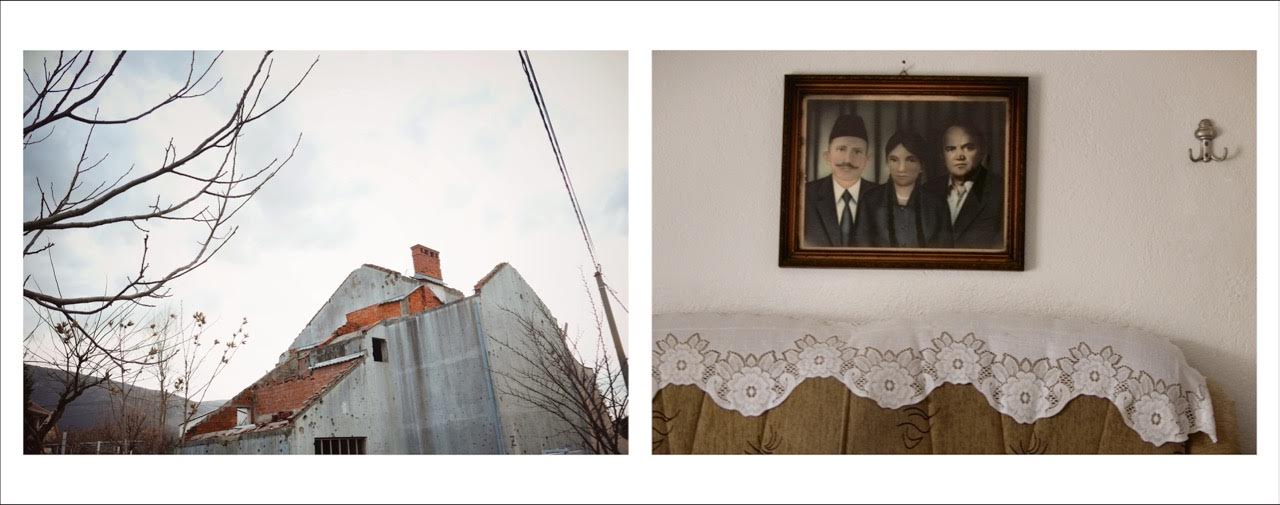
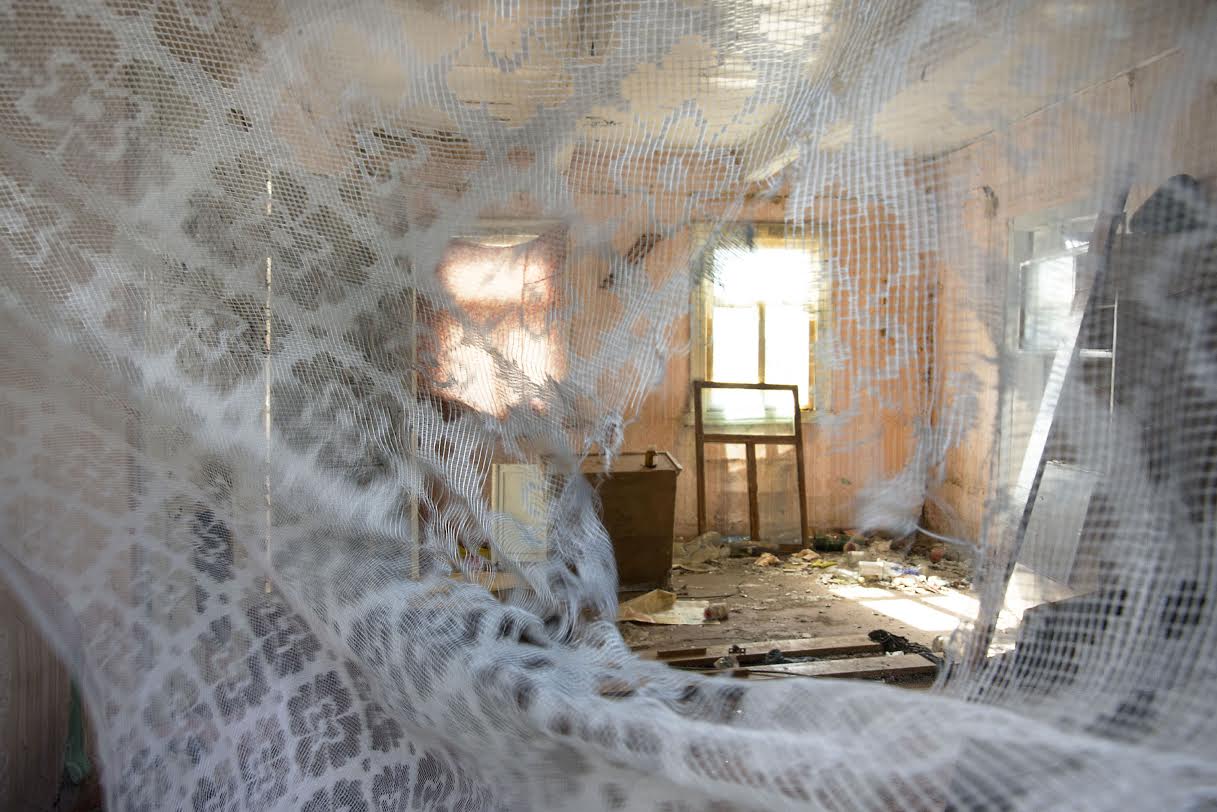
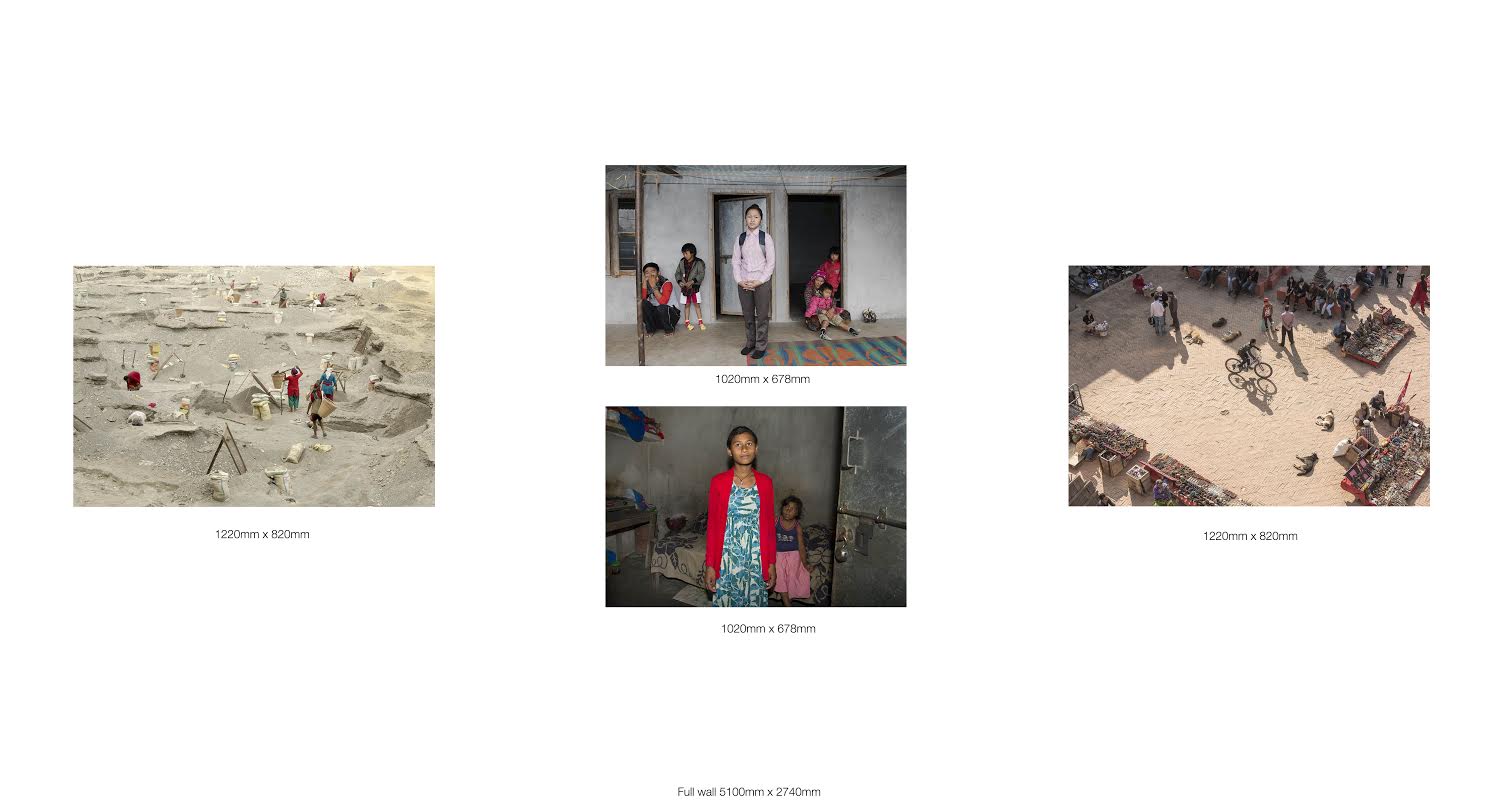
A l’origine du projet, trois photographes résidant à Londres discutent et réfléchissent sur les récents travaux, tournant tous autour de grandes crises qui ont fait la une de « l’actualité ». Mais qui ne la font plus… La guerre de Bosnie, l’accident nucléaire de Tchernobyl, il y a 30 ans, et le tremblement de terre au Népal. Sophie Fauchier, Chris Gravett et Karen Block décident de réfléchir sur cette idée de l’actualité passé, « yesterday’s news », comme on dit dans les salles de rédaction.
Puis ils ont rencontré un lieu. Platform Southwark a ouvert il y a peu dans le sud de Londres, à deux pas de la Tamise, du dynamique centre culture de Southbank et de l’incontournable scène du Young Vic. Organisateur d’une festival de théâtre acclamé sur la santé mental fin mai, Stories of Being, Platform est un lieu multidimensionnel, tour à tour salle de concert, scène de spectacle vivant et lieu d’exposition, un de ces lieux revigorants et innovants dont la capitale britannique à le secret, au cœur d’un quartier en plein renouveau.
Le bâtiment de briques peintes en noir est orné d’un logo aux lettres blanches affichant son nom, auquel on accède par une cour accueillante. Ses trois étages permettent la création de spectacle et l’organisation d’ateliers, le but étant de permettre à des artistes de créer, collaborer et participer à la vie de la communauté.
L’exposition se présente comme une expérience immersive, mise en son et en mouvement par les designers de plateau Jojo Fauchier et Darcy Davies, ainsi que l’artiste et musicien Evan Lopez de Bergara.
Trois actualités oubliées, trois écritures photographiques
« C’est après avoir fini ma formation à la photographie d’art que je me suis tournée vers Karen et Chris », raconte Sophie Fauchier, une Française installée à Londres depuis près de 25 ans. Elle leur a proposé le lieu et le thème de l’exposition. « Karen est passionné par l’histoire de Tchernobyl et Chris est photographe documentaire. Il a souvent travaillé au Népal et en avait gardé de merveilleux souvenir avant la catastrophe ».
Sophie Fauchier est une artiste photographe et travaille notamment sur des récits photographiques. Elle s’est rendu pour la première fois en Bosnie pour l’ONG ‘Miracles Centre for Prosthesis and Care’, basée à Mostar. « Je ne voulais pas être trop informée avant de m’y rendre », explique l’artiste, « j’avais lu des livres d’histoires, je connaissais l’actualité, mais je voulais la place à l’aspect humain en premier lieu ». Elle a suivi la prothésiste et fondatrice de l’association et a ainsi pu progressivement rencontrer les familles des blessés et survivants… En février dernier, elle est également partie sur les routes entre Mostar et les villages du centre de la Bosnie pour poursuivre son projet. Ses photos sont présentées par pair, dans un travail autant émotionnel qu’esthétique sur la mémoire des lieux.
Karen Block travaille en art et sur des documentaires sociaux. Elle a été formée à la Royal Photographic Society et se rend en Biélorussie depuis 2015. Elle travaille aussi avec le CCP, le Chernobyl Children Project. Pour Yesterday’s News, elle a sélectionné trente photos, une pour chaque année depuis la catastrophe de Tchernobyl. Elle souhaite montrer les blessures cachées et les conséquences invisibles de l’accident et de la contamination nucléaire. Elle a choisi de montrer de nombreux lieux vidés de vie pour illustrer le passage du « nuage toxique ».
Chris Gravett est un photographe indépendant travaillant sur des sujets sociaux dans une démarche documentaire. En 2015, il est retourné au Népal suite au violent tremblement de terre, avec l’organisation Kidasha. Il a voulu montrer la capacité de résilience d’une société souffrant d’une dépression social et économique, miné par le travail des enfants, les trafics d’êtres humains, l’exploitation et une pauvreté chronique. Ses photos conjuguent portraits et paysages du Népal.
Le mercredi 8 juin, un panel d’experts discutera plus en profondeur de ces trois crises avec les trois photographes, ainsi que des conséquences du traitement ou de leur non traitement par les médias. Par eux : Tony Barber, rédacteur en chef pour l’Europe du Financial Times, correspondent à Moscou de l’agence de presse Reuters dans les années 80, et reporter de guerre pour The Independent durant la Guerre de Bosnie, et Jane Corbin, journaliste et réalisatrice pour la BBC et The Guardian entre autres.
Le samedi 11 juin à 16h, le poète Mario Petrucci, docteur en physique, donnera une lecture de son poème primé ‘Heavy Water, a Poem for Chernobyl’. Il sera ensuite rejoint par Linda Walker, la fondatrice du Chernobyl Children’s Project), pour une discussion sur les conséquences de cette catastrophe.

Informations Pratiques :

Yesterday’s News
Platform Southwark
1 Joan Street | London | SE1 8DD
Karen Block | Chernobyl – Sophie Fauchier | Bosnia – Chris Gravett | Nepal


--

Plus de photos:


Chris Gravett :


Karen Block :


Sophie Fauchier :


Karen Block : 


04/06/2016

Should They Stay Or Should They Go...


About this time of year, 19 years ago, I travelled to London with a friend. It wasn't my first time in the city, but it was my first free and wild visit, without adults or teachers, some funny few days between Soho and Camden Town, for two teenagers eager to discover the world, to escape the road from school to adult life.
It started in me a deep passion for England, that was becoming concrete, after years of reading into British bands' lyrics and films, theatre, novels, poetry. London didn't seem so close back then, it was so exotic for a Parisian, so exciting, so big and so energetic. It still is somehow.
How almost two decades have past, I don't know. It seems insane! Since then I've seen much much more of England, lived two years in London, visited a few other - very - different cities, and found a real passion for a different England in the West Country... Bristol changed my vision of the UK for sure, changed a bit of my life also.
I've never felt that a place was so much of my second home. And at the same time my hometown has never felt so estranged...
Now, United Kingdom, Britons, you're voting soon to choose either to leave or to remain in our European Union. It seems like the worst timing to separate...

What can I say? "Don't leave... Don't leave".
Well, I found out this song could actually be about our love as people more than as couples...
So, United Kingdom, see you soon, once you've vote. Well.

Radiohead - 'True Love Waits' - Live In Paris 2016

https://www.youtube.com/watch?v=McOmif9yxbE


"The ones worth suffering for"


“If she’s amazing, she won’t be easy. 

If she’s easy, she won’t be amazing. 

If she’s worth it, you won’t give up. 

If you give up, you’re not worthy… 

Truth is, everybody is going to hurt you; 

you just gotta find the ones worth suffering for.” 


    – Bob Marley


"La splendeur de la vie"


“Il est parfaitement concevable que la splendeur de la vie se tienne prête à côté de chaque être et toujours dans sa plénitude, mais qu’elle soit voilée, enfouie dans les profondeurs, invisible, lointaine. Elle est pourtant là, ni hostile ni malveillante, ni sourde ; qu’on l’invoque par le mot juste, par son nom juste, et elle vient. C’est là l’essence de la magie qui ne crée pas, mais invoque.


            — Franz Kafka, Journal


02/06/2016

"Being on the road is so romantic"... Jeff Buckley


 One of my first musical loves, passions, awakenings... The voice of Jeff Buckley. The grace of Grace!
This music shook me to the core, changed me and made me feel so understood... His songs are among those I love the most to sing, at home, and in my heart.

Listen to this documentary on BBC Radio 4 about the making of the album and the making of the man, and about his relationship to England.

One of the first direct quotes from him says: "Being on the road is so romantic"... Yes, indeed, a few people are drawn on the road all the time. It may be what musicians and wandering itinerant journalists have in common...

Then is mentioned is love for Elizabeth Fraser's voice and Jimmy Page's guitare skills.

Link to the audio:
http://www.bbc.co.uk/programmes/b048hxpk?ns_mchannel=social&ns_campaign=bbc_radio_4&ns_source=facebook&ns_linkname=radio_and_music


Details:

Since his desperately early death in May 1997, there's been an inevitable mythologizing about the life and music of Jeff Buckley. Perhaps it's not surprising that in the posthumous rush to acknowledge his genius, memories have been clouded or, retrospectively, given a silver lining.
The quiet, uncertain foundations of his reputation were laid on a solo tour of Europe three years earlier, in March 1994 - and, in particular, during one day. On the 18th March, Buckley was scheduled for a photo shoot (with Kevin Westenberg), an appearance on BBC GLR and his first proper London concert, at a folk club called Bunjies.
In 'The Grace of Jeff Buckley', those who were there speak for the first time about the man and his music: Buckley's American manager Dave Lory, record company owner Steve Abbott, booking agent Emma Banks and photographer Kevin Westenberg share intimate memories that have so far not featured in the Buckley biography.
And the programme also includes rare archive: the GLR radio session that has not been heard since that live broadcast in 1994 - including an astonishing version of 'Grace' - and, exclusively, a private interview that Buckley recorded on the eve of this tour but decided not to release.
Together, these glimpses offer a portrait of a young man whose voice and musicianship, as well as his irresistible charisma and the trauma of his early death, touched millions.
Produced by Alan Hall.
A Falling Tree production for BBC Radio 4.
--

Mary Anne Hobbs recommends

Mary Anne Hobbs recommends
"This programme centres on a short trip that Jeff Buckley made to the UK in 1994. We hear stories of a tender but troubled soul, with shadowy unresolved issues from childhood haunting him, from his manager, agent, photographer and driver. We also get a taste of his first BBC session for the local London station GLR, which he kicks out in a rage. It gives us a measure of just how gifted he really was, and what a tragedy it was to lose him in the Mississippi River aged just 30."

--

PS. One of the most beautiful love songs in the world:


Jeff Buckley - 'Lover, You Should've Come Over' (Acoustic)