09/09/2017

"NATIVE INVADER"


 Music inspires so much love. LOVE.

This album is what our NOW needs. So grateful to this amazing woman, musician, songwriter, out-of-this-world vocalist and genius pianist - a real force of nature - for her path and her maturity.

Extract from The Guardian yesterday, my very personal selection... I don't like the title and some of the questions, so here are only a few parts of the long article.

In bold, two of the most important topic of the moment, completely under-addressed:

-The US and the killing of the First Nation people
-Men and vulnerability...

 These could have been source for a great title.

-

Thank you Lady Amos.

And see you on Monday au Grand Rex.

-


Tori Amos - Reindeer King (Audio)


-


A walk in the Smoky Mountains in the footsteps of her late Cherokee grandfather helped the musician rediscover her muse – and write an album that confronts the US’s rapacious violence

Thursday 7 September 2017 


(...)

Native Invader, released this week, is Amos’s 15th studio album, some 25 years on from her solo debut Little Earthquakes. She is feeling “fortunate, blessed” about this benchmark. “But writing is still nerve-racking, mostly because I’m waiting for the muses to turn up.” She has jump-started the process in previous years; a penchant for hallucinogens, for example, is well documented. “Oh, I haven’t done those in a while,” says the 54-year-old. “I’m leaving that to the youth now.”
(...)
It was a trip through the Great Smoky Mountains, her late Cherokee grandfather’s ancestral lands, last autumn that grounded her. Trekking through the Appalachian sub-range (a stretch that bridges North Carolina and Tennessee), she imagined her “Poppa” as a boy, treading those same routes. “In that moment, we shared something; seeds were planted. I didn’t recognise them at the time, though. It was very humbling.”
Poppa’s influence runs deep on Native Invader, peaking in the urgent thrum of the album’s standout single, Up the Creek. When she was a girl, Poppa taught her about songlines – the sacred navigational paths of the indigenous folk. “We’d take walks. He’d smoke his pipe, tell me his people’s stories. There was no fanfare to it. I just drank it all in, like a weed.”
Lineage and land, then, are dovetailing influences on this album. Resilience, too, the environmental kind – climate change hangs heavy – and the psychological, both in the face of Trump-era chaos. In the US last year, while working on a song for the Netflix teen drama Audrie & Daisy, Amos experienced the poison he has spread first-hand. “I remember flying into Florida and sitting next to a woman who chanted, ‘Lock her up!’ the whole way there. Oh! Such hate,” she says. “After that, I began to see the polarities; people unfriending family members on Facebook …”
The schisms bore an unsettling similarity to Poppa’s accounts of post-civil war life, gleaned from his mother, Little Margaret, a formidable, tomahawk-wielding matriarch who had evaded the forced relocation of Native Americans by means of taking refuge in the Smokies. “I remember Poppa telling me how cousins would fight cousins, how some families still hadn’t healed, a hundred or so years later. The similarities terrified me. I cocooned myself there for a minute, and the muses weren’t coming.”
(...)
“I think mother earth is being incredibly resilient against a government that seems hell-bent on exploiting her resources,” she says. “So she is under attack, and yet, when I walk in her bounty, I don’t get the sense that she’s giving up, or defeated. I do sense that [feeling] in people though.”

She says that paranoia and fear permeated the tours for her post-9/11 album, Scarlet’s Walk, but she’d encountered the “smell, the taste” of political influence, years before, playing to piano bar lobbyist crowds in Georgetown, Washington, throughout her teens. “I was at a very impressionable age, performing for people making huge backroom decisions about the country. That was back when [Trump’s Supreme Court appointee] Neil Gorsuch’s mother was head of the Environmental Protection Agency. Iran-ContraWeinberger – I played through all of that.”
Remaining creative in the face of the machine, she says, is vital. “You can’t beat a bully at his own games. And I’m not talking about one particular bully here; it’s energy. You have to out-create the destruction – it’s the only way.”
But first, says Amos, the US must face its shame: its crimes against the First Nations, from Andrew Jackson’s 1830 Indian Removal Act to the bulldozers that crushed the Standing Rock protests this February. “I’m not in a position to speak for First Nation people – that’s a sacred task. But, as an observer, it seems to me that, unlike Germany, we’ve never had to really face our holocaust. Until we do that, the healing can’t begin.”
(...)
It was Amos’s physician sister, Marie Amos Dobyns, a member of the Association of American Indian Physicians, who prompted the pilgrimage. “Marie’s a big believer in championing the voiceless; I didn’t truly understand that until Mary lost hers.” Dobyns has forged deep friendships in the Native-American medicine communities over the years, says Amos, kinships she has been generous enough to share with Amos. “I call them the ‘Seattle sweat lodge sisters’. There’s nothing I’ve experienced like [sitting in a sweat lodge with them]; you feel so nurtured, so given to. But there’s a nakedness, a vulnerability, you have to bring to it in order to receive that.”
Vulnerability – men’s, in particular – is tackled compassionately on the Native Invader song Wings: “Sometimes, big boys, they need to cry.” Is she referencing anyone in particular here? “Oh, I see it all around me: in my marriage, in my crew.” Men can spend hours gabbing in the pub, Amos says, without ever articulating their feelings. When, I wonder, did Trump last cry? Would we all be safer from the epidemic of toxic white masculinity – Charlottesville, Dylann Roof, “fire and fury” – if men could own their fragility? “Listen, we have all heard men being called a certain female body part when they cry. And we all know the real power of that body part; talk about a multitasker! Emotional vulnerability takes bravery. Great male leaders through the ages have understood this.”
(...)
“I’ve been doing music since I was two and a half; it’s the thing that makes sense to me.” And yet, at her peak, Amos didn’t always make sense to her critics. In the 90s, her genius was frequently couched in misogynistic backhanders by the music press: she was a “weird chick” in Q; a “Grade-A, class-one, turbo-driven fruitcake” in the NME. “And they weren’t all men, those critics,” Amos points out wryly. But she persisted, and here she is now, 15 albums in – still touring, still creating, still defiant.

-

Link to article : https://www.theguardian.com/music/2017/sep/07/tori-amos-menopause-is-the-hardest-teacher-ive-met-harder-than-fame?utm_source=esp&utm_medium=Email&utm_campaign=Sleeve+notes+Collections&utm_term=242873&subid=88933&CMP=sleevenotes_collection

-

I add this short review:

Review: Tori Amos Processes our Trump-Era Trauma on 'Native Invader'


Our take on the 15th album from the piano-balladeer  (Rolling Stone)


Few artists are as deft as Tori Amos at writing about the ways people process pain. In these times of national trauma, then, a new LP from her feels uniquely urgent. Amos confronts the Trump era most effectively with "Broken Arrow" and "Up the Creek," darkly funky protests against white supremacy and climate ignorance. Elsewhere, she rolls through psychedelia ("Wildwood"), chilled-out trip-hop ("Wings") and her trademark passionate piano ballads ("Bang," "Mary's Eyes"), scattering political allusions like seed pearls. It adds up to one of the most purposeful full-length statements in her quarter-century career. 


08/09/2017

"These Europeans came to live a British dream..."


COULDN'T AGREE MORE!!


These Europeans came to live a British dream. Is it all over? | by John Harris


Hard-working and self-reliant, they moved to the UK to get ahead. But tough talk on immigration makes many fear for the future

On the southern edge of Peterborough is a new residential development called Cardea – a huge expanse of housing served by a solitary Morrisons supermarket and a self-styled “clean, modern pub” called the Apple Cart – which has become a byword for the more affluent elements of the city’s Polish population.

On roads called Jupiter Avenue, Hercules Way and Neptune Close, newly built homes extend into the distance. A three-bedroom detached will give you change out of £250,000, and put you in close proximity to the expanse of warehouses, distribution centres and retail outlets which power a big part of the local economy. The openings such places offer tend to fall one of two ways: management positions and tech roles for people who have either worked their way up or arrived with the right qualifications; or, at what the modern vernacular calls entry level, more uncertain roles for people who are prepared to put in the graft, and who often shoulder the burden of mind-bending shift patterns and low wages.

From a leftie perspective, all this might suggest some awful neoliberal dystopia. But to many people from EU countries, Peterborough has offered the prospect of self-improvement and hard-won comfort. Individual career histories often defy not only the more doomy critiques of the modern job market, but the idea that human beings can be neatly divided into “low-skilled” and “high-skilled”. They instead present a picture of people who have determinedly moved from one category to another.

One of my most reliable contacts is a fortysomething man who arrived in 2005, began stacking shelves for Marks & Spencer, and now runs his own photography business. In the recent past, I have met people who started packing crates for Ikea and became middle-managers, or initially found low-grade work in supermarkets, only to eventually open their own shops.
Such stories are built around a set of aspirations: property ownership, relative affluence, and as much stability and security as the modern economy can deliver. Hearing them first-hand, I have felt at least some of my ingrained scepticism and jadedness melt away: it might be easy to scoff at such an idea, but at least some people in this part of England have lived out a kind of British dream.

But no more, perhaps. Since 24 June last year, the signals emanating from Whitehall and Westminster have been clear. If the United Kingdom once offered an open door and an array of opportunities, such things are now almost completely obscured by mistrust, bad faith, and the sense that a majority of people in England and Wales (including the 61% of voters in Peterborough who supported Brexit) have had enough.

Such is the upshot of those leaked proposals from the Home Office, reportedly reflective of the views of Theresa May herself, and loudly endorsed by the rightwing press. In symbolic terms, this is just one more burst of nastiness and delusion to add to an ever-expanding pile. But in the sense of practical policy, what has been proposed represents something quite remarkable: confirmation that post-Brexit Britain will put the demands of economics – or, put another way, national prosperity – well below the emotional stuff of belonging and nationhood, with no end of consequences.

Certainly, if it all comes to pass, there will be no more Cardeas. For any would-be migrant from mainland Europe, the kind of career ladder scaled by people in Peterborough will be snapped in two. Supposedly low-skilled workers will only be able to stay for up to two years; even the high-skilled will have their stays capped at five. In that sense, the British dream will be over: migration from the EU will be subject to the kind of guest worker system that institutionalises prejudice and mistrust, and puts up huge barriers to some of the most basic elements of human existence.
Britain will be no place to start a family, or buy a home; as with people from outside the EU, anyone wanting to come and work here will be subject to an almost incomprehensible regime of income requirements, residency permits and immigration checks.

As far as I can tell, the mood among many people from EU countries remains stoical and hard-headed, perhaps reflective of a sensibility ingrained under communism, when the people in power regularly lost their minds but life had somehow to continue. “You are leaving the EU, so I guess some sort of restriction is inevitable,” said one of my Polish acquaintances this week.
But at the same time, there is a sense of a collective anxiety that has been slowly growing since last summer. On that score, I think of a woman I met in a Peterborough delicatessen back in February, who told me that her Facebook feed had recently filled with rumours that after the triggering of article 50, people from EU countries would be barred from re-entering Britain. “There are fears that they might chase us out of here, fears of deportations,” she said. Then she shrugged. “But life goes on.”

What all this says about the state of British Conservatism is very revealing. Post-Thatcher, the Tories have never resolved the tensions between the politics of nationalism and base prejudice, and the most basic principles of free-market economics. But if May has her way, the first will decisively trump (a good word, that) the second.

In that sense, the fate of a lot of people from mainland Europe will be hugely symbolic. Most of the EU citizens I have spoken to in Peterborough do not have a leftwing thought in their heads; they believe in a credo of self-reliance, hard work and home ownership. In a British context, these ideas are as Tory as they come. So how come so many Conservatives now want to slam the door on their most devout adherents?
And what of the economy? Peterborough is one of the largest urban centres of a region of England in which unemployment is below the national average; and in a city of nearly 300,000, a mere 1,770 people are currently claiming out-of-work benefits. Its successive waves of migration from the EU – first Poles, Latvians and Lithuanians, then Bulgarians and Romanians – have fed a job market in which most British people are barely interested. Nonetheless, all of us have come to expect the benefits: cut-price food; consumerism-on-tap; the confidence of knowing that an online click today means a delivery tomorrow; the idea that if the worst comes to the worst, some or other army of care workers will be there to look after us.

No more, perhaps: if a good deal of the explanation for Brexit is about a denial of the future and some misplaced vision of the past, we may be about to find out what all that means in practice.

Terrified of the more irate elements of its core vote, the Labour party currently seems little interested in loudly raising the alarm. Whether Tory unease will boil over is uncertain, at best. But what we could be about to lose is obvious. Frozen into the brickwork of those newly built houses in Peterborough is a whole host of stuff – hard work, persistence, ambition, stoicism – that has played a huge role in keeping an increasingly fragile country in business. To throw all that away would be madness. But amid the general lunacy of Brexit, will that be enough to stop it?


"A quel moment le Monde a-t-il perdu son Humanité?"


Sospel, février 2017. Photo : Mélissa Chemam


Je ne peux que partager cette tribune publiée en août par l'association Citoyens Solidaires 06 :


A quel moment le Monde a-t-il perdu son Humanité?

Ce soir chez Citoyens Solidaires 06, on en a gros sur la patate.
Alors une fois n’est pas coutume, nous allons un peu parler de ce qui se passe tout à côté de chez nous, mais en même temps loin de nous : ce qui se passe en Mer Méditerranée.

Voici des mois que nous essayons aux côtés de milliers d’associations d’ONG, de citoyen.ne.s de toutes nationalités et tous horizons, de tenter de faire comprendre à nos concitoyen.ne.s qu’il n’y a pas de crise migratoire, mais une crise de l’accueil. Que d’accueillir ne signifie pas souffrir. Que nos situations personnelles ne se trouveraient pas affectées si l’Etat français acceptait enfin d’être digne de notre devise (rappel pour les nul.le.s : « Liberté, Egalité, Fraternité », vous savez, les 3 mots écrits sur les frontons des mairies, palais de justice, écoles…)

Des mois que nous crions pour que les droits des exilé.e.s soient respectés, pour qu’ils.elles puissent accéder à leurs droits dans les Alpes-Maritimes, mais aussi en France, dans l’Union Européenne, et plus globalement encore dans le Monde.
Mais voilà, l’actualité de ces derniers jours pourrait presque nous décourager, même si nous n’en ferons rien, car ce n’est pas de nous qu’il s’agit, mais de femmes, d’enfants et d’hommes qui n’ont pas demandé à être traité.e.s comme des moins que rien par nos autorités.

Ce vendredi 11 août, nous avons eu comme tout le monde le sourire aux lèvres en prenant connaissance de la débâcle du C-Star, vous savez ce navire acquis par Génération Identitaire aux fins non voilées d’empêcher le sauvetage en mer des exilé.e.s. Pour ceux et celles qui n’auraient pas suivi, le C-Star a reçu une proposition de l’ONG d’aide aux exilé.e.s Sea-Eye en vue d’aider son équipage suite à des problèmes mécaniques inavoués (ici).

Mais en réalité, il y a bien pire que Génération Identitaire pour empêcher les sauvetages. Il y a les Etats concernés, de près, ou de loin. L’Union Européenne et ses accords avec la Libye, l’Italie, en accord avec l’UE et sa « charte de bonne conduite des ONG » (laissant la population croire que lesdites ONG s’enrichiraient en faisant affaire avec les passeurs), la Libye elle-même avec son interdiction faite aux ONG de secourir les embarcations en péril au sein desses eaux territoriales (faisant croire que ses garde-côtes vont se charger des sauvetages). Toutes ces décisions qui ne prennent pas en compte les êtres humains dont elle décide du sort, et qui, dans le même temps, génèrent du racisme au sein des populations et ainsi le rejet de ces êtres humains.

Alors nous, à Citoyens Solidaires 06, on se demande à quel moment le Monde a-t-il perdu son Humanité. A quel moment des êtres humains ont vrillé au point de parler de certain.e.s de leurs semblables comme s’ils.elles ne l’étaient pas? Commes s’ils.elles n’étaient que des chiffres? A quel moment « les politiques migratoires » sont devenues plus importantes que des vies humaines? A quel moment des hommes, des femmes et des enfants ne sont devenu.e.s que des « migrants », des chiffres, des flux? A quel moment défendre son propre bout de pain est-il devenu plus important que de préserver la vie d’êtres humains en détresse? Où sont passées nos valeurs de fraternité et de partage?

Qu’ils.elles fuient leur pays pour cause de guerre ou de misère et de famine, nous rappelons que cela n’est pas chose aisée. Il est par contre très facile de dire « oh, moi à leur place, je prendrais les armes pour combattre et défendre mon pays » ou encore « moi, je me battrais pour gagner de l’argent et nourrir ma famille, mais je ne quitterais jamais mon pays« . Comment pouvons-nous savoir ce que nous ferions si nous étions à leur place? Nous n’y sommes pas justement. Et nous sommes privilégié.e.s parce que bien né.e.s, né.e.s du bon côté de la Mer Méditerranée. Alors de quel droit pouvons-nous juger ces hommes et ces femmes d’avoir fui, en les observant depuis nos canapés sur nos écrans de télévision, (plateau télé sur les genoux et télécommande à portée de main pour pouvoir zapper et ne pas voir ce qui nous dérangerait)? Qui sommes-nous pour décider que nous ne devrions pas les accueillir, leur tendre la main, leur ouvrir nos portes (et nos cœurs)?

Cette Mer dans laquelle nous, habitant.e.s des Alpes-Maritimes, nous avons appris à nager. Eux.elles, ne savent pas nager. En 15 ans, environ 46 000 personnes sont décédées dans notre Mer Méditerranée, dont plus de 13 000 depuis 2014, plus de 2 400 au cours du premier semestre 2017. Ces personnes cherchaient une vie meilleure. Elles n’auront pour la plupart même pas droit à une sépulture, personne ne pouvant attester de leur décès en mer. Alors forcément, on ne la voit plus vraiment pareil la Mer Méditerranée. On imagine tous ces corps sans vie posés là, tout au fond, à quelques kilomètres de nos côtes, et ça devient compliqué de faire trempette. Vous vous souvenez peut-être, il y a quelques temps, un fake avait été inventé par les racistes pour dénoncer des « méchants migrants irrespectueux assis sur des tombes dans nos cimetières en salissant la mémoire de la Tante Gertrude et de la cousine Germaine« ? Est-ce cohérent que ces mêmes racistes ne soient pas gênés de se baigner dans la Méditerranée (voire d’y uriner, parce qu’on est bien d’accord, on a tous et toutes fait pipi dans la mer, au moins une fois)? Ce n’est pas gênant de batifoler dans un cimetière à ciel ouvert où plus de 46 000 corps ont été ensevelis en 15 petites années? Cela n’est pas considéré comme de la profanation?

Tout ça, vous nous direz que c’est déjà pas mal pour mettre un coup au moral (et encore, on ne parle pas ici des déclarations récentes de notre ministre de l’intérieur qui veut trier les gens comme des chaussettes sales, de ce qui se passe à Calais comme à Vintimille ou encore dans la Roya ou dans le camp de Metz-Blida ou dans les rues de Nice, ou des 300 personnes jetées à l’eau au large du Yémen par des passeurs, ou…. il y en aurait tant à dire…).

Mais voilà. Nous avons pris connaissance du communiqué de Médecins Sans Frontière du 12 août 2017. En le lisant, nous ressentions la même sensation que lorsque nous entendons le glas sonner (ceux et celles ayant vécu dans des petits villages comprendront).

Nous apprenons donc ce soir que suite à la toute récente décision de la Libye d’interdire aux navires des ONG d’approcher trop près, Médecins Sans Frontière suspend les activités de son navire « Le Prudence »:
Hier, les autorités libyennes ont annoncé l’établissement d’une zone de recherche et sauvetage (SAR) et la limitation de l’accès des bateaux humanitaires aux eaux internationales au large des côtes libyennes. Immédiatement après cette annonce, le Centre de Coordination du Sauvetage Maritime basé à Rome (MRCC) a alerté MSF au sujet des risques de sécurité associés aux menaces exprimées par les garde-côtes libyens à l’encontre des bateaux humanitaires de recherche et sauvetage.
Suite à ces restrictions supplémentaires à l’aide humanitaire indépendante, et face au durcissement du blocus qui retient les migrants en Libye, MSF a décidé de suspendre temporairement les activités de recherche et sauvetage de son bateau, le Prudence. L’équipe de soutien médical de MSF continuera à assister la capacité de sauvetage sur le bateau dirigé par SOS Méditerranée – l’Aquarius – qui navigue actuellement dans les eaux internationales.
« Si ces déclarations seront confirmées et ces directives mises en oeuvre, il y a aura plus de morts en mer et plus de gens seront piégés en Libye, précise Annemarie Loof, directrice des opérations de MSF. Sans les navires des organisations humanitaires, il n’y aura pas assez de capacités pour sauver les gens de la noyade. Ceux qui ne se noieront pas seront interceptés et ramenés en Libye, où ils seront exposés à l’insécurité et à la détention arbitraire. »
Laisser les exilé.e.s aux mains des Libyens, c’est un peu comme laisser ses enfants à …. NON. Nous ne l’écrirons pas. Nous vous laissons imaginer la suite. Personne, non personne, ne peut ignorer la situation en Libye. Les témoignages affluent de tous les côtés. Des enfants armé.e.s dont le jeu favori est de tirer sur les noir.e.s (on a beau hurler contre le handspinner dans nos cours d’école françaises, mais au moins, ça ne tue personne. En théorie). Des marchés d’esclaves, comme à la grande époque. La traite des femmes (premières victimes dès qu’il se passe quelque chose quelque part d’ailleurs, mais c’est un autre sujet). Et les habitant.e.s de l’Union Européenne seraient d’accord pour donner 10 millions d’euros à la Libye et permettre la pérennité de ces actes atroces? Vous qui nous lisez, êtes vous d’accord pour être complices de ça?

Chez Citoyens Solidaires 06, nous n’avons pas l’habitude de livrer nos billets d’humeur, mais là c’était trop. L’actualité était trop chargée, nous avions besoin de partager tout ça.
Nous vous quitterons en vous laissant (re)visionner ce poignant documentaire réalisé par Jean Paul Mari et Frank Dhelens au cours du premier semestre 2016 à bord de l’Aquarius, navire de l’ONG Sos Méditerranée (2016 Production Point du Jour), comme un hommage à toutes ces personnes décédées en Mer Méditerranée. Les Migrants ne savent pas nager. *

Lien : https://www.dailymotion.com/video/x5mnxff


Attention, ce film contient des images pouvant heurter la sensibilité notamment des plus jeunes, et ce dès les premières secondes

-

Et pour aller plus loin, voire vérifier ce que l’on raconte (on ne vous dit jamais assez de vérifier vos sources) :
  • Généralités :
  • Les décès en Méditerranée:
  • La charte bonne de conduite des ONG 
  • Les accords UE / Libye
  • Libye : interdiction aux ONG d’approcher
  • Et si besoin était, situation des exilé.e.s en Libye


Bristol : rendez-vous mardi à La Colonie!


(Rencontre / projection) 

Pour ceux qui sont à Paris : rendez-vous mardi à La Colonie!


Une petite introduction avant mardi... 

Avec Blue Lines, en 1991, Massive Attack montre de manière explosive comment le collectif a réussi à synthétiser une quantité incroyable d'influences, musicales et artistiques, tout en projetant un son totalement nouveau... 

Ce ton soul, hip-hop et ultra-moderne à la fois est un héritage d'années DJ-ing dans les caves et immeubles désaffectés de Bristol, où se sont mélangés des fans de punk, des enfants de travailleurs de Caraïbes, nourris de reggae, et des passionnées de hip-hop américains. Le tout dans un univers underground et métissé!

Dix ans plus tard, les groupes et DJ qui se feront un nom ne s'appesantiront certainement pas sur les lauriers de leur gloire, et préparent déjà d'autres sons et projets provocateurs...

Mais pour commencer, le son de 1991 :


-

Les détails


SEP12

Rumeurs sur Bristol : 20 ans d'une scène artistique engagée


1997-2017 : 20 ans d'une scène artistique forte, rebelle et engagée.

AU PROGRAMME : Discussion, un peu d'histoire et beaucoup de vidéoclips commentés. Les meilleurs, les plus coups de poing...

En 1997, de la sortie du 'Risingson' de Massive Attack aux débuts de Banksy, Bristol a marqué l'Angleterre au fer rouge de sons et visuels décapants, bruts, engagés et sans compromis. Après avoir fait la première partie de David Bowie et Radiohead, Massive Attack revient avec un single sans concession, 'Risingson', annonçant leur chef d'oeuvre, 'Mezzanine'. 

Au même moment, Tricky (autoproclamé 'Nearly God') collabore avec Björk et PJ Harvey, Roni Size remporte le Mercury Prize avec le premier grand album de drum & bass ('New Form') et Portishead s'impose avec un sublime deuxième album. 

Quant à Banksy, il sort tout juste de l'ombre... 

1997 voit exploser un groupe d'artistes et scène visuelle et sonore venue d'une ville revêche et politiquement sans concession, qui impose sa vision brute, réaliste, et postcoloniale d'une Angleterre alors commercialement enrubannée dans les atours de la "Brit Pop" et du "Cool Britannia". 

Deux mondes que tout oppose!

-


-

Lien : https://www.facebook.com/events/1959983860890067/?active_tab=about

-


Pour trouver le livre : librairie Nordest, Paris 10e :

https://www.librairienordest.fr/livre/10061843-en-dehors-de-la-zone-de-confort-de-massive-atta--chemam-melissa-anne-carriere


Qu’ont en commun le Pont suspendu d’Isambart Brunel, l’acteur Cary Grant, le groupe Massive Attack et l’artiste de rue Banksy ? Ils sont tous originaires de Bristol, une ville moyenne de l’ouest de l’Angleterre. Une ville marquée par une histoire riche et complexe, mais encore jamais racontée ! Marquée par une fortune précoce liée à l’ouverture de l’Angleterre vers l’Amérique, elle devient aussi un des points névralgiques du commerce triangulaire. C’est justement cette histoire qui va nourrir, de manière inédite et radicale, la génération d’artistes éclose à Bristol à partir de la fin des années 1970.

Tout prend forme lorsque qu’un jeune graffeur anglo-italien du nom de Robert Del Naja signe du pseudonyme « 3D » sa première œuvre de rue sur un mur de la ville en 1983. Avant de fonder le groupe Massive Attack en 1988 avec les DJs noirs Grantley Marshall et Andrew Vowles, il rencontrera les pionniers du post-punk de Londres et Bristol, les passionnées de reggae antillais du quartier de Saint Pauls, puis la chanteuse Neneh Cherry et le rappeur Tricky. Creuset inattendu mêlant hip-pop, reggae, soul et guitares rebelles, le premier album de Massive Attack, Blue Lines, sort en 1991 et provoque une révolution dans la culture populaire britannique. Massive Attack devient l’incarnation du succès d’un métissage à la britannique, et parviendra à toujours se renouveler, tenter de nouvelles révolutions et durer au-delà de nombreux mouvements musicaux des années 1990 et 2000, telles la Brit Pop, l’electronica et le drum and bass.

Dans le sillage de cette créativité débridée mêlant musique, art et implication sociale profonde, naissent aussi les groupes Portishead et Roni Size, les mouvements nommés trip-hop et dubstep, et le génial Banksy, inspiré dès son plus jeune âge par les graffitis de Robert Del Naja. Depuis, la profondeur artistique de ces artistes et leur engagement n’ont fait que se renforcer, tout comme leur lien avec leur ville. Ce lien va devenir le tremplin qui les porte jusqu’à l’autre bout du monde, de l’Amérique à Gaza. Il pousse aussi très tôt Robert Del Naja à se mobiliser – contre la guerre d’Irak, pour les droits des Palestiniens ou, plus récemment, pour l’accueil des réfugiés jetés sur les routes européennes. 
Rébellion, art, musique, engagement, Bristol synthétise ainsi une autre histoire du Royaume-Uni. Une histoire qui amène au sommet des charts et sur le devant de la scène de parfaits autodidactes, et la part plurielle et afro-antillaise de la culture britannique.

07/09/2017

Banksy: News from Bethlehem


Winter bookings at The Walled Off Hotel are now open, with 25% off selected rooms, Sunday through Thursday, and the Presidential Suite is now half price for non-presidents.

Our gift shop is now open, selling a range of delightful souvenir trinkets made by Banksy exclusively for the hotel, like this charming high tensile grappling hook. Some items available worldwide on mail order.

-

Souvenir?

-


Winter bookings now being taken


-


Graffiti masterclass with @lushsux 
(the artist formerly known as LUSH) 

20th - 22nd October
A very special package comprising two nights at the hotel in the company of "the world’s most entertaining vandal" who'll run a workshop, answer your questions, take you to a fresh piece of wall, help you paint a masterpiece and then escort you to dinner.. Limited availability and likely to contain adult themes. $200 per person + room rate. Register here.


-


In concert - Flea and Tom Waits

The Chilli Peppers bassist and gravelly voiced American icon have both recorded exclusive compositions to play on our automated baby grand piano. 

Twice daily.


-

Contact:  182 Caritas Street, Bethlehem, Palestine

http://walledoffhotel.com/index.html


06/09/2017

Last goodbyes


 Sad day with sad news. Again. While half of the world is struggling with floods, from South Asia to the Caribbean islands, the Brexit negotiations are showing their real face.


The New Statesman write today: "Among the proposals: people from the European Union will have to clear an income threshold in order to move to Britain" 

Then, goodbye United (well, so-called united) Kingdom... I loved you well and deeply. But I'm too poor for you I guess. 

Read here:


How leaked immigration plans expose the government's Brexit mess


These tough policies simply aren't compatible with assurances about a transition deal.

The Guardian has got hold of an 82-page Home Office paperoutlining Britain's proposed post-Brexit immigration policy, dated last month.
Among the proposals: people from the European Union will have to clear an income threshold in order to move to Britain, and in order to secure indefinite leave to remain will have to provide fingerprints and other information. Most visas will be capped to a two-year stay. The full document, which can be read here, is just a proposal, but strikingly one that would be incompatible with anything other than a hard and immediate exit from the single market and customs union in March 2019.
The contents are pretty much exactly in step with immigration policy under Theresa May, with the plans in much the same spirit as the post-2013 "hostile environment" approach: designed to encourage people already living here to leave and to deter others from arriving. The leaked paper is full of the sort of language that makes the Home Office so unpopular on Whitehall, and particularly in the Treasury. (One particular highlight calls on immigrants after Brexit to make a positive contribution to the lives of British people – something every study shows they already do.)
Over at the Times, Sam Coates has been digging into the leak and has unearthed details of the cabinet battle around the proposal. In the blue corner: Amber Rudd, who has been working to modify and soften the policy, as well as the Brexiteers Boris Johnson and Michael Gove, who are more liberal on immigration than the PM. In the purple corner: the PM, who is determined to enforce a tougher policy after Brexit. The row is part of why the PM's next big speech on Brexit has been pushed back to 21 September.
In many ways the leak confirms what we suspect and conforms to what we already know: that the PM has religion as far as a tough border policy goes, and that her hope at least is that after Brexit, Britain turns the same unwelcoming face to Europe as it does to the rest of the world.
But the interesting new development is in the date of the proposal: just last month. These policies simply aren't compatible with the government or the PM's assurances to business and to the public about a transition deal. One of the questions about the United Kingdom's Brexit strategy is if it really is as rushed and incoherent as it looks. On this evidence, the government's approach really is as messy and contradictory a first impression would suggest.
Stephen Bush is special correspondent at the New Statesman. His daily briefing, Morning Call, provides a quick and essential guide to domestic and global politics.
--


Check The Guardian:

Leaked document reveals UK Brexit plan to deter EU immigrants

Exclusive: Home Office paper sets out detailed proposals including measures to drive down number of low-skilled migrants from Europe


-


03/09/2017

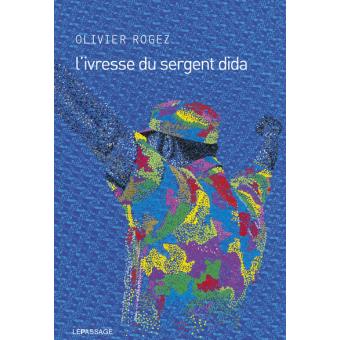
L’Ivresse du sergent Dida


 Un choix pour la rentrée littéraire, au parfum africain, of course :


L’IVRESSE DU SERGENT DIDA : 

LEÇON DOUCE-AMÈRE DE RÉVOLUTION 

D’OLIVIER ROGEZ


3 septembre 2017 Par
Melissa Chemam

L’Ivresse du sergent Dida, premier roman du journaliste africaniste Olivier Rogez paru le 31 août aux éditions Le Passage, décrit l’ascension irrationnelle et circonstancielle d’un sergent auquel le destin n’avait jusque là rien promis… Une plongée dans une Afrique colorée, riche mais corrompue, nourrie par une écriture foisonnante et des années de reportages de terrain qui n’ont pas dû manquer d’inspirer l’auteur.
l-ivree-du-sergent-dida
« Le sergent ressentit une soudaine bouffée d’amour pour ce bon colonel si compréhensif. Cet homme venait de faire de lui – le zéro absolu, le moins que rien – un cadre militaire occupé à de hautes fonctions. »
Après une enfance pénible sous le joug d’un père qui le rejette et le bat, une entrée dans l’armée qui s’est jouée sur une envie de contrer le mauvais sort, des années d’errance à ne presque rien combattre ou réussir, le sergent Dida a juste la chance, un jour comme un autre, de servir de couverture au Colonel Zoumana après un petit acte de corruption. Un de plus dans une Afrique de l’ouest hyper réaliste, rendue apathique par les petits détournements de fonds et de lourds dysfonctionnements. Le Colonel nomme alors le sergent fonctionnaire de l’armée en charge de l’essence… Et Dida, dans sa bonne fortune, ne ménage pas ses efforts pour se rendre indispensable, passant rapidement capitaine.
Ce pays imaginaire mais au combien parlant et évocateur, Olivier Rogez le décrit avec précision. Il fait vivre par une langue riche et évocatrice, des voix, odeurs, bruits et couleurs, des rues peuplées, des bars joviaux, et un quotidien fait de contradictions profondes et de petites joies. Dida, sa cousine Fanta, ses potes Pavi, César, Séraphine et les autres tentent d’évoluer dans ce quotidien chaotique quand des hommes armés attaquent le palais du président Hamidou Doumbia… Et, poussé à achever l’entremise, Dida devient le héros de la chute du régime. Il promet alors une révolution avec nationalisations et fins des abus des puissances étrangères ! Un rêve, un espoir populaire enflamme Dida mais alarme l’élite, les partis corrompus et les ambassadeurs occidentaux. S’en suivent une série de malencontreux rebondissements qui vont placer Dida face à la complexité du pouvoir…
Reporter depuis plus de vingt cinq ans pour Radio France Internationale, Oliver Rogez a couvert l’actualité sur le terrain, en Europe puis en Afrique, avec une plume radiophonique généreuse et littéraire qui laissait depuis longtemps pressentir l’auteur en lui. Avec ce roman, on repense aux espoirs contrariés du Burkina Faso et surtout à l’histoire convulsée de la Guinée Conakry. Il faut dire en effet qu’Olivier Rogez est un des rares journalistes français à s’être autant rendu sur place.
Evidemment, décrire trahisons et complots suivant un coup d’Etat, même en les universalisant au possible, conduit inéluctablement à souligner les dysfonctionnements d’un jeune Etat africain et de jeunes militaires, déformés par l’absence de justice et les conséquences douloureuses d’une décolonisation mal agencée, de décennies de politiques de « diviser pour mieux régner ». Un constat sombre donc, plus inspiré par les drames ouest et centre africains que par la croissance débridée et les marchés de l’art en ébullition de l’Afrique du Sud ou du Nigéria, mais portée par une écriture qui se veut universaliste, une foi en l’homme d’exception. Olivier Rogez a d’ailleurs placé en exergue de chaque partie du roman une citation de William Shakespeare… Cette Afrique imagée qu’il nous raconte est un paysage comme un autre de notre humanité, pour lui, un paysage qu’il a longuement étudié. Le livre offre aussi une introduction par les mots aux maux que l’Afrique tente en ce moment, avec plus ou moins de succès, de dépasser. Et la seconde partie emporte magistralement le lecteur dans une course folle vers un rêve, amer certes, porté par l’honnêteté et le désir de changement.
L’Ivresse du sergent Dida d’Olivier Rogez, Editions Le Passage, 312 pages, 18 euros


Ibeyi - 'Deathless'


 Give birth to yourself... This is what this video inspires me.
New song by the talented twin sisters Ibeyi.
You know my passions for twins also...


Ibeyi - 'Deathless' feat. Kamasi Washington


Published on 31 Aug 2017

Taken from the forthcoming album 'Ash', out September 29th via XL Recordings. http://x-l-r.co/ash

Stream 'Deathless' & Pre-order 'Ash' here: http://x-l-r.co/ash
Follow Ibeyi
Website: http://ibeyi.fr/
Twitter: https://twitter.com/IbeyiOfficial
Instagram: https://www.instagram.com/ibeyi2/
Facebook: https://www.facebook.com/ibeyimusic/

Director: Ed Morris
Writers: Morris & Kobulsz
Producer: Dulcie Kellett
Production Company: Rattling Stick