Journalist at RFI (ex-DW, BBC, CBC, F24...), writer (on art, music, culture...), I work in radio, podcasting, online, on films.
As a writer, I also contributed to the New Arab, Art UK, Byline Times, the i Paper...
Born in Paris, I was based in Prague, Miami, London, Nairobi (covering East Africa), Bangui, and in Bristol, UK. I also reported from Italy, Germany, Haiti, Tunisia, Liberia, Senegal, India, Mexico, Iraq, South Africa...
This blog is to share my work, news and cultural discoveries.
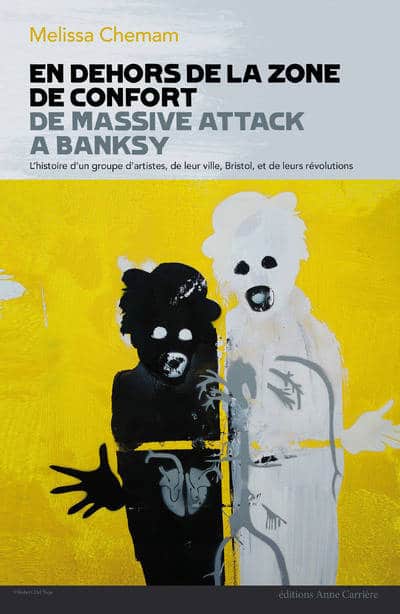
Bordeaux, parce qu'elle est jumelée avec Bristol, est pour moi une première étape! Etape comme début d'une réflexion sur le rôle des villes, des politiques de la ville, des artistes et musiciens au niveau local, dans le changement culturel et social. D'autres sont au programme pour 2018. Stay tuned ;) - Merci au blog "SERIAL BLOGUEUSE" d'avoir relayé :
God save THE CULTURE UNDERGROUND à Bordeaux !
SAVE THE DATE ! Le Café Politique de Bordeaux 2020 sur le thème de Bordeaux et la culturec’est dans une semaine ! Au programme de cet événement éminemment plein de Jugeote :
Bristol, capitale européenne de la culture, un exemple pour notre ville ?
Quelle place pour la culture underground à Bordeaux ?
Bristol un exemple passionnant pour Bordeaux
A partir de 1982, la ville anglaise de Bristol a vu exploser plusieurs mouvements artistiques polymorphes, multiculturels, et surtout totalement underground et spontanés, sans aucune aide publique.
En dix ans, post-punk, reggae, puis hip-hop et donc graffiti ont transformé cette ville moyenne, alors engluée dans le chômage, en un pôle de créativité sans comparaison.
Le collectif Le Wild Bunch, qui ressemble les meilleurs de leurs DJs, va se produire à Londres puis à Birmingham et même à Tokyo en 1986. De ce collectif naissent ensuite le groupe Soul II Soul en 1988 puis le trio Massive Attack et Tricky.
Des studios se créent plus facilement dans la ville, les collaborations abondent. Björk et Madonna veulent travailler avec ces Bristoliens…
Aujourd’hui, 12ème ville du pays en terme de population, avec 450 000 habitants, jumelée avec Bordeaux depuis 1947, dont les artistes sont mondialement connu (Damien Hirst, Banksy, Massive Attack, Roni Size, JK Rawlings y son nés), Bristol peut être un exemple passionnant, métissé, moderne, en matière de politique culturelle et urbaine, pour de nombreuses villes d’Europe !
Venez débattre avec :
– Melissa Chemam, Journaliste et auteur du livre En dehors de la zone de confort, de Massive Attack à Banksy, sur la ville de Bristol (éd. Anne Carrière) – Nathalie Lanzi Bucero, Vice-présidente en charge de la jeunesse, de la culture, du sport et du patrimoine au conseil régional Nouvelle-Aquitaine – Philippe Barre, Co-fondateur de Darwin – Renaud Cojo, Comédien, metteur en scène, auteur, performeur, fondateur de la cie Ouvre le Chien – Ivan Torres, Artiste mexicain – Pierre Chavot, Auteur, historien, enseignant
« La fonction sociale de l’art est de placer le citoyen à hauteur d’une réflexion. »
Bordeaux 2020, think tank citoyen, vous propose de débattre de la culture à Bordeaux et d’être force de proposition pour son avenir.
Bordelais, Bordelaises, jeunes et moins jeunes, je compte sur vous pour être présent en masse sur cet événement !
Jeudi 23 novembre à partir de 18h30 à la Faculté, place de la Victoire.
Après la chute de l’URSS et la conversion de la Chine communiste au capitalisme d’État, on a pu croire le marxisme mort et enterré. Mais les analyses du philosophe, avec tout ce qu’elles ont de percutant, ont resurgi de plus belle après la crise de 2008. Le Capital fête ses 150 ans. Il reste néanmoins, à bien des égards, pertinent dans son déchiffrement du système capitaliste. Le 1 Hebdo revient sur la vie, la pensée et l’héritage de Karl Marx. Un hors-série disponible en kiosques et librairies, 4,90€.
video credits: Directed by Tim Walker & Emma Dalzell Creative Direction by Björk Director of Photography - James Henry Lighting Director - Paul Burns Producer - Jeff Delich Stylist - Edda Guðmundsdóttir Dress – Pam Hogg Shoes by Gucci Braid ornaments - James Merry Makeup Artist - Hungry Steady Cam Operator - Tommi Marshall 1st Assistant Camera - Þór Elías 2nd Assistant Camera - Daníel Gylfason Gaffer - Finni Sænski DIT - Benedikt Vilborgar Og Jóhannesson Local Production - Oli Páll Torfason & Daddi Bjarna Post Production - Coffee & TV
All of my mouth was kissing him Now, into the air, I am missing him Is this excess texting a blessing? Two music nerds obsessing
He reminds me of the love in me I'm celebrating on a viral sea Sending each other MP3s Falling in love to a song
This handsomest of recommend He asked if I could wait for him Now, how many lightyears is interim While I fall in love with his songs?
His hands are good in protecting me Touching and carressing me Well, would it be trespassing Wanting him to be blissing me? Probing in and out of his ears
Lift under like suspension My longing has formed its own skeleton Bridging the gap between singletons Sending each other's these songs
The interior of these melodies Is perhaps where we are meant to be Our physical union, a fantasy I just fell in love with his song
So, I reserve my own intimacies Abandon 'em all in packages My woe and longing are too visceral Did I just fall in love with him?
The M-Shed, historical museum of Bristol, ideally located on the other side of the harbour (don't miss the lovely view) is preparing a very special participative exhibition...
Details:
What is Bristol Music?
Posted on by Lauren MacCarthy.
Next summer M Shed will open its doors to Bristol Music – and we’re looking for you to play a leading role.
Since the 1950s, Bristol has been one of the UK’s most vibrant music cities, incorporating a rich mix of styles, genres and sounds. Not only has this been driven by artists and producers, but crucially by the people of Bristol themselves.
With that in mind, we’d like you to tell the stories that have shaped Bristol’s music scene.
Ashton Court, 1990
Music, as we all know, provokes the senses and stimulates debate.
For the past year and a half, we’ve listened to the views of our advisory panel of music practitioners, researchers and academics from across the city.
Some great stories have already emerged – from anecdotes about unlicensed blues parties in St Pauls, to DJing at The Dug Out and shoegazing at The Tropic.
Now we’d like to build as full a picture as possible by hearing from you.
Bristol Music is an open book, to be co-authored and re-authored by you. The exhibition will be informed by your opinions, your memories and your emotions.
Le Jeune Karl Marx, le film de Raoul Peck, par le critique René Marx :
"Le Jeune Karl Marx" de Raoul PECK - La Critique de la Semaine
Film allemand de Raoul PECK (2017) avec August DIEHL, Stefan KONARSKE et Vicky KRIEPS. 1h 58. Sortie en salle le 27 septembre 2017. La Critique de la Semaine, présentée par René MARX, Rédacteur et critique à l'Avant Scène Cinéma.
Sun sets, we wander through a foreign town
Strangely, there's nobody else around
See you open your dress and show me your tights
On the swing set at the old playground
And when you go away, I still see you
The sunlight on your face in the rearview
Sun sets, I want to hear your voice
A love that nobody could destroy
Took photographs like prodigals
Book covers that we both adored
And when you go away, I still see you
The sunlight on your face in my rearview
This always happens to me this way
Recurring visions of such sweet days
And when you go away, I still see you
The sunlight on your face in my rearview
When you go away, I still see you
The sunlight on your face in my rearview
Now, just a personal note. Because this autumn has been so deeply blissful so far, so enlightened and full of joy, I have to express my gratitude and try to spread the light!
Did you too feel some form of change in the general energy since the end of September?
Visuals and music are required for such feelings.
-
Pictures of Paris, bright again two years after the attack...
-
Music is life:
David Bowie And Massive Attack - Cover of Nat King Coles's sublime 'Nature Boy' (featured in the Moulin Rouge's film soundtrack)
-
"The greatest thing you'll ever learn
I just to love, and be loved in return"...
-
And remember by love start with yourself!!
"You cannot pour from an empty cup"? they say...
-
Whoever you are, wherever you are, if you ever read / see / hear this, I hope it'll bring you a glimpse of joy!!
La deuxième édition de la
foire d’art contemporain AKAA s’illustre par des thèmes forts et un éclectisme
vibrant
AKAA – pour Also Known As
Africa - est la première foire d'art contemporain et de design centrée sur
l'Afrique en France. Cette deuxième édition s’est tenue du 10-12 novembre 2017
au Carreau du Temple avec pour thème central la guérison.
--
Mélissa Chemam
--
Le but annoncé de cette foire
thématique est de « partager l’énergie de l’Afrique, prêter l’oreille à sa
rumeur et découvrir sa vibration ». 38 galeries et 150 artistes, venus de
28 pays, ayant tous un lien avec l’Afrique, se sont ainsi réunis sur trois
jours au cœur de Paris pour AKAA 2017. La première édition en 2016 avait attiré
15.000 collectionneurs et amateurs d’art.
Peintures,
sculptures, installations, photographies et pièces de design ont été présentées
par les galeries Ebony, Guns & Rain, Candice Berman et Barnard d’Afrique du
Sud, la galerie LouiSimone Guirandou de Côte d’Ivoire, la galerie First Floor
Harare qui promeut les arts visuels au Zimbabwe, les galeries This Is Not a
White Cube d’Angola et Atiss du Sénégal, la galerie Loft et la galerie 127,
consacrée à la photographie au Maroc, et Aicha Gorji de Tunisie. A cela
s’ajoutent des espaces dédiés à l’art contemporain africain ailleurs dans le
monde, comme les galeries françaises Arts Design Africa ou Angalia (qui
présente les œuvres d’artistes du Congo Kinshasa), ARTCO en Allemagne ou encore
Catinca Tabacaru Gallery aux Etats-Unis.
Parmi
les artistes : le plasticien Bissau-Ghinéen Nù Barreto ; l’artiste congolais Eddy Kamuanga ;
les
photographes éthiopienne Aida Muluneh, ivoirienne Joana Choumali et la portugo-angolaise Mónica de
Miranda ; la plasticienne sud-africaine Jo Rogge ; ou encore le
peintre congolais Patrick Villecocq qui présentait une série intitulée
« The Art of Survival », consacrée au quotidien de la vie d’enfants
déplacés et réfugiés ; pour n’en citer que quelques uns.
Pour le public concerné,
collectionneurs et amateurs d’art, il s’agit d’abord de s’ouvrir à un marché
encore jeune et en pleine expansion. Pour les artistes, outre l’opportunité de
faire voyager leurs œuvres, l’intérêt de ce rendez-vous à Paris est aussi
l’échange d’idées et la mise en avant des défis actuels du continent, à travers
la lecture symbolique et subjective qu’ils offrent, en tant qu’artistes, des
événements qui secouent leurs pays respectifs.
Un fil conducteur : le
rôle de l’art dans la perpétuation de la mémoire et la guérison
Et
le thème majeur qui est sorti de cette deuxième édition d’AKAA est bien celui
de la catharsis. Comment parler du passé ou du présent, quand ils sont
douloureux, marqués par des conflits, traumatismes ou incidents violents, quand
on est un artiste ? Un récepteur puis un passeur d’émotions et d’idée…?
Un
exemple : les installations du jeune Congolais Paul Alden Mvoutoukoulou.
Intitulées « Medecine Blues », reconstituées à partir d’emballages de
médicaments, elles interrogent le rôle de l’art comme moyen de guérison : symbolisant
la maladie de sa mère, les emballages de médicaments se retrouvent sublimés dans
l’œuvre, esthétisés, et sont ainsi utilisés pour former des plans de villes en
trois dimensions.
Les
« rencontres », des débats avec artistes, photographes, curateurs,
ont particulièrement mis l’accent sur le lien entre la création et la guérison.
« L’artiste nous panse, embrasse nos vides et les comble de l’espoir d’un
nouveau jour », annonçait le programme de Victoria Mann, la directrice et
fondatrice d’AKAA.
L’un des moments forts : la
rencontre « Sans haine ni oubli », samedi 11 novembre, modérée par Salimata Diop, directrice de
programmation d’AKAA, accueillant les artistes Joana Choumali et Nù Barreto. Elle est ivoirienne ; lui
bissau-guinéen.
Avec leur art et avec leurs mots, les
deux artistes ont échangé sur leurs raisons de « revisiter un événement
tragique de notre histoire ». Guerre civile, terrorisme : « l’artiste
contemporain peut-il nous rendre la mémoire, et nous guérir ? »
interrogeait cette rencontre. Pour Joana Choumali,
qui a réalisé un travail mêlant photos d’iphone et broderie à la station
balnéaire de Grand Bassam, après l’attentat du 13 mars 2016, son travail est
une réponse dans une société où l’on ne parle pas des « blessures
invisibles », où l’on affirme aux traumatisés : « ça va
aller ». En photographiant les promeneurs de la plage après l’attaque et
en retravaillant les images imprimées en brodant, Joana a voulu « ajouter
de la normalité à des sentiments écrasants », et réussi à créer du lien
malgré le silence.
Nù
Barreto, quant à lui, dessinateur, photographe et plasticien, a toujours, par
ses toiles, recréé un espace pour la douleur collective et les traumatismes de
son pays, la Guinée Bissau, passée par de multiples coups d’Etat.
« J’essaie d’extérioriser ce qui me scie de l’intérieur et de mettre mon
travail d’artiste au service des autres, c’est ma conception de l’art »,
explique-t-il. Ce qui le guide est une envie de retourner visiter l’histoire,
d’aller voir « ce que l’homme fait de mal » et de regarder ses actes
autrement, pour voir ce qui est dérangeant au lieu de le cacher. Il espère ainsi
les transcender. Sa couleur de prédilection, le rouge, qui symbolise à la fois
passion et sang, colère et vie, jonche son parcours, de ses dessins à ses
tableaux et ses travaux photographiques. Il travaille en ce moment à des
portraits de Guinéens en train de crier, pour exprimer ces douleurs enfouies et
mal cicatrisées.
Organisées autour de la commémoration
de l’Armistice du 11 novembre 1918 qui a mis fin aux combats du front ouest de
la Première guerre mondiale, à Paris, et à deux jours des commémorations des
attentats du 13 novembre, ces rencontres ont abordé des thèmes profondément
universels, qui mériteraient d’être aussi adressés dans les foires d’art
occidental…
Last week, I decided to walk to a meeting in Clifton from the Post’s offices on Temple Way. It was a bright, November morning and the city looked beautiful in the long shadows of the golden winter sunlight.
My route took me across Castle Park, past Corn Street, down Broad Street, over Nelson Street, up Christmas Steps and on to Park Row. The stroll became a sort of impromptu history walk, a pilgrimage through streets paved with centuries of significance, past buildings whose stones could tell fascinating tales.
Oh yes, Bristol has history all right.
Except that the problem with Bristol’s history is that much of it has been reduced to just that. History. The past. It’s all about the buildings now. The spires, the domes, the high windows and the trading halls.
We Bristolians don’t like to talk about the human history of those buildings. Why is that? Is it because it’s history, irrelevant to today? Or is it because we’d prefer to agree with L P Hartley, that the past was a foreign country and they did things differently there?
I want to challenge that view. I’m a Bristolian who wants to talk about my city’s past.
Of course, I can imagine many Bristolian readers rolling their eyes right now. Is he on about the slave trade? Why can’t we move on? You could say that about any building, couldn’t you? What about modern-day slavery, why isn’t he talking about that?
Well, Bristol, prepare to roll your eyes. Because, yes, I am talking about the slave trade. But I am also talking about modern-day Bristol.
The harsh reality is that, culturally, Bristol is a bit of an embarrassment. Our city is one of the most ethnically diverse in the UK. Yet, according to a “dissimilarity index” report this year, its schools are also the most ethnically divided in England. Not AMONG the most divided. THE most divided.
Division, it would appear, starts at an early age here.
And beyond that lack of integration, black and minority ethnic (BME) people are still not properly represented in the city’s leadership.
Before you say it, I know we have a black elected mayor. But how many black Merchant Venturers do you think there are? Here’s a clue... it’s none.
Let me give you one small example of how Bristol can let itself down culturally. On Friday night, I was at a fabulous dinner in town to celebrate 800 years of the Lord Mayor of Bristol.
The banqueting hall of the Harbour hotel was packed to its painted rafters with hundreds of Bristol’s so-called great and good. It was a fantastic occasion which raised a lot of money for charity. Yet I counted just two black people in the room. And one of them was the Lord Lieutenant.
The Post is no better. Too few of my staff are from the BME community and neither black writers nor black communities are well represented in the paper or on our website. And, over the years, the Post has undoubtedly contributed to the cultural divide that plagues our city.
Now, of course, this wasn’t intentional exclusion. None of it happened by design. But that doesn’t make it acceptable.
So why aren’t BME people properly represented in Bristol? Why is our city so culturally divided? Why don’t we want to talk about the legacy of the slave trade, even though hundreds of white Bristolians were also exploited by it? Why do we want to distance ourselves from our history?
I don’t know the answer to these questions. But I do know that this situation is unhealthy and unsustainable. And I want this newspaper to be part of the movement that is seeking to change it.
That is why the Bristol Post is supporting an initiative conceived by Roger Griffith, the founder of Bristol’s community radio station Ujima Radio. Roger wants 2018 to be a Year of Change and we’re joining forces with him and Tom Morris, Artistic Director of the Bristol Old Vic - which itself is undergoing huge change next year - to try to make that happen.
Roger is quietly passionate about bringing the city together and conceived the idea of a Year of Change after being inspired by the anniversaries of some powerful and significant change advocates – the fiftieth anniversaries of the assassination of Martin Luther King and Olympic Black Power salute and the seventieth anniversary of the voyage of Windrush.
Roger wants to see his city properly acknowledge its role in the transatlantic slave trade. In the way that Germany acknowledges its role in the Second World War or the Holocaust. He is not recriminatory or accusative. He is measured and dignified and his ambition does not seem unreasonable to me.
At the core of the Year of Change will be a series of city conversations - public meetings to discuss how we as a city should recognise Bristol’s role in the slave trade, or remember Edward Colston, or address our cultural divides. They will take place around the city, with a final conversation at the Old Vic itself.
This is not a cue for trite, municipal apologies or for Bristol to beat itself up about its past. It’s about a desire to find agreement in voices from across the city, from Knowle West to Easton. To bring together communities who don’t often talk to each other, to allow them to share their views and perspectives. The conversations will undoubtedly be awkward at times. But they will hopefully help us all to better understand and integrate with each other.
Year of Change campaign launch for Bristol
The Year of Change was launched last night at the Bristol Old Vic, itself in the midst of great change. The façade of Bristol’s stunning Georgian theatre is undergoing a once-in-a-generation transformation. If you walk down King Street, you will see the huge wooden framework already in place ready to support a new glass front, allowing – for the first time – a view across its internal courtyard to the original theatre entrance.
But next year is about more than a new building for the theatre. Tom Morris has put together a powerful programme of plays and events for 2018. And central to that will be the development of a major new production about the slave trade, The Meaning of Zong, by Giles Terera.
The Zong was a slave ship and its story speaks volumes about how slaves were viewed and treated. In 1781, the ship was the setting for the massacre of 133 slaves. They were killed because the Zong was running out of drinking water, partly to save water for the other passengers but also because the slaves were insured and the crew knew they could cash in on the insurance.
But the plan backfired. The initial award of insurance was hotly contested and, in a hearing which became a cause celebre of the abolition movement, resulted in a stalemate which meant that the Liverpudlian owners were never paid.
The terrible events and ensuing publicity around the case are said to have become a catalyst for abolitionism. The play is being developed with other theatres in Liverpool, London and Glasgow.
I sincerely hope that this play, our city conversations and Roger’s Year of Change will help Bristol to find a way of properly recognising and moving on from its difficult past.
But this is about Bristol’s future, too.
Let’s make history show 2018 as the year when we took the first steps together towards creating a truly united city.