25/07/2018

About my book's English version...


Message of the day...
And thanks for your patience!!
For more, you can check my Facebook page:
https://www.facebook.com/frombristoltomassiveattack

-

Hello people, Bristol-lover, fans of The Wild Bunch, Massive Attack, Tricky, Portishead, The Pop Group, The Cortinas, Black Roots and all of Bristol's music scene from The Wurzels to Young Echo, Lady Nade and IDLES... Admirers of Bristol's art scene - from Inkie to Banksy...
This book is for you!
I wrote it in French first because I met with a very enthusiastic French publisher!! But now in England, despite the fact that I interviewed the more than 30 artists, most of whom rarely talk to the press, it seems publishers are a bit skeptical...
I still hope this English version of my book can be released this year but - lacking the necessary support - I might have to postpone to 2019...

Show your interest if you care!!
I'll be in England next month to try and make it happen.

PS. Thanks to all the artists who gave me time and shared their story. You're full of talent, heart and dedication. I'm fighting for your story.
melissa Xx

-

Interview on the book:


THE WILD BUNCH – New Book Tells The Story Of Massive Attack, Trip Hop And The Influential ‘Bristol Scene’


Emerging from the Bristol Party scene of the late 1980s, Massive Attack have been hailed as one of the most original and influential groups the UK has produced.

Now a new book seeks to lift the lid on the band, their home city and the network of artists and collaborators that broke through alongside them.

Massive Attack Out of the Comfort Zone is the product of three years’ work by French journalist Melissa Chemam.
Her book is drawn from a long series of interviews with Massive mainman Robert “3D” Del Naja and other key figures including Tricky, producer Neil Davidge, bassist Sean Cook, and members of the bands Portishead and Alpha.
Overtly political and fiercely uncompromising, Massive Attack is as much a multimedia arts collective as a conventional band.
Fearless in their support of causes like the plight of Palestinian refugees, inter-band rivalries mean members have often fought their biggest battles with each other.
Tricky left early to forge a solo career, while Andy “Mushroom” Vowles rancorously quit in 1999 after growing disenchanted with the dark direction in which Del Naja was taking the group.
Here Chemam tells Matt Catchpole how she went about generating the band’s mystqiue and why she feels Bristol’s history as a slave port is so important to shaping its music.

Bristol became a leading port in the slave trade in the 18th century, with thousands of Africans forced to make the difficult and dangerous journey to the Caribbean to face a life of servitude on plantations.
Due to overcrowding and appalling conditions on board the ships, it’s thought that half of those trafficked failed to survive the voyage.
It’s this grim history that forms the backdrop to Chemam’s book and she argues it’s been central to shaping the culture of the city, along with the more recent arrival of the “Windrush” generation of immigrants in the 1950s.
“Bristol’s past, its link with the Americas, the slave trade and the influx of newcomers from the Caribbean, Italy, Ireland and beyond, in the 1950s, was defining,” Chemam asserts.
“We could say artists are connected to their birthplace and origins in many cases, it’s true for The Beatles, as well as Nirvana, or Jean-Michel Basquiat.
“But in the case of Massive Attack, they put Bristol on the cultural map in a way few had done before then. The very dynamic reggae and punk scenes of the 1970s obviously helped them in becoming so unique. And the birth of their first album, Blue Lines, was very much nourished by a dynamic intended to bring these influences into their very new and British hip-hop style.”
What makes Massive Attack so special, Chemam argues, is that they’re able to assimilate diverse influences and combine them to create something entirely fresh and original.
“Not every Bristolian of the 1980s became Massive Attack! It is about finding alchemy between different elements, talent, a self-taught ethos, a vision and a good instinct,” she explains.


Massive Attack’s principal trio, Del Naja, Vowles and Grant “Daddy G” Marshall met and gained notoriety in the mid to late ’80s through the Bristol partying collective and sound system The Wild Bunch.
Tricky was also a member along with Nellee Hooper, who would go on to be a celebrated producer and re-mixer of artists, such as Madonna, Garbage and Bjork.
The success of Blue Lines was like a statement of intent, a clarion call, focussing attention on the burgeoning music and arts scene in the city.
Suddenly a whole wave of musicians from the area were garnering national attention – many with close links to Massive Attack.
Portishead, Tricky, Martina Topley-Bird and Goldfrapp – to name but a few – all came through at about the same time, garnering considerable critical acclaim.
Much of the music was an entrancing, eerie, hypnotic blend of punk, reggae and hip hop and a new phrase was coined, with the city rapidly becoming known as the capital of ‘trip hop’.
“Bristol was big enough to attract great collaborators, producers and vocalists, but also small enough to allow encounters and good opportunities.It was far enough from and close enough to London, connected enough to New York City.” Chemam explains
“Hip-hop and street art all emerged together in a melting-pot in the early 1980s, and were taken to a new level by The Wild Bunch. From there, a dynamic was on the way.”


Following the departure of Vowles, and with Marshall taking a temporary break from studio work during the making of 100th Window, Del Naja became Massive Attack’s de facto leader.
It was pivotal to the success of Chemam’s book that he agreed to cooperate.
“Of course, to me, this project was only worth writing if Robert Del Naja was willing to participate. He’s the heart of the story, both an artist and visionary musician,” Chemam says.
“It was difficult to reach out to him but once he received my message, he said yes right away.”
With Del Naja on board, doors opened and many other key figures in the band’s inner circle began to emerge from the shadows.
“Most of the 30 artists and musicians I interviewed were a bit difficult to reach, but once I did, they were all very cooperative and helpful. Especially Mark Stewart of The Pop Group, Neil Davidge and [street artist] Inkie.”

-

A former BBC journalist, Chemam says it was Del Naja’s political activism that first made her want to tell the band’s story.
“I have always loved their music of course but what sparked the book project for me was their show in Lebanon in August 2014.
“They highlighted the situation of Palestinian refugees in the country in a very striking manner, going themselves to visit refugee camps with a charity they have been helping for years.
“As a reporter on culture but mainly international news, I was very moved by the authenticity of their involvement. I looked back at their history and realised how deeply relevant they had been in defining the past three decades, culturally.”

Chemam argues that Del Naja’s activism bleeds into the band’s music in both explicit and more ambiguous ways.
Songs like Eurochild, Future Proof, False Flags and Splitting The Atom are direct in their message, while others look at the challenges we face in the current geo-political landscape.
Hymn of The Big Wheel on Blue Lines is about looking at the world and wishing for change,” Chemam explains. “While the collaboration with James Massiah, for the EP Dear Friend, is about our post-colonial world and the tensions we’ll have to overcome whether we want to face them or not.”
Having now released five albums, along with numerous EPs, film scores and other collaborations, and with Marshall firmly back on board, Massive Attack remain as inventive and influential as ever.
Never far from controversy they remain a source of fascination for both music and mainstream media.

A former graffiti stencil artist, Del Naja, has often found himself compared with another of Bristol’s famous sons, the mercurial Banksy. Banksy has admitted his early work was inspired by Del Naja, but some have speculated that the relationship is actually much closer.

In a 2016 post, blogger Craig Williams suggested that the anonymous Banksy, may not have been a single individual, but a network of artists including Del Naja.To support his theory, Williams matched the appearance of several Banksy works to Massive Attack live dates. A year later, drum and bass artist Goldie, appeared to add further fuel to the fire, when he referred to Banksy as “Robert” in an interview with Scroobius Pip’s Distraction Pieces podcast. Chemam, however, is roundly dismissive of these stories.
“These are old rumours, recently exhumed by people who hardly know Bristol,” she says. “British tabloids, The Daily Mail, The Sun, regularly use them to bring traffic to their websites. Banksy’s anonymity sells and Massive Attack won’t give these media any interviews.”
For the real connections between the band members and Bristol’s street art scene,” Chemam says you have to “dig into the story”.

Where better to start than with Out of the Comfort Zone?


24/07/2018

Massive Attack in Nice, en français, 19 juillet 2018


Pictures by myself, iPhone SE:


-

'Hymn of the Big Wheel'


-

'Risingson'


-

'United Snakes'


-

'Future Proof'


-

'Eurochild'


-

'Inertia Creeps'


-

'Take It There'


-

'Unfinished Sympathy'


-

'Splitting The Atom'


-

Goodbye Nice


-


21/07/2018

On Melanie Bonajo and "Night Soil"


Settled in Palermo, after a day immersed in the different spaces in which the itinerant European art biennale Manifesta 12 is taking place this summer, ready to share a few ideas:


Next Level: Melanie Bonajo - "Night Soil"


Melanie Bonajo (born 13 November 1978, Heerlen, Netherlands) is a Dutch artist working with film, performance, installations, music, event organizing, and photography. Her works address themes of eroding intimacy and isolation in an increasingly sterile, technological world.

Her experimental documentaries often explore communities living or working on the margins of society, either through illegal means or cultural exclusion. Her work has been exhibited and screened internationally, from the Tate Modern, MoMA PS1, to De Appel Arts Centre and Stedelijk Museum in Amsterdam to the Center for Contemporary Art, Warsaw, the Kunsthalle Basel, International Documentary Film Festival (IDFA), the Berlinale, the International Film Festival Rotterdam, and Treefort Film Fest.

-


Her film series Night Soil is a trio of experimental documentaries about modern approaches to nature and the cultural implications of acting against capitalism.

The first in the series, Night Soil - Fake Paradise, is about psychedelic plant medication and human-plant conversations.


Night Soil / Fake Paradise Trailer


The sequel, Night Soil - Economy of Love presents an alternative ethical model for sex-work healing and activism.

The third film, "Night Soil - Nocturnal Gardening" questions the role of radical agriculture in a world of dwindling natural resources and disconnection to nature.

Her other recent film, which premiered at Hacking Habitat, Progress vs. Regress is the first in a trilogy that questions how technology has evolved through the eyes of elderly people in the Netherlands.

This film was also selected for IDFA (International Documentary Film Festival Amsterdam) 2016.


-

See more at Manifesta 12; Palermo, Palazza Butera:
http://m12.manifesta.org/palazzo-butera-2/


18/07/2018

GB : "Hommage amer pour les Windrush"


Grande-Bretagne : 

Mon reportage sur les 70 ans de l'arrivée des travailleurs des Caraïbes pour la Deutsche Welle ici:  Angela Merkel en maison de retraite / Les descendants de "Windrush" toujours discriminés au Royaume-Uni.

- En deuxième partie d'émission


https://www.dw.com/fr/angela-merkel-en-maison-de-retraite-les-descendants-de-windrush-toujours-discriminés-au-royaume-uni/av-44715354


Hommage amer pour les Windrush
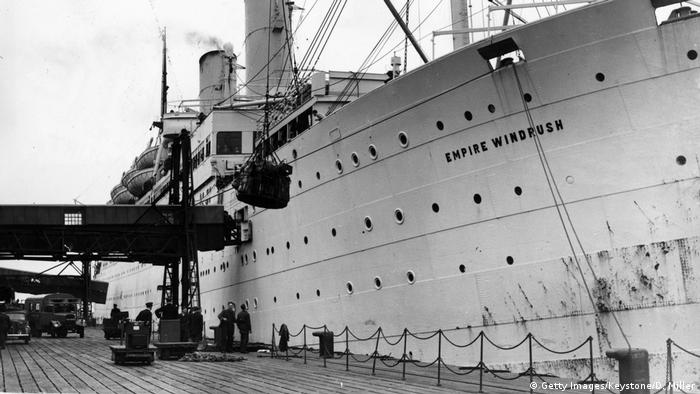
Le navire Empire Windrush a amené des travailleurs des Caraïbes pour reconstruire l'Angleterre après la guerre
Depuis fin juin, des célébrations rendent hommage à la culture caribéenne dans ce pays. Parmi elles, l’exposition « Windrush, Songs in a Strange Land », à la British Library de Londres.
Le titre vient du nom d’un bateau qui a emmené des travailleurs de toutes les Antilles vers la « mère partie » il y a 70 ans. Mais le contexte de ces célébrations est difficile et les débats sur l’immigration, qui agitent le pays depuis les attentats de Londres en 2005, ont créé un climat d’hostilité qui a failli gâcher ces moments de fête. Un reportage en Angleterre de Mélissa Chemam.   


Video: Pitchfork Explores Massive Attack’s Mezzanine


Pitchfork Explores Massive Attack’s Mezzanine (in 5 Minutes)


Published on 17 Jul 2018

Massive Attack’s third full length Mezzanine was a noise-laden reinvention for the Bristol trip-hop pioneers. Mezzanine is a contrarian masterpiece that still sounds like the discovery of a new kind of darkness.


17/07/2018

Windrush @ 70 : Reportage en Angleterre


Mon reportage sur la génération ‘Windrush’ en GB sera diffusé ce mardi 17 juillet dans l'émission 'Vu d'Allemagne'  sur la DW à 17h TU 


 L’exposition « Windrush, Songs in a Strange Land » à la British Library fait partie des célébration qui depuis fin juin rendent hommage à la culture caribéenne du Royaume-Uni. Le titre vient du nom d’un bateau qui a emmené des travailleurs de toutes les Antilles vers la « mère partie » il y a 70 ans. Mais le contexte dans le pays est difficile et depuis 2005 les débats sur l’immigration ont créé un climat d’hostilité qui a failli gâcher ces moments de fête. Reportage en Angleterre : Mélissa Chemam.   

--


« London Is The Place For Me », une chanson de Lord Kitchener du genre calypso, est devenue un emblème de toute une génération. Symbole des promesses de réussite et d’intégration entre les colonies antillaises et la patrie anglaise.

Elle est au centre d’une exposition organisée par la British Library à Londres pour célébrer les 70 ans de l’arrivée de L’Empire Windrush. Ce bateau venu de Jamaïque en 1948 transportait les travailleurs des colonies vers l’Angleterre, venus contribuer à reconstruire le pays après la guerre.

Pour Elizabeth Cooper, commissaire de l’exposition, la musique est un des héritages les plus flagrants de cette arrivée. « Notre section musique s’articule avec le reste de l’exposition, nous avons de la musique d’influence africaine et de la musique indo-caribéenne du début du 20e siècle, du reggae qui est né ici au Royaume-Uni ainsi que du ‘Lovers Rock’, une sorte de résumé de la musique antillaise ».

Spécialiste américaine de l’art des Caraïbes, Elizabeth a aussi voulu mettre l’accent sur l’histoire de l’immigration afro-caribéenne en Grande-Bretagne, qui remonte au XVe siècle.

« Notre approche a été d’avoir un regard critique sur ces commémorations pour se demander ce que la génération ‘Windrush’ signifie socialement, pour regarder d’où elle vient non seulement géographiquement mais aussi culturellement et historiquement. Pour cela, nous avons regardé les impacts de la colonisation, de l’esclavage et de la notion de race sur la société britannique depuis bien plus longtemps que 50 ou 70 ans ». 

Si Londres, avec son fameux carnaval de Notting Hill, est connue dans le monde entier pour sa culture antillaise, de nombreuses autres villes anglaises ont ce même métissage, dont Birmingham, Liverpool et Bristol. C’est dans cette ville du sud-ouest du pays que l’artiste Michele Curtis a eu l’idée de créer une exposition autour de « sept patrons de St Pauls », un des deux quartiers jamaïcains de la ville. Pour mettre en valeur une histoire d’intégration souvent difficile, pour une population qui a souffert du racisme et de la pauvreté, comme l’explique l’adjointe au Maire Cleo Lake le jour de l’inauguration: « ‘Les Bristoliens Noirs Iconiques’ est un projet nécessaire et une inspiration, qui retrace le parcours, la contribution à notre histoire de ces importants acteurs du changement dans notre communauté pour que les jeunes et toute la population puisse connaître leurs apports au progrès de notre ville, Bristol ».

Michele est comme Cléo d’origine jamaïcaine. Elle a toujours été inspirée par les hommes et ses femmes de son quartier qui ont mis en place grèves et manifestations pour se faire accepter et servir de modèles à la seconde génération.

« Mon projet a commencé comme une passion, j’ai dessiné et écrit les biographies pour présenter ces personnes et les faire connaître. J’ai grandi dans une partie de la ville nommé Easton. Il y a ici deux quartiers où se sont installées les communautés noires, St Pauls et Easton. J’ai grandi entouré de travailleurs, d’activistes, des gens qui ont beaucoup fait pour la communauté. Et je suis maintenant mère de deux garçons et depuis quelques années notre quartier a des problèmes de drogues ; ce qu’on entend le plus souvent dans le reste de la ville c’est que ces problèmes ‘viennent de ces jeunes Jamaicains’, ou que c’est ‘vraiment un problème lié aux Noirs’ et qu’il n’y a pas de modèles positifs pour ces jeunes dans leur communauté… Comme si toutes les personnes de couleurs étaient des criminels, des vendeurs de drogue ou ce genre de choses. Et ce n’est vraiment pas mon expérience. Ni celle des autres personnes noires que je connais. Donc je voulais contribuer à changer cette vision. C’est pour ça que j’ai commencé à dessiner ces portraits et à écrire ces biographies pour partager notre histoire. Les clichés perdurent… Et je pense constamment à comment toucher plus de gens avec notre histoire positive et les ‘Bristoliens Noirs Iconiques’ parce qu’il reste beaucoup à faire selon moi ».

Au moment où se préparaient ces célébrations, le Royaume-Uni a plongé dans une crise sociale profonde. Et l’une des illustrations a été le « Windrush Scandale », provoqué par le renvoi dans les Antilles de travailleurs retraités qui vivaient en Grande-Bretagne depuis parfois plus de 60 ans… Un contexte qui a évidemment révélé le racisme parfois persistant jusqu’aujourd’hui, dans un pays souvent loué pour son multiculturalisme passionnant, selon Elizabeth Cooper, de la British Library…

« L’exposition permet de prendre du recul sur le contexte actuel. On voit bien que cette hostilité fait partie d’un long héritage de lutte pour la liberté et l’intégration, et en réponse à des tentatives des gouvernements britanniques d’exclure les descendants d’Antillais. L’exposition met en valeur la lutte pour les droits civiques, ici comme aux Antilles, et cela remet en perspective ce que les gens subissent aujourd’hui. Cela fait partie d’une longue tradition de défense d’un monde plus humain et plus juste dont les Antillais font partie. »

Le 7 juillet a eu lieu à Bristol le Carnaval de St Pauls, qui fêtait ses 50 ans. Et le 26 et 27 août aura lieu celui de Notting Hill. Malgré les préjugés et le contexte social difficile, la culture caribéenne n’a jamais été aussi bien représentée dans le pays.

Mélissa Chemam, à Londres et Bristol, pour la Deutsche Welle.


-


Michele Curtis' artwork in pictures, exposed in Bristol in early July 2018:


Cleo Lake and Michele Curtis, the artist


16/07/2018

These "Adventures in Hi-Fi"


Currently in 1996... I wish I could like that much an album from 2018...

This is so relevant for today on top!


R.E.M. - E-Bow The Letter feat. Patti Smith


(Official Music Video) 


-


P.S. Pitchfork Media founder and owner Ryan Schreiber described this song as "possibly one of the greatest songs ever written."


-

Lyrics:


[Verse 1]
Look up, what do you see?
All of you and all of me
Fluorescent and starry
Some of them, they surprise
The bus ride, I went to write this, 4:00 a.m
This letter
Fields of poppies, little pearls
All the boys and all the girls sweet-toothed
Each and every one a little scary
I said your name
I wore it like a badge of teenage film stars
Hash bars, cherry mash and tinfoil tiaras
Dreaming of Maria Callas
Whoever she is
This fame thing, I don't get it
I wrap my hand in plastic to try to look through it
Maybelline eyes and girl-as-boy moves
I can take you far
This star thing, I don't get it

[Chorus: Patti Smith & Michael Stipe]
I'll take you over, there

Aluminum, tastes like fear
Adrenaline, it pulls us near
I'll take you over
It tastes like fear, pulls us near
I'll take you over


[Verse 2]
Will you live to 83?
Will you ever welcome me?
Will you show me something that nobody else has seen?
Smoke it, drink
Here comes the flood
Anything to thin the blood
These corrosives do their magic slowly and sweet
Phone, eat it, drink
Just another chink
Cuts and dents, they catch the light
Aluminum, the weakest link
I don't want to disappoint you
I'm not here to anoint you
I would lick your feet
But is that the sickest move?
I wear my own crown and sadness and sorrow
And who'd have thought tomorrow could be so strange?
My loss, and here we go again

[Chorus: Patti Smith & Michael Stipe]
I'll take you over, there

Aluminum, tastes like fear
Adrenaline, it pulls us near
I'll take you over
It tastes like fear, pulls us near
I'll take you over

[Verse 3]
Look up, what do you see?
All of you and all of me
Florescent and starry
Some of them, they surprise
I can't look it in the eyes
Seconal, Spanish fly, absinthe, kerosene
Cherry-flavored neck and collar
I can smell the sorrow on your breath
The sweat, the victory and sorrow
The smell of fear, I got it

[Chorus: Patti Smith & Michael Stipe]
I'll take you over, there

Aluminum, tastes like fear
Adrenaline, it pulls us near
I'll take you over
I'll take you over
It tastes like fear, pulls us near
I'll take you over
I'll take you over
It tastes like fear, pulls us near
It pulls us near
It tastes like fear
It tastes like fear
It pulls us near
It tastes like fear
It pulls us near


[Outro]
Nearer, nearer
Over, over, over, over
Yeah, look over
I'll take you there, oh, yeah
I'll take you there
Oh, over
I'll take you there
Over, let me
I'll take you there
There, there, baby, yeah