24/08/2011

UK: LET'S LOOK BACK AT LONDON'S RIOTS

  
Today I finished my second report from the post-rioting London. The first one was located in Brixton, where I met British Muslims celebrating Ramadan while the riots occurred in their neighbourhood. 

The Brixton Mosque's imam had launched an appeal to peace and calm.


 I'm doing this series of reporting for Vox Africa News on the causes of the riots and the point of view of the different types of people who happened to be involved in them in a way or another.

Last Friday, I went to Enfield where a few rioters agreed to talk to me as well as an outreach worker who is daily in contact with London's kids.


Here is the link to the story:

http://www.voxafrica.co.uk/vod/videos/&v=0_jfyu5wvq&p=0_0swhvd1d

Or the whole news bulletin where the report was broadcasted. It is at 11 min 30:
http://www.voxafrica.co.uk/vod/videos/&v=0_udr49ac0&p=0_0swhvd1d
--

While investigations and court hearings continue in London following the August riots, Vox Africa News went back to Enfield where some rioters agreed to talk to us. They live in the neighbourhood and whilst admitting to participating in the riots they are clear they don’t condone looting. 

For them as well as the social workers from the neighbourhood and from Tottenham where the riots sparked, there are deep reasons explaining why the youth feel targeted by the police. Melissa Chemam and Nana Dankwa.

---

Enfield is a quiet neighbourhood in North London, next to Tottenham. But it was rapidly touched by the violent riots that took the street of London from August 6.

M. and AJ participated to the rioting and agreed to meet us to explain how they think it all started.

AJ: “We went down to Tottenham and it was madness… But it was also North London fighting back”.

M.:”I was not interested in looting at all. I understand what happened in Tottenham cause they killed an innocent man there. But the rest of the riots were too much and I don’t understand why”.

For those young Londoners, the riots were definitely the sign of the deep problems of the British society. Both M. and AJ think the police are too regularly targeting youth and that they have to ease their pressure on the poorest neighbourhood. According to them, the police are constantly controlling young people and stereotyping them.

M: "Everyone went crazy, there was fire, etc. But the police have to respect the civilians”.

Both also think there are chances for the riots to happen again.
Karl Donaldson is an outreach worker interacting daily with the kids of London, especially in North London. He was in Enfield during the first days of the riots.

Karl Donaldson: “Tottenham was the spark; it had a meaning because of the tension of the police. But then it went out of control”.

But Karl also understands that the youngest and the poorest feel left out: “I think they’re disillusioned and there’s a serious discipline problem”.

Like AJ and M, he believes the recent riots in London are far from being over, especially if authorities don’t try to understand the deep roots of the discontent.


18/08/2011

Ethiopian Jews want more integration in Israel

My latest sroty for Vox News, Vox Africa's English news bulletin, this Wednesday:

In Israel an NGO called 'Selah' is trying to help young Ethiopian Jews, who have lost their parents, to take responsibility for their younger siblings.


http://www.voxafrica.co.uk/vod/videos/&v=0_i2o1h5ca&p=0_0swhvd1d

I always wanted to report on Falach Muras from Israel. This is just a short insight from our news room thanks to Reuters TV news picture...

17/08/2011

IMPRESSIONS ROMAINES

The great thing about being back in London is the proximity with the most charming places in Europe. In two hours it is easy to fly South or East and to get a complete change of scenery.

I always say one of my favourite countries is Italy. So when friends renting an apartment in the eternal city offered me to come over and stay in their guest bedroom, I didn't hesitate and booked my British Ariways tickets.


This trip was my ninth visit to Rome. Before that I had been to the Italian capital to celebrate New Year's Eve, to interview filmmakers and writers, to attend weddings or simply to visit friends.


This time, I was set to stay in the lovely neighbourhood named Trastevere, on the 'other side' of the river Tebere.


Main attractions for this summer three-day weekend were the Vatican, dinners in the hidden and tiny Jewish neighbourhood, the beach on the Southern coast, and the MACRO, Rome's Museum of contempory arts.


To eat amazing food in Rome, you need to get away from breathtaking but touristic hotspots and to wonder in tiny and dark lanes...


To enjoy the heat and the burning sun, nothing is better than a train-ride to the beach along the coast spread between Rome and Naples.


 Italian trains may not be always on time, but the belated arrival is worth any precise TGV's ride... for its beautiful beaches, clear Mediterranean waters and amazing montains in the background.


And back to the city in about an hour of train journey, the next day was devoted to discover the MACRO, Museum of contemporary art of Rome and its stunning neighbourhood, Northeast from the ancient city centre.


Its location in a quiet, forgotten but richly beautiful part of Rome and its brilliant architecture are the first reasons to come up to the MACRO.


Then remains the enjoyable collection of Italian contemporay pieces of art. I don't want to spoil the visit nor to pretend I am a contemporary creations' specialist, so here is only a sample of visual insights:


It's the middle of summer in Italy, and amazing moment to be in Rome. If you have a minute, just go yourself...

08/08/2011

UNEP report on Nigeria has been presented in London

 Nigeria was all over the news last weekend, especially in Nairobi, the UN Environnent Programme's (UNEP) headquarter and in London. The UN body did actually present its report on the oil eploitation in Ogoniland, a area situated in the Niger Delta.


Here is an extract of my interview with UNEP's chief scientist who presented the report in London last Friday:


http://www.voxafrica.co.uk/vod/videos/&v=0_i5grsnre&p=0_0swhvd1d

Joseph Alcamo said he was optimistic for the future cleaning of the area despite the high level of pollution...


29/07/2011

Everyday in Vox News on Vox Africa at 12.30 BST

Hello everyone,
so I have been working with the pan-African channel Vox Africa since July 4th.
I am the new news presenter for the French news and a reporter / interviewer for our news in both French and English.


If you want to follow us, go on our website:    
http://www.voxafrica.com or http://www.voxafrica.co.uk/.


And watch today's midday news in French here:
http://www.voxafrica.com/vod/videos/&v=0_6hej13gy&p=0_q3b9ys18
or Thrusday July the 28th:
http://www.voxafrica.com/vod/videos/&v=0_9mfbbovv&p=0_q3b9ys18

Kenya: report on heathcare and technology

Here is my latest radio report from Kenya, the the German broadcast Deutche Welle for Africa, in French :


Rappel de RDV médicaux, communication de résultats, diagnostic à distance : le téléphone portable est le nouvel outil au service de la santé en Afrique. Un outil qui permet d'atteindre les zones les plus reculées...


En Afrique, les SMS peuvent sauver des vies car le téléphone portable reste le seul moyen de communication. La situation est parfois absurde: dans certains villages, on manque d’eau potable, mais on a des portables. D’où le projet d’une ONG fondée en 2009, appelée Alliance Mobile Health, d’intégrer les SMS aux systèmes de santé des pays en voie de développement pour améliorer les soins de santé et pour atteindre les personnes des zones les plus reculées. Ecoutez dans ce magazine Jody Ranck, directeur de recherche à l’Alliance Mobile Health, basée à Washington, qui en dit plus sur les diagnostics à distance via les téléphones portables.
Selon une étude de l’OMS, l’organisation mondiale de la Santé, plus de 40 pays africains disposent au moins d’un tel programme de téléphonie mobile au service de la santé. Mais en réalité, trois pays se détachent du lot : l’Afrique du Sud, le Rwanda et le Kenya. Notre correspondante à Nairobi, Mélissa Chemam,  a enquêté sur l’un de ces projets kenyans, Health Text, qui permet aux habitants des bidonvilles de recevoir des conseils de santé via leurs téléphones portables. Ecoutez ci-dessous son reportage.
Auteur : Cécile Leclerc
Edition : Mireille Dronne
SÉQUENCES AUDIO ET VIDÉO SUR LE SUJET


27/07/2011

Remembering Ireland

Time flies... I have been in Europe for about six weeks now and with my new job (http://www.voxafrica.com/vod/videos/&v=0_oxjknw4u&p=0_q3b9ys18) I had no time to update my travel experiences.
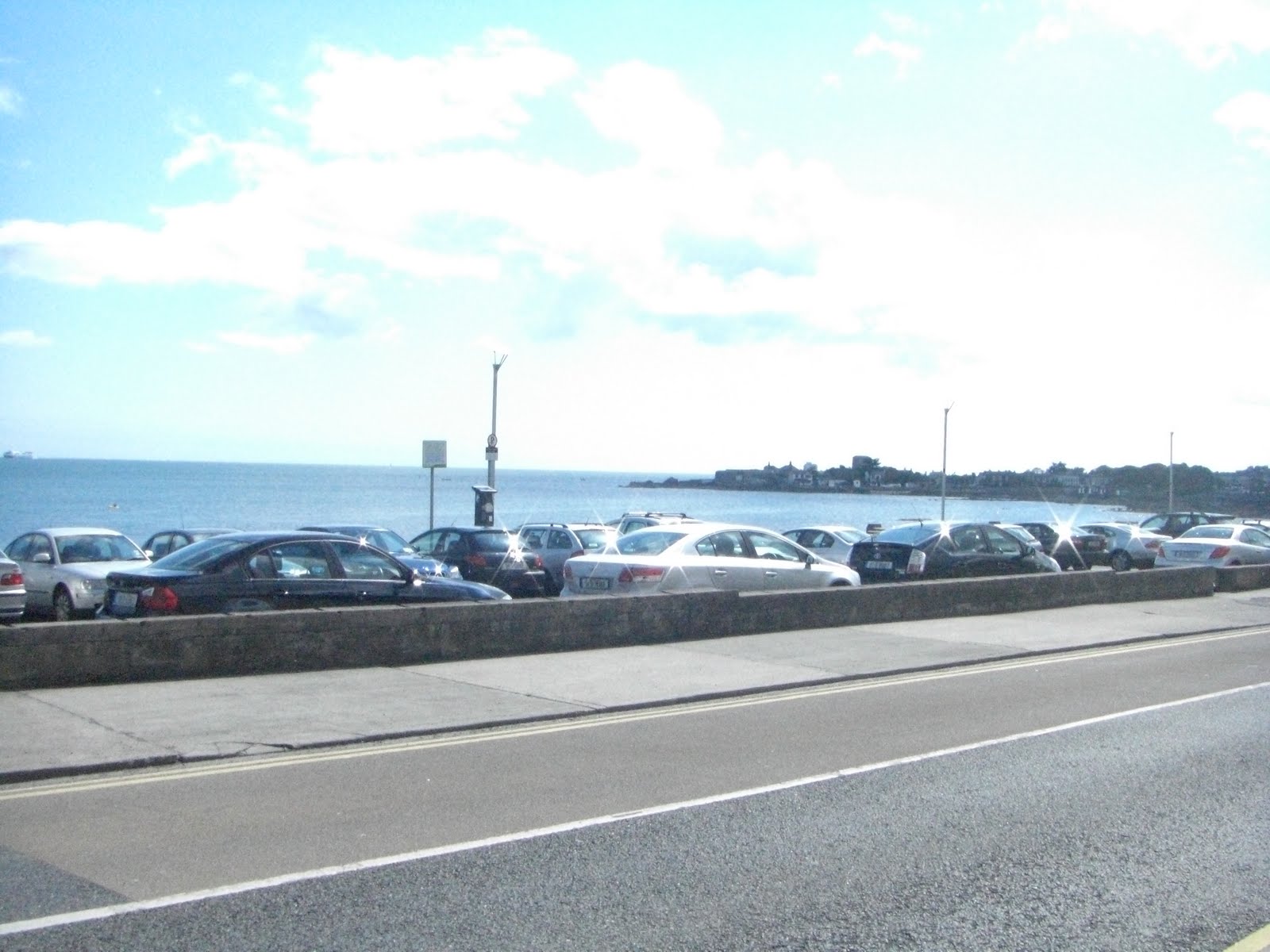
But I now have a good internet connection and a spare day off work. So here a re a few pictures from my first stop in Europe: Dublin.
Will follow in the next few days: thoughts from Paris, London and Rome, the three cities where I'll spend the rest of the summer. 

And finally, I will be back in Nairobi on September the 1st. 

And Dublin was simply a dream citybreak. Vibrant and beautiful, welcoming and exotic. I cannot wait to go again!


25/07/2011

Kenya: drought and famine threaten Dadaab refugee camps

Hello everyone.
Since I've been back in London, this story has been published in France in the daily newspaper, Le Figaro.
Here is a link to the newspaper's website anf below the report in French.
Thanks for caring!
--

Au Kenya, le plus grand camp de réfugiés du monde


Par Melissa Cheman

A quelques kilomètres de la frontière avec la Somalie, Dadaab s'est transformée en une vingtaine d'année en un gigantesque camp où vivent 350.000 personnes.


Les Kenyans l'appellent la ville poussière… Dadaab est postée à seulement quelques kilomètres de la frontière avec la troublée Somalie voisine, dans la zone aride du nord du Kenya. Et elle s'est transformée en vingt ans en camp de réfugiés géant. Plus de 350.000 personnes y vivent au sein de trois structures gérées par le Haut Commissariat pour les réfugiés de l'ONU, le HCR.

Lorsque la ville de Dadaab a commencé à recueillir les Somaliens fuyant les combats qui ont suivi la chute de leur dernier véritable dirigeant, Siyad Barre, personne ne prévoyait que la Somalie ne connaîtrait plus la paix.

Abari Osman vit depuis vingt ans à Ifo, l'un des camps de Dadaab, devenu le plus grand ensemble de camps de réfugiés du monde. «Je n'ai jamais pensé que je resterai ici si longtemps , nous raconte-t-il lors de notre visite du camp où il est désormais traducteur pour le HCR. Je suis arrivé à 8 ans, je ne pensais pas faire toute mon école primaire dans un camp de réfugiés puis toutes mes études secondaires…»

Des villes de toile surpeuplées 

Abari a poursuivi ses études par correspondance et a pu se rendre occasionnellement à Nairobi, pour des examens, mais il n'a jamais été autorisé par le Kenya à vivre ailleurs que dans le camp. Il reste enfermé dans ce lieu, qui, en nombre d'habitants, peut être considéré comme la quatrième ville du Kenya. À présent, la ville est engorgée de nouveaux arrivants, alors que l'Afrique de l'Est connaît sa pire sécheresse depuis soixante ans.

Dadaab est constituée de trois camps, Ifo, Dagahaley et Hagadera, et d'un quatrième en construction, Ifo 2. Chaque entité est conçue pour recevoir autour de 30.000 réfugiés, 40.000 au maximum. Mais, elles en accueillent trois fois plus. La situation s'est rapidement détériorée depuis le début de l'année. «Un des principaux problèmes est la congestion des camps, et nous cherchons à lutter contre la surpopulation , explique Richard Floyer, directeur de programme au Haut Commissariat pour les réfugiés de l'ONU. 

Nous avons demandé au gouvernement kényan de nouveaux espaces. Car nous pensons que nous avons atteint un stade ou le nombre de réfugiés dans cette région du Kenya a atteint un niveau insoutenable.»

Muslima Hassan est mère de quatre enfants, elle a fui la guerre à Mogadiscio, il y a quelques mois. Arrivée au Kenya fin janvier, dans le plus grand camp de réfugiés du monde, elle n'a pas trouvé le refuge espéré…«J'ai fui la Somalie du fait de la guerre, raconte-t-elle, essuyant les larmes qui coulent sur les joues de son nourrisson. Je suis venue avec mon mari et mon bébé et puis mes autres enfants ont pu nous rejoindre. Mais quand nous sommes partis, nous pensions que nous vivrions dans de meilleures conditions…»

Comme elle, des milliers de Somaliens ont fui la terrible sécheresse qui frappe depuis décembre la Somalie, à laquelle s'ajoutent les combats qui se sont intensifiés à Mogadiscio depuis janvier. Or ils vivent à présent sous des tentes en plastique installées aux abords du camp, loin des structures sanitaires et des écoles. 

Cette situation semble d'autant plus insoutenable que le nouveau camp, baptisé Ifo 2, est prêt depuis plusieurs mois à accueillir les nouveaux arrivants. Mis en place depuis août 2010, il aurait dû commencer à accueillir des réfugiés en novembre dernier mais le gouvernement kényan n'a autorisé son ouverture que le 14 juillet.

Terribles conditions 

Selon le département kényan des Affaires liées aux réfugiés, le DRA, le Kenya­ s'inquiétait des conditions de sécurité et de respect de l'environnement… Haron Komen, le directeur des camps de Dadaab pour le DRA, justifie le report de l'ouverture d'Ifo 2 par un conflit avec les communautés locales…

Mais, pendant ce temps, des milliers de réfugiés somaliens arrivés depuis janvier ont vécu dans de terribles conditions. Seules des tentes de fortune aux abords du camp de Dagahaley étaient disponibles ces derniers mois pour ces familles démunies. L'ouverture du camp d'Ifo 2 ne pourra qu'être une bénédiction pour ces réfugiés de la sécheresse. Mais pour combien d'entre eux?

11/07/2011

London is on

So here am I in Europe...
Holidays are over but I'm staying in the UK. I've started presenting the midday news on the African channel based in Battersea, Vox Africa.
This means I'm still working on Africa, but from London.

I've spent only a week in the British city, but it's already a blessing. London has become my favourite town in the world, since I moved here in 2009. And I am lucky enough to have found a place to stay despite the rush of my new move. I am currently in Denmark Hill for a few weeks before I move for good in Hampstead.
This makes me travel a lot and cross the city regularly, which is always a pleasure for me.

So far, I have spent a lovely sunny afternoon in Covent Garden, I've spent some time at the Caledonian Road's local Festival, I've been working in Battersea and discovering the Clapham Common's neighbourhood... I have also done some shopping in Chelsea and had brunch in Stoke Newington. I also spent time with friends in the area of Angel, along the London Canal... Finally on Saturday, I went to see the latest exhibition in the wonderful Saatchi Gallery in Sloane Square, dedicated to "New Sculpture" in the UK.

More to come on London's adventure... So exciting to be here again!

26/06/2011

European Tour

  So, I've been pretty silent on this blog this past week, but paradoxically it is because I've been doing so much!
More on my trips soon, but I've left Kenya for a while to go back on a break to Europe.


First, I've seen Ireland for the first time, visiting Dublin and its southern neighbourhoods around Bray and Powerscourt. I have then spent the three busiest days in London, meeting my editor and boss in the BBC World Service, in Bush House, as well as colleagues, friends and other fellow journalists.

Finally, last Thursday, I arrived home, in Paris, for a break with friends and family.

I am now to visit a few of our great art events and will try to give some insight into them here very soon...

Cheers from Europe!