04/11/2012

Maroc : Remous à l'Istiqlal où Chabat change la politique

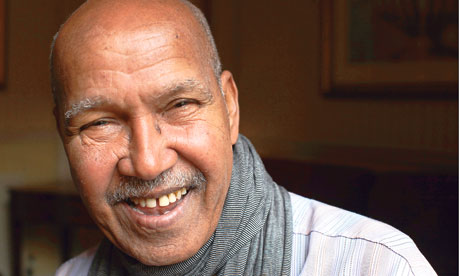
Nouvel entretien pour Al Qarra TV : sur le Maroc, Hamid Chabat à la tête de l'Istiqlal et les changements en cours en politique...

Entretien avec Hamid Barrada, journaliste et spécialiste de la vie politique marocaine.


Maroc: L’élection d’Hamid Chabat provoque des remous politiques
Depuis l’élection du nouveau secrétaire général de l’Istiqlal, les cartes du jeu politique marocain semblent se redistribuer.
Hamid Chabat, ancien ouvrier et syndicaliste, a en effet été élu à ce poste le 23 septembre dernier, une première dans l’histoire du parti, dominé jusqu’à présent par une famille politique. Pour observer cette évolution de la vie politique marocaine, nous recevons Hamid Barrada, journaliste et spécialiste de la vie politique marocaine.

01/11/2012

Sur Le Point, les sans gêne et les pains au chocolat

 
Tribune - Paris, 1er novembre 2012 
Je ne suis pas musulmane. Pas selon mes propres critères : je ne pratique pas cette religion. Je pourrais me désintéresser du problème, voire m’éloigner le plus possible du débat. Certains, aujourd’hui, en France, en profiteraient même pour rejoindre le mouvement d’acharnement. Mais cette semaine, les haineux ont dépassé les bornes.
Ancien ministre, candidat à la direction de l’Union pour un Mouvement Populaire, l’UMP, Jean-François Copé a initié il y a peu le mouvement de défense des ‘pains au chocolat’, accusant les musulmans de terroriser les enfants français, les privant par simple influence et épouvante du traditionnel goûter très français, par la pratique trop suivie du ramadan, un mois par an, dans certains quartiers d’agglomérations de grandes villes françaises. 
Cette semaine, le magazine d’information Le Point en rajoute sur le dossier des musulmans-tous-coupables en publiant sa une sur ‘L’islam sans gêne’, illustrée par une femme portant un niqab – voile intégral – noir et enveloppant, complété de gants noirs et épais. Voici la une présentée par le blog de Pascal Riché du site Rue89 peu avant sa sortie en kiosque :
Je ne suis pas musulmane, mais comment ne pas réagir en voyant une large partie de la population française visée, caricaturée et marginalisée par une presse qui n’est même pas sensée être radicale ou xénophobe, mais centriste ou traditionnel. Comment comprendre qu’un (ancien) homme d’Etat, un élu, appelle ses électeurs à juger responsables de la plupart des maux du pays une autre partie de leurs concitoyens ? Pour une partie de musulmans extrémistes, prosélytes et antirépublicains, combien en France ne font que pratiquer leur religion dans le respect et les valeurs de la laïcité ? Est-il bien nécessaire alors de susciter le rejet et la haine leur encontre, dans leur globalité, et contre toute personne française ou étrangère d’apparence musulmane ou originaire d’un pays nommé dans l’actualité seulement pour être aujourd’hui musulman ? Affirmer que la pratique du rite du ramadan par un groupe de parents dans un quartier entraine la peur pour tous les petits enfants français non musulmans, chrétiens ou autres ou athées, d’être attaqués parce qu’ils mangent leur gouter, du simple fait qu’ils côtoient à l’école des enfants de musulmans, n’est pas seulement ridicule, c’est outrageux. Et ne se souvient-on pas tous des conséquences de tels appels à la stigmatisation et à la haine de l’autre pour ses pratiques religieuses ou supposées origines à caractère religieux connoté ?
L’expert et chercheur Pascal Boniface parle de « Course à l'islamophobie ». Jean-Yves Camus, politologue, diplômé de l’Université Paris I Sorbonne, chercheur associé à l’IRIS, a justement publié la réflexion suivante la même semaine, le 28 octobre, dans un quotidien algérien, que voici :
Spécialiste des nationalismes et extrémismes en Europe, il parle d’islamophobie en France et nous y présente les extrémistes identitaires français. Voici l’extrait de son analyse s’appliquant a notre cas : « La droite populaire, la droite  forte, Jean-François Copé, assument tout à fait leur choix idéologique d’orienter l’UMP vers une droite décomplexée qui utilise les thèmes de l’Islam, de l’immigration et du «racisme anti-blanc» pour reconquérir l’électorat du FN, sans lequel la droite ne peut pas espérer gagner une élection. La nouvelle formation de Jean-Louis Borloo, l’UDI, ainsi que François Fillon à l’UMP refusent cette droitisation qui peut faire fuir les électeurs centristes et libéraux ».  
N’est-il pas clair que ces attitudes, déclarations et effets de presse ne peuvent que nuire à la cohésion sociale, insulter une population déjà largement discriminée ou marginalisée – ne le nions pas - et encourager l’exclusion ? 
Je le répète, je ne suis pas pratiquante, d’aucune religion, même si des très proches le sont, mais je vis dans un pays où, enfant, le climat ambiant encourageait les Français d’origine arabe à le cacher, et où de nos jours, leurs enfants apprennent, adultes, l’arabe à l’université pour étudier les évolutions dans ce même monde arabe. Je vis dans un pays où pour prôner l’intégration des minorités dans les médias, certains créent des écoles en banlieue pour jeunes des banlieues au lieu d’envisager de les admettre dans celles des élites qu’ils ont autrefois dirigées… Lire les détails ici : http://www.strategies.fr/actualites/medias/194966W/un-master-de-journalisme-favorisant-la-diversite-ouvre-a-gennevilliers.html Un pays fait de plafond de verre et de discriminations à l’apparence. Et ce pays a longtemps été surnommé le ‘pays des droits de l’homme’. Quel dommage. Mais nous ne sommes pas obligés de laisser faire et d’encourager cette tendance en laissant Le Point et les Jean-François Copé faire entendre un discours qui stigmatise trop souvent injustement certains d’entre nos concitoyens. 

29/10/2012

La Boheme et les Bohemiens

My favourite radio has a morning show about history. I think it's a great idea, after the early morning programme dedicated to news, from 9am, we look more in depth at themes in the air.

This week the show is dedicated to La Boheme and les Bohemiens. Those of you who understand a bit of French will understand.

Please listen:

http://www.franceculture.fr/emission-la-fabrique-de-l-histoire-boheme-et-bohemiens-2012-10-29

This morning it starts with a biographical search about Django Reinhardt.

--

The programme also refers to an art exhibition currently on display in Paris at the Grand Palais that I am surely going to see this week, BOHEMES:


WATCH THE BEAUTIFUL TRAILER:

http://www.grandpalais.fr/grandformat/bohemes-la-bande-annonce/

More details here:

http://www.grandpalais.fr/grandformat/exposition/bohemes/
and 
 http://www.grandpalais.fr/grandformat/la-boheme-un-mythe/


Shall I spend an afternoon in the Grand Palais for the third weekend in a row?

--

On France Culture this week:

Dans La Fabrique de l'Histoire cette semaine

Trois émissions donc consacrées à la Bohème et aux Bohémiens.

Demain nous vous proposons un documentaire signé Perrine Kervran et Renaud Dalmar titré « Des tsiganes sous surveillance / du carnet anthropométrique au carnet de circulation. ». on y raconte comment en 1912, la république a instauré pour les nomades un carnet anthropométrique utilisant les découvertes alors récentes de Mr Berthillon.

Mercredi nous visiterons l’exposition « Bohèmes » qui vient de commencer au Grand palais à Paris  en nous demandant comment le bohémien , figure classique de l’art européen depuis le XVI ème siècle, devient dans la première moitié du XIX ème siècle un modèle de liberté pour de jeunes artistes en rupture avec l’académisme.

Nous commençons ce matin en évoquant la musique manouche, celle de Django Reinhardt, au cœur d’une autre exposition à la cité de la Musique à Paris. Django, « fils de l’air » comme l’avait qualifié avant la seconde guerre mondiale Jean Cocteau.

Comment ce musicien, après avoir essayé le violon et le banjo, est-il devenu l’inventeur de la guitare jazz ? Pourquoi a-t-il été fasciné par la musique noire ? Qu’a-t-il inventé avec Stephane Grapelli, son frère Joseph et le quintette du Hot Club de France ?
C‘est ce que nous verrons avec notre invité Vincent Bessières, commissaire de l’exposition Django, et avec son invité que nous découvrirons à 9 heures 30.

Ethiopia: Hard time for Muslims

I conducted this interview this summer but this case is still worrying. Here is the audio in French I never posted here for those interested in Muslims in Ethiopia.

L'invitée 16/08/2012 : Laetitia Bader (Human Rights Watch)

Dernière mise à jour: 16 août, 2012 - 04:00 GMT 
Audio :

http://www.bbc.co.uk/afrique/nos_emissions/2012/08/120816_linvitee_laetitiabader.shtml

En Ethiopie, l'organisation de défense des droits de l'homme Human Rights Watch appelle Addis Abeba à libérer des musulmans arrêtés après des manifestations.

L'organisation juge ces arrestations arbitraires, alors que des musulmans ont manifesté pacifiquement contre ce qu'ils jugent comme des interférences du gouvernement dans les affaires réligieuses.
Laetitia Bader, chercheuse a HRW, a mené l'enquête pour ce rapport. Selon elles, ces arrestations violent les droits des musulmans qui représenteraient plus de 30% de la population. Elle a été jointe par Melissa Chemam.

28/10/2012

Working on Somalia...

Writing about Somalia's politics for a research report, here are a few facts I gathered in the news and that can be useful for all:

Who is Hassan Sheikh Mohamud?

From the BBC News' website:

  • Born in central Hiran region
  • From the major Hawiye clan
  • Married, speaks Somali and English
  • Studied engineering at the Somali National University and went onto become a lecturer in 1981
  • Five years later went to India to study, obtaining an MBA from Bhopal University
  • Returned to oversee a Ministry of Education teacher-training scheme funded by Unesco
  • Stayed in Somalia during the civil war, working as a consultant with non-governmental groups, UN bodies and on several peace initiatives
  • Helped set up the Simad University, and was its dean for 10 years until 2009
  • Founded his Peace and Development Party (PDP) in 2011
  • Elected an MP in August 2012 

Key constitutional points

  • A bill of rights, with everyone declared to be equal, regardless of clan or religion
  • Islam is the only religion of the state, and no other religion can be propagated in the country - however, this was also the case previously
  • Female genital mutilation - a widespread practice - is outlawed
  • Citizens have the right to be educated up to secondary level
  • A Truth and Reconciliation Commission is to be established
  • Territorial disputes should be settled peacefully - Somalia has gone to war with both Kenya and Ethiopia over its claims to their Somali-inhabited regions
  • Somalia will have a federal system - however the status of Mogadishu, the borders and distribution of power and resources between the regions are yet to be decided

Kenya : Les avancees de la CPI


Et pour en savoir plus sur la visite de Fatou Bensouda, Procureure de la Cour Pénale internationale, au Kenya cette semaine, en français, notre rapport sur Al Qarra TV:

 http://www.alqarra.tv/2012/10/26/kenya-la-procureure-de-la-cpi-en-visite/

More on ICC and Kenya


Here are more articles and reports on the ICC Prosecutor's visit in Kenya, Fatou Bensouda.
I really hop the visit of the new Prosecutor will improve the conditions for the coming trial on the 2007-08 postelectoral violence in Kenya. 

--

First, the BBC World News' TV report in Kenya:

http://www.bbc.co.uk/news/world-africa-20112575 

--

On Kenya media, The Star reports

http://www.the-star.co.ke/news/article-93017/anxiety-bensouda-visits-pev-hotspots

Kenyan newspaper the Daily nation's interrogations on the hearing of Internally displaced people, IDPs:

http://www.nation.co.ke/oped/Letters/-/440806/1605466/-/cha8tl/-/index.html 

--

And finally here is the ICC statement in its entire version:

Statement: 25 October 2012
Kenya, Nairobi

Statement by the Prosecutor of the International Criminal Court
Mrs. Fatou Bensouda at the press conference at the conclusion of Nairobi segment of ICC Prosecutor’s visit to Kenya, Nairobi
Good afternoon, ladies and gentlemen,
It is a pleasure to see many of you here again on this last day of the Nairobi segment of my visit to Kenya.
First of all, I wish to extend my sincere thanks to the people and Government of Kenya and in particular  President Kibaki and Prime Minister Odinga for the warm welcome, and the traditional Kenyan hospitality  extended to me and my delegation for this visit. I am especially grateful for the support of the Kenyan Government for the organisation of the complex logistics and security arrangements of this visit - not my first to Kenya, but my first as ICC Prosecutor.
On Tuesday, I met with President Kibaki and Prime Minister Odinga at the Office of the President.   It was a fruitful and constructive exchange of views. I conveyed my Office's concerns regarding delays in the Government's response to a number of OTP requests related to our investigations. They assured me of their willingness to ensure timely and effective execution of the pending requests and instructed the Attorney-General and the Cabinet Sub-Committee to facilitate expeditious responses to my Office's requests.
My meeting with the President and Prime Minister was followed by a meeting with the Cabinet Sub-Committee which was also attended by the Minister of Foreign Affairs, the Director of Public Prosecutions, the Attorney-General and other officials. The meeting focussed on the specific requests, the dates they were submitted and the nature of the information requested.
In both meetings with President Kibaki and Prime Minister Odinga as well as with the Cabinet Sub-Committee, I stressed that time is of the essence given that our final list of evidence is due on 9 January 2013. The submission of this evidence is essential for giving the Defence a fair trial. I expressed my strong desire to receive all the requested information by the end of November 2012 to enable me to comply with my obligations to the Defence. I was assured by the Committee that they will take appropriate steps to ensure that I am provided with the information without delays.
I also reiterated my concerns regarding witness intimidation and the increasing climate of fear affecting those perceived to be ICC witnesses, their family members, as well as those perceived to be associated with the ICC. We agreed that witness intimidation is unacceptable and that both the Court and the Government of Kenya have a responsibility to investigate and punish anyone who intimidates or tampers with witnesses.
Yesterday, I met with the Chief Justice and exchanged views on issues of mutual interest. Additionally, I met with members of civil society,  and also briefed the diplomatic community in Kenya on developments in my Office ‘s work.
This morning, I went to Nakuru, in order to meet with victims of the 2007-2008 post-election violence. This trip to Nakuru was an expression of my desire to listen to and interact with victims.
My programme tomorrow includes visiting Kiambaa Church and its environs, continuing my exchange with victims, and meeting with other members of the public. My visit to Eldoret is primarily about public information on the ICC process and my role as Prosecutor. I hope that by listening to and directly exchanging views with victims groups and the public, albeit a very small representative sample, to gain a better idea of what all victims still need to know or understand about the ICC process, the work of my Office, or the next steps.  Of course I cannot meet with all victims throughout Kenya, nor listen to everyone affected by the PEV. I wish I could. But to those I shall meet and to all those whom I cannot, I say this:
In the course of my career, I have had the opportunity to meet and listen to many - too many - victims of massive crimes. Invariably, I am touched and humbled by the dignity and courage of those who have lost and suffered so terribly. The start point and end point of this entire ICC process in Kenya remains the PEV victims and the justice they deserve.
When we speak of courage, I want to speak also of the special kind of moral courage shown by our witnesses. Caring for witnesses and ensuring their well being is a key priority for me. It takes an exceptionally moral breed of person to stand up and speak. The challenges we face together with witnesses and the sacrifices they make for the sake of truth and justice are exemplary.   To these Kenyans, who are prepared to come forward, and to protect the truth no matter what, and to all other witnesses who have come forward, and continue to come forward, I want to say, thank you. To others who may harbour doubts, I say be courageous and follow the examples of your brothers and sisters who are helping ICC to expose the truth.
You have heard my Office many times putting on notice anyone who attempts to bribe, threaten or intimidate OTP witnesses. It is a serious crime by those who aim to prevent not just the Court, but Kenyans, from knowing the truth.  Those who attempt to pervert justice by instilling fear or paying off witnesses to stay quiet, you are criminals.  We will not hesitate to investigate and prosecute you.  This is not an empty warning.
Lastly, I want to say this.  I am prepared to say it again and again, lest there be any mistake. No matter what anyone else may say, whoever they are.  We are impartial. We are objective. We are independent.  We are not biased against anyone. We are not biased against Kalenjin or Kikuyu, not against Kisii or Luo, Maasai or any Kenyan tribe. This is not a case about political responsibility. It is not a case of targeting certain communities.  It is about individual criminal responsibility.
Together with Kenyans we are pursuing justice, for the sake of all the PEV victims from all affected regions and from all Kenyan tribes. We will continue to do our work, in strict conformity with the law. With the help and courage of Kenyans, we will fight for Justice to run its course. And we will be scrupulously fair. 
ICC's sole purpose is to end impunity for the worst crimes in the world: Genocide, War Crimes and Crimes against humanity, and to prevent future crimes. To transform the words 'Never Again' from a moral promise to a legal obligation.  Simply put, this means no-one, irrespective of status, can commit crimes on a massive scale and get away with it. It is the law.
Let me repeat what I said on Monday: our motivation is those who are indisputably the real victims of Kenya's PEV - families, women, men, children and babies who have been beaten, killed, burned, raped, mutilated, and dispossessed. For them and for the sake of all Kenyans, it is crucial to break the cycle of impunity and violence. Ensuring justice and accountability can play a part. We stand ready to do our part, but we can not do it alone, it is up to Kenyans to decide to make this happen, within a strong and united Kenya. I hope I can count on Kenyans in this joint endeavour.
Thank you.

27/10/2012

Literature is travel: Discovering writers from countries I love

David Toscana

Mexico


© Jaime Rivero

David Toscana, considered one of the most important new voices in Mexican literature, was born in 1961 and lives and works in Monterrey, Mexico and Warsaw, Poland. His books of short stories and his novels have been translated into several languages. He was awarded an impressive number of prestigious literary prizes. In 2003 Toscana was guest of the Writers in Residence Programme in Berlin (DAAD) for one year.

http://www.mertin-litag.de/authors_htm/Toscana-D.htm


More in French:

L’Armée illuminée
Roman traduit de l’espagnol (Mexique) par François-Michel Durazzo

http://www.zulma.fr/livre-larmee-illuminee-572024.html


--

Nuruddin Farah 

Somalia

Nuruddin Salah
Farah: 'We become replicas of the tyrant whom we hate. When you rid yourself of a monster, you become a monster.' Photograph: Eamonn McCabe/The Guardian


Over 45 years, Farah has pursued complex, elusive truths as one of Africa's greatest novelists, and a cosmopolitan voice in English-language fiction. He was driven into exile by the Somali dictator Mohamed Siad Barre, who ruled from 1969 to 1991, and he now lives in Cape Town. But all 11 of his novels (translated into 20 languages) are set in Somali-speaking lands, one impulse being to "keep my country alive by writing about it". When I first met him in London in the 1980s, he was with Salman Rushdie at a Royal Court play, and his became a staunch Muslim voice against the fatwa. Rushdie writes in his new memoir of seeking his friend's advice on how to depict a country lost to him: "'I keep it here,' Nuruddin said, pointing to his heart."

http://www.guardian.co.uk/culture/2012/sep/21/nuruddin-salah-life-in-writing?INTCMP=SRCH

http://www.netnomad.com/nuruddinfarah.html


26/10/2012

On ICC Prosecutor's visit to Kenya


The International Criminal Court’s (ICC) chief prosecutor Fatou Bensouda is currently in Kenya this week.

She met with officials in Nairobi and travelled to Eldoret, in the Rift Valley, where most of incidents in trial  occured during the postelectoral violence in 2007-08.


According to AFP, she said on Thursday she was alarmed about reports that witnesses in Kenya's 2007-2008 post-election violence were being intimidated, and she urged "the government to be more forthcoming in providing information about the crisis". 


Fatou Bensouda told a news conference she voiced concern in her talks with Kenyan leaders that the government was late in responding to a number of requests made by her office.


Read more in today's Independent (UK):


ICC chief prosecutor accuses Kenya’s government of failing to provide evidence for post-election riot accused


More in Kenya's Daily nation here:

Victims fault ICC's evidence on suspects


"Speaking to ICC prosecutor Fatou Bensouda, victims of the Kiambaa church tragedy in Eldoret argued that real victims were never interviewed by Waki and Kriegler commissions of inquiry as well as former ICC Prosecutor Moreno Ocampo", the newspaper reports.

--

Very few newspapers are covering this visit in Europe, most brief news coming from AFP and Reuters. I will follow the Kenyan press on the issue and hope the BBC will produce a video report at the end of her visit. Will keep you posted!

24/10/2012

Somalia: The President wants to remain hopeful for the near future

Here is my lastest story on Somalia. The recently elected President Hassan Sheikh Mohamed has given an interview to the media from Mogadishu and explained how he intends to get definitely rid of Al Shabaab.

Here is my script in French for Al Qarra. Soon our channel will also be broadcasting in English, which will help me posting more news in English too.

--


Somalie: Les espoirs du Président


Video here:

Al Qarra – La Somalie sort enfin d’une longue période de transition. Après l’élection du président Hassan Sheikh Mohamud le 10 septembre par les députés réunis à Mogadiscio, le pays s’est doté d’un gouvernement et d’un Premier ministre mi-octobre. A présent que ce processus politique semble achevé, pour la première fois en 20 ans, le président promet de tout faire pour remettre le pays en ordre, notamment face aux dernières menaces islamistes.  
Hassan Sheikh Mohamud :  « Les Al Shebabs ont deux composantes : l’une est composée des étrangers qui sont venus en Somalie de différentes parties du monde, et l’autre est formée par des jeunes Somaliens. Ces étrangers, leur seule option c’est qu’ils partent, c’est la seule approche pour nous, qu’ils quittent le pays, et rentrent chez eux. Et nous allons régler les problèmes de fonds qui ont poussé certains à rejoint les Shebabs. Si c’est pour des raisons économiques, nous sommes en train d’établir des opportunités dans le pays pour que les gens puissent gagner un revenu décent à travers un emploi correct. Pour ceux qui ont rejoint les islamistes pour des raisons idéologiques, nous mettons en place des centres de réhabilitation ».
Sur le plan militaire et sécuritaire, la question du contrôle du sud du pays reste la grande interrogation, malgré la reconquête récente du port stratégique de Kismayo sur les Shebabs, grâce à l’intervention des troupes kenyanes…
 Le Président somalien a annoncé que « des discussions se déroulent entre les différentes parties et bientôt il y aura une administration intérimaire à Kismayo. Et il y aura un processus de réconciliation et ensuite l’établissement de structures administratives locales dans cette région ».
Hassan Sheikh Mohamud espère ainsi pacifier l’ensemble du territoire et par la suite relancer les pourparlers avec les régions séparatistes du Puntland et du Somaliland dans le but de réunifier complètement le pays.
Cet optimisme enthousiasme largement la population somalienne. Mais les obstacles sur la route du président et de la nouvelle administration restent immenses : insécurité, malnutrition, des dizaines de milliers de déplacés et des centaines de milliers de réfugiés hors de ses frontières la Somalie reste dans une situation critique.
Les partenaires occidentaux de Mogadiscio se disent de leur côté solidaires de la démarche du nouveau président. Cette semaine, l’Italie a entre autres annoncé un nouveau programme de coopération et de développement, avec la visite de son ministre des Affaires étrangères à Mogadiscio. Les détails seront annoncés seulement à son retour à Rome pour des raisons de sécurité, mais fait marquant : il s’agit de la première visite d’un représentant italien dans l’ancienne colonie du pays depuis 1992. 
Par Mélissa Chemam


Video here: