15/10/2015

AudioGhost68


In January of 1968 a violent earthquake hit a vast area of Western Sicily between the provinces of Agrigento, Trapani and Palermo. The village of Gibellina, among the worst-hit by the quake, was almost completely destroyed.

A few years later Gibellina was rebuilt a few miles away and the Mayor, Ludovico Corrao, called for the help of internationally known architects, urbanists and artists. Invited by Corrao, Alberto Burri refused to intervene in the “new” Gibellina but proposed a gigantic Land Art installation that would completely cover the ruins of the old village destroyed by the earthquake: the Grande Cretto. T

he work was built between 1984 and 1989 but it was never completed. This year, on the occasion of Alberto Burri’s 100th anniversary which will culminate on October 10th with a retrospective at the Guggenheim in New York, the Grande Cretto was finally completed according to the original project.

AUDIOGHOST 68 is an opera for lights, sounds and a thousand actors specially created for Alberto Burri’s Grande Cretto by Anglo-Italian musician Robert Del Naja and Italian artist Giancarlo Neri on the occasion of the great Italian artist’s 100th birth anniversary.

One thousand white fireflies move and dance in the night in all directions inside the “veins” of the Cretto, their moving light sculpting the dark shapes of the Cretto’s islands and forming a great luminous mosaic in constant evolution.

In the air, coming from who knows where, are the sounds and voices of a long-gone era, that year 1968 that changed the world for a long moment but that here, in Gibellina, like a true Apocalypse, marked the end of it.

Alberto Burri’s Grande Cretto, remembering but also hiding the tragic event under concrete, represents a return to life through art. We would like to pay homage to this great piece, and to the great artist who created it, with a “collective” work that would further underscore its greatness: tonight, it will take a thousand of us.

Robert Del Naja and Giancarlo Neri

--


More about AudioGhost68...

...in the Italian English-written Nero Magazine:


NERO


AUDIOGHOST68 by Robert Del Naja and Giancarlo Neri at Cretto di Burri in Gibellina


On the occasion of Alberto Burri’s 100th birthday anniversary E.ON and the City of Gibellina, as part of the first edition of the Cretto Earth Festival, present AUDIOGHOST68, a work composed of lights, sounds and a thousand actors especially created for Burri’s Grande Cretto by Anglo-Italian musician Robert Del Naja and Italian artist Giancarlo Neri
Over a year ago we published the book La Linea della Palma which presents the field work research produced by the participants of the programme Studio Roma of the Swiss Institute of Rome, in the spring of 2014 in Valle del Belice, Sicily. Research which does not consider the catastrophe – the earthquake in January 1968 – as a univocal and linear element, but ventures into new paths, free from pre-existing narratives. As an attempt to question the possibility of understanding a territory by following its geography, research participants contributed individually or collectively to the construction of a fluid body of images, sounds and texts that define a space of knowledge. Each participant freely took a position within the physical, historical and social context of this area, and from that position offered personal knowledge and skills that intertwined with those of others – a reading of the territory.

For Alberto Burri’s 100th birthday anniversary, among the many events organized this year, and perhaps most noteworthy is the final completion of the Grande Cretto – originally constructed between 1984 and 1989.
On this occasion E.ON and the City of Gibellina, present AUDIOGHOST68: One thousand white fireflies move and dance in the night in all directions inside the “veins” of the Cretto, their moving light sculpting the dark shapes of the Cretto’s islands and forming a great luminous mosaic in constant evolution. In the air, coming from who knows where, are the sounds and voices of a long-gone era. 1968 was a year that changed the world irrevocably. Here, in Gibellina, like a true Apocalypse, its end was marked.
In AUDIOGHOST68 the work, the actors and the public merge together, becoming one.
 On their arrival at the Cretto at 8 pm, the actors/spectators, equipped with a LED light headband, position themselves along the entire perimeter of the piece, yet with their lights turned off. At a given signal – the start of the sound effects broadcast in FM – the “actors” light their lamps and enter the Cretto from all directions to move freely inside the “veins” of the great sculpture, forming rivers, trails, clusters, and single dots of moving light. At the same time, the sounds and the voices of 1968 are spread through the air to be transformed, after a moment of absolute silence, into an explosion of percussion, music, and dance.
 
Featuring Percussion Voyager and Max Passante.

--

NERO is a quarterly contemporary culture magazine – distributed in Europe and in the US – as well as a publishing house specialized in the production of artist’s books, editions, and catalogues commissioned by museums, foundations and private collections. NERO also works in curating, art direction and consulting for cultural projects and contemporary art.

NERO è una rivista trimestrale di cultura contemporanea – distribuita in Europa e negli Stati Uniti – e una casa editrice specializzata in libri d’artista, edizioni, e cataloghi  per conto di musei, fondazioni e collezioni private. NERO si occupa anche della cura, direzione artistica e consulenza di progetti culturali e artistici.
--

... and in Italian in Arts Vibes:

Art Vibes


L’arte si fa in mille di Robert Del Naja e Giancarlo Neri
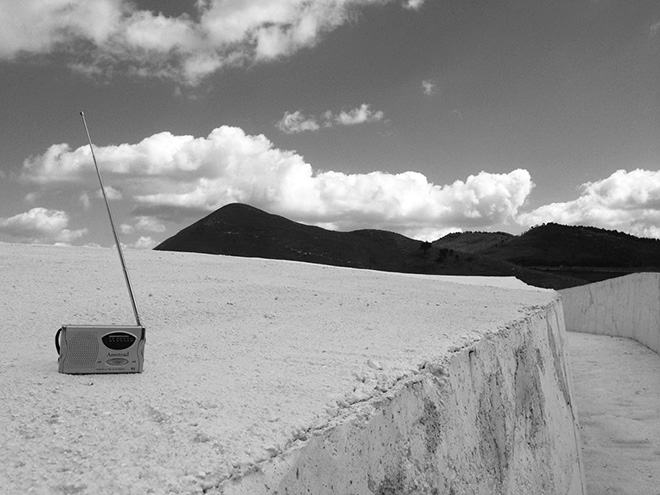
AUDIOGHOST68 – L’arte si fa in mille di Robert Del Naja e Giancarlo Neri
 | On 14, ott 2015

Il ritorno alla vita attraverso l’arte: una suggestiva installazione partecipativa celebra il Grande Cretto di Alberto Burri.

di Redazione Art Vibes

In occasione del centenario della nascita di Alberto Burri, la multinazionale energetica E.ON e il comune diGibellina, all’interno della prima edizione del “Cretto Earth Fest”, presentano AUDIOGHOST68, un’opera per luci, suoni, e mille attori appositamente concepita per il Grande Cretto dal musicista anglo-italiano Robert Del Naja e dall’artista Giancarlo Neri.
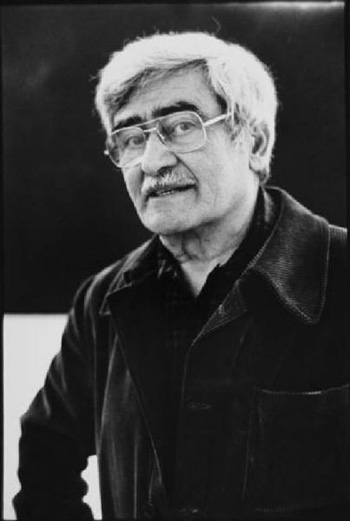
Ritratto di Alberto Burri - Photo credits: ©Maria Sulas
Ritratto di Alberto Burri – Photo credits: ©Maria Sulas, via:lombardiabeniculturali.it

Nel Gennaio del 1968 un violento terremoto colpì una vasta area della Sicilia occidentale tra le provincie diAgrigentoTrapani e PalermoGibellina, tra i paesi più colpiti dal sisma, fu quasi completamente rasa al suolo. Alcuni anni dopo Gibellina fu ricostruita a pochi chilometri di distanza e il sindaco, Ludovico Corrao, volle coinvolgere nella ricostruzione architetti, urbanisti e artisti di fama internazionale. Invitato da Corrao, Alberto Burri non volle intervenire nella “nuova” Gibellina ma propose una gigantesca opera di Land Art che avrebbe completamente coperto le macerie del paese distrutto dal terremoto: il Grande Cretto.
L’opera fu realizzata tra il 1984 e il 1989 ma non fu mai completata. Quest’anno, in occasione del centenario della nascita di Alberto Burri che culminerà il 10 ottobre con una retrospettiva dell’artista al Guggenheim di New York, il Grande Cretto è stato finalmente ultimato secondo il progetto originale.
AUDIOGHOST68
Mille lucciole bianche si muovono e danzano nella notte tra le “vene” del Cretto in tutte le direzioni, la loro luce in movimento scolpisce le forme buie delle isole di cemento formando un grande mosaico luminoso in continua evoluzione…
Nell’aria, provenienti da chissà dove, i suoni e le vocidi un’epoca ormai lontana, quel 1968 che cambiò le sorti del mondo per un lunghissimo momento ma che qui, a Gibellina, ne segnò la fine come una vera Apocalisse.
In AUDIOGHOST68 l’opera, gli attori e il pubblico sono una sola cosa. All’arrivo al Cretto alle ore 20, gli attori/spettatori vengono equipaggiati con una torcia a LED da indossare sulla fronte e si dispongono lungo tutto il perimetro dell’opera a luci spente.

A un segnale convenuto, l’inizio degli effetti sonori trasmessi in FM da piccole radio disseminate su tutta la superficie del Cretto, gli “attori” accendono le lampade ed entrano nel Cretto da tutte le direzioni per poi muoversi liberamente per le “vene” della grande scultura formando fiumi, scie, grumi, e singoli puntini di luce in movimento mentre i suoni e le voci del 1968 si diffondono nell’etere per trasformarsi, dopo un momento di silenzio assoluto, in una esplosione di percussioni, musica e danze, con la partecipazione di Percussion Voyager e Max Passante.
--

Giancarlo Neri è un artista nato a Napoli nel 1955 ed è uno dei maggiori autori italiani di installazioni di grandi dimensioni e arte pubblica. Neri si trasferisce a New York nel 1978 dove studia alla “Art Students League”.
Dopo gli inizi come pittore si dedica alla realizzazione di installazioni di grandi dimensioni negli U.S.A., in Brasile e in Europa. Tra le sue opere più note “Still Night” (1989) alla Clocktower Gallery/P.S.1 di New York, “180 Sedie a Capri” (1991), “The Writer” (2005) a Londra e Roma, “Massimo Silenzio” (2007) al Circo Massimo di Roma, “Vincere si deve la sorte” (2010) sul Cretto di Burri a Gibellina e “Máximo Silêncio em Paris” (2012) a Rio de Janeiro.
Robert Del Naja è un musicista e artista britannico nato a Bristol nel 1965. Con il suo gruppo, Massive Attack, ha pubblicato cinque album. Del Naja ha contribuito a numerose colonne sonore per film tra cui Gomorra di Matteo Garrone nel 2008, per il quale ha ricevuto il David di Donatello con Euan Dickinson per la migliore canzone originale.

Del Naja ha iniziato la sua carriera come graffiti artist a Bristol ed è considerato uno dei pionieri della stencil art, citato dall’artista Bansky come sua maggiore influenza. Del Naja è anche co-autore di varie installazioni audio-visive tra cui Volume in collaborazione con il gruppo UVA al Victoria & Albert Museum di Londra nel 2013, Meltdown Festival al Southbank Centre (Londra, 2008) e Massive Attack v Adam Curtis al Manchester International festival e alla Armory NYC nel 2013 con il regista Adam Curtis.

Percussion Voyager sono un duo di percussioni tra i più originali e richiesti in Italia. Nati nel 1998dall’incontro tra Maurizio Rizzuto e Matteo Scaioli, hanno legato il loro nome ai più importanti club italiani collaborando con top DJs italiani ed internazionali. I Percussion Voyager si sono esibiti in vari festival sia in Italia (Mtv Coca Cola Live Tour, ArezzoWave, Intermittenze) sia all’estero (in Brasile, a Capoverde, e in Germania).

Max Passante DJ e produttore, lavora principalmente tra Roma, New York e Londra. Nel 1995, assieme aiPlanet Funk, crea l’etichetta indipendente Bustin’ Loose Recordings contribuendo al lancio di artisti qualiKaren RamirezGaudi e Hondy. Collabora stabilmente con i Massive Attack. Si è esibito nei principali festival musicali del mondo (Bestival, Big Chill, Secret Garden e Romaeuropa). Per il cinema ha supervisionato le colonne sonore di “Gomorra” e “Reality” di Matteo Garrone ed è stato consulente musicale per i film “The Beach” e “Entrapment”.

--

Locandina, AUDIOGHOST68 – L’arte si fa in mille, un progetto di Robert Del Naja e Giancarlo Neri

AUDIOGHOST68 - L’arte si fa in mille di Robert Del Naja e Giancarlo Neri


14/10/2015

La lingua italiana...


Imparo l'italiano...


Vissi d'arte - Angela Gheorghiu (soprano) - Tosca, 


opéra de Giacomo Puccini.


TOSCA
Vissi d'arte, vissi d'amore,
non feci mai male ad anima viva!...
Con man furtiva
quante miserie conobbi, aiutai...
Sempre con fé sincera,
la mia preghiera
ai santi tabernacoli salì.
Sempre con fé sincera
diedi fiori agli altar.
Nell'ora del dolore perché,
perché Signore, perché
me ne rimuneri così?...
Diedi gioielli
della Madonna al manto,
e diedi il canto agli astri,
al ciel, che ne ridean più belli.
Nell'ora del dolore perché,
perché, Signore,
perché me ne rimuneri così?
Vedi,
le man giunte io stendo a te!
Ecco, vedi, e mercé d'un tuo detto,
vinta, aspetto...

TOSCA
J'ai vécu pour l'art. J'ai vécu pour l'amour.
Sans faire de mal à âme qui vive !...
Furtivement j'ai tenté d'alléger
les souffrances que j'ai rencontrées...
Mes prières montaient
d'un coeur sincère
vers le Saint Tabernacle.
Toujours d'un coeur sincère j'ornais
de guirlandes les autels.
Dans mon heure d'affliction, pourquoi,
pourquoi, ô Seigneur, pourquoi
me récompenser ainsi ?
J'ai donné mes bijoux
pour la cape de la Madone,
j'ai donné mes chants aux étoiles
pour embellir les cieux.
Dans mon heure d'affliction, pourquoi,
pourquoi, ô Seigneur, pourquoi
me récompenser ainsi ?
Regardez-moi.
Les mains tendues, je vous implore !
Humiliée, vaincue, j'attends
votre aide !


About 'Ellis'


Lazarides Rathbone are proud to be hosting the UK premiere of Ellis, a short film directed by JR.
Ellis Island was once the gateway to the United States for millions of immigrants. Leaving their past behind them, immigrants fleeing poverty, discrimination, and dictatorship arrived there to be processed until approved or denied access to a new land of opportunity. Huge numbers of these were placed in the island's hospital due to sickness or exhaustion, a purgatory of sorts in the shadow of the Statue of Liberty, where thousands of men, women and children awaited their fate.
Ellis tells the forgotten story of these immigrants who built America, while raising questions and consciousness of those who currently seek the same opportunities and safety in this country and other parts of the world.
Starring Robert De Niro and scripted by Academy Award winning writer Eric Roth, the film was directed by JR, whose 'Unframed' series of art installations in the abandoned Hospital complex serve as the set for this powerful and timely film, the trailer for which is below.
Ellis will be screened throughout the duration of Crossing – JR's solo exhibition at Lazarides Rathbone – from 16th October to 12th November 2015.

See more on Steve Lazarides' gallery's website:


Regardez Sarcellopolis


Article pour Toute la Culture :


SARCELLOPOLIS, LE WEBDOC D’UNE VILLE


ENREGISTRÉE SOUS TOUS LES ANGLES


Toute la Culture
14 octobre 2015 
Lien : http://toutelaculture.com/cinema/sarcellopolis-le-webdoc-dune-ville-enregistree-sous-tous-les-angles/


Récompensé par le Visa d’Or 2015 du meilleur webdocumentaire, Sarcellopolis est un projet de longue haleine, consacré à la ville de Sarcelles, en banlieue parisienne, longtemps louée comme exemple de mixité sociale réussie. Le documentaire radio a été diffusé sur France Culture, dans l’émission Sur Les Docks, le 7 octobre. La version film sera diffusée le 17 octobre sur France 3. L’œuvre documentaire transmédia est toujours consultable en ligne. Immanquable.


Note de la rédaction : 

Tout a commencé comme une utopie sociale. Celle des « grands ensembles ». Après guerre, la France en pleine crise du logement lance en proche banlieue parisienne une série de projets architecturaux et urbanistiques prometteurs. La petite ville de Sarcelles, en Seine-Saint-Denis, prend son essor.
Depuis, Sarcelles s’est fait connaître pour son mélange de populations très poussé et une conception du « vivre ensemble » idyllique, mêlant classes moyens et nouveaux arrivants en harmonie. Mais 30 ans plus tard, avec 70 communautés pour 60 000 habitants, après plusieurs crises et avec la montée du chômage, tout n’est pas rose derrière les tours et les bâtiments conçus trop vite et peu entretenus… Si la ville reste incroyablement métissée, son organisation sociale a bougé, les différentes communautés, d’une génération à l’autre, s’étant repliées chacune sur elles-mêmes.
Sarcellopolis est une plateforme documentaire, alliant film, photographies et audios sur le web, pour la radio et la télévision. Il offre différents angles de reportages pour plonger le spectateur dans l’évolution d’une ville passée de modèle pour l’avenir dans les années 60 à quartier paria depuis les émeutes de 2005 ayant démarré un peu plus loin, à Clichy-sous-Bois, également en Seine-Saint-Denis.
Conçu et réalisé par Sébastien Daycard-Heid et Bertrand Dévé, inspiré par le travail du photographe Jacques Windenberger, dont les archives photographiques sont utilisées dans le film, le webdocumentaire nous emmène dans différents quartiers de Sarcelles, à travers ses immeubles, à la rencontre de nombreux habitants, et le long du trajet du bus 368 qui traverse toute la cité.
On y écoute des jeunes filles chaldéennes, qui se trouvent particulièrement protégées par leur communauté chrétienne, installée autour de l’Eglise Saint Thomas, proche de la gare, un avocat chevronné qui a étudié dans le lycée juif non mixte et privé et se retrouve à défendre aujourd’hui l’un des acteurs sociaux musulmans de la ville lorsque celui-ci doit comparaitre pour incitation à la violence, ainsi qu’un peintre dont toute l’œuvre est marquée par son enfance à Sarcelles dans les années 60.
Entre espoirs et tensions sociales, Sarcellopolis offre un travail intense et qui ouvre à la fois les yeux et les oreilles.

visuels : photos officielles du film/ page officielle


--

Sicilia


Un poco d'italiano...


Sicilia. 

Rivive il capolavoro di Burri


Gibellina. Fine settimana dedicato al Grande Cretto, il capolavoro di Land Art che l'autore umbro progettò come contributo alla rinascita dell'area del Belice dopo il tragico sisma del 1968. Un'opera che viene "completata" con un'installazione multimediale. Protagonisti l'artista napoletano Giancarlo Neri e, per la parte musicale, Robert Del Naja, dei Massive Attack


Sicilia. Rivive il capolavoro di Burri


Nuova vita laddove un tempo c'è stata la distruzione. Sembra essere proprio questo il dono di un territorio come quello di Gibellina Vecchia, in Sicilia, dove nel 1968, nella notte tra il 14 e il 15 gennaio, un grande sisma, il terremoto del Belice, distrusse completamente tutto quello che c'era, provocando oltre mille vittime e quasi centomila senzatetto. La vita della cittadina riprese a fianco dell'antica zona originaria, lentamente, e, in seguito alla tragedia, grazie alla sensibilità di Ludovico Corrao, sindaco di allora, negli anni Ottanta, venne chiesto l'intervento di aiuto, per ridare vita alla città, a grandi artisti come Mario Schifano, Arnaldo Pomodoro, Alberto Burri.

Proprio quest'ultimo, di cui quest'anno celebriamo il centenario della nascita, propose, accettando l'invito del sindaco, di non creare una nuova città ma di intervenire sulle macerie: fu così che nacque quella che oggi è considerata una delle più grandi opere di Land Art (ossia l'arte realizzata sulla terra e con la terra stessa, intervenendo direttamente sul paesaggio) che esistono nel mondo, nota con il nome di il Grande Cretto. L'opera venne realizzata tra il 1984 e il 1989 ma non fu mai completata.

A ridargli vita oggi ci pensano l'artista napoletano Giancarlo Neri  (specializzato in installazioni di grandi dimensioni e arte pubblica) con il musicista britannico Robert Del Naja (membro dei Massive Attack, non nuovo a incursioni artistiche) che, sabato 17 ottobre 2015, alle ore 20, grazie all'aiuto della multinazionale energetica E. ON e il comune di Gibellina, all'interno della prima edizione del "Cretto Earth Fest", presentano Audioghost68 un'opera realizzata  principalmente con luci e suoni, proprio sul grande cretto.


Mille "lucciole bianche" si muoveranno dalla sera e per tutta la notte tra le crepe del Cretto, disegnando così una sorta di mosaico luminoso di cui non si possono prevedere le forme che prenderà, anche perché la partecipazione del pubblico e degli attori invitati alla serata, darà fortemente  il suo contributo. A tutti gli spettatori che arriveranno, infatti, verranno date torce a led da indossare sulla fronte e sarà chiesto  loro di disporsi lungo il perimetro dell'opera a luci spente. Soltanto nel momento in cui verrà dato il segnale, si potranno accendere le torce e avranno inizio anche gli effetti sonori trasmessi da piccole radio dislocate su tutta la superficie del Cretto: sarà alla fine un trionfo di musiche, movimenti, luci, con la partecipazione di Percussion Voyager e Max Passante.

Per partecipare gratuitamente alla serata di sabato come uno dei 1000 "attori" che contribuiranno alla realizzazione dell'opera basta prenotarsi qui. I nomi di tutte le persone coinvolte finiranno nei materiali dell'opera.


--

In pictures:
Gibellina in 1968


Gibellina Vecchia today:


Giancarlo Neri, in Gibellina


Neri's artwork, which inspired the coming show:


More Candles - For the International Migrants Day on December 18


International Migrants Day 2015: Worldwide Candlelight Vigil to Remember Lost Migrant Lives #iamamigrant


From IOM Director General William Lacy Swing:


To mark this year’s International Migrants Day on December 18, the International Organization for Migration (IOM) is calling on the international community to come together and remember the refugees and migrants who have tragically lost their lives this year.

IOM invites the international community to hold the first global Candlelight Vigil to commemorate the lives that have been lost or have disappeared while trying to reach safe harbour after arduous journeys across seas and deserts this year. Each person has a name, a story and left their homelands seeking better opportunities and safety for themselves and in many cases for their families - aspirations that all of us strive for.

In commemoration of the thousands of lives lost this year and each year during migration, IOM is encouraging the distribution of white wristbands with the inscription  #IamaMigrant which will serve as the theme for the day as well as a powerful social media hashtag.

The Candlelight Vigil is a renewed opportunity to increase awareness on drivers of migration, and most importantly shift the narrative of migration towards a positive recognition of the many ways migrants contribute to host societies.

The candlelight should become the symbol of our solidarity with migrants and their families and remind us that for many, migration is often the only sliver of light left for millions of people around the world.
IOM will remain steadfast in ensuring that the international community stays fully committed to saving migrants' lives.

We must ensure that their lives have not been lost in vain. We must not forget them. 

--

Read more

--