Journalist at RFI (ex-DW, BBC, CBC, F24...), writer (on art, music, culture...), I work in radio, podcasting, online, on films.
As a writer, I also contributed to the New Arab, Art UK, Byline Times, the i Paper...
Born in Paris, I was based in Prague, Miami, London, Nairobi (covering East Africa), Bangui, and in Bristol, UK. I also reported from Italy, Germany, Haiti, Tunisia, Liberia, Senegal, India, Mexico, Iraq, South Africa...
This blog is to share my work, news and cultural discoveries.
The UN Secretary general is currently holding consultations in order to approve or not a African mission in Northern Mali. And this Wednesday he expressed his worries about a potential military intervention.
Read his declarations below.
--
The lastest from Reuters press agency:
U.N. chief recommends "offensive military operation" in Mali
(Reuters) - U.N. Secretary-General Ban Ki-moon on Wednesday recommended that the Security Council approve an African Union peace enforcement mission be deployed to combat Islamist extremists in northern Mali, but did not offer financial support from the world body.
--
And the BBC:
Mali crisis: UN's Ban gives AU mission guarded support
UN Secretary General Ban Ki-moon has recommended conditional backing for a one-year African Union mission against Islamist militants in Mali.
Alors que les islamistes armés qui occupent le nord du Mali agrandissent la zone sous leur contrôle -ils viennent de s'installer, sans combattre, à soixante kilomètres de la frontière mauritanienne- à l'ONU, mercredi 28 novembre au soir, le secrétaire général des Nations unies, Ban Ki-moon, s'est inquiété des risques d'une intervention militaire au Mali.
Here is the link to my interview for Al Qarra TV with the Sudanese leader and opposition member Mariam Alsadig Almahdi, conducted on November 24th, 2012, in Paris. Sudan: The UNP wants a national meeting with all parties
Al Qarra – Hello and welcome on Al Qarra TV. Today we are talking about Sudan and Sudanese politics and for that we receive Mrs Mariam Alsagig Almahdi. Welcome. To introduce you, you are a member and the spokesperson of the UNP, the Umma National Party in Sudan, you are also an advocate for human rights, democracy and women’s right. Your party seems right now both close to the ruling party, the National Congress Party (NCP) and to some to some party from the opposition side. Can you explain to us what it does tell of your values and your political positions today for Sudan?
Mariam Alsagig Almahdi – Thank you very much for putting this very important question because many of the ruling party officials would like to present us as you presented the party, because we are very much in opposition to the National Congress Party, the ruling party in Sudan, and to its policies and structures, and the conduct of its personnel. But we are not against the Sudan and its people and its well-being. So that’s why we keep in dialogue with the NCP but we are for a radical and comprehensive change for all policies of the NCP and actually we are now advocating for all our counterparts in Sudan for a comprehensive conference -a conference for total peace and democratic transformation. And that entails for all parties of Sudan to participate. But we are not waiting for the NCP; we keep telling the NCP about its erroneous policies and this is the main difference between the Umma National Party and the rest of the opposition. The other opposition parties are calling for the total boycott of NCP. We believe otherwise but at the same time we are very much committed to the radical change of the policies of the NCP. If the NCP would not change, then we would advocate to change it.
Al Qarra – Sudan is currently undergoing lots of changes. Is the UNP in favour of a peaceful transition even if it has to take a long time or a more radical change?
Mariam Alsagig Almahdi – We are for a civil transformation. Of course, civil entails a lot of demonstrations, sit-ins, and disobedience. We are very much against the change through arms because we have tried it, we believe that yes it presents the case through the loudest voice, but Sudan has already been totally shattered by this way. That’s why we are working with our counterparts in the armed groups to find complementary ways for the total and radical change. And of course, we need a change as radical as possible to have a totally alternative programme, not only changing the people; as well it should be as speedy as possible because every day with the current policies it is devastating Sudan and its people more and more.
Al Qarra – According to you, is Sudan now more peace? Since the separation of South Sudan and its current conflicts on border issues, has the past year been bringing more peace in Sudan?
Mariam Alsagig Almahdi – Of course it hasn’t at all. Sudan, after the separation in two countries, is now more in chaos, for the two Sudans. That is why we say we should take the Sudanese issues as a piecemeal, each in a separate venue, will not solve anything, actually, it would complicate the Sudanese matters. We are calling for a comprehensive and holistic approach. Including relations with the South is important, as well as a new constitution to be written by the participation of all people, as well as new economic policies and reforms, as well as relations with the international community which includes a settlement regarding the International Criminal Court (ICC) and its demands in Sudan. This all to settle the conflicts in Darfur, the Nuba Mountains and South Kordofan and the Blue Nile region. So, as long as we keep doing that we believe it’s positive, like what happened lately in Addis Ababa where the international community pressed hard with using the economic crisis in both countries, Sudan and South Sudan, to enforce or to oblige a settlement in nine agreements. Unfortunately it is now dismantling and it might entail more conflict, as it was just opposed. So unfortunately the last year has been a very bad year in terms of security, in terms of the livelihood of the people, and economic crisis and in terms of violation of human rights.
Al Qarra – The ruling party and the power in the hands of President Omar Al Bashir seems to be weakened and its own party divided, what would be your recommendations for the party to find a new revival for the whole political system to work better in Khartoum right now?
Mariam Alsagig Almahdi – Unless the NCP would agree to radical reforms needed for the stability of Sudan, by sitting with other Sudanese players, the NCP will have no place in the future of Sudan.
Mariam Alsagig Almahdi, thank you very much for being with us.
Entretien avec Alain Gascon, professeur émérite à Paris VIII, et spécialiste de la corne de l’Afrique
Sur Al Qarra TV
L’Ethiopie après Meles Zenawi – Vers une normalisation
En août dernier, le Premier ministre éthiopien Meles Zenawi est décédé après plus de 20 ans à la tête du pays. Pour tenter de comprendre l’évolution politique possible en Ethiopie, nous recevons Alain Gascon, directeur de recherches à l’EHESS, professeur émérite à l’université Paris VIII et spécialiste de la corne de l’Afrique.
While the situation in Goma, Eastern Congo worsens, it is important to raise concern, among readers and among the international community.
Here is a selection of columns and research report that can enlighten about the current situation, a week after the M23 rebels took over control on the North-Kivu province, bordering Rwanda.
--
First, why the Congo is not taking enough space in the news and in the public debate:
Gaza grabs the headlines as Congo once more descends into chaos
Conflict in the Middle East is overshadowing the bloody events in central Africa
"Once again, the apparently insoluble struggle between Israel and
Palestine has flared up before flickering into uneasy standoff. As
usual, world leaders issued fierce warnings, diplomats flew in and the
media flooded the region to cover the mayhem as both sides spewed out
the empty cliches of conflict. After eight days of fighting, nearly 160
people lay dead.
Meanwhile, 2,300 miles further south, events took
a sharp turn for the worse in another interminable regional war. This
one also involves survivors of genocide ruthlessly focused on securing
their future at any cost. But the resulting conflict is far bloodier,
far more brutal, far more devastating, far more destructive – yet it
gains scarcely a glance from the rest of the world".
(...)
"The truth is that six times as many people have died already in the
Congolese wars as died in the Rwandan genocide. Time to say never again –
or does the blood of Congo not count?"
--
Also in the Guardian, this column by Navy Pillay,theUnited Nations High Commissioner for Human Rights:
End the impunity of Congo's war criminals
The
soldiers who marched into Goma this week are led by the world's worst
violators of human rights. They must be held responsible
Before rebels known as M23 split up Congo any further, the United
Nations must help this giant African nation find a unifying identity.
The same goes for Rwanda.
By
the Monitor's Editorial Board /
November 25, 2012
--
In the UK, analysis by Phil Clark from the School of Oriental and African Studies (SOAS) on the role of Rwanda and the case of European aid:
UK Aid to Rwanda
Written evidence submitted by Dr. Phil Clark, SOAS, University of London
This
submission addresses the decision by the Department for International
Development (DFID) to withhold, and subsequently to disburse, budget
support to the Government of Rwanda following allegations about its
involvement with the M23 rebel group in eastern Democratic Republic of
Congo (DRC). This paper puts forward two main arguments. First,
decisions to withhold or withdraw aid to particular states should be
based on more comprehensive and systematic evidence than that provided
by the United Nations Group of Experts (GoE) for the DRC. There are
substantial methodological and substantive shortcomings in the 2012
Group of Experts reports, on the basis of which several foreign donors
reconsidered their development aid strategies toward Rwanda.
Second,
while there are justified concerns over Rwanda’s alleged military
involvement in eastern DRC as well as domestic human rights issues in
Rwanda, the withholding or withdrawal of aid to Rwanda will do little to
address systemic causes of conflict in eastern DRC and may undermine
important political, social and economic gains which Rwanda has made
since the 1994 genocide. This risks destabilising a still fragile
situation in Rwanda, with major repercussions for the entire Great Lakes
region. On this basis, this paper advocates the continuation of UK aid
to Rwanda at the same level as before the GoE findings, alongside the
continued use of non-aid measures to address the question of Rwanda’s
alleged military involvement in the DRC and domestic human rights issues
in Rwanda.
GOMA, Democratic Republic of Congo — "The lights are out in most of Goma.
There is little water. The prison is an empty, garbage-strewn wasteland
with its rusty front gate swinging wide open and a three-foot hole
punched through the back wall, letting loose 1,200 killers, rapists,
rogue soldiers and other criminals".
--
En francais :
Le Monde
RDC : le gouvernement exclut de négocier avec les rebelles avant un retrait de Goma
Al Qarra – Le Soudan
se remet doucement de la tentative de déstabilisation contre Omar el
Béchir. Les autorités soudanaises ont annoncé jeudi avoir déjoué un
complot qui visait directement l’appareil d’Etat. Depuis des
informations divergentes ont circulé sur les arrestations qui ont suivi
et les personnes impliquées. Selon les services de renseignement
soudanais, plusieurs responsables de partis ont été arrêtés dans la journée
de jeudi. L’enquête mènerait plus précisément vers des militaires et
plusieurs civils.
Le régime a d’abord annoncé un coup d’Etat, pour quelques heures plus
tard revenir sur ce terme et parler de tentative de déstabilisation.
Pour Rachid Saïd, spécialiste du Soudan, la clarification fait sens.
Des informations auraient ensuite circulé parlant d’arrestations de
membres de l’opposition, qui a démenti toute implication. Selon Rachid Saïd, celle-ci ne serait pas impliquée.
Rachid Saïd, spécialiste du Soudan : « l’opposition n’a rien à voir avec ces événements ».
Le Ministre de l’information Ahmed Bilal a annoncé jeudi que 13
personnes avaient été arrêtées, des civils, et des militaires,dont de
grandes personnalités du régime, comme le lieutenant à la retraite Salah
Gosh ou le brigadier Adel Al-Tayeb.
Rachid Saïd, spécialiste du Soudan : « Quand on regarde la liste des personnes détenues, on trouve de toutes les tendances ».
L’annonce du complot déjoué est intervenue quelques heures après que
l’armée ait confirmé une attaque aérienne près de Samaha, une région
frontalière disputée avec le Soudan du Sud. Autre dossier qui semble plomber le régime militaire.
Même à Paris, mes pas me mènent régulièrement vers le Mexique.
Quelques exemples, en librairie hier:
Série de polars dont Mexico en première ligne
Et au rayon roman :
--
Et puis la rencontre avec un cameraman qui me parle de l'un de ses tournages, pour Un Œil sur la Planète, l'excellente émission de la chaine publique française France 2 sur le Mexique...
L’émission met en avant l'avenir exponentiel, notamment économique du premier pays hispanophone du monde, et les défis qui lui reste a surmonter.
--
Les détails :
La nouvelle révolution mexicaine
Le Mexique, touché de
plein fouet par la concurrence asiatique, a entamé une véritable mutation. Ses
maquiladoras se modernisent, des industries de pointe émergent comme dans
l’aéronautique. Pour vendre aux États-Unis, le premier marché mondial, il est
aujourd’hui plus rentable de produire au Mexique qu’en Chine. Croissance.
Emploi. Finances assainies. Le Mexique est un pays d’avenir. Ses jeunes
diplômés lorgnent moins vers l’étranger. Et même les émigrés commencent à
revenir…
Le Mexique est méconnu en France, trop souvent assimilé à quelques
mots-clichés. Il y a ceux qui évoquent la violence : « cartels » et «
narcos » et eux qui évoquent la fête au soleil : « téquila », «
tortillas », « sombreros ». C'est à peu près tout, en dehors des
émissions sur le patrimoine aztèque ou maya... L'année du Mexique en
France devait permettre de combler nos lacunes mais elle a été annulée
avec l'affaire Florence Cassez...
Autant dire que notre vision
du Mexique est un peu étriquée. Le Mexique qui préside en ce moment le
G20, est un pays important. 3 fois la France en superficie, 112 millions
d'habitants, c'est le premier pays hispanophone au monde et la première
puissance commerciale d'Amérique latine. Ce sera l'une des premières
économies du monde dans les années à venir.
L’émission de France Culture 'Secret des Sources' pose une question très pertinente cette semaine : pourquoi une telle différence de traitement dans les médias occidentaux entre le conflit au Proche-Orient et celui de l'est du Congo?
La question est d'abord abordée du rapport entre les journalistes et l’armée israélienne à Gaza, après notamment la série de bombardement qui a visé un immeuble notoirement occupé par des journalistes, et sur la question de rester témoins sans prendre partie sous les bombes...
Deuxième interrogation : pas une brève sur la R. D. Congo dans les journaux télévises de France 2 et TF1 cette semaine... Un trop plein sur le conflit israélo-palestinien versus silence sur les Grands Lacs.
Pour les participants, le Proche-Orient est beaucoup plus proche et l'identification pour le public européen est plus facile.
Jean-Marie Charon note qu'il y a beaucoup moins de spécialistes de l'Afrique centrale et beaucoup moins de moyens sur place. Colette Braeckman, journaliste pour le Soir, pointe les clichés sur l'article et l’excès des grilles de lecture spécifiquement ethniques, et non politiques, qui empêchent aux lecteurs de s'identifier.
Pourtant, Goma et son milieu d'habitants souffre de conflits meurtriers depuis 1994, suite aux flux de réfugiés qui ont suivi le génocide au Rwanda voisin, faisant 2 millions de déplacés, dans la région, et des centaines de milliers de réfugiés. Les éléments objectifs d’intérêt semble réunis.
Il est pourtant tout à fait possible de se rendre sur place, selon les journalistes invités, et il y a peu de problèmes de communication.
Seul détails, sur 50 min d’émission, plus de 29 sur Gaza, 18 sur Goma... Mais c'est déjà beaucoup plus que partout ailleurs.
Comment travailler à Gaza en guerre ? Gaza / Goma : deux poids, deux
mesures ? Pourquoi les médias s'intéressent-ils plus à la guerre Hamas /
Tsahal qu'à la situation au Congo qui fait pourtant beaucoup plus de
morts ?
Avec : - Michel Bôle-Richard, ancien correspondant du Monde à Jérusalem
- Frédéric Barreyre, France Inter, ancien correspondant à Jérusalem
- Grégory Philipps, correspondant de Radio France à Jérusalem
- Maria Malagardis, grand reporter à Libération, spécialiste des Grands Lacs
- Laurent Larcher, grand reporter au journal La Croix, spécialiste des Grands Lacs
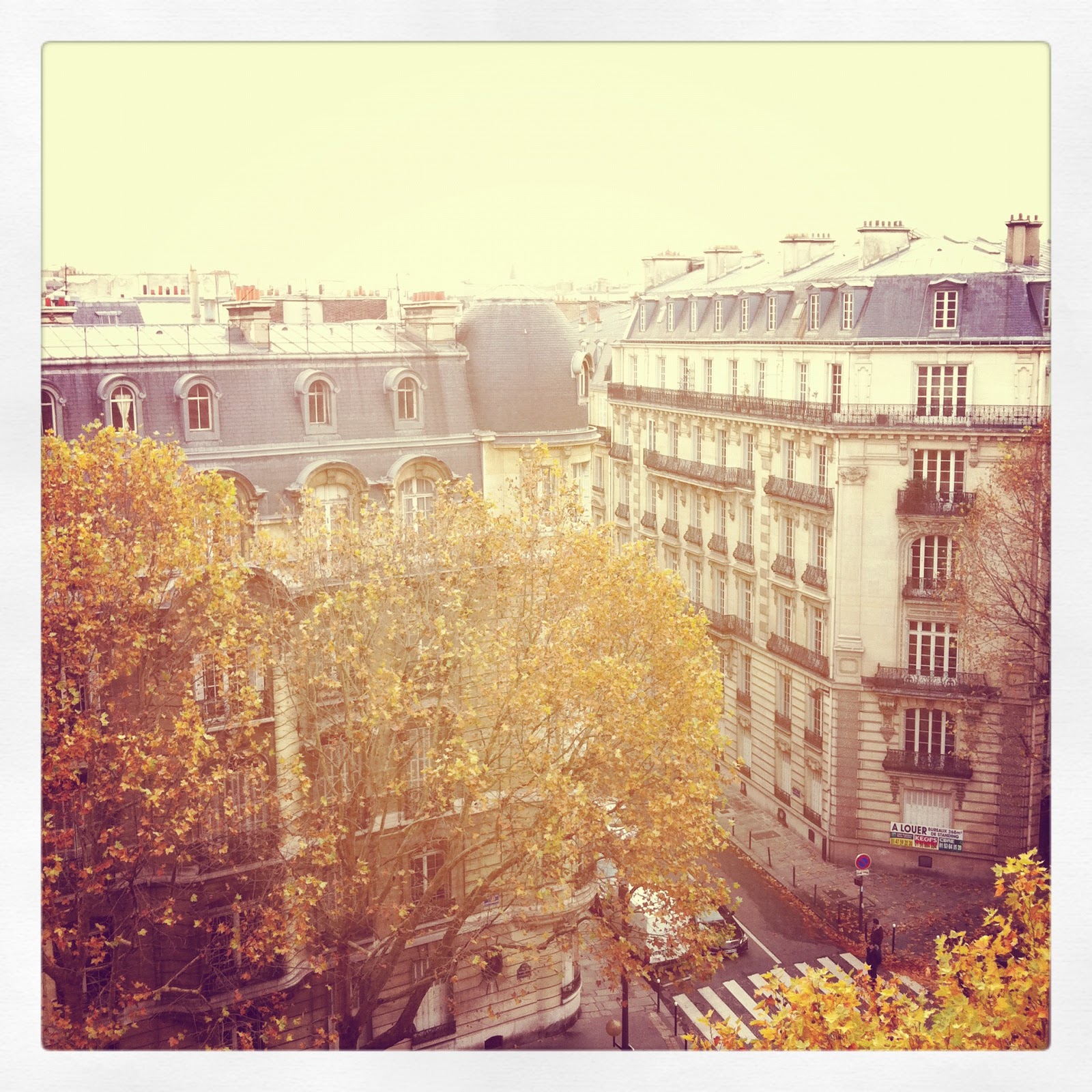
I usually post pictures from afar, from travels, from reporting missions. But since I've been on the road for more than four years, Paris has now become a new playground to behold and I therefore allow myself to share a few photos from Home...
My story in French for Al Qarra and some more links below about the recent coup attack in Khartoum, last Wednesday night, and on division inside the ruling party : Soudan : Le complot déjoué révèle les dissensions
Le Soudan se remet doucement de la tentative de déstabilisation contre Omar el Béchir. Les
autorités soudanaises ont annoncé jeudi avoir déjoué un complot qui
visait directement l’appareil d’Etat. Depuis des informations
divergentes ont circulés sur les arrestations qui ont suivi et les
personnes impliquées. Selon les services de renseignement soudanais,
plusieurs RESPONSABLES DE PARTIS ont arrêtés dans la journée de jeudi.
L’enquête mènerait plus précisément vers des militaires et plusieurs
civils.
Le
régime a d’abord annoncé un coup d’Etat, pour quelques heures plus tard
revenir sur ce terme et parler de tentative de déstabilisation. Pour
Rachid Said, spécialiste du Soudan, la clarification fait sens. Des
informations auraient ensuite circulé parlant d’arrestations de membres
de l’opposition, qui a démenti toute implication. Selon Rachid Said,
celle-ci ne serait pas impliquée.
Rachid Said, spécialiste du Soudan : « l’opposition n’a rien à voir avec ces événements ». Le
Ministre de l’information Ahmed Bilal a annoncé jeudi que 13 personnes
avaient été arrêtées, des civils, et des militaires,dont de grandes
personnalités du régime, comme le lieutenant à la retraite Salah Gosh ou
le brigadier Adel Al-Tayeb. Rachid Said, spécialiste du Soudan : « Quand on regarde la liste des
personnes détenues, on trouve de toutes les tendances ».
L’annonce
du complot déjoué est intervenue quelques heures après que l’armée ait
confirmé une attaque aérienne près de Samaha, une région frontalière
disputée avec le Soudan du Sud. Autre dossier qui semble plomber le
régime militaire.
--
About Abyei tensions on the BBC:
Abyei deadline looms for Sudan and South Sudan
1 November 2012Last updated at 23:24 GMT
A new deadline is approaching in the efforts to end one of the most contentious disputes between Sudan and South Sudan.
The Abyei region straddles the north-south border and many
see this as the biggest flashpoint left unresolved when the two
countries separated last year.
Mike Wooldridge reports from Abyei.
International Crisis Group analysis about the ruling Party, National Congress Party, from 2011:
Sudan: Divisions in the Ruling Party
4 May 2011: For years, the National Congress Party
has ruled Sudan by concentrating power in the northern center and
dominating rebellious territories in the periphery. But now the NCP
itself is showing signs of fracture. EJ Hogendoorn, Crisis Group’s Horn
of Africa Project Director, explains why internal divisions in the
ruling party could threaten the country’s future stability.